

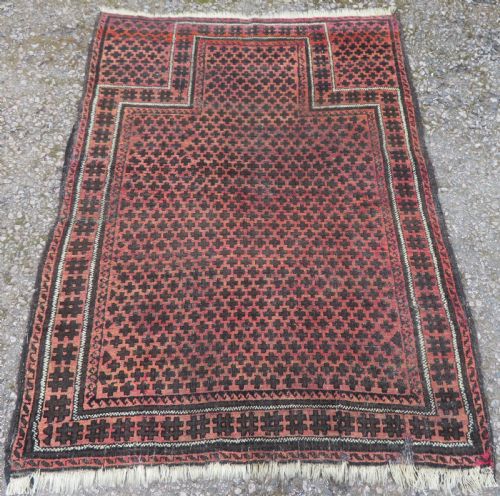


Traditional Mihrab Prayer Rug
A traditional mihrab prayer rug brings centuries of Anatolian, Persian and Turkmen weaving heritage into a room through architectural arches and symbolic motifs.
Traditional Mihrab Prayer Rug
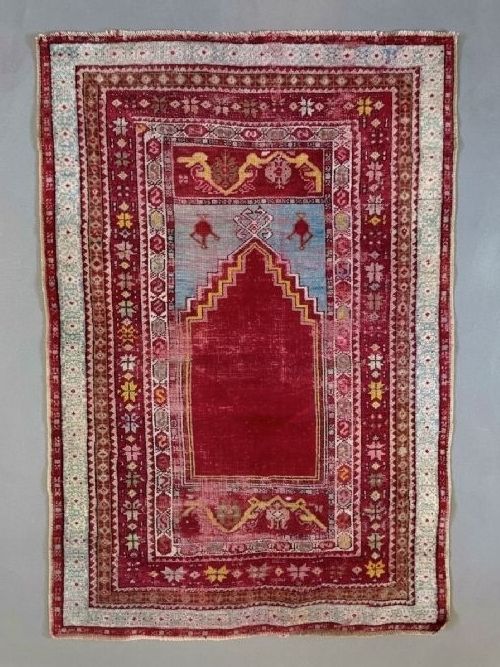
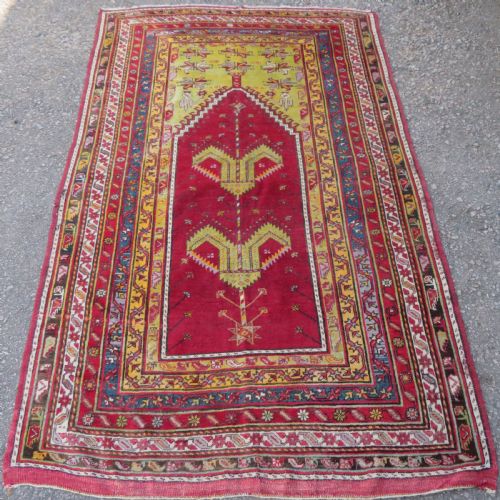
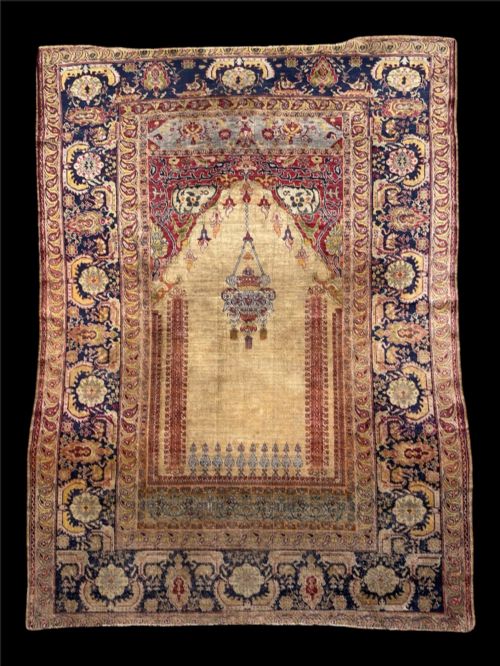
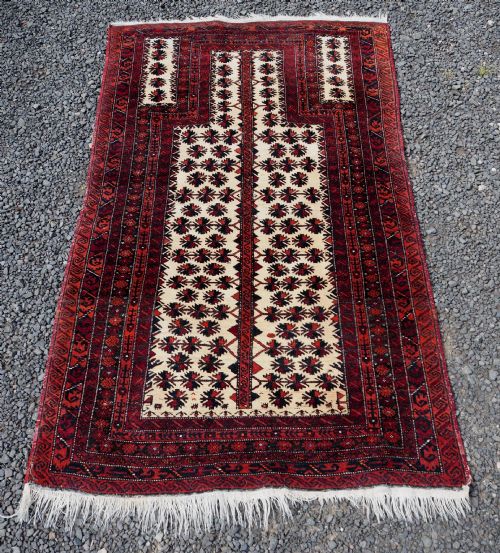
When you search for a traditional mihrab prayer rug, you encounter floor coverings and wall textiles designed around a central arched niche that represents the mihrab of a mosque. These pieces originate from regions including Anatolia, Persia, the Caucasus and Afghanistan, spanning periods from the eighteenth century to the early twentieth century.
The format typically centres on a distinct architectural arch pointing toward Mecca, often accompanied by motifs such as floral vases, lanterns, lotus leaves and rams horns. Formats range from compact village rugs to finer city carpets and embroidered silk suzanis executed in prayer formats.
Pieces on this page represent diverse tribal and village traditions, notably Baluch, Kizil Ayak, Ghiordes, Kirsehir and Ladik workshops. Each variant employs regional geometries and palettes to frame the defining prayer arch.
How They Were Made
Weavers constructed these textiles using hand-spun wool, cotton foundations and occasionally silk threads for detailed pile work or embroidery. Natural dyes yielded the enduring reds, yellows and deep tones seen across Anatolian and Turkmen examples.
Village and tribal pieces relied on upright looms and traditional hand-knotting or flatweaving techniques passed down through generations. Suzani variations instead utilise fine silk embroidery stitched onto yellow or red cotton grounds.
Materials documented across these textile listings include hand-spun wool, cotton foundations, pure silk pile and silk embroidery on cotton grounds.
What Varies in Quality
The standard of a traditional mihrab prayer rug rests on the precision of its knot density and the crispness of the arch geometry. Finer examples display intricate rendering of secondary motifs like floral vases and border systems.
Material selection dictates the tactile and visual depth of the pile, with hand-spun wool and pure silk yielding superior light reflection and saturation. Regional provenance also influences desirability, particularly pieces originating from established weaving centres such as Ghiordes or Kirsehir.
The Traditional Mihrab Prayer Rug Glossary
- Mihrab
- The arched niche in the design of a prayer rug that mimics the architectural orientation toward Mecca. It forms the visual focal point of the textile.
- Suzani
- An embroidered tribal textile from Central Asia, occasionally produced in a prayer format with silk thread on a cotton ground.
- Pile
- The cut or uncut loop surface of a woven rug that forms the thick upper layer. Hand-knotted examples rely on dense wool or silk pile.
- Foundation
- The underlying grid of warp and weft threads that supports the knots of a rug. Cotton and wool are standard foundation materials.
- Border
- The decorative bands framing the central field of a rug. Traditional designs incorporate multiple guard stripes alongside a primary border.
Traditional Mihrab Prayer Rug: Frequently Asked Questions
What is a mihrab design?
The mihrab design depicts an architectural arch that traditionally directs the user toward Mecca during daily prayers. In decorative rugs, this arch serves as the primary compositional frame for the central field.
Weavers often filled this niche with hanging lanterns, floral vases or geometric trees of life to add symbolic depth to the textile layout.
How do I clean an antique rug?
Antique wool and silk textiles require specialist professional cleaning rather than domestic water immersion or harsh chemical treatments. Gentle surface dusting and keeping the textile away from direct sunlight preserve the natural dyes.
Placing a suitable underlay beneath the rug prevents sliding and reduces friction between the foundation threads during everyday use.
Where were these rugs made?
These textiles originate from weaving traditions across Anatolia, Persia, the Caucasus and Central Asia. Specific towns and tribal groups such as Ghiordes, Kirsehir, Ladik and the Kizil Ayak Turkmen developed distinct regional styles.
Village workshops utilised local materials and time-honoured geometric patterns, while city centres produced finer floral compositions.
How are different regional styles identified?
Regional attribution relies on the specific geometry of the prayer arch, the arrangement of border motifs and the choice of palette. Anatolian pieces often feature stepped arches and village floral motifs, whereas Turkmen and Baluch examples lean toward tribal gulls and rich red wools.
Examining the weave structure and foundation materials provides further clues to the origin of each individual piece.