
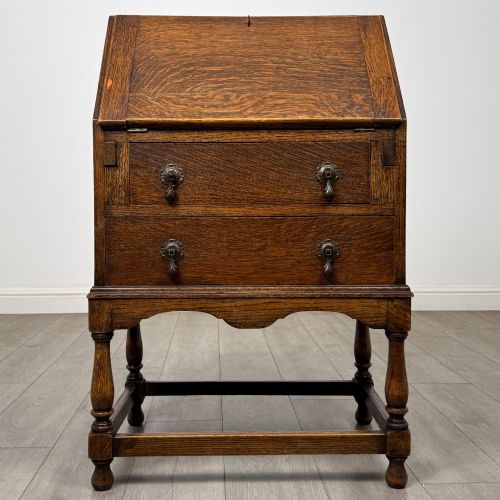
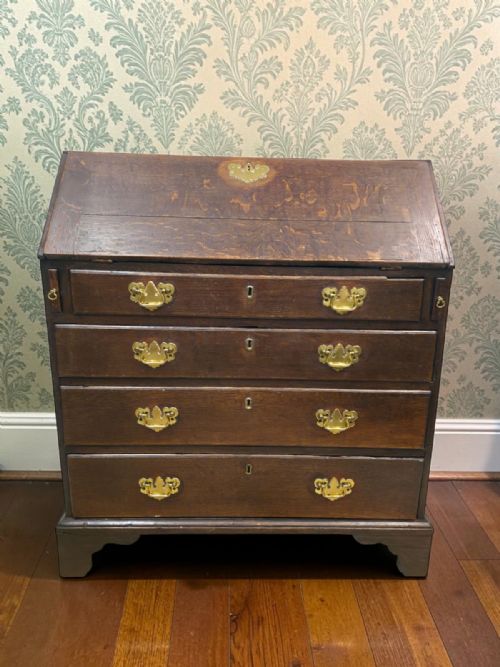
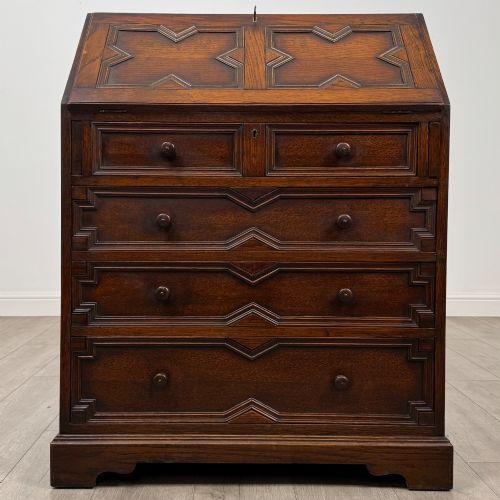
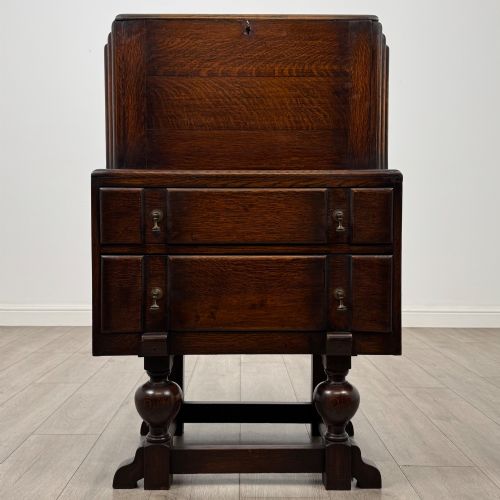

Dark Oak Writing Slope
A dark oak writing slope brings portable timber craftsmanship into daily use, offering a rugged, hinged surface for correspondence that sits comfortably on any table.

What these pieces are
When you search for a dark oak writing slope, you encounter compact timber desks, bible boxes, and table-top bureaux designed for personal letters and record-keeping. These pieces date across the seventeenth, eighteenth, and Victorian periods, reflecting diverse vernacular traditions from Welsh workshops to English provincial joinery.
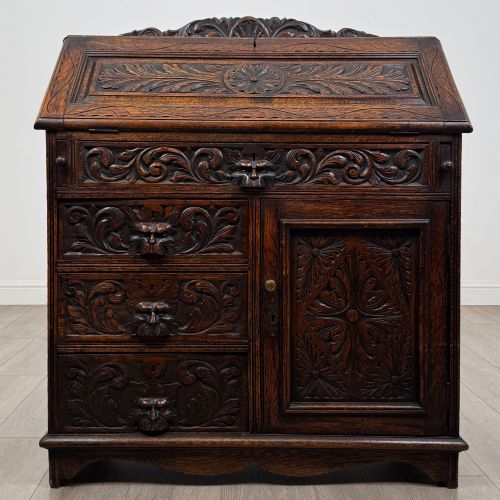
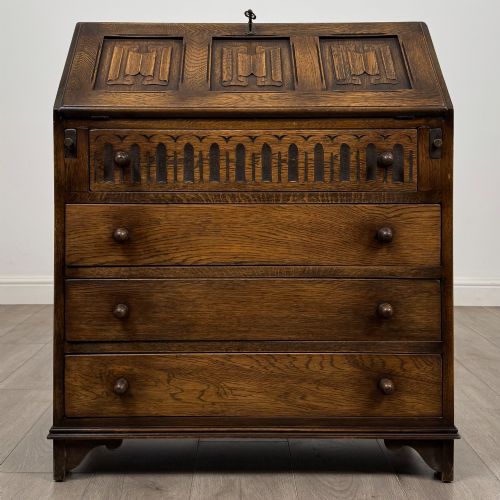
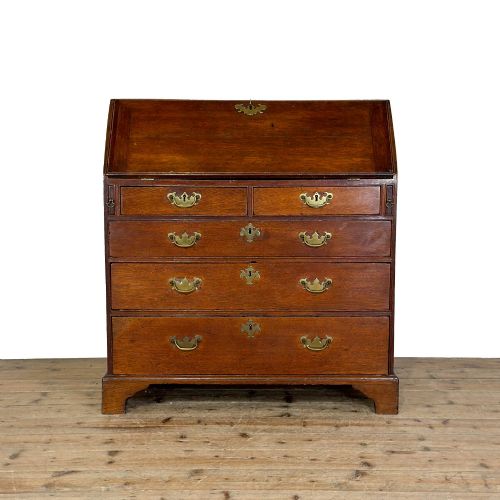
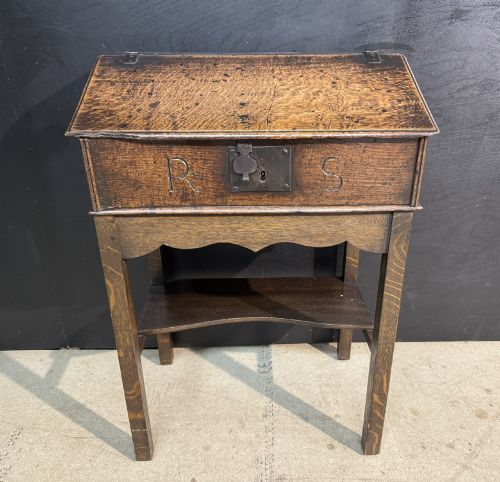
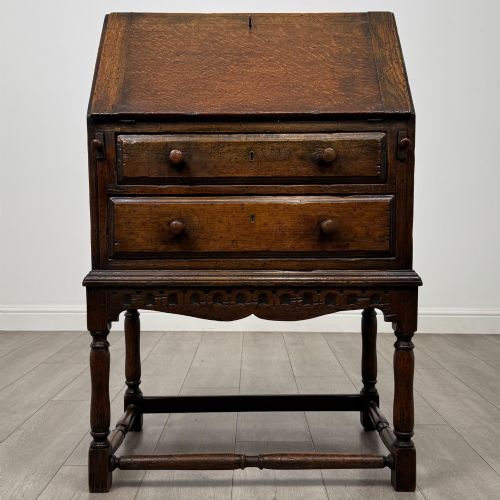
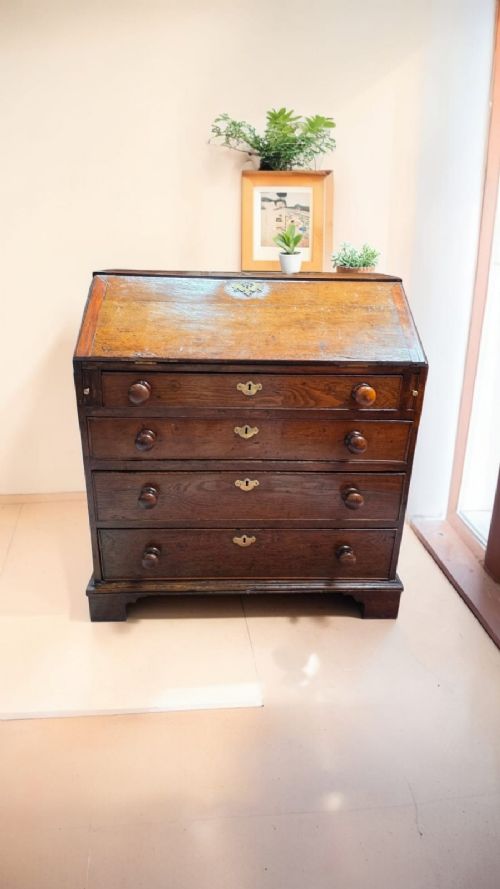
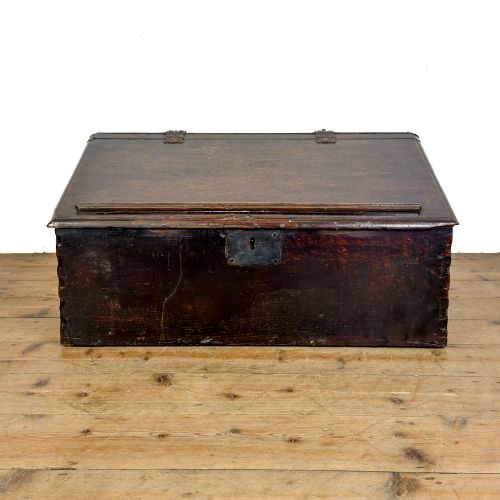
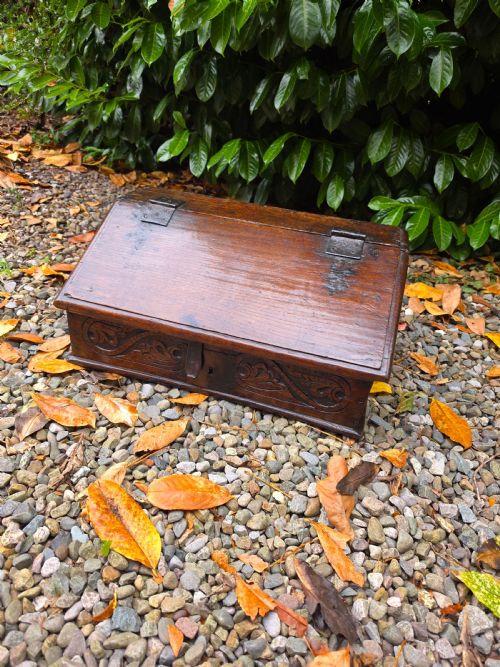
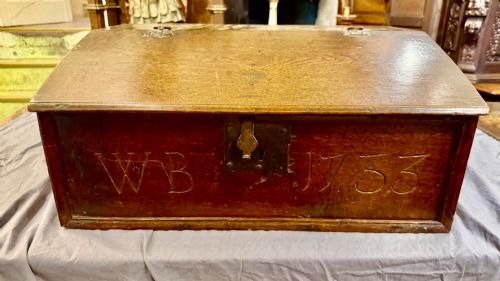
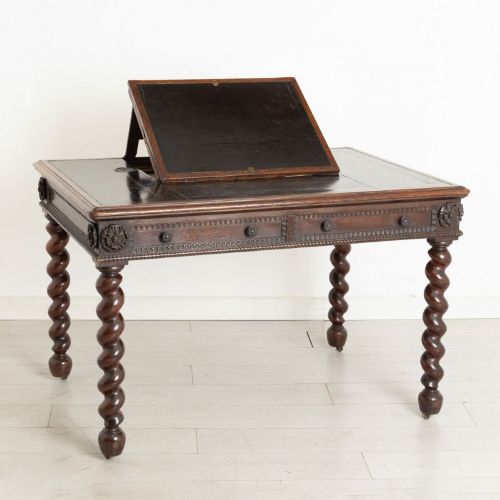
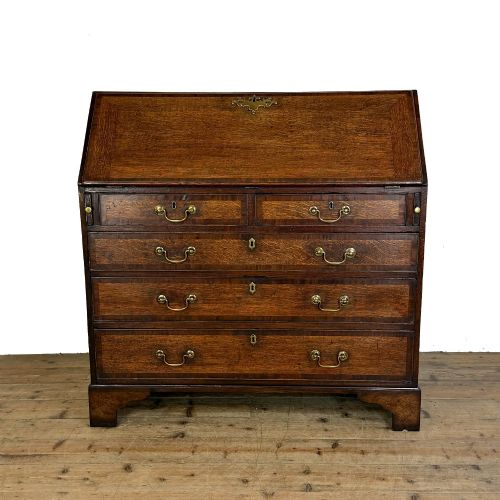
The forms on this page range from simple lidded desk boxes and miniature bureaux to elaborate carved Davenport desks and table top bureaux on stands. The seventeenth-century examples often feature initials and dates carved into the timber, while eighteenth-century iterations introduce fitted interior compartments and miniature proportions.
Oak dominates the structural framework of these items, frequently paired with secondary woods and iron or brass hardware. Their origins span standard periods like the Georgian and Victorian eras, alongside specific stylistic revivals such as Jacobean and William and Mary designs.
How they were made
Carpenters constructed these writing slopes and desk boxes using solid oak timbers, joining panels with traditional framing methods suited to portable furniture. Iron and brass provide functional hardware for hinges, lock plates, and carrying handles.
Surface detailing involves hand carving, as seen in Victorian green man motifs, alongside inscribed owner initials and dates on seventeenth-century Welsh table desks. Leather and fabric elements occasionally line the writing surfaces of later desks and bureaux.
Retail Price Guide 2026
Typical UK retail prices for dark oak writing slope, calculated from the Sellingantiques database of over a million retail prices indexed since 2003. This retail price guide relies exclusively on Sellingantiques data; no external sources or auction records are used, so the figures do not describe the wider market.
The listings span the seventeenth, eighteenth, and Victorian periods, utilising oak alongside iron, brass, leather, and fabric materials.
What varies in quality
The distinction between standard provincial joinery and superior craftsmanship lies in the crispness of the timber carving and the integrity of the original stand or base. Pieces retaining their contemporary iron or brass mountings alongside well-preserved interior compartments command greater respect from collectors.
Proportions and regional characteristics also dictate the standing of a piece, with miniature bureaux and dated seventeenth-century Welsh examples demonstrating distinct regional competence. The depth of the oak's patination and the survival of original owner inscriptions further separate utilitarian boxes from exceptional decorative objects.
The Dark Oak Writing Slope Glossary
- Bible box
- A sloping-lidded wooden box originally intended to hold a family Bible or religious texts before evolving into a portable writing surface. These boxes represent some of the earliest forms of desk furniture found in domestic settings.
- Bureau
- A writing desk featuring a sloping lid that opens to reveal fitted pigeonholes and small drawers for stationery. Table top bureaux sit directly on furniture surfaces, while others incorporate dedicated stands.
- Green man
- A sculptural architectural motif depicting a face carved from or entwined with leaves and vines. Victorian interpretations of this decorative style frequently appear on carved oak Davenport desks.
- Patina
- The surface sheen and deep colour developed by timber over centuries of handling, polishing, and exposure to light. A rich patina indicates age and continuous use.
- Vernacular
- Regional furniture built by local joiners to practical designs rather than following strict metropolitan pattern books. Welsh oak table desks and miniature bureaux often display these distinct local characteristics.
Frequently Asked Questions
How were these slopes used historically?
Historically, these pieces served as secure repositories for personal correspondence, financial records, and important texts like family Bibles. The sloping lid provided an ergonomic angle for handwriting while seated at a table.
Many incorporate internal compartments for inkwells, quills, and stationery, functioning as early personal workstations before dedicated freestanding desks became common.
How do I date a dark oak writing slope?
Dating relies on examining the construction methods, hardware, decorative styles, and any inscribed dates or initials found on the timber. Seventeenth-century examples often display simpler plank construction and carved inscriptions, while eighteenth and nineteenth-century pieces introduce more complex interiors and hardware.
Stylistic markers such as Jacobean framing or Victorian green man carvings help place the piece within a specific period.
Where were these pieces made?
These pieces originated in workshops across England and Wales, with regional centres producing distinctive vernacular forms. Welsh workshops frequently produced table desks and miniature bureaux with local joinery characteristics.
Provincial carpenters utilised locally sourced oak to build these functional items for domestic use, resulting in diverse regional variations rather than uniform factory production.