





Dark Oak Relief Sculpture
Dark oak relief sculpture brings centuries of carved timber history into modern rooms through panels, corbels and figures.
Dark Oak Relief Sculpture
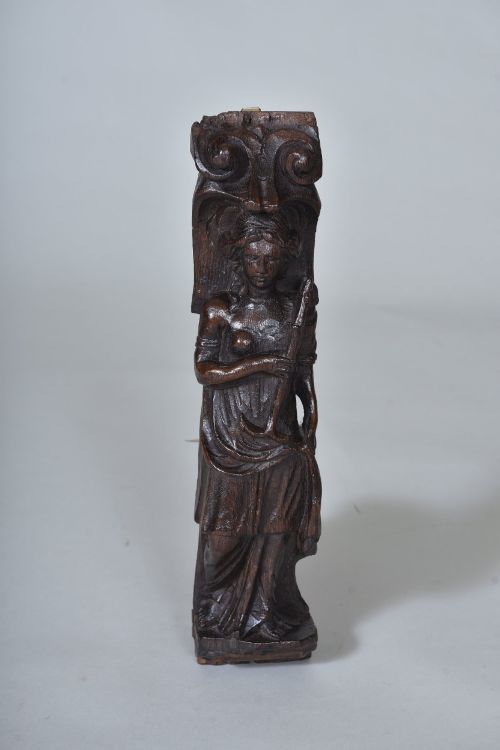
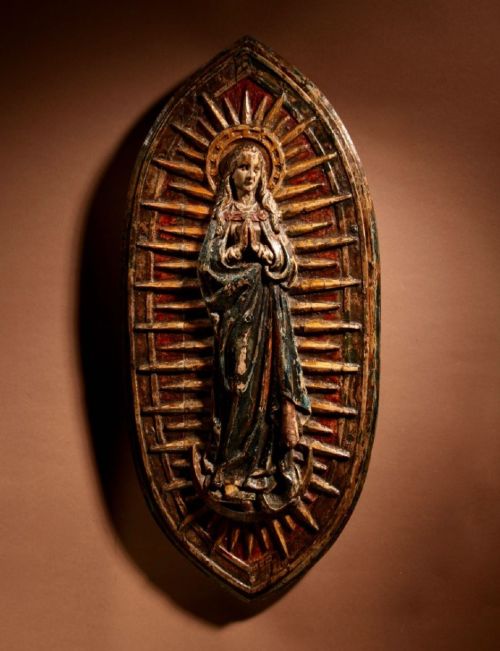
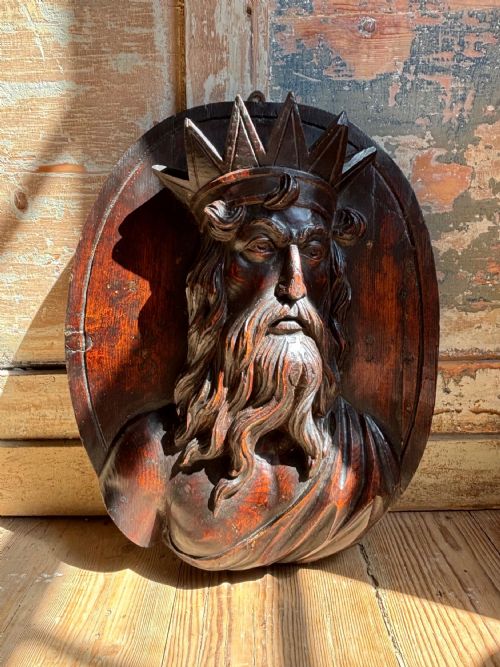
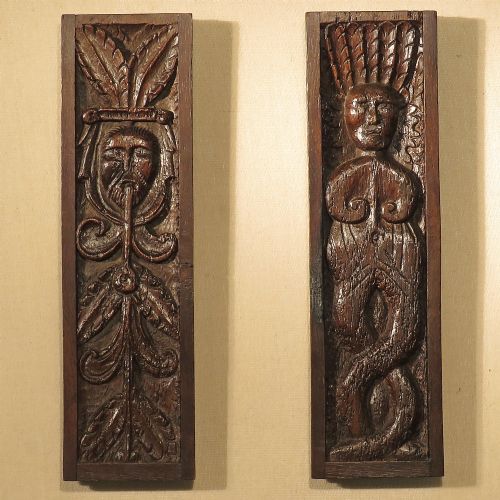
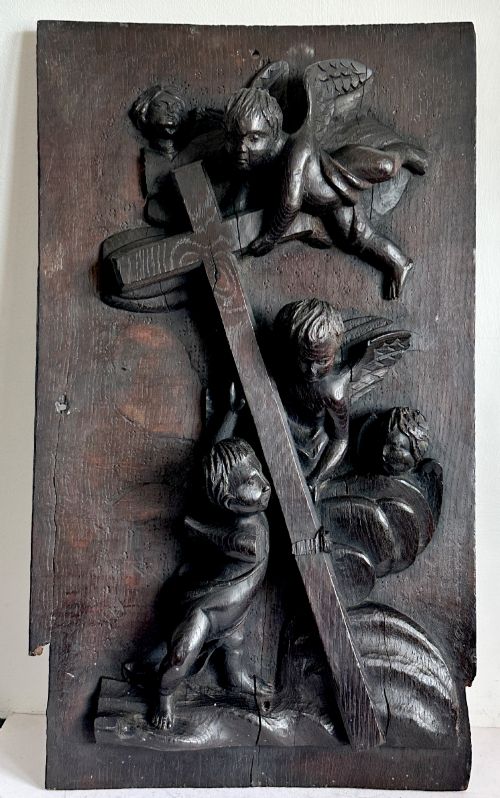
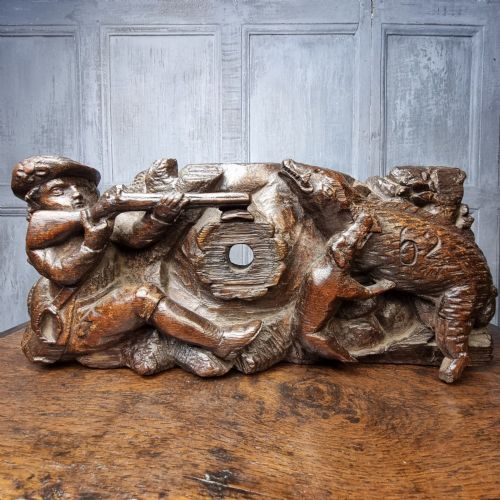
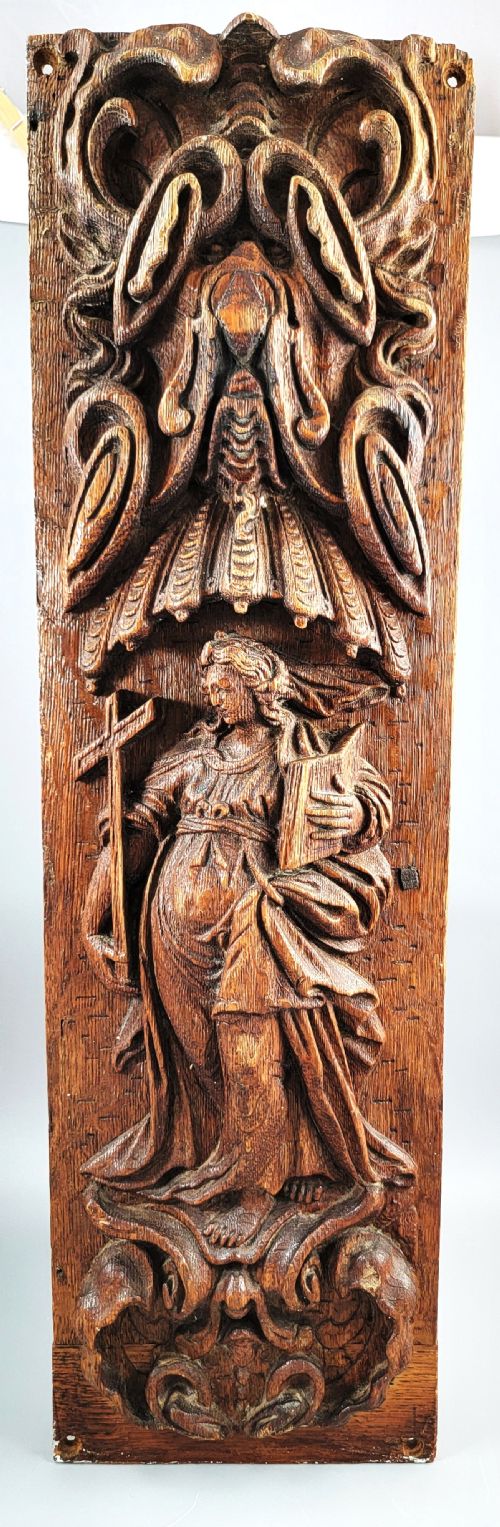
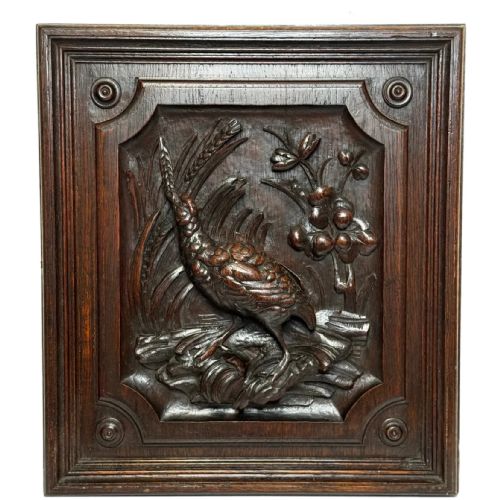
Dark oak relief sculpture encompasses wall panels, architectural salvage, and figural wood carvings spanning from the pre-sixteenth century through to the Victorian era. These works frequently depict religious subjects, allegorical figures, and mythological characters such as Neptune or the Green Man.
Buyers will encounter substantial architectural fragments alongside dedicated wall sculptures carved from heavy timber. Continental pieces, including Flemish and German works, sit alongside English examples from the seventeenth century and later periods.
The sculptural forms range from deep overdoor panels and ecclesiastical angels to compact plaques and corbels. Most pieces present the rich, dark tones associated with centuries of ageing timber.
How they were made
Craftsmen carved these works directly from solid timber, utilising oak as the primary medium alongside occasional applications of gesso and polychrome paint. The carvers employed chisels and gouges to build high and low relief scenes from single or joined boards.
Certain panels integrate bronze elements or decorative polychrome surfaces to enhance the visual depth of the carving. Master carvers shaped architectural salvage and structural elements into sculptural displays designed for prominent placement in interiors.
What varies in quality
The depth and ambition of the carving separate standard architectural remnants from masterworks attributed to notable carvers. Sharpness of detail in facial expressions, drapery, and anatomical forms indicates the skill of the original hand.
Condition and completeness also govern the hierarchy, with untouched seventeenth-century surfaces commanding greater appreciation than heavily restored Victorian interpretations. The integration of the sculptural subject within its original architectural context defines the distinction.
Edward Pearce
The Dark Oak Relief Sculpture Glossary
- Relief sculpture
- A sculptural technique where the figures project from a flat background surface. This approach defines wall panels and plaques designed for architectural display.
- Architectural salvage
- Building elements rescued from older structures and repurposed as decorative art. These pieces often retain structural profiles from earlier centuries.
- Polychrome
- The practice of decorating architectural wood carvings in a variety of colours. Traces of this finish survive on select ecclesiastical works.
- Corbel
- A structural piece of stone or timber projecting from a wall to support a weight. In sculpture, these often take the form of carved human or grotesque figures.
- Gesso
- A white paint mixture consisting of a binder mixed with chalk or gypsum. It provided a smooth base for gilding or polychrome decoration on wood.
Dark Oak Relief Sculpture: Frequently Asked Questions
How do I hang a heavy oak relief panel?
These substantial timber sculptures require robust wall fixings anchored directly into masonry or heavy studwork. Professional mirror plates or concealed French cleats provide secure support for the weight of the oak.
Ensure the hanging method distributes the load evenly across the structural frame of the panel to prevent strain on ancient joints.
How should I clean dark oak carvings?
Dust the surface gently with a dry, soft-bristled brush to remove accumulation from deep recesses and carved details. Avoid liquid cleaners, modern polishes, or excessive moisture which can damage aged timber and historic finishes.
Maintain stable indoor humidity levels to prevent the oak from drying out or splitting over time.
How can I tell a seventeenth-century panel from a Victorian copy?
Seventeenth-century panels display tool marks consistent with hand-riven timber and period chisels, alongside natural oxidation and shrinkage in the wood grain. Victorian revivals often utilise harder Tiger oak or machine assistance, showing different joinery methods and surface patination.
Comparing the style of the carving and the wear patterns helps clarify the period of origin.
What is a Green Man panel?
A Green Man panel depicts a human face surrounded by or entwined with leaves, vines, and foliage. This motif appears frequently in architectural wood carvings and ecclesiastical contexts.
The imagery bridges mediaeval Gothic traditions and Renaissance naturalism in European woodwork.