


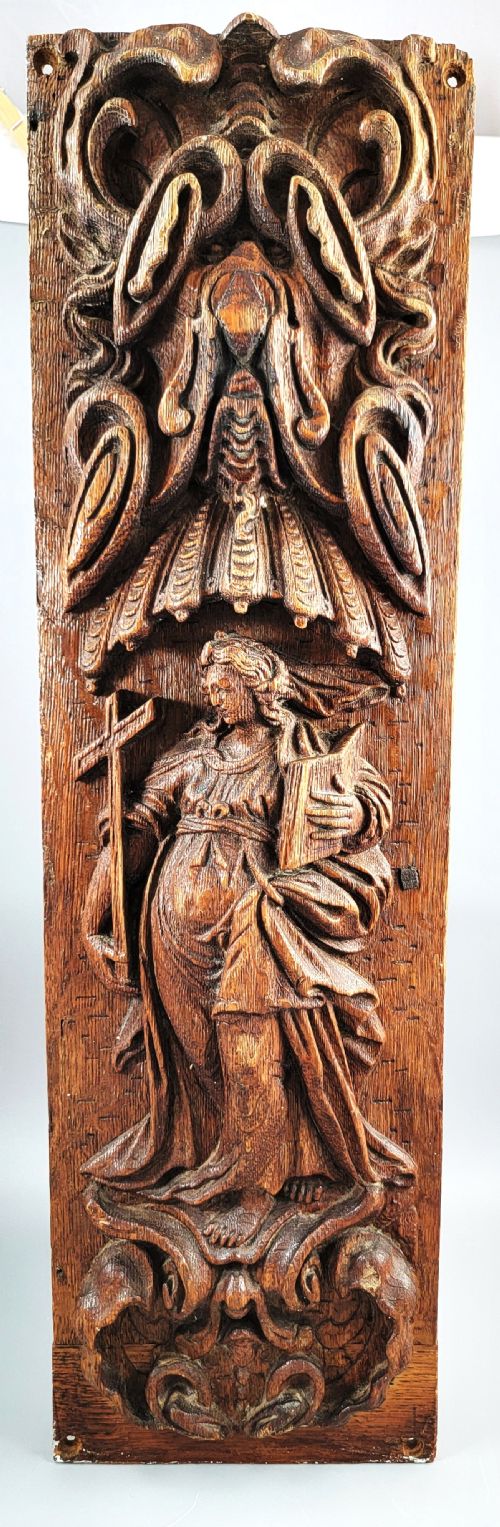


Flemish Wood Panel
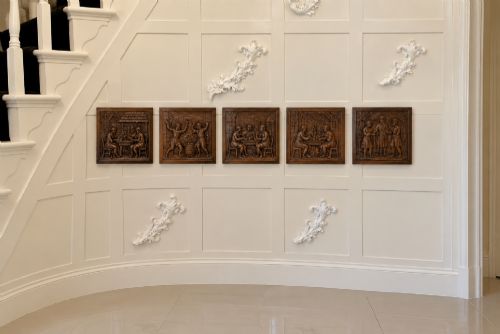
These flemish wood panel pieces bring deep relief carvings and rich oil paintings into a room, offering genuine historical weight for your walls and furniture.
Flemish Wood Panel
When you search for flemish wood panel, you encounter a distinct group of antique carved panels, furniture elements, and oil paintings that reflect centuries of craftsmanship. These items span from the sixteenth century through the Victorian era, capturing the shifting tastes of European design.
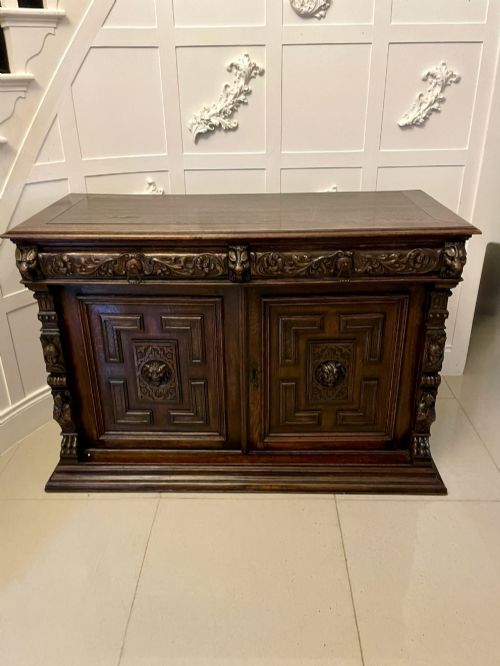
You are most likely to meet oak panels and sideboards alongside oil paintings on wood panels when browsing this selection. The range extends from architectural wall carvings and table cabinets to settles, benches, and hall chairs.
The aesthetic bridges several periods, taking in the Renaissance and Baroque eras as well as later revivals. Each piece carries the visual language of its origin, whether through deeply carved biblical or allegorical scenes or through painterly depictions of landscapes and interiors.
Materials and methods
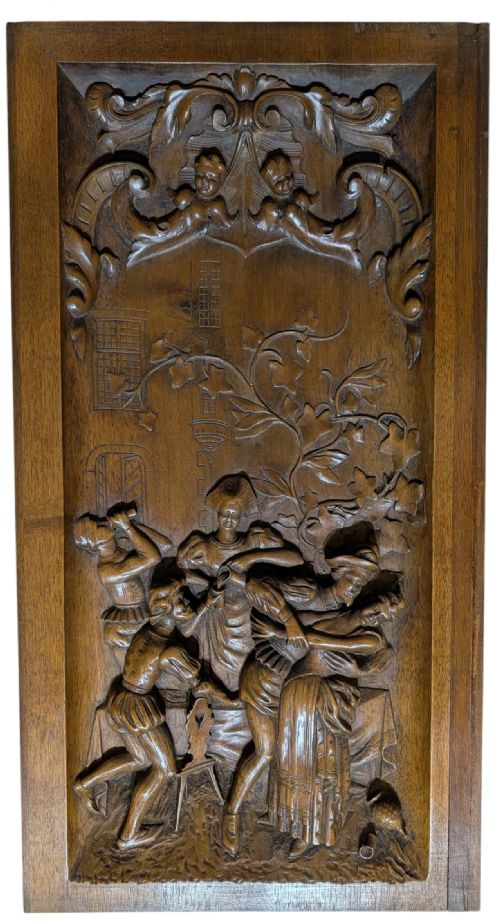
The physical character of these works relies fundamentally on oak as the primary timber, chosen for its durability and suitability for intricate carving. Craftsmen worked the wood to create high-relief scenes and structural components for sideboards, cabinets, and seating.
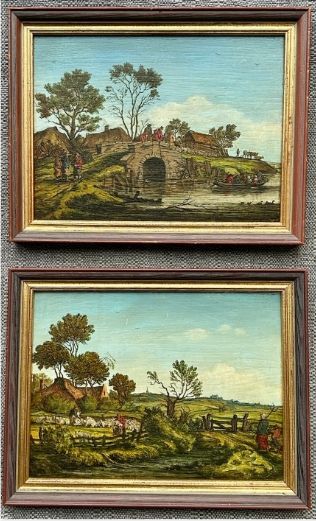
Paintings utilise wood panels as a stable ground for oil paint, often paired with solid wooden decorative gilt frames to complete the presentation. Additional materials such as brass, iron, and leather appear as hardware, structural reinforcement, or upholstery elements on furniture.
Gentlemen counting money and summer boat scenes appear among the archived paintings.
Assessing quality
The distinction between ordinary and exceptional pieces lies in the depth and vitality of the carving. Superior works display confident toolwork that gives figures and architectural details a convincing three-dimensional presence.
Proportion and the preservation of the original surface also define the upper tier. Pieces retaining their early patination and structural integrity command greater attention than those with compromised surfaces or later alterations.
W Klombeck
The Flemish Wood Panel Glossary
- Oak
- A hard, durable timber native to temperate regions and widely utilised for European furniture and architectural carvings throughout the early modern period. It accepts crisp chisel work and develops a deep patina over centuries.
- Baroque
- An artistic style spanning the seventeenth and early eighteenth centuries, characterised by dynamic movement, theatrical compositions, and exuberant ornamentation. In wood panels, this translates to dramatic relief carvings with strong contrasts of light and shadow.
- Relief carving
- A sculptural technique where figures or ornamentation project from a flat background surface. High relief brings the subject significantly forward, creating pronounced depth.
- Gilt wood frame
- A wooden structure coated with a thin layer of gold leaf or metallic gilt, designed to surround and elevate oil paintings. These frames often feature complementary carved decoration.
- Table cabinet
- A portable or desk-height cabinet intended for storing valuables, frequently featuring multiple internal drawers behind a decorated exterior door or fall front.
Flemish Wood Panel: Frequently Asked Questions
What are flemish wood panel pieces?
These items encompass antique carved architectural panels, furniture components like sideboards and cabinets, and oil paintings executed on wooden supports. They represent historical European artistry, particularly from seventeenth and eighteenth-century traditions.
Collectors prize them for their tactile surface textures and the narrative depth found in their carved or painted subjects.
How should I care for antique wood panels?
Keep wooden panels away from direct sunlight and sudden temperature fluctuations to prevent the timber from warping or splitting. Maintaining a stable indoor climate preserves both the wood and any applied oil paint.
Dust gently with a dry, soft cloth and avoid modern chemical polishes that can degrade historical finishes.
How do I distinguish between periods?
Earlier pieces from the sixteenth and seventeenth centuries generally feature bolder, deeper chisel work and distinct regional joinery methods. Later nineteenth-century revival items often mimic these historical styles while revealing different tool marks and wood preparation.
Examining the back of a panel often reveals the age of the timber and the methods used by the original carpenter.
Where were these pieces used originally?
Carved panels typically formed part of larger wall panelling schemes, choir stalls, or domestic furniture within wealthy European homes and civic buildings. Oil paintings on panels were created for private devotional use or interior decoration.
Today, they function as standalone wall art or integrated architectural accents in modern interiors.