




Flemish Oak Relief
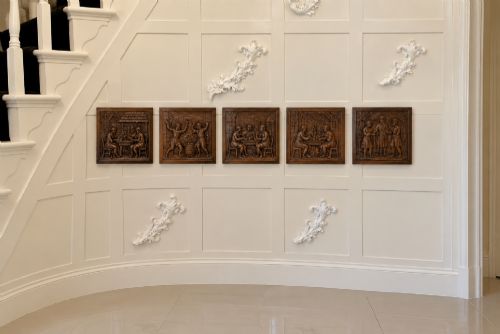
These pieces of flemish oak relief bring dense, figurative carving and solid timberwork into a room.
Flemish Oak Relief
When you search for flemish oak relief, you are looking at heavy architectural timber panels and case furniture carrying deep, figurative woodcarving. The origin stretches from sixteenth and seventeenth-century workshops through nineteenth-century revival interpretations.
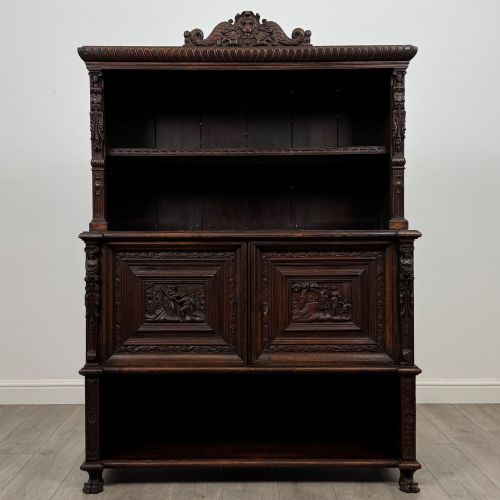
The objects on this page appear as standalone wall carvings, mounted panels, hall stands, and large cabinets or cupboards. Most examples belong to the nineteenth-century Victorian revival era alongside genuine seventeenth and sixteenth-century fragments.
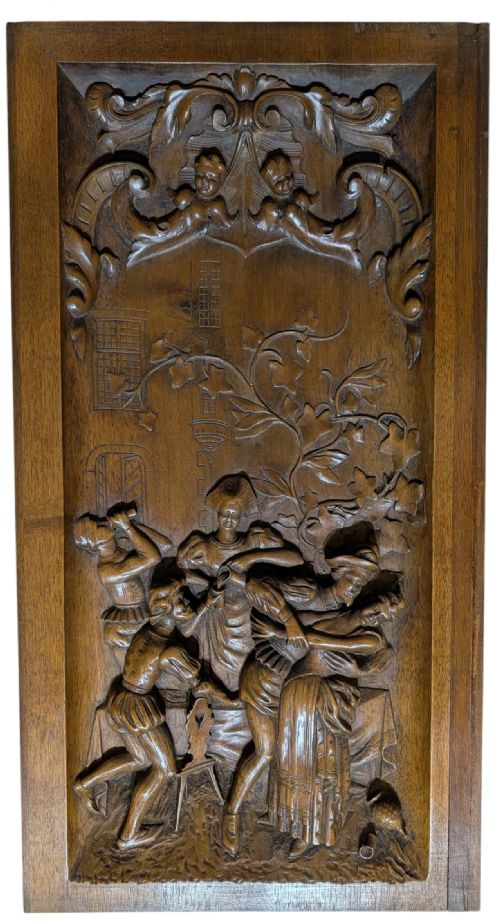
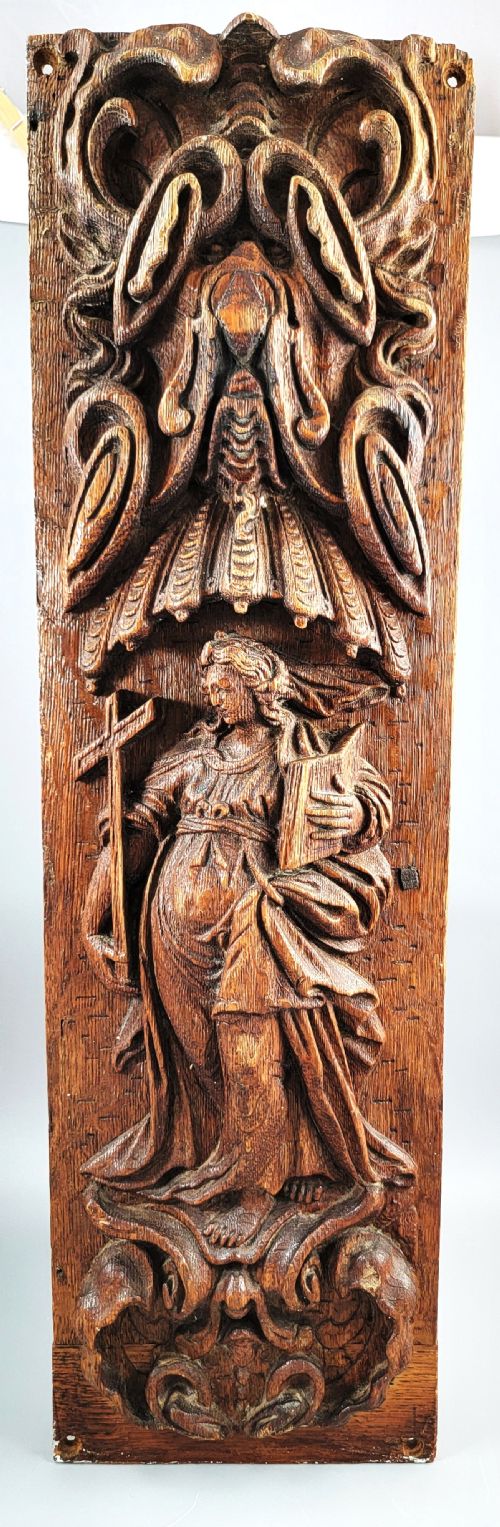
These works often depict allegorical subjects, classical figures, or biblical narratives carved in high relief. The timber surface displays the rich grain and darker patination characteristic of old oak.
How they were made
The makers relied on seasoned oak, carving the imagery directly into the thick planks with gouges and chisels to achieve strong depth. Iron and brass hardware or fixings frequently secure the structural joints and panels.
Surfaces were often left unpolished or treated with traditional oils and waxes to preserve the dark tone of the timber. Cabinets and wall carvings integrate pegged mortise and tenon joinery alongside applied mouldings.
Several panels proudly depict the Allegory of Faith, ensuring your hallway is watched over by a very resolute seventeenth-century virtue.
What varies in quality
The integrity of the structural timber and the retention of original seventeenth-century or Victorian hardware influence the overall character. Heavy cabinets depend on solid constructional timber that resists warping and supports massive carved doors.
The Flemish Oak Relief Glossary
- Relief
- Sculpture where the figures project from a flat background. This technique dominates the wall carvings and cabinet doors found in this category.
- Allegory
- A symbolic representation of abstract ideas through human figures or narratives. Pieces in this category frequently portray the Allegory of Faith.
- Revival
- The architectural or decorative style that imitates historical periods from earlier centuries. Victorian Renaissance Revival pieces draw directly upon sixteenth and seventeenth-century Flemish designs.
- Baroque
- The European artistic style characterised by dramatic movement and exuberant detail. High Baroque panels show deep undercutting and theatrical composition.
Flemish Oak Relief: Frequently Asked Questions
What is flemish oak relief?
It refers to carved wooden panels and furniture originating from Flanders or created in later revival styles. The subjects range from allegorical scenes to religious narratives.
The timber used is robust oak, shaped with deep figurative carving that projects significantly from the flat background.
How were these carvings used?
Many sixteenth and seventeenth-century panels functioned as architectural elements inset into larger wall panelling or furniture. Later Victorian pieces served as decorative wall art or structural parts of cabinets and hall stands.
They were designed to display status, learning, and piety within grand domestic interiors.
How do I date a piece?
Dating relies on examining the tool marks, timber shrinkage, construction joints, and stylistic markers such as Renaissance or Baroque motifs. Sixteenth and seventeenth-century items show authentic age patination and hand-pegged joinery.
Victorian revival pieces often copy these earlier styles but utilise nineteenth-century structural methods and hardware.
How do I clean carved oak?
Dust accumulates within the deep recesses of the relief carving and requires careful removal with a soft natural bristle brush. Avoid modern liquid cleaners or silicone polishes that damage the historic wax or oil finish.
Feed the dry timber occasionally with a traditional microcrystalline wax applied sparingly with a soft cloth.