

Dark Oak Hall Cupboard
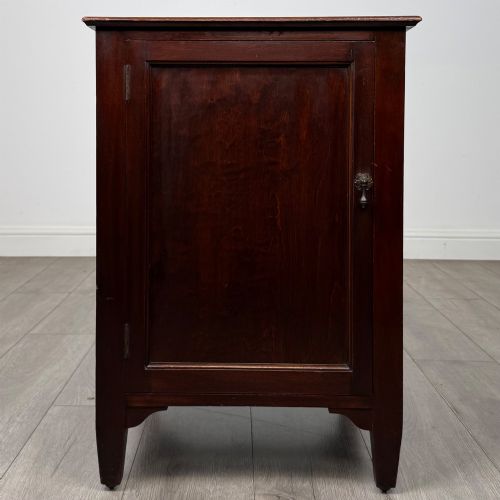
A dark oak hall cupboard brings robust timber and centuries of utility to an entranceway, storing coats and hats with quiet strength.
Dark Oak Hall Cupboard
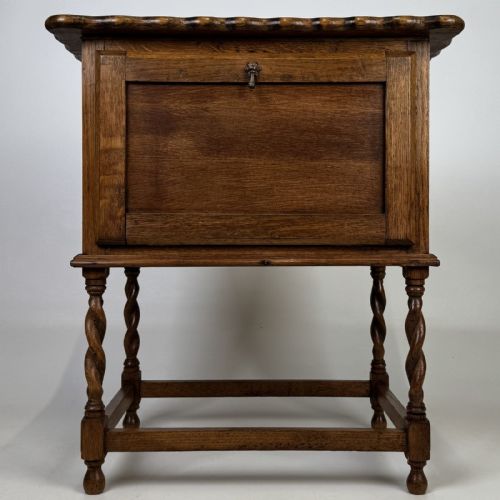
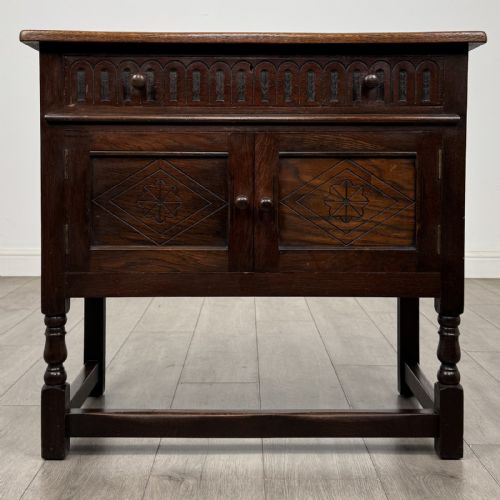
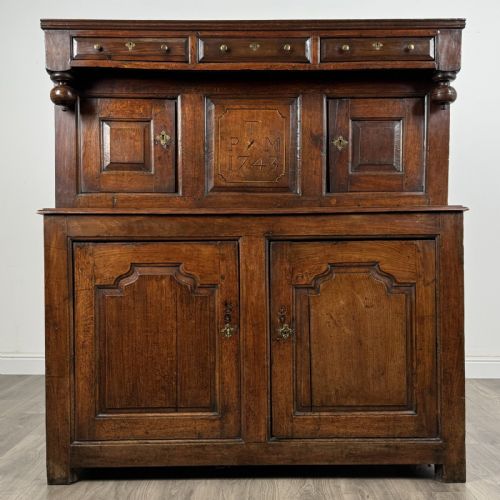
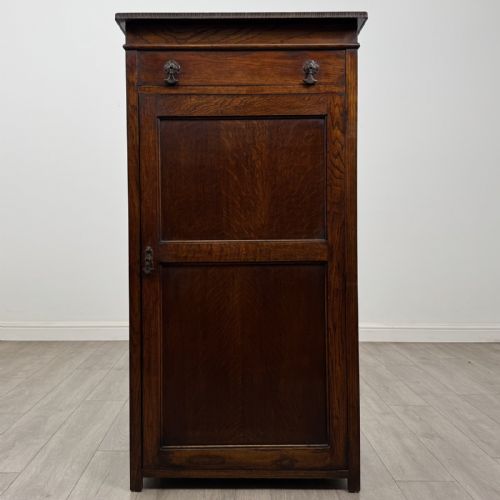
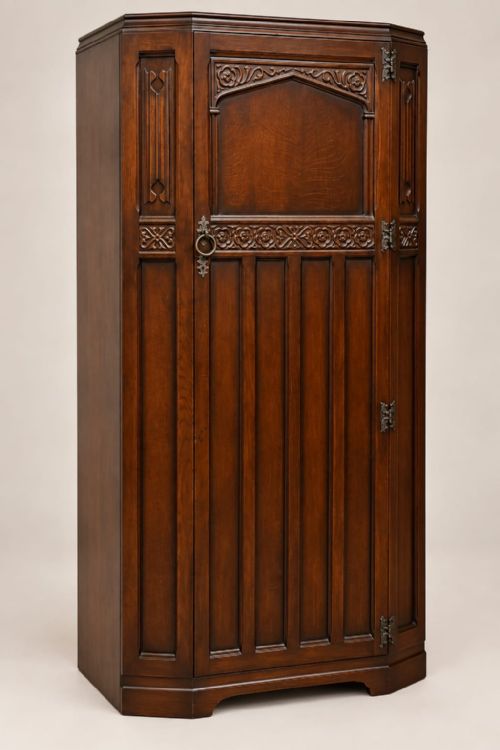
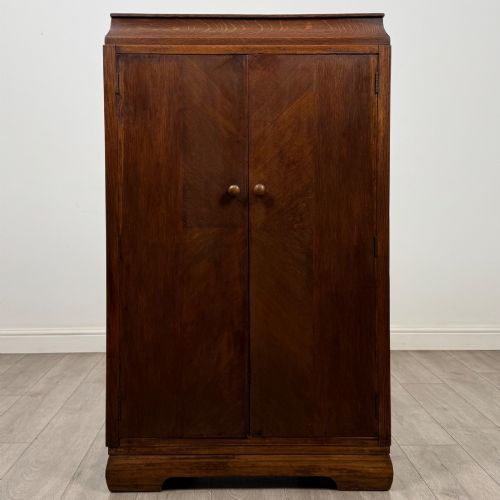
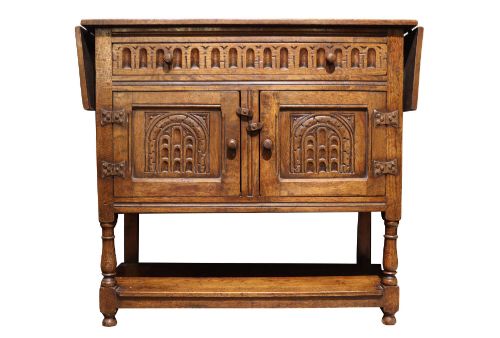
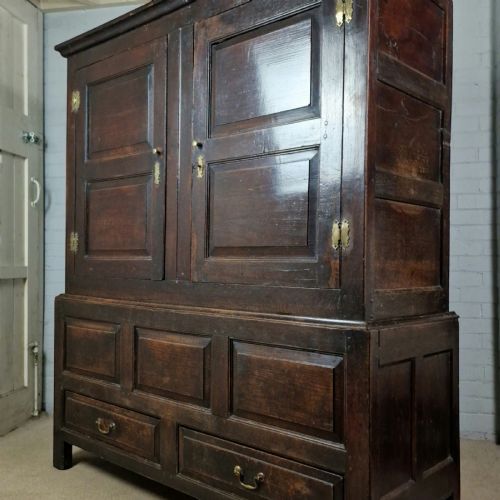
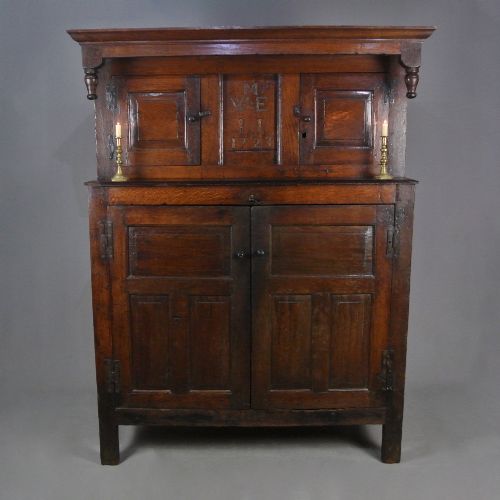
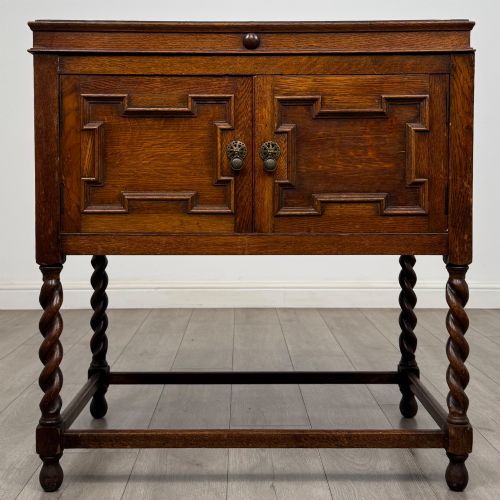
A dark oak hall cupboard serves as a substantial storage piece for hallways and reception rooms, frequently appearing in forms such as court cupboards, livery cupboards, and hall wardrobes. These sturdy pieces organise everyday garments and household items behind panelled wooden doors.
The selection ranges from early seventeenth-century constructions to twentieth-century revivals, reflecting shifts in domestic architecture. Edwardian and 1920s interpretations join earlier Georgian and Victorian examples to populate the available formats.
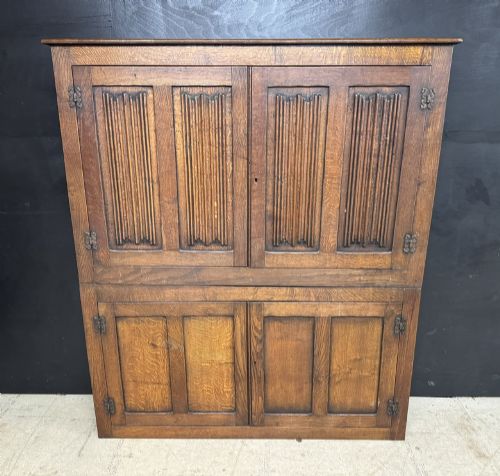
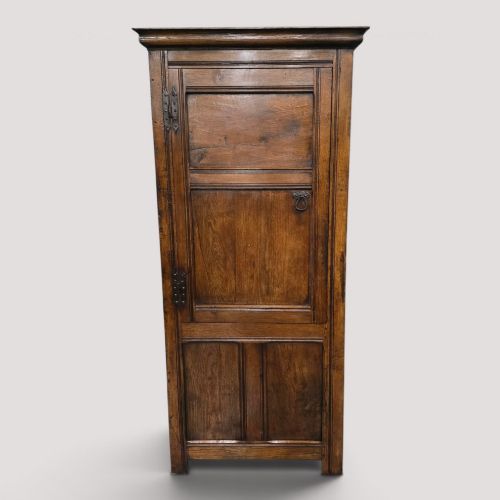
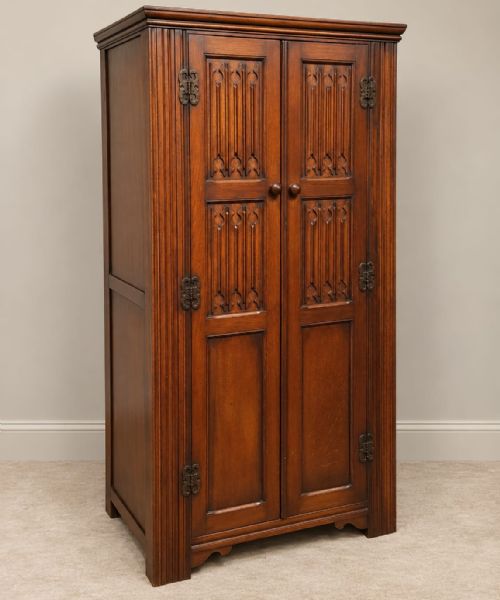
Construction relies heavily on solid timber framing, often incorporating elm or pine alongside primary oak elements. Certain variants utilise panelled doors with linenfold carving or heavy blacksmith-made iron and brass hardware to secure the interior.
Materials and construction methods
Joinery methods depend heavily on the period, with earlier pieces employing pegged mortise and tenon joints to secure solid oak planks. Later Edwardian and twentieth-century interpretations utilise machine-sawn boards alongside traditional framing techniques.
Iron and brass fittings complete the hardware, providing structural integrity through strap hinges and functional locks. Blacksmith-made metalwork frequently anchors the doors on eighteenth-century examples, while polished brass appears more commonly on later pieces.
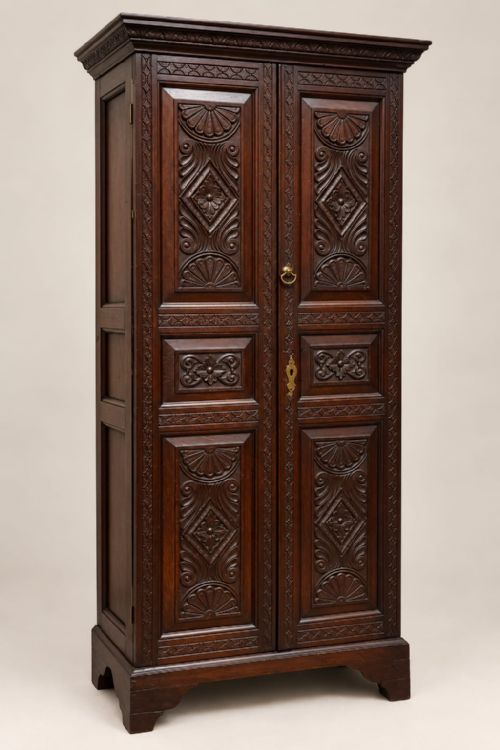
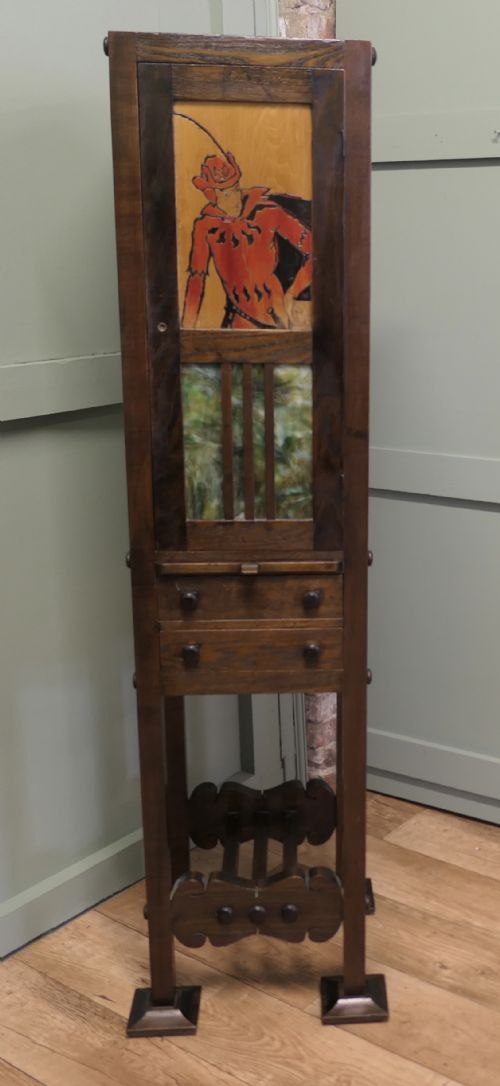
Surface finishes range from natural polished oak to stained wood and darker wax treatments applied to enhance the grain. Carved detailing, linenfold panels, and occasional marquetry inlay decorate the exterior surfaces of revival and period specimens.
The inventory records regional forms such as the Welsh deuddarn alongside traditional court cupboards and hanging hall robes.
Assessing quality and proportion
Proportion and scale dictate the visual weight of the piece in a narrow hallway, with smaller court cupboards and compact wardrobes offering practical alternatives to massive standing cupboards. Superior examples maintain balanced dimensions that complement domestic entryways without dominating the floor space.
The integrity of the timber and the crispness of any carved ornamentation reveal the maker's skill. Hand-carved panels, original iron hinges, and undisturbed timber patination elevate certain pieces well above standard utility furniture.
The Dark Oak Hall Cupboard Glossary
- Court cupboard
- A traditional two-tier enclosed piece of furniture used for storing provisions or displaying plate. These items often feature carved upper sections supported by bulbous columns.
- Livery cupboard
- An early storage cabinet designed to keep food, candles, or garments ventilated through pierced splays or turned spindles. They represent key predecessors to modern hall wardrobes.
- Linenfold
- A style of relief carving applied to wooden panels to imitate folded cloth. This motif appears frequently on Tudor revival and Edwardian cupboard doors.
- Deuddarn
- A traditional Welsh two-part cupboard featuring enclosed storage sections stacked vertically. These regional pieces utilise local oak and display distinctive vernacular proportions.
Dark Oak Hall Cupboard: Frequently Asked Questions
Where should I place a hall cupboard?
Position the piece in an entrance hall or large landing where there is sufficient clearance for the doors to open fully. These items handle coats, boots, and everyday clutter while anchoring the spatial layout of the room.
Ensure the timber is kept away from direct heat sources such as radiators to prevent the solid oak panels from drying out or splitting over time.
How do I clean dark oak furniture?
Dust the surfaces regularly with a soft, dry cloth to prevent grit accumulation in the carved recesses and panel grooves. Avoid silicone-based sprays that leave a film and attract dust.
Apply a traditional beeswax periodically to nourish the wood and maintain the deep sheen characteristic of older polished oak.
What is the difference between a court cupboard and a wardrobe?
A court cupboard typically incorporates recessed upper stages and shorter proportions designed for general storage or display. They originate from earlier centuries when domestic layouts required multi-functional containment.
A wardrobe provides taller vertical space specifically arranged for hanging garments, a format that became more prevalent during the Victorian and Edwardian periods.
How do I identify the period of an oak cupboard?
Examine the construction marks, hardware, and joinery style visible on the interior and back panels. Hand- forged iron hinges and pegged joints usually indicate earlier eighteenth-century or seventeenth-century craftsmanship.
Uniform machine-cut boards and lighter stained finishes point towards twentieth-century revival pieces produced during the Edwardian era or the nineteen-twenties.