




Jacobean Revival Hall Cupboard
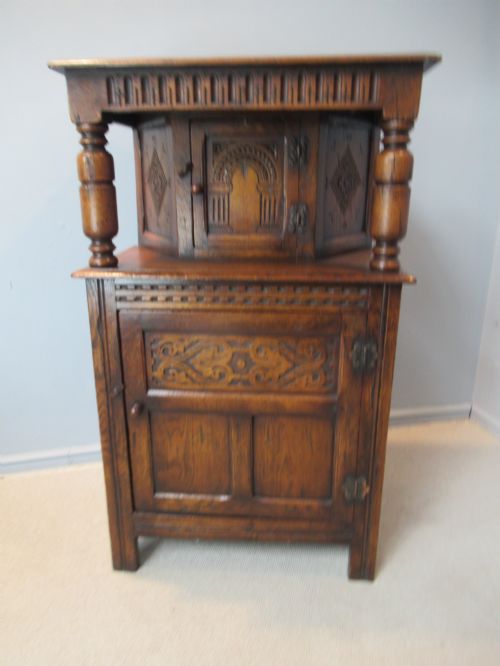
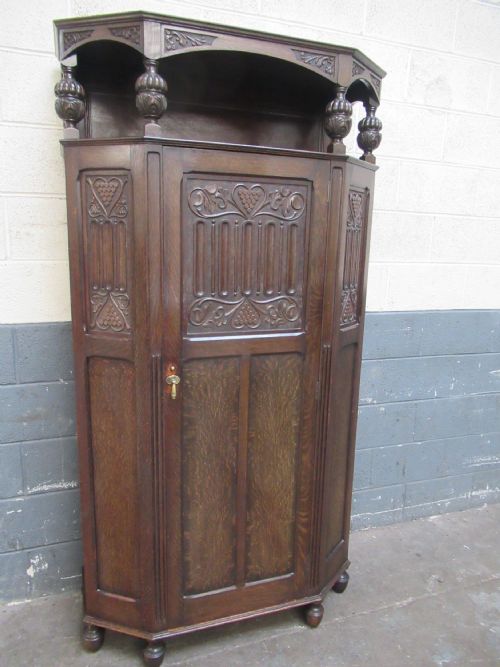
A jacobean revival hall cupboard brings heavy seventeenth-century style and dark timber into an entranceway, offering deep storage with carved panels and panelled doors.
Jacobean Revival Hall Cupboard
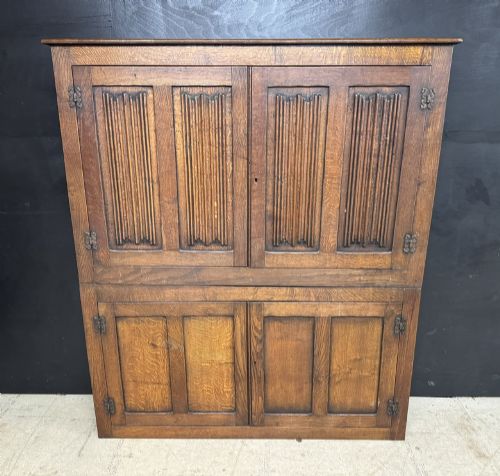
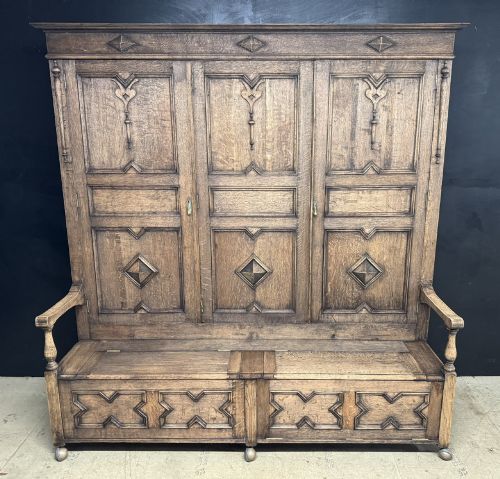
A jacobean revival hall cupboard stands as a heavy storage piece built to furnish entranceways and hallways with historic presence. You will most frequently meet Edwardian and 1920s examples constructed to echo earlier centuries through architectural mouldings and recessed panelling.
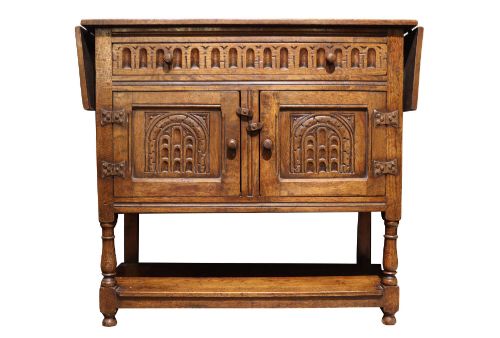
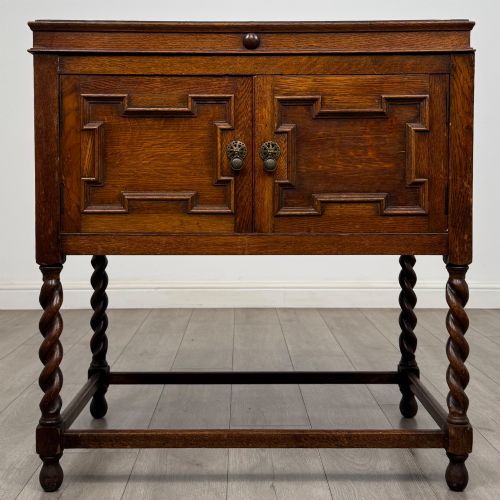
The forms span small side cabinets, court cupboards, sideboards, and larger hall wardrobes fitted with linenfold doors or stick stands. These pieces translate seventeenth-century motifs into practical hallway furniture suited for domestic storage.
Makers drew on Victorian and Edwardian revivals of Tudor and Gothic styles, producing dark oak furniture that anchors a room. The selection ranges from compact cabinets to tall wardrobes designed to hold coats and hats.
How they were made
Craftsmen built these pieces predominantly in solid oak, occasionally incorporating fruitwood marquetry inlay for decorative contrast. Timber selection focused on durable domestic woods capable of taking deep carving and dark polishing.
Hardware consists of brass and iron handles, hinges, and lock escutcheons that secure the heavy panelled doors. Carved details and linenfold motifs were worked directly into the timber by hand or with machine assistance during the nineteenth and twentieth centuries.
Materials recorded across the inventory include solid oak, fruitwood marquetry inlay, brass, and iron.
What varies in quality
Quality rests upon the crispness of the timber carving and the depth of the oak figure rather than simple age. Pieces featuring well-defined linenfold panels and integrated fruitwood marquetry inlay display superior cabinet-making ambition.
Proportion and scale dictate the success of the design, with smaller court cupboards and compact side cabinets demonstrating balanced joinery. The heft of the solid oak and the integration of original brass or iron hardware elevate certain examples above standard production.
The Jacobean Revival Hall Cupboard Glossary
- Court cupboard
- A short, two-tier sideboard or cabinet used for displaying plate and storing household items, often featuring carved upper sections.
- Linenfold
- A style of wood carving that imitates folded linen cloth, frequently used on the panels of cupboards and wardrobes from this period.
- Marquetry inlay
- Decorative patterns created by fitting contrasting wood veneers, such as fruitwood, into the primary oak surface.
- Stick, hat and glove stand
- A hallway furniture piece combining compartments for accessories with racks for walking sticks and umbrellas.
Jacobean Revival Hall Cupboard: Frequently Asked Questions
Where do I put a jacobean revival hall cupboard?
These pieces suit entrance halls and corridors where their depth provides substantial storage for outdoor wear without dominating main reception rooms.
Their dark timber and architectural carvings work best against neutral walls in spaces with adequate natural light.
How do I care for solid oak hall furniture?
Maintain the dark wood surface by dusting regularly with a dry cloth and applying occasional beeswax to nourish the grain.
Avoid placing these heavy cabinets near direct heat sources that might cause the solid oak to split or warp.
Are these cupboards original seventeenth-century pieces?
The pieces seen here date from the nineteenth and early twentieth centuries, spanning the Victorian, Edwardian, and 1920s revival periods.
They replicate earlier seventeenth-century Jacobean aesthetics using later manufacturing methods and machinery.