
Dark Oak Geometric Chest
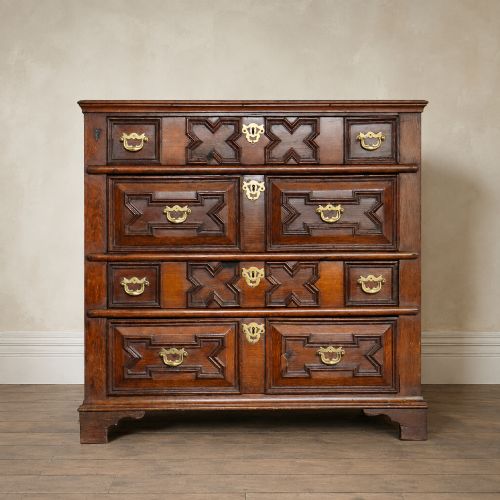
A dark oak geometric chest brings the heavy timber and striking panel work of the seventeenth century directly into a modern room.
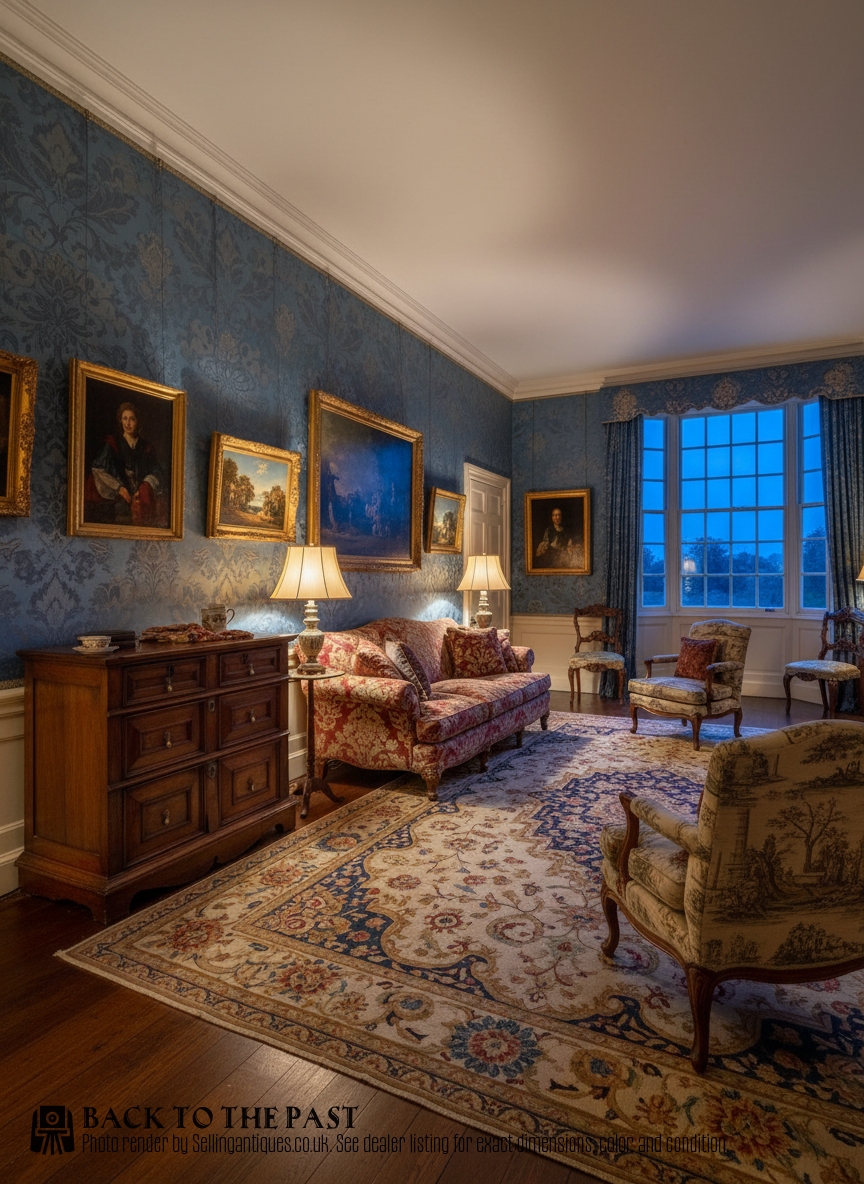
Dark Oak Geometric Chest
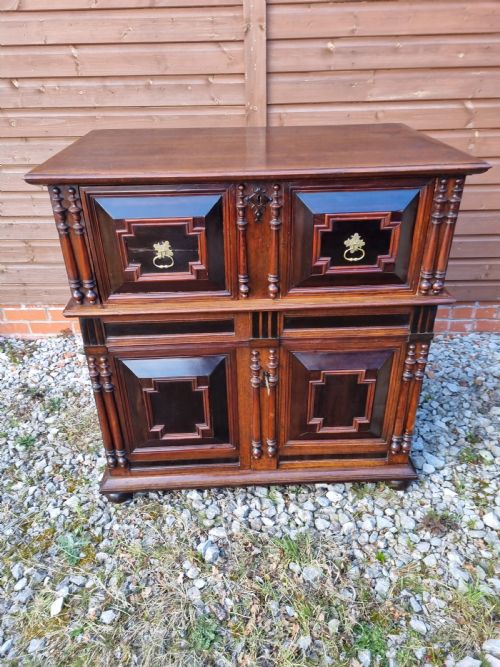
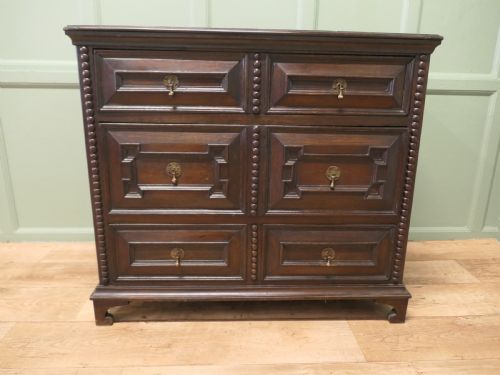
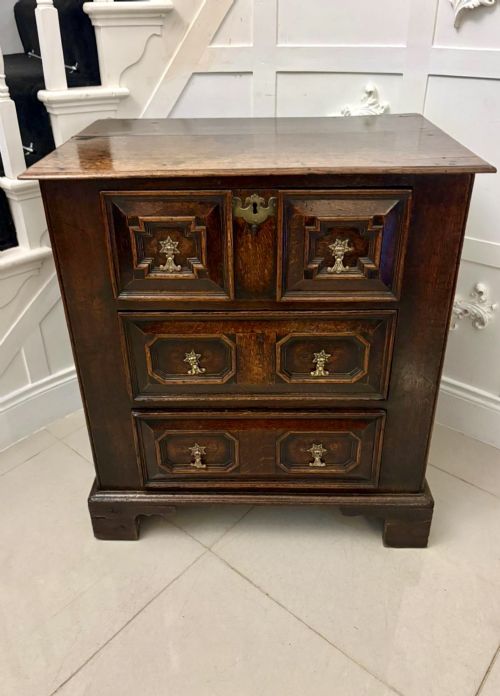
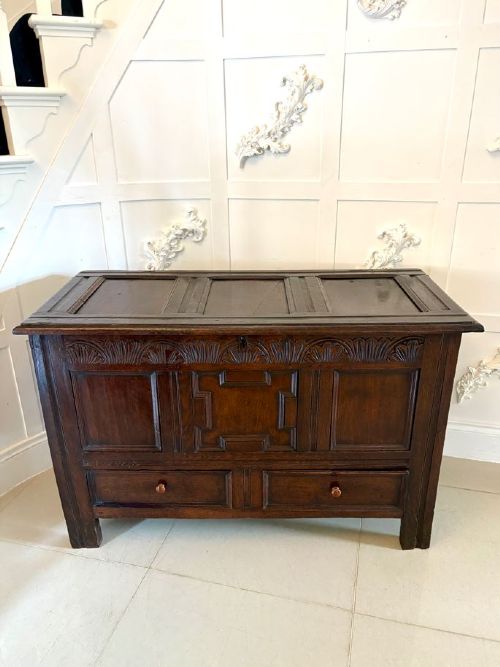
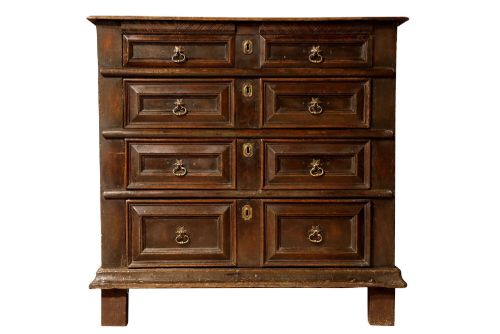
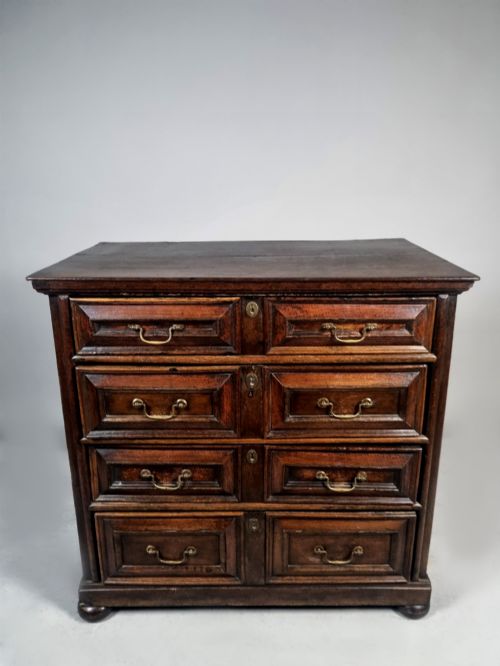
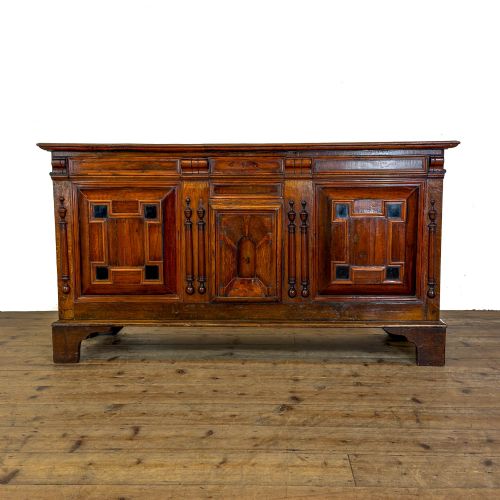
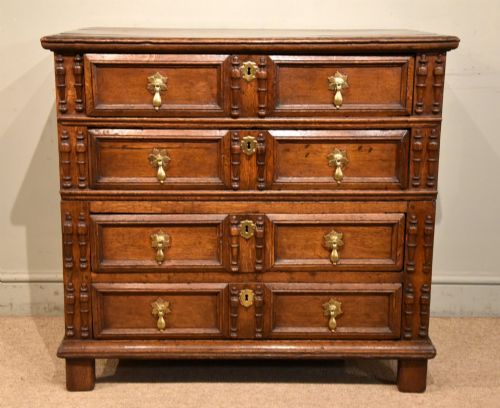
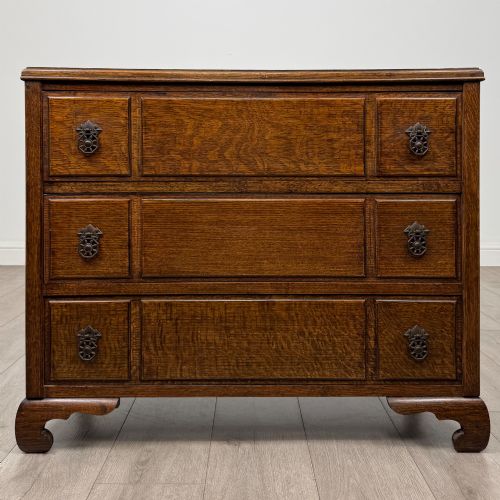
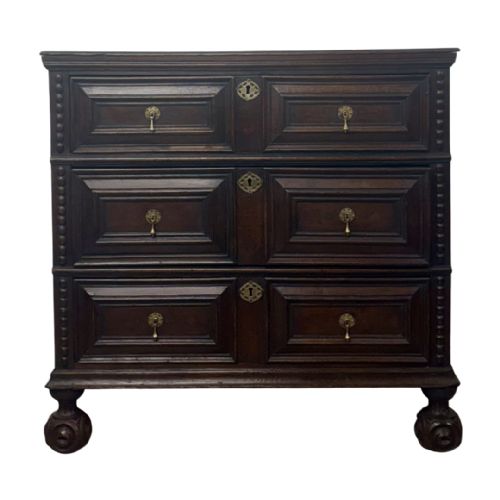
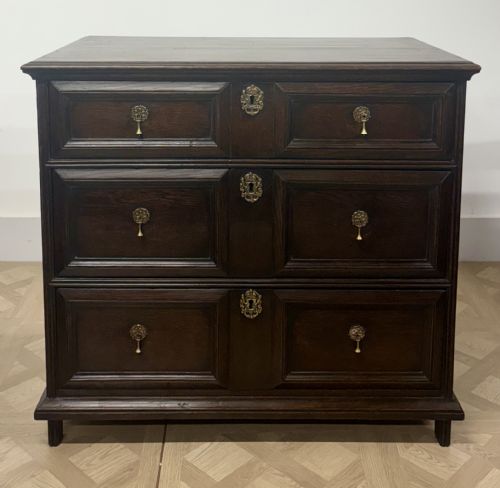
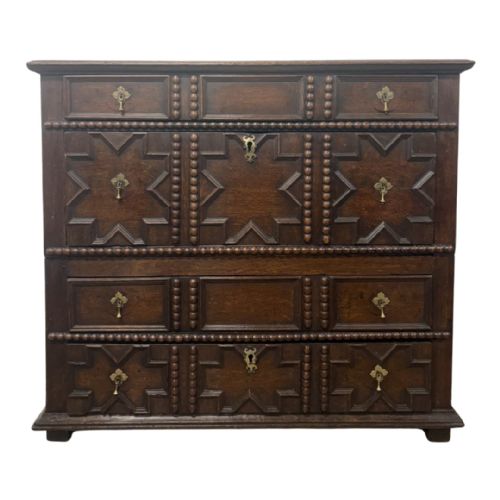
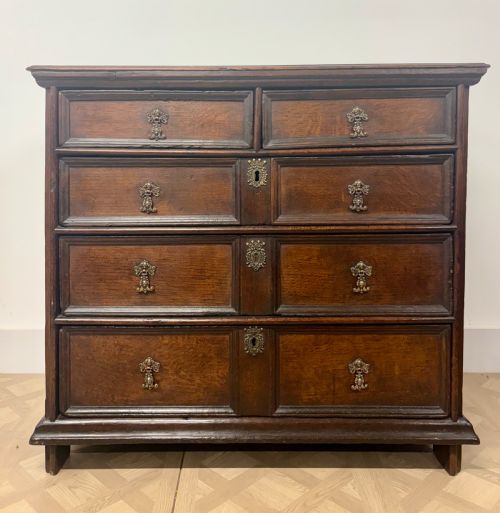
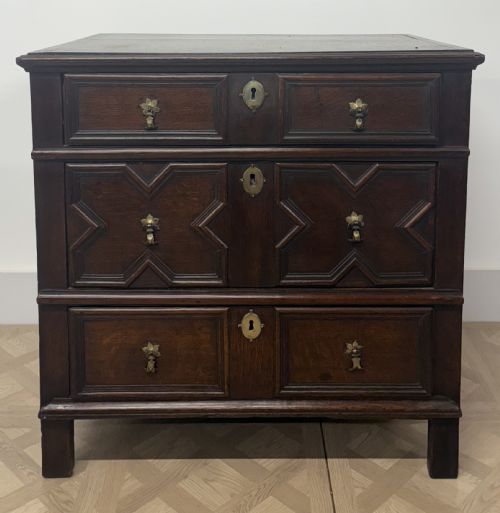
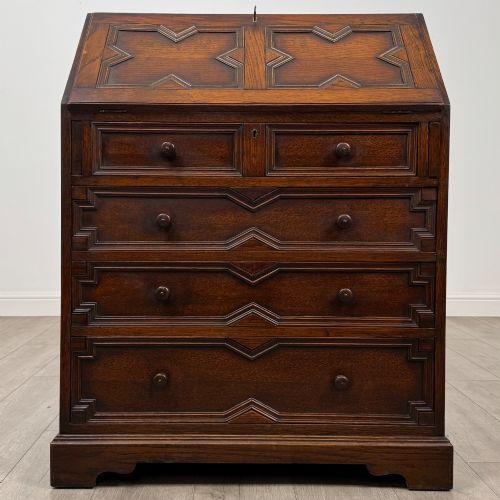
A dark oak geometric chest is defined by its deep carcass work and applied rectilinear or mitred mouldings on the drawer fronts. These pieces most frequently emerge from the seventeenth century, spanning the Jacobean, Charles II, and William and Mary periods. The examples met on this page range from small two-part chests of drawers to safes and dressers.
Makers of the period built these items primarily for domestic storage, utilising robust timber frames that survive centuries of use. The typical format presents three or four graduating drawers adorned with raised geometric panels in contrasting wood tones. Buyers encounter both authentic seventeenth-century survivals and later revival pieces dating into the twentieth century.
Materials and construction methods
Carpenters constructed the primary carcasses using solid local oak, occasionally incorporating walnut, fruitwood, and ebonised wood to accentuate the geometric designs. Drawer fronts display applied mouldings arranged in intersecting polygons, rectangles, and octagons. Craftsmen secured these complex decorative elements using animal glues and wooden pins.
Hardware played an essential structural role, with forged iron and brass drop handles, escutcheons, and complex steel locks fitted to secure valuables. Secondary timbers inside the drawers often show hand-riven markings from pit saws. Surfaces received wax or oil finishes that darkened over generations, creating a deep patina.
The listings feature oak, walnut, fruitwood, and ebonised wood across periods from the seventeenth century through to the nineteen-thirties.
Factors determining quality
Quality rests upon the crispness of the applied mouldings and the harmonious integration of contrasting timbers such as walnut and oak. Pieces that retain their original brass drop handles and complex steel locks command greater interest. The integrity of the carcass joinery dictates how well the structure withstands atmospheric changes.
The depth of the surface patina and the minimal replacement of original timber distinguish finer examples from heavily restored counterparts. Survivals featuring two-part construction or integrated stands demonstrate superior cabinet-making ambition from the period. Simpler coffer forms rely entirely on the proportion of their carved panels for visual impact.
The Dark Oak Geometric Chest Glossary
- Geometric moulding
- Raised wooden strips applied to drawer fronts in rectilinear or polygonal patterns. This technique defined seventeenth-century decorative taste.
- Oyster veneering
- Cross-grain slices of small branches laid in intricate patterns across a surface. It appears on select high-status pieces.
- Carcass
- The main structural body or frame of a chest of drawers. It provides the foundation for all drawers and exterior mouldings.
- Escutcheon
- A protective metal plate surrounding a keyhole. These fittings are frequently fashioned from brass or iron.
- Patina
- The surface sheen and darkening developed by wood over centuries of handling and exposure to light. It serves as an indicator of age.
Dark Oak Geometric Chest: Frequently Asked Questions
Where should I place this chest at home?
These chests suit hallways, living rooms, or bedrooms where their dark timber tones anchor the surrounding decor. Their robust proportions make them practical surfaces for lamps or ceramics while offering deep interior storage.
Keep them away from direct heat sources and strong sunlight to protect the aged oak and delicate veneer work from drying out.
Are these chests suitable for daily use?
Sturdy oak construction allows these chests to function reliably for storing clothes, linens, or household items. Drawer runners benefit from occasional waxing to ensure smooth movement.
Care should be taken not to overload the older drawer bottoms, which were designed for lighter textiles rather than dense modern objects.
What is a two-part chest?
A two-part chest consists of an upper and a lower cabinet stacked together to form a tall storage unit. This construction method made heavy furniture easier to transport within seventeenth-century homes.
The separation point usually sits discreetly behind the waist mouldings, supported by robust internal framing.