
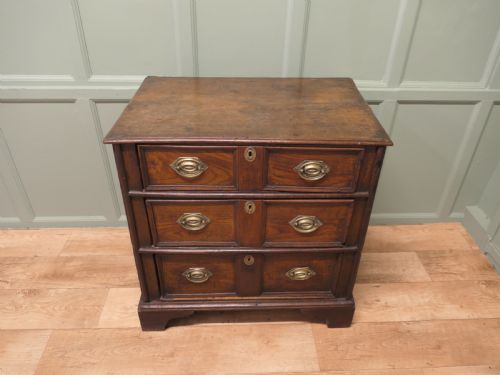
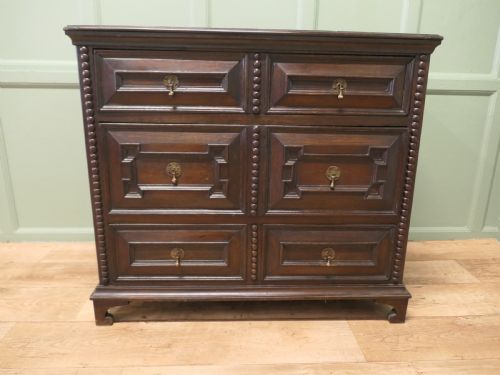
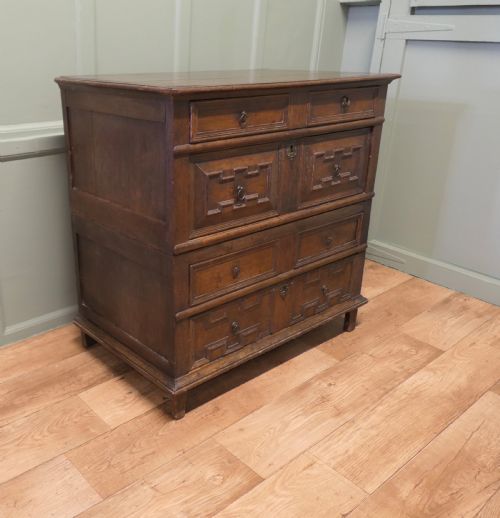
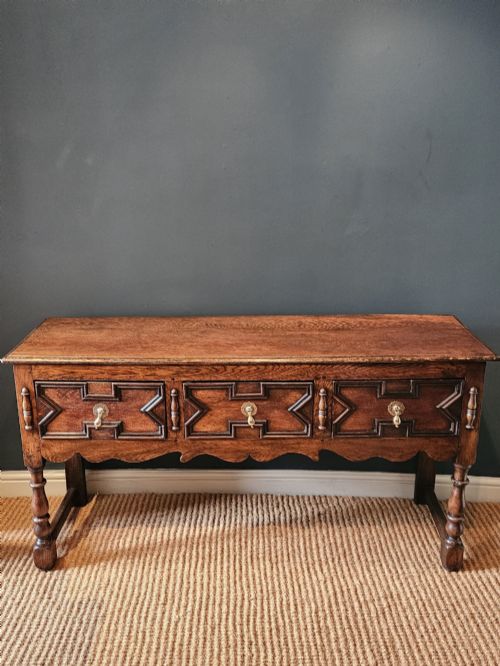
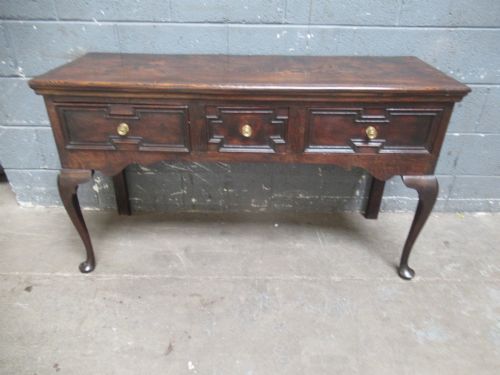


Georgian Moulded Oak Drawers
Georgian moulded oak drawers bring honest country timber and crisp architectural detail into a room.
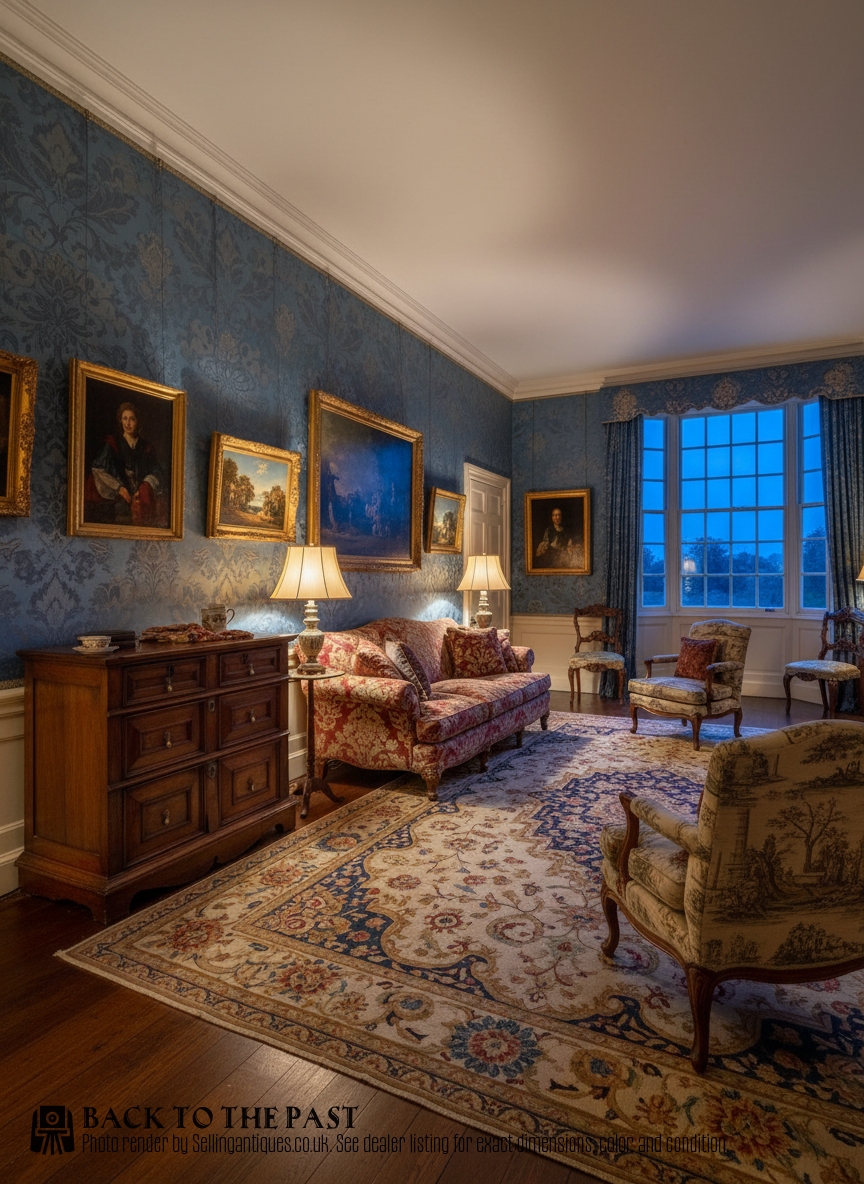
Georgian Moulded Oak Drawers
Georgian moulded oak drawers are sturdy case pieces built primarily from English timber during the eighteenth century and associated periods. Buyers searching this phrase look for chest of drawers and dresser forms displaying geometric or panelled mouldings on the drawer fronts.
The pieces on this page span the Georgian era alongside revival interpretations from the nineteenth century and around nineteen hundred. They range from simple chests to complex dressers and chests on stand incorporating walnut elements.
How they were made
Carpenters constructed these items using solid oak boards for the main carcase and drawer linings, occasionally combining walnut for decorative effect. They shaped the timber by hand, applying geometric and panelled mouldings directly to the drawer fronts.
Hardware such as brass handles and iron fittings completed the functional design of the drawers and dressers. Joinery techniques relied on traditional framing and panelling rather than modern adhesives.
Early carpenters occasionally hid secret compartments behind decorative mouldings to guard family savings.
What varies in quality
Quality rests on the depth of the timber's grain and the crispness of the hand-carved mouldings. Pieces featuring distinct geometric patterns or superior early brass work stand apart from simpler vernacular examples.
Age and untouched surface patination separate the authentic eighteenth-century examples from later nineteenth-century revivals and pieces dated around nineteen hundred. Original construction integrity dictates the standing of each individual chest or dresser.
The Georgian Moulded Oak Drawers Glossary
- Chest of Drawers
- A solid storage furniture form consisting of multiple stacked drawers within a wooden carcase. This is the primary shape found in eighteenth-century oak furniture.
- Geometric Moulding
- Raised wooden profiles applied in repeating angular patterns to drawer fronts. This detail defines the aesthetic of early Georgian and Jacobean styles.
- Dresser
- A dual-purpose piece combining base drawers or cupboards with a serving surface. Examples here include geometric moulded oak variants.
- Chest on Stand
- A tall drawer section elevated upon a separate supporting frame. This form lifts the storage space off the floor.
- Patina
- The surface sheen and colour developed by aged wood through handling and time. It signals genuine antique character.
Georgian Moulded Oak Drawers: Frequently Asked Questions
What defines georgian moulded oak drawers?
These pieces are storage furniture built from solid oak during the eighteenth century and later revival periods. They use hand-worked timber and applied architectural mouldings.
The search phrase encompasses chests of drawers, dressers, and chests on stand featuring distinct geometric or panelled fronts.
How do I date a oak chest?
Dating relies on examining the construction methods, timber choice, and specific moulding profiles found on the piece. Eighteenth-century examples differ visibly from nineteenth-century revivals.
Hardware placement and secondary woods also provide clues to the period of manufacture.
Were these used in bedrooms?
Georgian oak chests served multiple utilitarian roles throughout houses, including bedrooms and main living spaces. They provided secure storage for garments and household goods.
Larger dressers functioned in kitchens and dining areas for storing tableware alongside dry goods.
How should I care for antique oak?
Keep antique oak furniture away from direct heat sources and dramatic humidity fluctuations to prevent wood splitting. Regular dusting with a dry cloth maintains the surface.
Avoid modern silicone polishes that can damage the historical patina built up over centuries.