
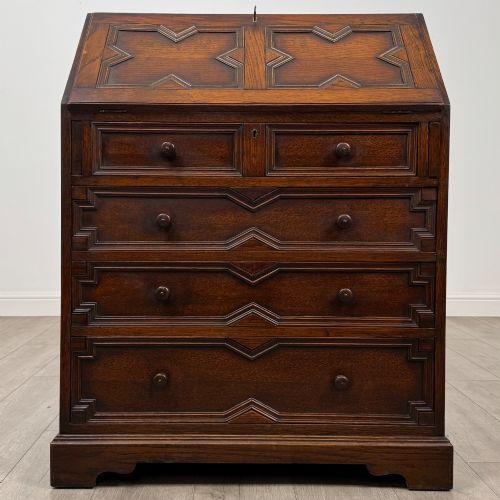
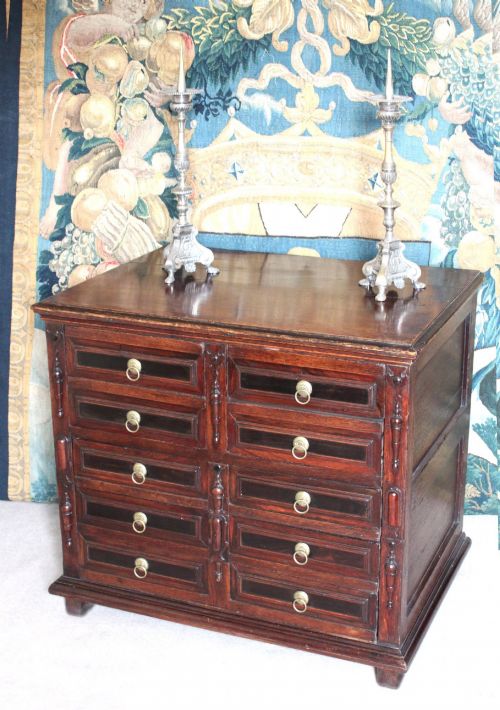
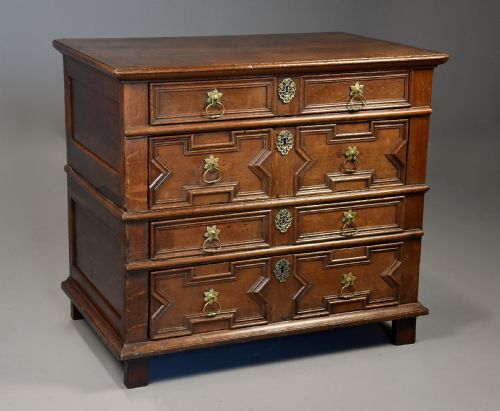
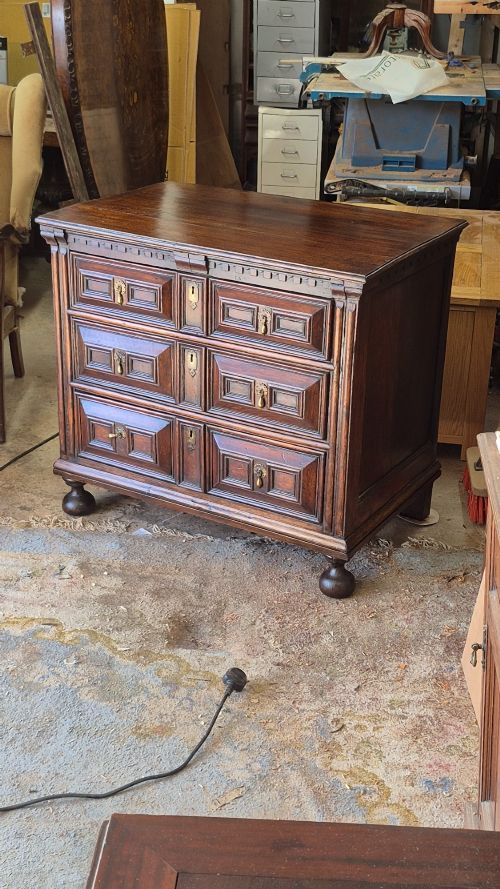

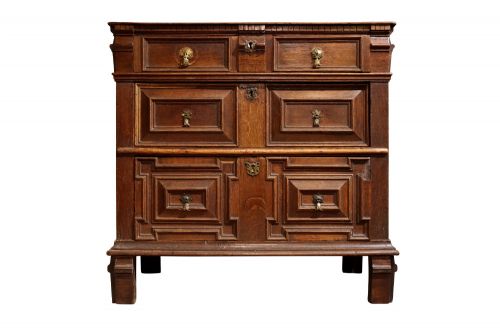


Oak Geometric Front Chest
An oak geometric front chest offers striking relief-carved facades and deep period character, making it a robust focal point for any traditional interior.
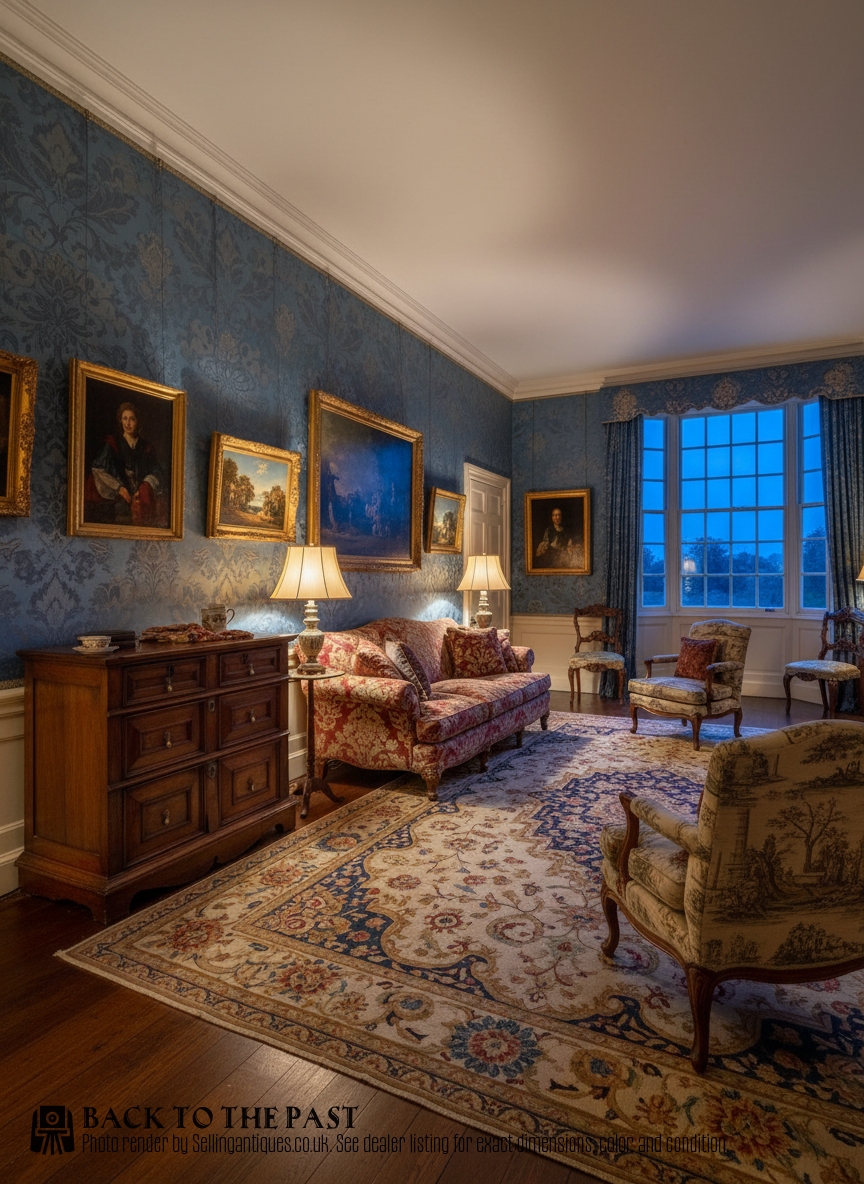
Oak Geometric Front Chest
An oak geometric front chest presents robust storage constructed primarily during the seventeenth and eighteenth centuries, alongside later Edwardian and nineteen-twenties revivals. These pieces feature distinct relief mouldings arranged in patterns across the drawers, defining the aesthetic of the period.
The chests of drawers and bureaux on this page originate predominantly from the seventeenth century and the Stuart era, alongside Charles II and William and Mary reigns. Buyers frequently encounter moulded fronts alongside rarer bureau and desk configurations.
Jacobean styles and Jacobean Revival pieces form a significant portion of the selection, showing how later makers emulated seventeenth-century joinery techniques. These forms offer substantial timber construction designed for practical daily use.
Materials and Construction
Makers utilised solid oak for the primary carcass and drawer construction, complemented by contrasting timbers such as fruitwood and snakewood for decorative embellishments. Wood inlay and geometric mouldings add texture and visual depth to the facade.
Hardware consists of brass and iron handles, hinges and escutcheons that secure the drawers and doors. Joinery relied on pegged frames and heavy panel construction to ensure structural stability over centuries.
Secondary timbers recorded in these pieces include exotic snakewood and fruitwood, used alongside native oak for decorative contrast.
Factors of Quality
Quality rests in the crispness of the geometric mouldings and the retention of original surface patination. Pieces that maintain their early brass hardware and unblemished secondary timbers stand apart from heavily restored examples.
The complexity of the timber decoration, particularly the integration of contrasting fruitwood or snakewood elements within the oak framework, indicates the original maker's skill and ambition.
The Oak Geometric Front Chest Glossary
- Geometric front
- A drawer facade decorated with applied mouldings in rectilinear, lozenge or panel patterns. This technique creates strong shadows and architectural depth.
- Patina
- The surface sheen and colour developed by timber through age, handling and light exposure over centuries. A faded patina shows natural wear.
- Bureau
- A desk form featuring a sloping flap that opens to reveal a writing surface and small interior compartments above drawers. Some examples incorporate geometric mouldings.
- Snakewood
- A dense tropical timber utilised for contrasting decorative details and inlay work on period furniture. Its mottled grain mimics snakeskin.
Oak Geometric Front Chest: Frequently Asked Questions
How do I date an oak geometric front chest?
Dating relies on examining the construction methods, timber species and joinery style. Seventeenth-century examples often display hand-split oak panels and pegged frames.
Later Edwardian or nineteen-twenties revival pieces utilise machine-cut elements and different internal secondary woods, despite copying early styles.
Were these chests used solely in bedrooms?
Period inventories show these pieces functioned across various rooms for storing textiles, valuables and household documents. Bureaux also served administrative duties in studies and public rooms.
Their robust construction made them suitable for high-traffic areas of the home.
How do I care for antique oak furniture?
Maintain stable room humidity and protect the timber from direct sunlight and heat sources to prevent splitting. Regular dusting with a soft cloth preserves the dry wax finish.
Avoid modern silicone polishes that penetrate the grain and alter the historic surface.
What is the difference between Jacobean and William and Mary styles?
Jacobean furniture generally exhibits heavier proportions, strapwork and pronounced geometric mouldings. William and Mary pieces often introduce lighter turning and more refined veneering techniques.
Both styles utilise oak as a primary structural timber.