
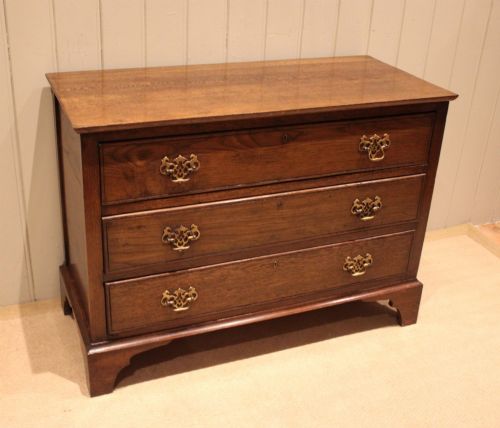
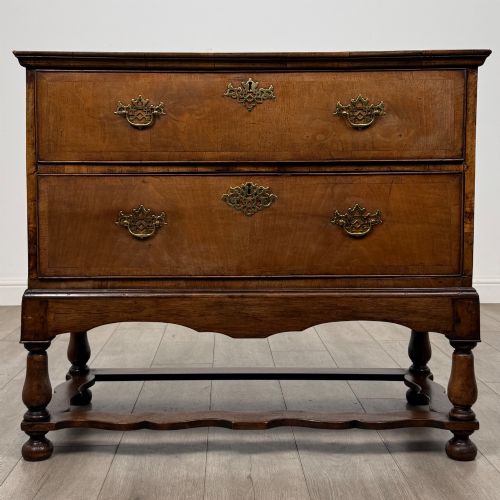
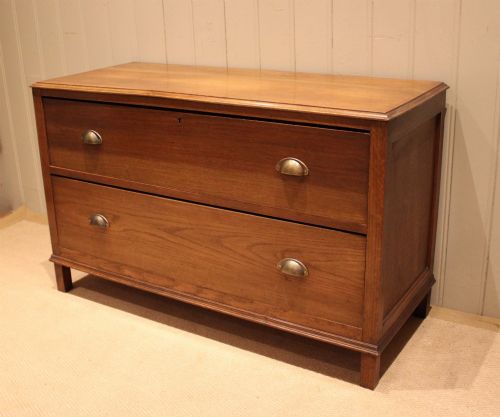
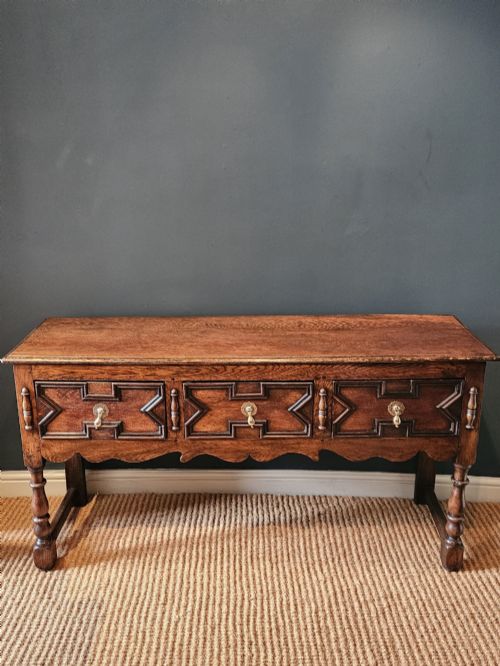
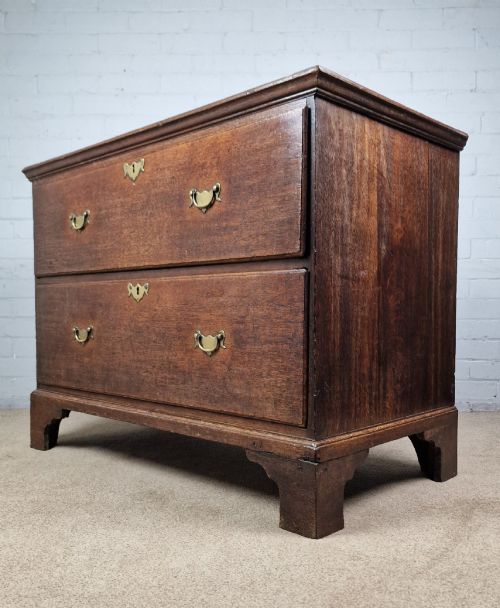
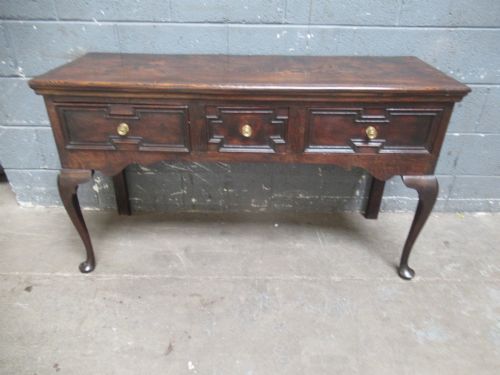


Oak Lowboy Chest
An oak lowboy chest offers practical storage and compact proportions, uniting traditional craftsmanship with versatile domestic utility.
Oak Lowboy Chest
An oak lowboy chest combines the compact footprint of a side table with the drawer storage of a small chest. Pieces carrying this description span multiple periods from the seventeenth century through to the twentieth century, reflecting enduring domestic utility.
Buyers will encounter distinct stylistic influences including Georgian, Jacobean, William and Mary, and George I designs. Most pieces utilise sturdy timber construction, though occasional variations introduce mahogany, walnut, or cherrywood alongside the primary oak.
Construction and Materials
Makers built these pieces primarily using solid timber frameworks, with oak forming the foundation across seventeenth, eighteenth, and nineteenth-century examples. Additional structural and decorative elements incorporate walnut, mahogany, and cherrywood timbers.
Metal components such as brass handles and hardware appear on drawer fronts, complementing the wooden construction. Surface detailing ranges from simple geometric mouldings to inlaid panels, depending on the specific period and regional workshop style.
Listings span the seventeenth, eighteenth, and nineteenth centuries, alongside Edwardian and twentieth-century revivals in oak, mahogany, walnut, and cherrywood.
Judging Quality and Character
The distinction between standard domestic items and finer pieces rests in the crispness of the mouldings, the selection of timber grain, and the integrity of the original construction. Early seventeenth and eighteenth-century examples often display hand-cut joinery and period-appropriate brass hardware that elevate the piece.
Later revivals from the Edwardian era and the twentieth century vary according to how closely the maker adhered to traditional proportions and timber selection. Patina accumulated through age contributes significantly to the visual depth of earlier examples.
The Oak Lowboy Chest Glossary
- Lowboy
- A small table with drawers, typically used as a dressing table or side table. These pieces usually stand on four legs and feature one or more tiers of drawers beneath the surface.
- Bachelors chest
- A compact chest of drawers featuring a fold-over top or a slide used for writing. This form became popular during the Georgian period.
- Dresser base
- The lower section of a traditional kitchen or dining room dresser, featuring cupboards and drawers beneath a flat top. They often serve as sideboards in modern settings.
- Geometric moulding
- Raised wooden profiling applied to drawer fronts or panels in geometrical patterns. This technique is particularly characteristic of seventeenth-century joinery.
- Jacobean style
- Design aesthetic spanning the late sixteenth and seventeenth centuries, characterised by heavy proportions, dark oak timber, and geometric panel decoration.
Oak Lowboy Chest: Frequently Asked Questions
What is an oak lowboy?
An oak lowboy is a small table equipped with one or more rows of drawers, traditionally used for personal grooming or as a side table in living spaces. Its compact height distinguishes it from a full-sized tall chest of drawers.
These pieces combine surface display space with concealed storage, making them adaptable for use in hallways, bedrooms, or reception rooms.
How do I date an oak chest?
Dating relies on observing construction methods, timber characteristics, and stylistic details such as mouldings and hardware. Earlier pieces from the seventeenth and eighteenth centuries often display hand-sawn boards and pegged joinery.
Later nineteenth-century and Edwardian revivals typically incorporate machine-cut elements and standardised fixings while imitating earlier Georgian or Jacobean aesthetics.
Where were lowboys placed historically?
Historically, lowboys served primarily in bedrooms as dressing tables for holding toiletries, wigs, and personal accessories. They also functioned as convenient side tables in reception rooms for writing or holding small objects.
Today, their modest proportions allow them to fit easily into smaller rooms, serving as hallway consoles or bedroom storage units.
What timber was used besides oak?
While oak forms the primary material for the majority of these pieces, makers also utilised alternative hardwoods such as mahogany, walnut, and cherrywood. Chestnut occasionally appears in internal drawer construction or secondary framing.
Brass hardware commonly accompanies these timbers, providing contrast on drawer fronts across various periods from the seventeenth century onward.