




Jacobean Low Dresser
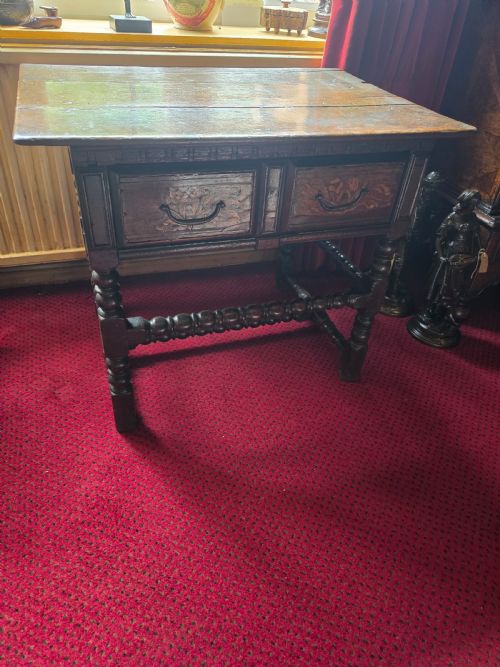
These jacobean low dresser pieces offer heavy oak construction and low-slung proportions, providing enduring utility for any hallway or dining room.
Jacobean Low Dresser
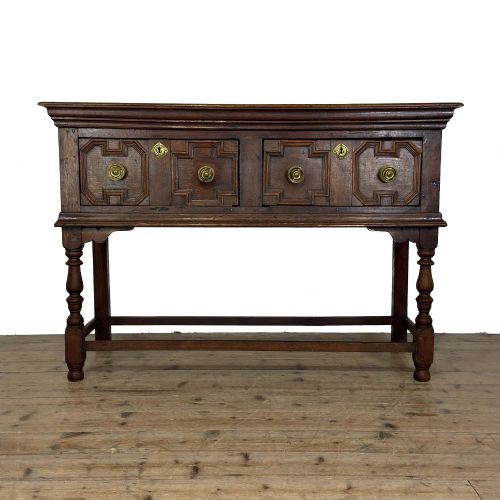
A jacobean low dresser is a heavy timber serving piece typically found in oak, designed with low proportions and generous drawer space for household storage. Buyers seeking this form encounter examples ranging from authentic late seventeenth century originals to nineteenth century revival interpretations.
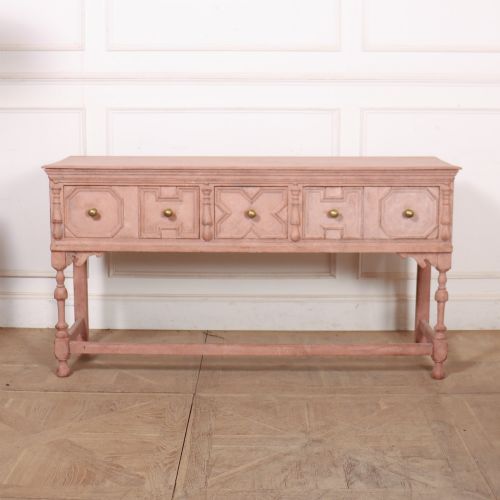
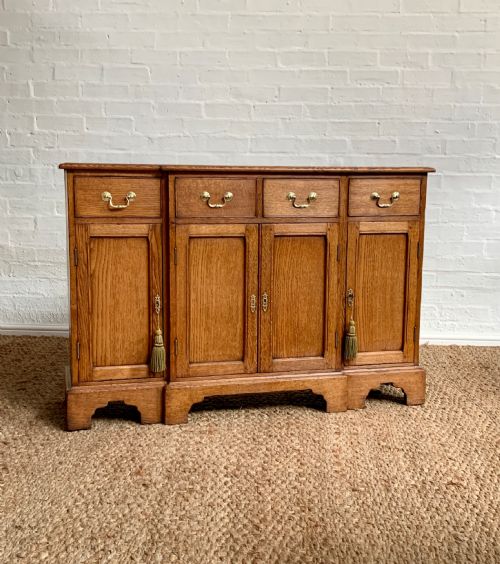
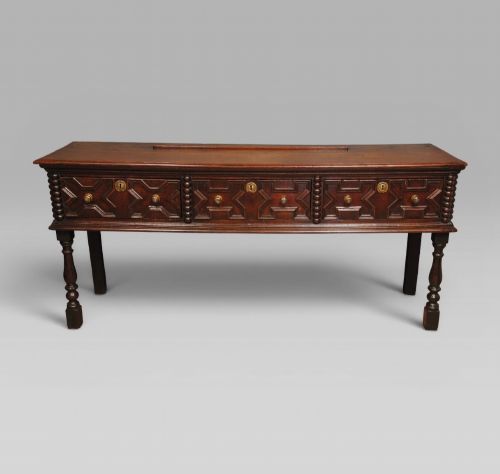
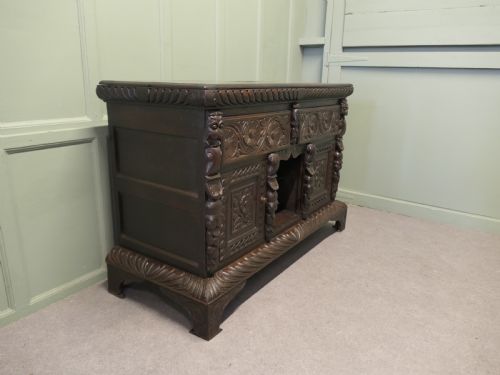
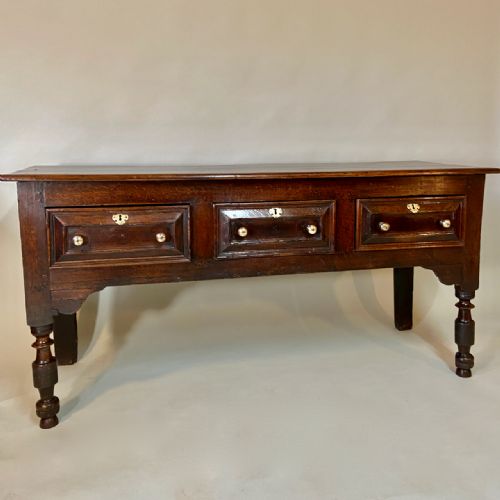
The inventory on this page includes dresser bases, sideboards, servers, and side tables that share the low profile and robust timber construction characteristic of the form. Many examples originate from the seventeenth century, while others date from the nineteenth century in revival styles.
Forms span from simple two drawer side tables to elaborately moulded server units, all retaining the characteristic low stance of a dresser base. Buyers will find pieces utilising traditional oak, occasionally enhanced with paint or wood inlay.
How they were made
Makers constructed these pieces primarily from solid oak, utilising durable timber that withstands centuries of daily use and domestic service. Iron and brass hardware such as drawer pulls and hinges secured the structural elements.
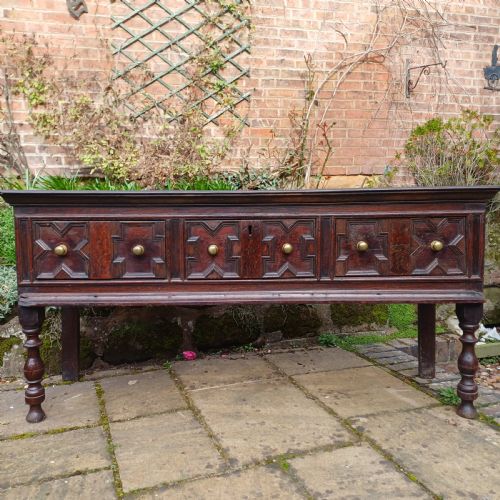
Decoration relies on carpentry techniques rather than applied ornamentation, featuring geometrically moulded drawer fronts and occasional wood inlay work. Some nineteenth century pieces display painted surfaces or carved details like the green man motif.
What varies in quality
Quality separates through the integrity of the timber and the depth of the cabinetwork, particularly in the execution of geometrically moulded drawer fronts and joints. Original seventeenth century examples demonstrate the competency of period joinery compared to later nineteenth century revival pieces.
The choice of materials also dictates standing, with select golden oak and intricate wood inlay elevating certain server and side table forms above plain painted surfaces.
The Jacobean Low Dresser Glossary
- Dresser base
- A low wooden storage unit featuring drawers and sometimes a surface for serving, lacking the upper plate rack of a tall dresser.
- Geometrically moulded
- Drawer fronts decorated with raised geometric patterns created by applied mouldings fixed to the wood.
- Revival
- A later artistic style that imitates the aesthetic and construction methods of an earlier historical period, such as the nineteenth century interpretation of seventeenth century furniture.
- Server
- A low sideboard or table utilised for presenting food and storing dining accessories within a dining room.
- Inlay
- A decorative technique where pieces of contrasting wood are inserted into recessions within the primary timber surface.
Jacobean Low Dresser: Frequently Asked Questions
What is a jacobean low dresser?
A jacobean low dresser is a sturdy wooden storage unit featuring a low profile, drawers, and a flat top surface. These pieces served historically for food preparation and storage in domestic settings.
Today they function effectively as sideboards or serving tables in dining rooms and hallways. Their solid oak construction ensures they remain practical items for daily use.
How do I date a low dresser?
Dating these pieces involves examining the timber grain, tool marks, and construction joints used in the drawers and frame. Seventeenth century examples show period hand craftsmanship.
Nineteenth century revival pieces often exhibit different tooling methods and standardised proportions. Comparing the specific moulding details helps establish the period of manufacture.
Where should I place a low dresser?
These pieces suit dining rooms, hallways, or living spaces where surface area and low storage are required. Their compact height allows them to sit beneath windows or art.
Ensure the room has adequate space for the deep proportions and opening drawers. Pairing them with traditional interiors highlights their timber grain and historical forms.
What materials are used?
Solid oak forms the primary material for these dressers, providing exceptional weight and durability. Additional elements include brass handles, iron fittings, and occasional wood inlay.
Some nineteenth century interpretations feature painted finishes or carved details. The dominant timber remains oak across both period originals and revival pieces.