



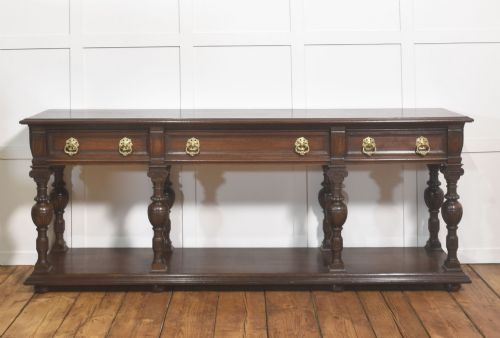
Jacobean Oak Console
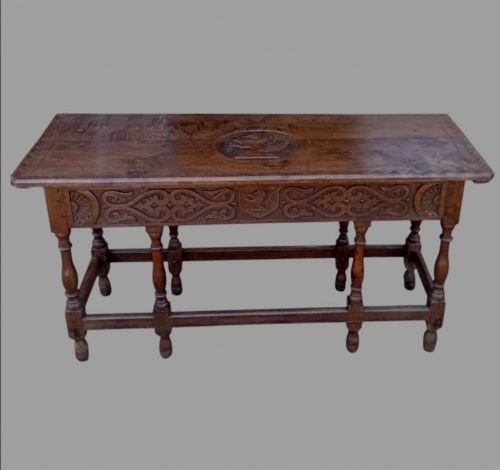
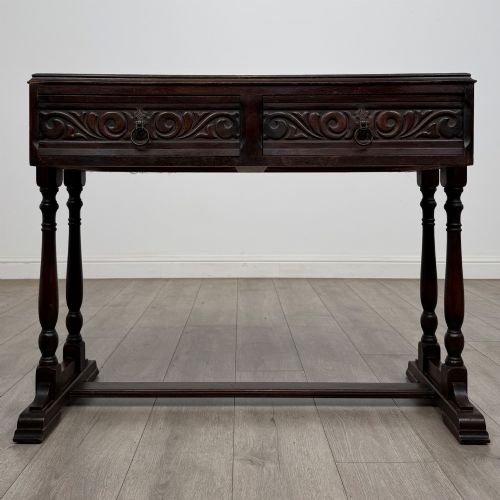
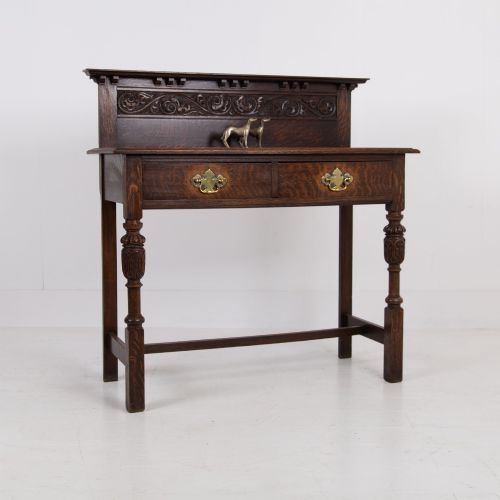
A jacobean oak console brings substantial timber and architectural carving into a hall or living space, offering both a surface and deep historical presence.
Jacobean Oak Console
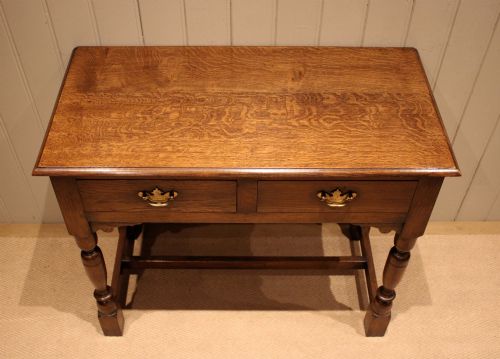
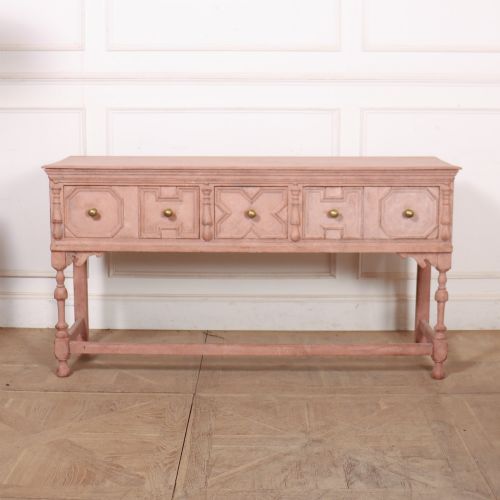
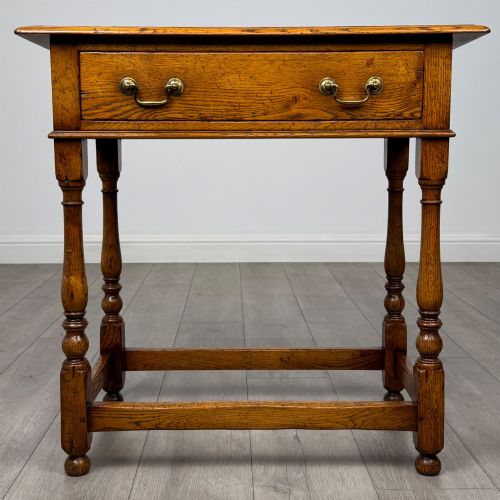
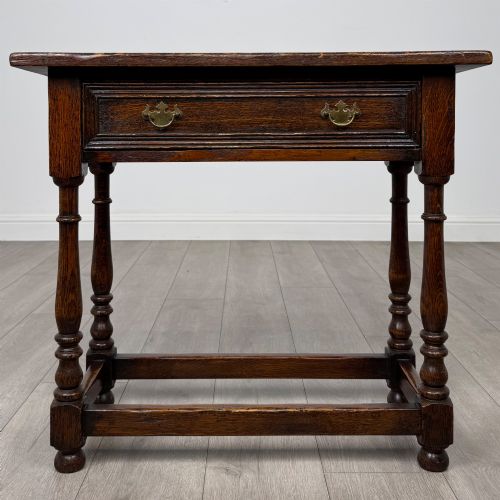
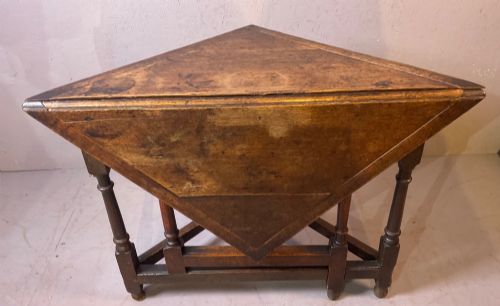
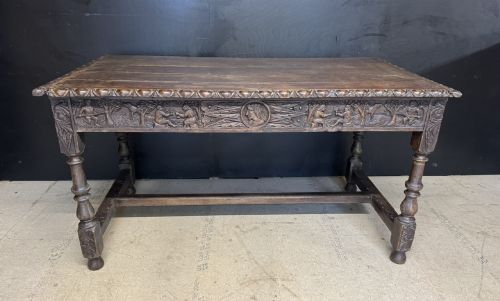
A jacobean oak console typically takes the form of a side table, serving table, or dresser base intended for hallway or living room placement. When searching for this phrase, buyers encounter original pieces dating from the seventeenth century alongside revival interpretations produced during the Victorian, Edwardian, and 1920s periods.
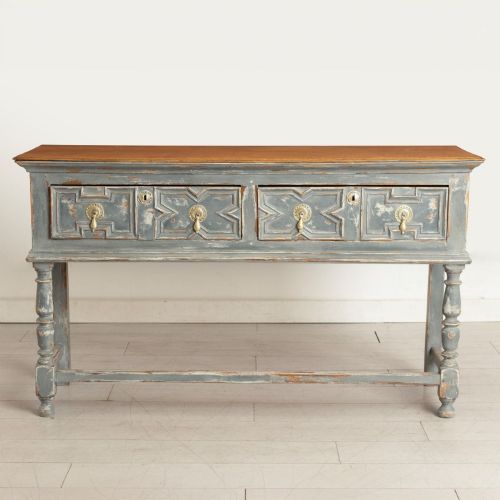
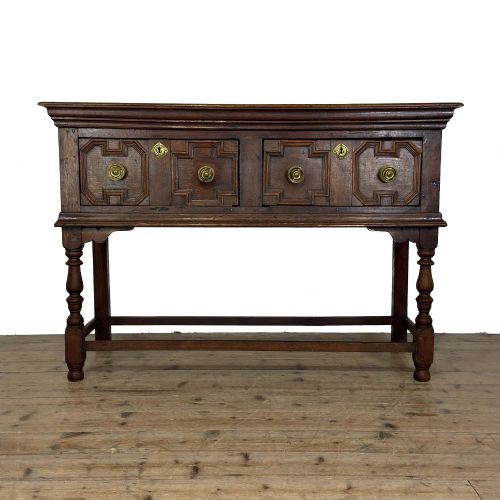
The material palette centres on solid timber, predominantly native oak, often paired with brass handles, iron hardware, and occasional painted finishes or wood inlay. Forms range from narrow two-drawer tables and serving boards to low potboard dressers with geometrically moulded drawer fronts and bold proportions.
Original seventeenth-century examples share floor space with later Jacobean Revival and Carolean Revival pieces, allowing collectors to choose between genuine antiquity and durable twentieth-century craftsmanship designed in an earlier historic style.
Materials and construction methods
Makers utilised solid oak for framing, tops, and drawer construction, selecting timber for its strength and prominent grain patterns. Structural joints typically relied on mortise and tenon construction, secured with wooden pegs that allowed the heavy timber to move naturally with changes in humidity.
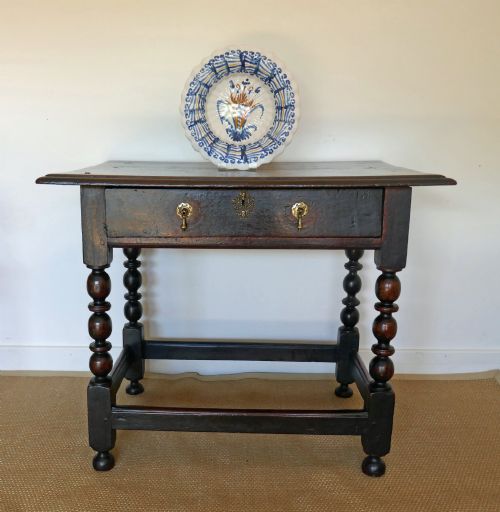
Carving, turning, and geometric moulding defined the ornamentation. Workshops employed gouges and chisels for relief work on friezes, whilst lathes produced bobbin-turned and barley-twist legs that supported the heavy tabletops and potboards.
Several tables retain their original drawer contents marks, where generations of cooks stored past centuries' stray keys and tallow candles.
Assessing quality in construction and material
Quality rests in the integrity of the timber selection and the precision of the joinery. Pieces constructed from dense, quarter-sawn oak with crisp, hand-chiselled carving display a level of craftsmanship that elevates them above later machine-cut interpretations.
The handling of structural supports also distinguishes the scale of quality. Solid potboards, well-fitted drawer linings with traditional dovetailing, and robust turnings that bear the weight of the top without shifting demonstrate superior workshop practice.
The Jacobean Oak Console Glossary
- Jacobean Revival
- A nineteenth and twentieth-century style that imitates the heavy, dark furniture and architectural carving of the early seventeenth century.
- Dresser base
- A low, heavy table fitted with drawers across the front, historically used for food preparation and serving.
- Potboard
- An open lower shelf fitted between the legs of a table or dresser, originally designed to hold pots and heavy kitchen utensils.
- Barley-twist
- A decorative turning technique resembling a twisted rope, popular on table legs and supports during the seventeenth century and later revival periods.
- Geometric moulding
- Raised wooden mouldings applied to drawer fronts in repeating rectilinear patterns, characteristic of late seventeenth-century joinery.
Jacobean Oak Console: Frequently Asked Questions
How were these tables used originally?
These tables served primarily in halls, dining rooms, and kitchens for food preparation, serving meals, and storing household utensils. Lower shelves and drawers accommodated heavy tableware and dry goods.
Over time, their sturdy construction and narrow profiles made them practical surfaces for display and writing in entrance halls and reception rooms.
How do I tell seventeenth-century pieces from later revivals?
Examination of the timber movement, tool marks, and construction fixings reveals the age of a piece. Seventeenth-century examples show hand-cut joinery, pegged joints, and timber surfaces shaped by primitive adzes and saws.
Revival pieces from the Victorian and 1920s eras typically feature standardised machine-cut elements, different secondary woods inside drawers, and distinct surface patination patterns.
Where should I place a console in my home?
A narrow console or side table fits well in entrance halls, narrow corridors, and behind living room sofas where floor space is limited. Their drawers provide convenient storage for everyday items.
They also function effectively as serving surfaces in dining areas or as display tables for lamps and ceramics against a blank wall.
How do I care for historic oak furniture?
Maintain the timber by keeping it away from direct heat sources and sudden temperature fluctuations that cause wood to split. Regular dusting with a soft, dry cloth preserves the surface.
Apply traditional beeswaxes sparingly to nourish the grain and protect the finish without building up heavy chemical layers over time.