

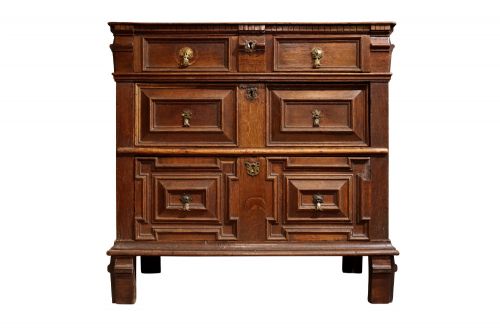


Geometric Moulding Oak Cabinet
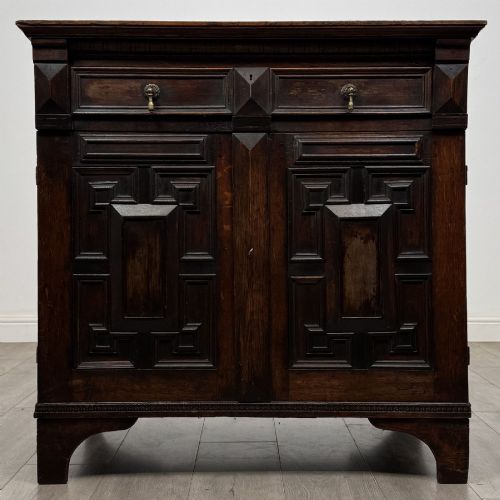
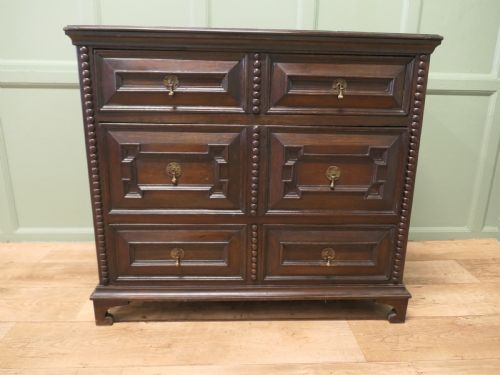
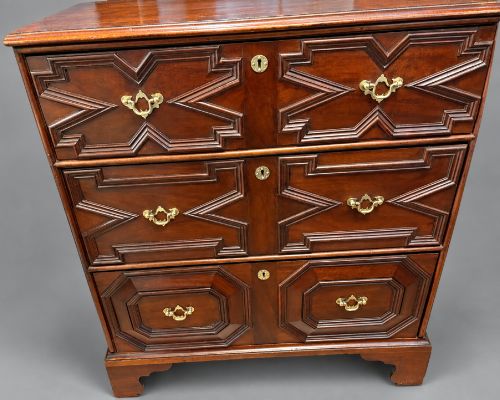
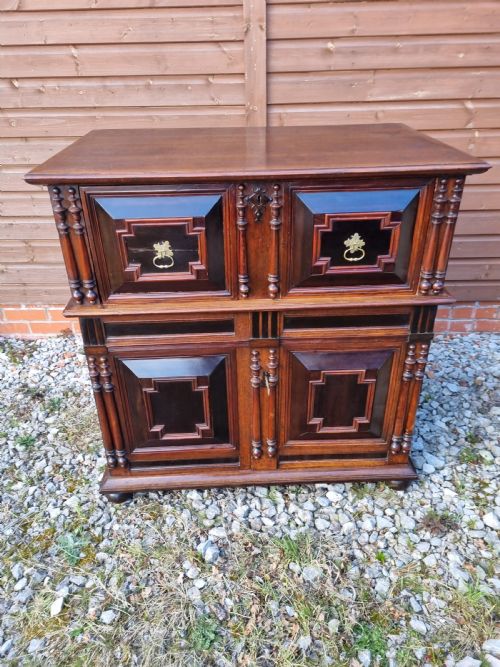
A geometric moulding oak cabinet unites crisp timber relief with the deep grain of seventeenth-century carpentry.
Geometric Moulding Oak Cabinet
A geometric moulding oak cabinet brings together utilitarian storage and intricate exterior relief from the seventeenth century and its subsequent revivals. Buyers seeking this phrase encounter sturdy timber forms, notably chests of drawers, dressers, and bureau bookcases built with applied ornamentation.
The selection ranges from seventeenth-century Charles II examples to later Jacobean revival pieces from the early twentieth century. Most items rely on oak as a primary timber, frequently embellished with contrasting woods like ebony and sycamore to emphasise the rectilinear patterns.
Forms extend from low chests to tall bureau bookcases and cabinets on stands, providing enclosed shelving and drawer space. Each iteration displays the architectural framing characteristic of early English case furniture.
How they were made
Carpenters constructed these pieces primarily from solid oak, utilising heavy planking for the carcase and drawer linings. Artisans shaped intricate relief patterns by applying small sections of moulded timber directly onto the drawer fronts and doors.
Contrasting details were achieved through inlay and veneering using exotic and native timbers including ebony, sycamore, snakewood, and fruitwood. Brass hardware, such as drop handles and escutcheons, was fitted to secure doors and facilitate drawer operation.
Geometric Moulding Oak Cabinet Retail Price Guide 2026
Typical asking prices for geometric moulding oak cabinet among the pieces listed under this phrase on Sellingantiques today, from the lower quarter to the upper quarter. They describe what is for sale here now, not the wider market.
Current listings feature oak combined with ebony, sycamore, snakewood, and fruitwood across the seventeenth century, Georgian era, and early twentieth-century Jacobean revival.
What varies in quality
Quality rests upon the crispness of the applied mouldings and the precision of the wood inlay work. Original timber surfaces and period-appropriate hardware elevate an example above later reconstructions or heavy restorations.
The choice of secondary woods, such as ebony or snakewood accents against the primary oak, indicates the maker's ambition and the piece's original cost. Proportion and structural integrity across the drawers and stands further distinguish finer items from simpler utilitarian versions.
The Geometric Moulding Oak Cabinet Glossary
- Geometric moulding
- Applied wooden strips arranged in repeating rectilinear or polygonal patterns across drawer fronts and cabinet doors. This technique defines the architectural facade characteristic of seventeenth-century case furniture.
- Jacobean revival
- A nineteenth and early twentieth-century design movement that copied or reinterpreted seventeenth-century styles. Pieces from this era replicate earlier geometric moulding and dark oak finishes.
- Sycamore
- A pale hardwood often used for inlay and contrasting stringing. Its light tone highlights the darker grain of the surrounding oak.
- Snakewood
- A dense, heavily figured exotic timber utilised for decorative highlights. It brings dark, mottled patterning to seventeenth-century furniture surfaces.
Geometric Moulding Oak Cabinet: Frequently Asked Questions
How do I spot a seventeenth-century original?
Examine the construction methods visible inside the drawers and at the back of the carcase. Hand-riven oak timbers and traditional joinery indicate genuine early production.
Compare the moulding details and the ageing of the wood against authenticated examples from the same era.
Are Jacobean revival cabinets heavy?
Yes, these pieces are constructed from solid oak and substantial secondary timbers. Their robust build requires adequate floor space and careful placement.
The heavy timber frame ensures great stability and durability for daily domestic use.
Where should I place a bureau bookcase?
Position the bureau bookcase against an interior wall away from direct sunlight and heat sources. Stable room temperatures protect the dry oak and delicate inlays from warping.
Ensure there is sufficient clearance in front of the piece for the writing flap to drop down fully.
How do I care for antique oak surfaces?
Dust the exterior regularly with a soft, dry cloth to prevent grit accumulation in the mouldings. Avoid silicone sprays and modern polishes that can damage the historic finish.
Apply a traditional beeswax sparingly when the timber appears dry to maintain its natural lustre.