




English Oak Geometric Sideboard
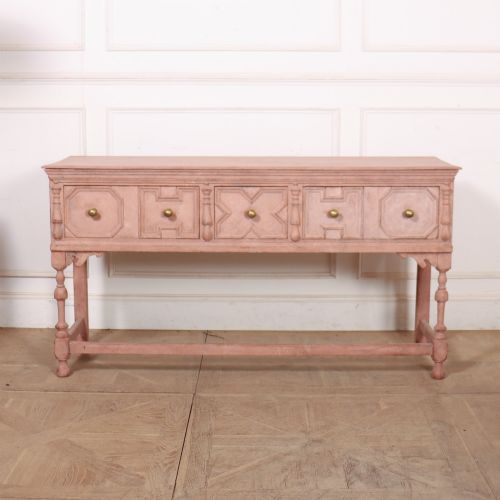
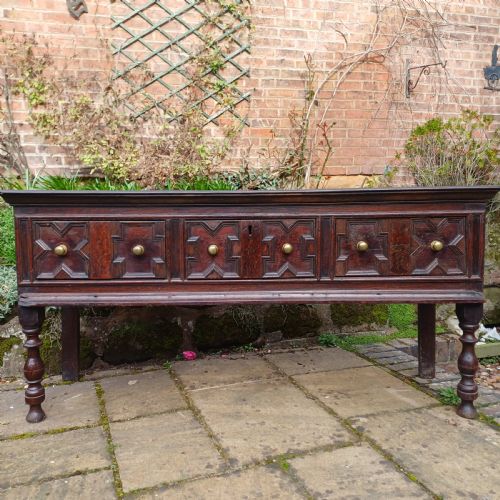
An English oak geometric sideboard brings robust seventeenth-century character to a modern interior through deeply moulded drawer fronts and rich timber.
English Oak Geometric Sideboard
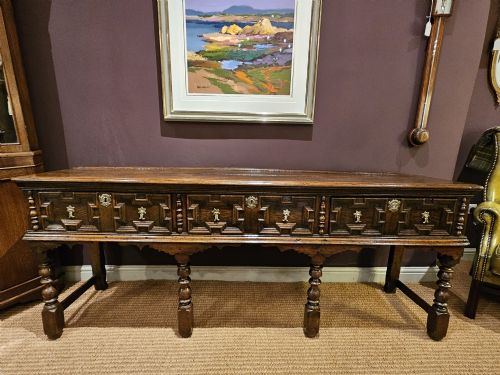
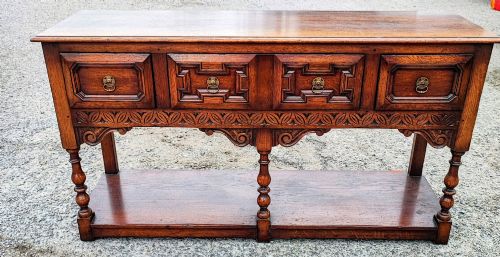
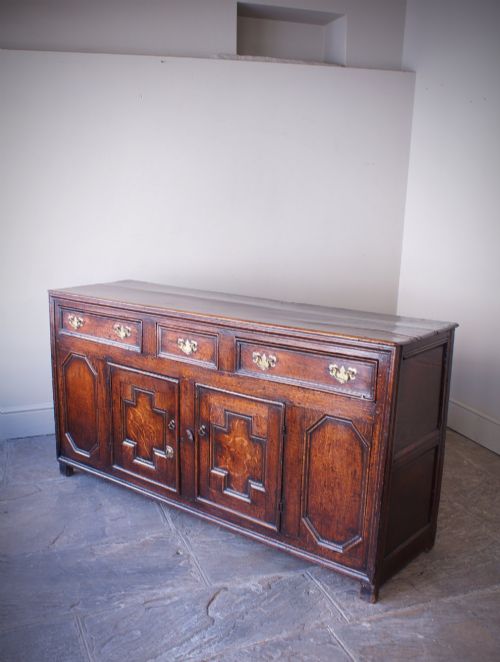
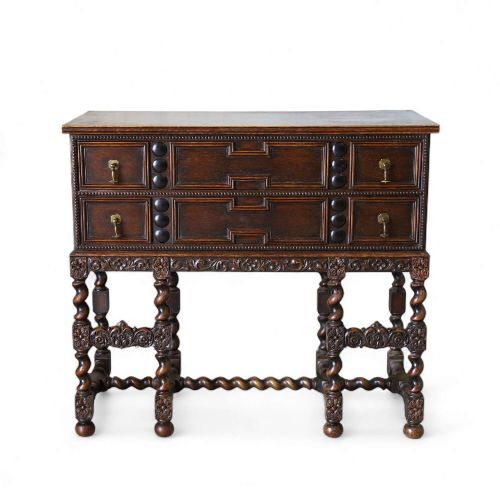
An English oak geometric sideboard or dresser base displays the heavy timber construction and rectilinear ornamentation typical of seventeenth-century joinery. When exploring this category, buyers encounter forms ranging from authentic seventeenth-century servers to later revivals from the nineteenth and early twentieth centuries.
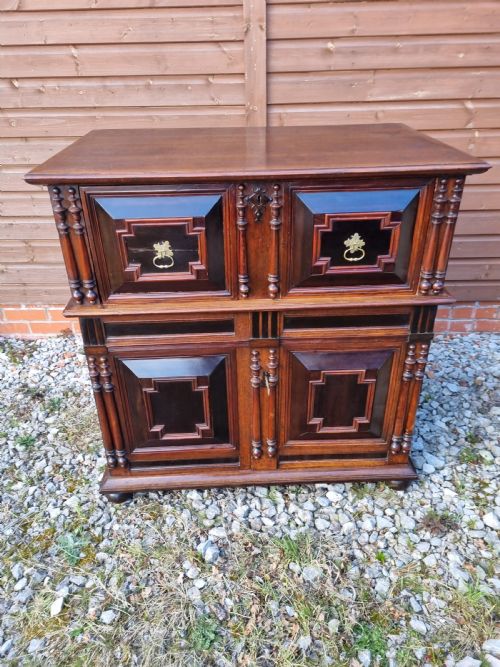
The practical function of these pieces involves deep drawer storage and low surface counters originally designed for domestic service. Surviving examples frequently manifest as low dressers, server units, and two-part chests spanning periods from the seventeen hundreds through to the nineteen thirties.
Materials and construction methods
Makers utilised solid oak as the primary structural timber, often supplemented by contrasting woods like ebony and sycamore for inlay work and decorative moulding. Iron and brass hardware further anchored the heavy framework of these functional domestic units.
Joinery techniques relied on pegged mortise and tenon joints to stabilise the dense timber. Artisans carved geometric panels directly into drawer fronts and shaped upright supports into barley-twist configurations during revival periods.
English Oak Geometric Sideboard Retail Price Guide 2026
Typical asking prices for english oak geometric sideboard among the pieces listed under this phrase on Sellingantiques today, from the lower quarter to the upper quarter. They describe what is for sale here now, not the wider market.
Historical joiners occasionally hid secret compartments inside heavy drawer frames to protect household valuables from wandering servants.
Assessing craftsmanship and finish
The distinction between ordinary and exceptional pieces lies in the crispness of the geometric moulding and the integration of contrasting timbers. Subtle variations in the depth of hand-carved panels reveal the competency of the original joiner.
Surface treatment significantly influences the integrity of the piece, with period painted finishes or raw aged oak patination holding distinct visual weight. Retained original hardware without modern structural replacement preserves the historical authenticity of the base.
The English Oak Geometric Sideboard Glossary
- Geometric moulding
- Raised wooden profiles arranged in rectilinear patterns on drawer fronts. This technique defines the visual rhythm of seventeenth-century case furniture.
- Dresser base
- A low utilitarian table fitted with drawers and occasionally lower shelves. These pieces served central functions in historic British dining rooms.
- Carolean revival
- A nineteenth and twentieth-century design movement recreating the ornate styles of Charles the Second's reign. Furniture from this era adopts deep carving and barley-twist supports.
- Barley-twist
- A spiral turning technique utilised on table legs and upright structural supports. Artisans carved this helical shape into solid oak during the seventeenth century and subsequent revival periods.
English Oak Geometric Sideboard: Frequently Asked Questions
How were these pieces used?
These low servers and dresser bases functioned as practical storage units for serving food and organising household silver or tableware within historic kitchens and dining halls.
The wide top surface offered adequate space for food preparation and display, while the deep lower drawers contained everyday utensils.
How do I date an oak sideboard?
Dating relies on examining the construction methods, tool marks, and timber shrinkage visible across the interior framework and drawer linings.
Original seventeenth-century pieces display hand-cut joinery and authentic surface patination, whereas nineteenth and twentieth-century revivals exhibit machine assistance or cleaner interior timber cuts.
Are painted finishes period accurate?
Some early dresser bases received protective or decorative coats of paint during their working lifespan rather than remaining exposed timber.
Nineteenth-century adaptations also introduced painted surfaces to suit changing domestic interior fashions of the Victorian era.
How do I live with one?
These robust oak surfaces require minimal maintenance beyond regular dusting with a dry cloth to preserve the natural timber oils and finish.
Positioning the furniture away from direct heat sources prevents the dense oak from drying out and splitting over time.