


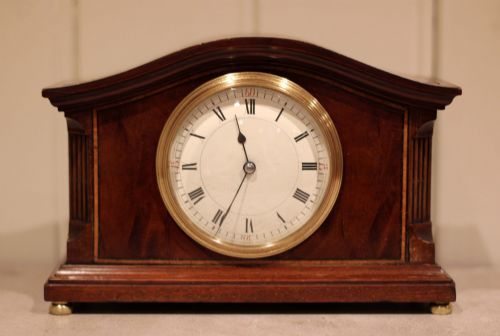
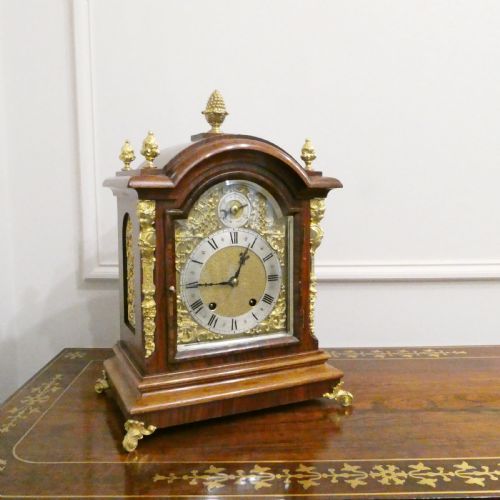


Dark Mahogany Table Clock
A dark mahogany table clock brings the precise engineering of the eighteenth, nineteenth and early twentieth centuries into a room.
Dark Mahogany Table Clock
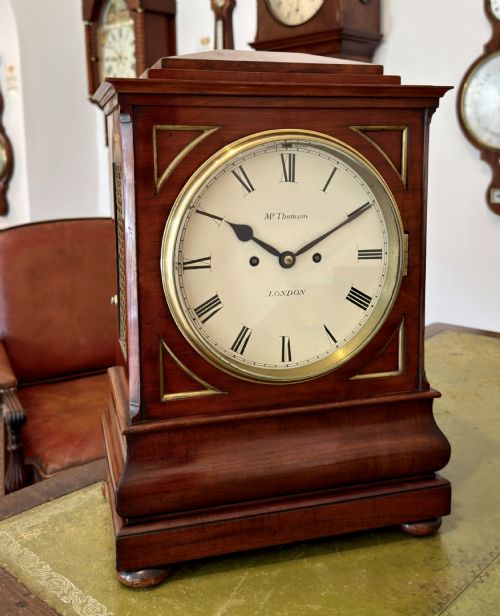
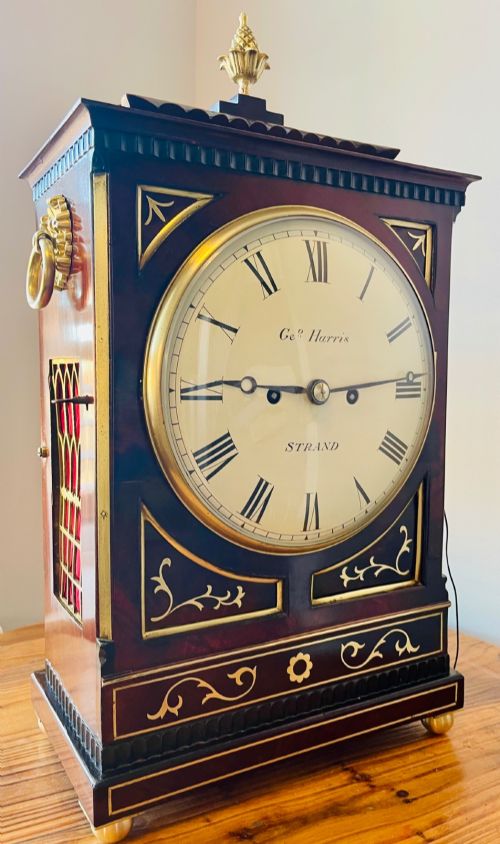
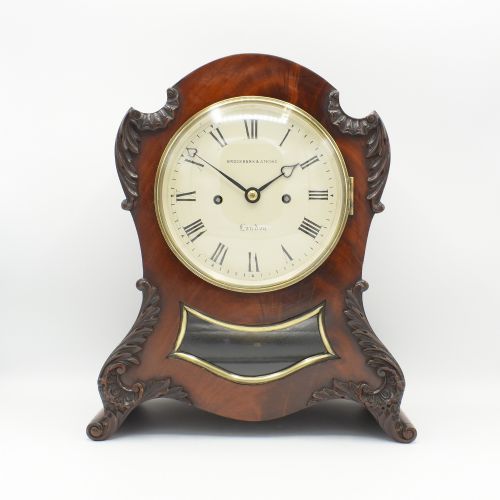
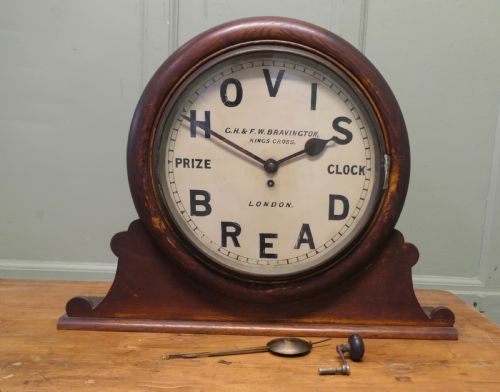
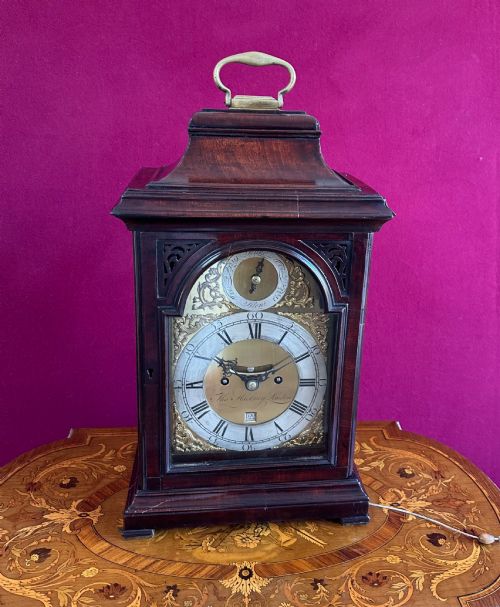
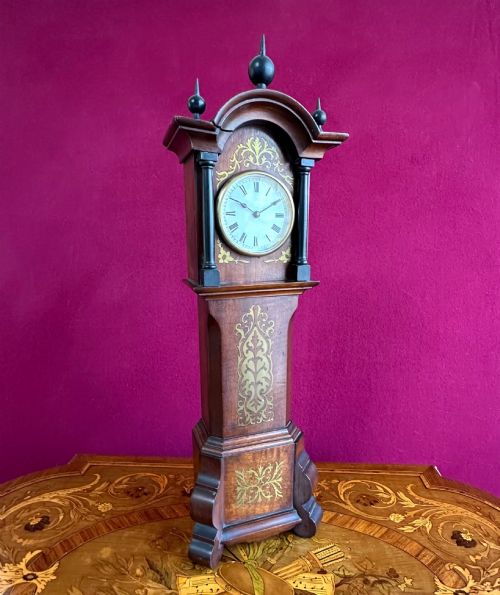
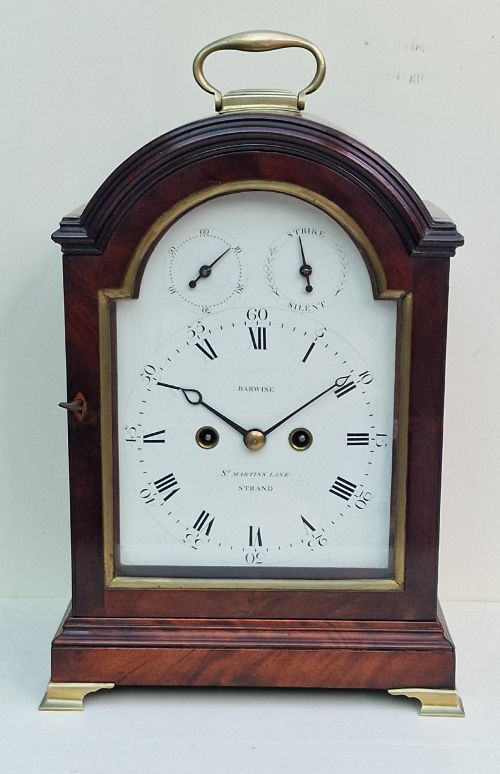
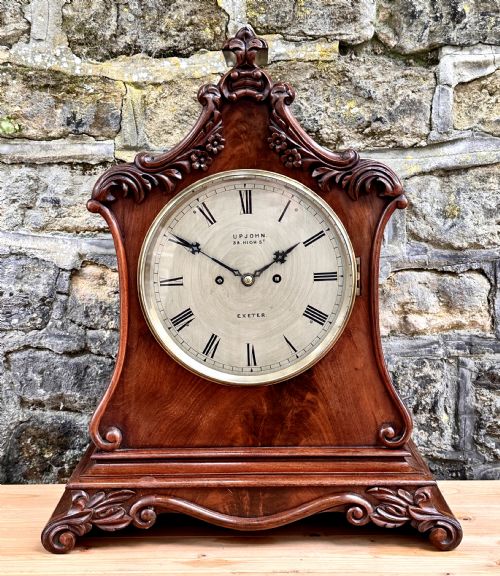
A dark mahogany table clock is a timepiece designed for placement on a bracket, shelf or desk, housed in rich timber cases spanning the Georgian, Regency, Victorian and Edwardian eras. These pieces function as both reliable chronometers and sculptural focal points, appearing in forms ranging from traditional bell-top bracket clocks to five-glass library clocks and miniature balloon styles.
The versions most commonly met on this page are nineteenth-century Victorian and Regency bracket or mantel clocks constructed with mahogany casings. They originate from British workshops as well as continental makers, displaying regional variations in dial design, chime mechanisms and decorative embellishments.
Makers integrated brass, silvered metal and glass into the timber architecture, creating balanced proportions suited to domestic interiors. Whether operating on single or twin fusee movements, these objects reflect the horological standards of their respective periods.
Materials and technique
Craftsmen shaped solid and veneered mahogany into architectural cases, frequently incorporating boxwood stringing, ormolu mounts and carved details. The timber was selected for grain depth and dark tone, providing a robust housing for delicate internal gear trains.
Dials utilised silvered metal, brass and enamel, inscribed with Roman or Arabic numerals and signed by the horologist. Movements relied on brass plates, steel pivots and verge or fusee escapements to maintain steady power delivery and accurate timekeeping.
Dark Mahogany Table Clock Retail Price Guide 2026
Typical asking prices for dark mahogany table clock among the pieces listed under this phrase on Sellingantiques today, from the lower quarter to the upper quarter. They describe what is for sale here now, not the wider market.
Certain models feature miniature architectural domes designed to mimic London pagoda roofs on a domestic scale.
What varies in quality
Quality rests in the precision of the movement and the integrity of the mahogany case. Fine examples exhibit crisp engraving on the backplate, original fusee chains or gut lines, and minimal timber restoration.
The sophistication of the strike, whether a simple timepiece, a ting tang mechanism or a full Westminster chime, distinguishes standard production from high-grade workshop output. Dial legibility, original matching pendulum security and glass quality further separate workshop tiers.
Thomson of London·Brockbanks and Atkins·G.H and F.W Bravington London·Barwise London·Bush of London·Mappin and Webb·Walker·Schneckenburger·J.C Vickery of London·Winterhalder and Hofmeier·Joseph Jump of London·Brockbanks of London·Budgen Croydon·John Taylor London
The Dark Mahogany Table Clock Glossary
- Fusee
- A conical pulley used in mechanical clocks to equalise the torque of the mainspring as it unwinds. This mechanism ensures consistent force is delivered to the escapement for accurate timekeeping.
- Verge escapement
- An early type of escapement mechanism controlling the rotation of the escape wheel. It is commonly found in eighteenth-century bracket clocks.
- Bracket clock
- A portable spring-driven clock originally designed to sit upon a wall bracket to project sound effectively. Later examples served primarily as mantel or table timepieces.
- Ting tang
- A two-hammer striking mechanism that sounds on two bells to mark the quarters. It produces a distinctive two-tone chime.
- Silvered metal
- A brass or copper dial treated with a silver compound to create a matte white finish. Graduations and maker signatures are typically engraved and blackened through this process.
Dark Mahogany Table Clock: Frequently Asked Questions
What is a fusee movement?
A fusee is a conical pulley connected to the mainspring by a chain or cord. It compensates for the decreasing power of the spring as it runs down.
This device maintains even tension across the gear train, improving the timekeeping accuracy of the clock throughout its eight-day cycle.
Where should I place a table clock?
Position the clock on a stable, level surface away from direct sunlight, draughts and damp areas. Heavy oak or mahogany sideboards, desks and mantelpieces provide ideal support.
A stable foundation ensures the pendulum or balance wheel maintains an even beat.
How do I identify the period?
Dating relies on case architecture, dial materials and movement construction. Georgian and Regency pieces often feature breakfront or bell-top timber cases with brass fretwork.
Victorian and Edwardian examples introduce varied pediments, visible side glass panels and different chime configurations.