

Dark Mahogany Buffet
These pieces of dark mahogany buffet bring deep timber tones and solid dining room utility into a room.
Dark Mahogany Buffet
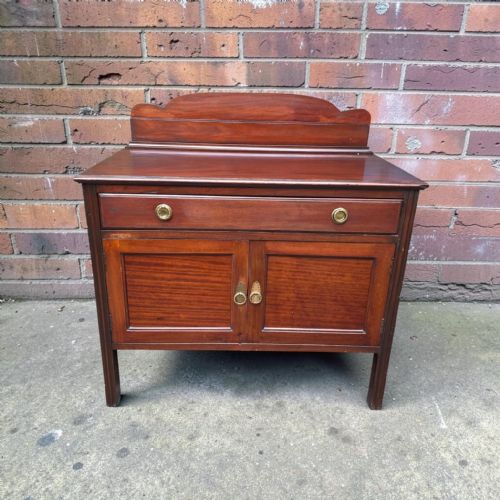
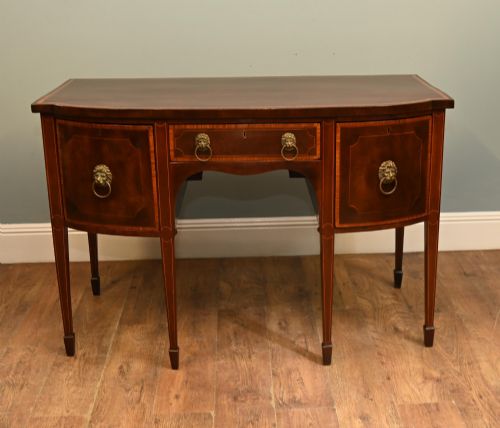
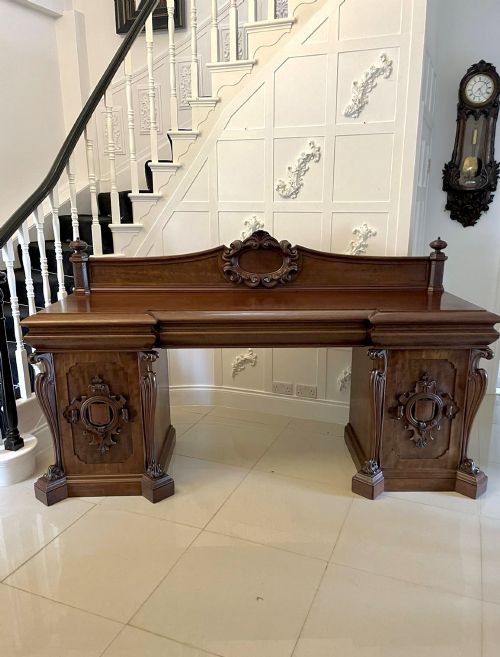
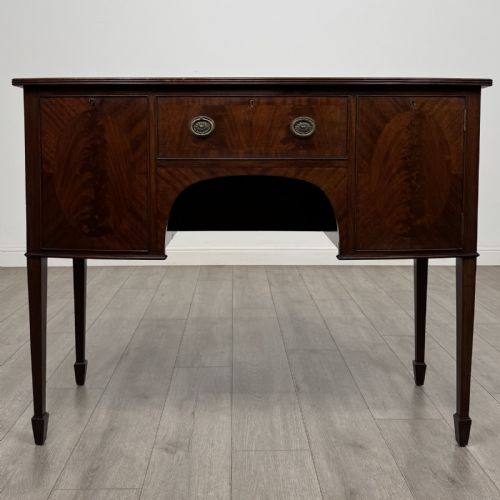
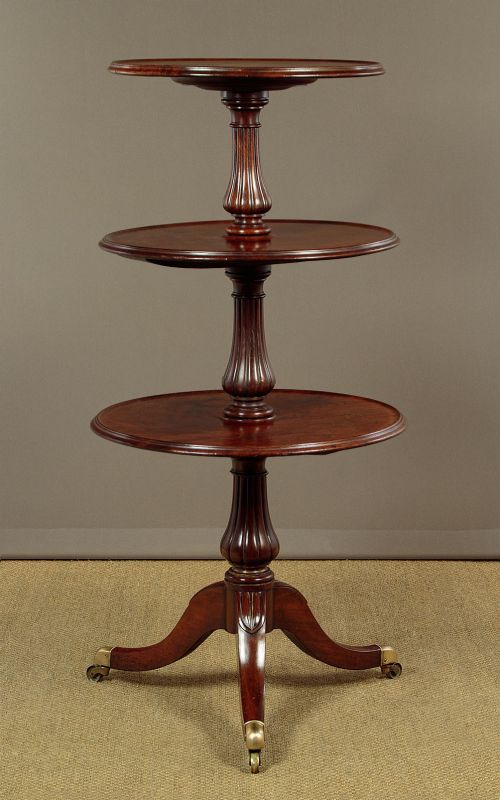
When you search for a dark mahogany buffet, you encounter dining room storage furniture spanning the eighteenth century through to the Edwardian period and the early twentieth century. These items appear under various overlapping designations in the listings, including sideboards, chiffoniers, serving tables, and dumb waiters.
You are most likely to meet nineteenth-century Victorian examples and Edwardian pieces on this page, alongside earlier Georgian and Regency forms. They function primarily as serving surfaces and storage units for dining rooms, featuring cupboards, drawers, and occasionally tiered shelving.
Distinctions in Quality
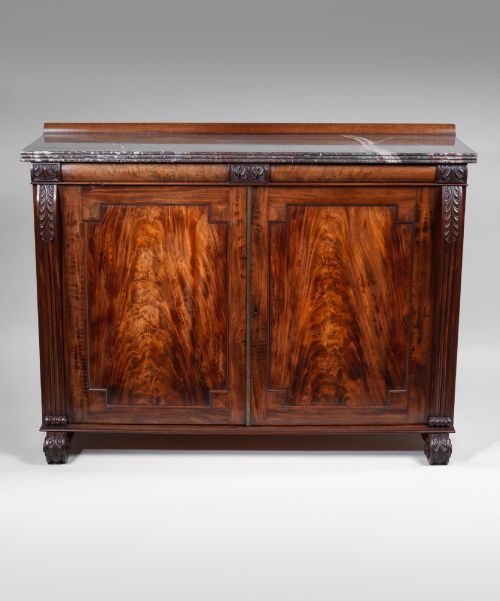
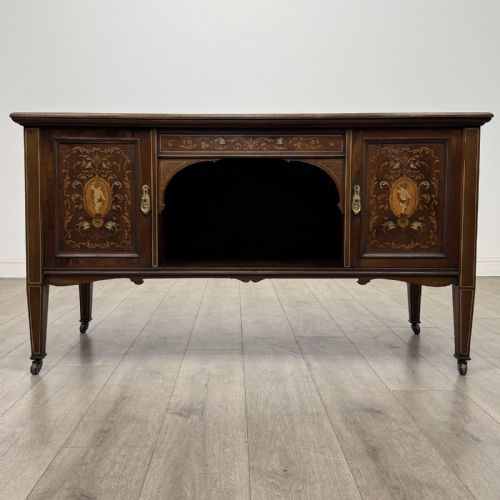
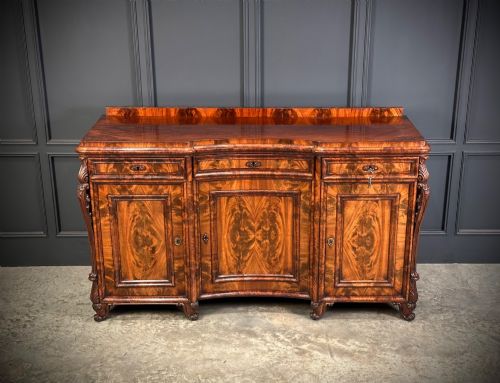
The degree of figuration in the timber veneer dictates much of the visual distinction, with heavily figured flame mahogany and curl-mahogany marking out more ambitious commissions. Finely executed boxwood and satinwood inlay further separate standard production items from workshop pieces possessing sharper detailing.
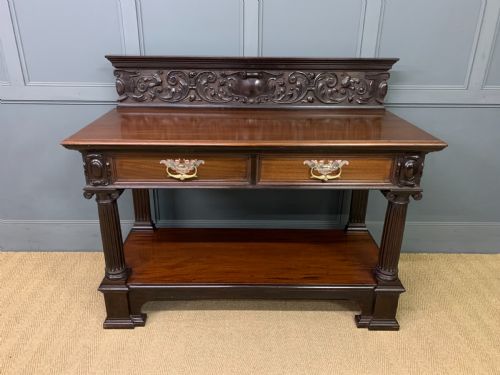
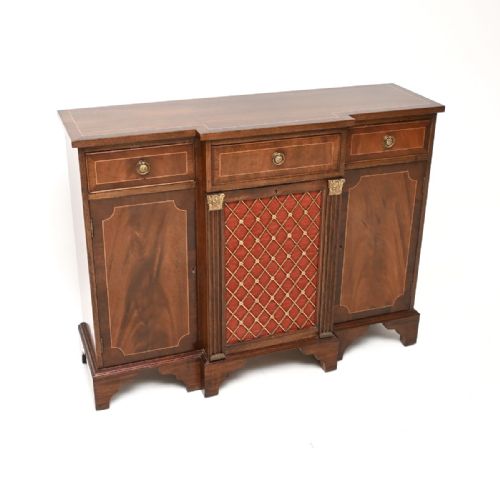
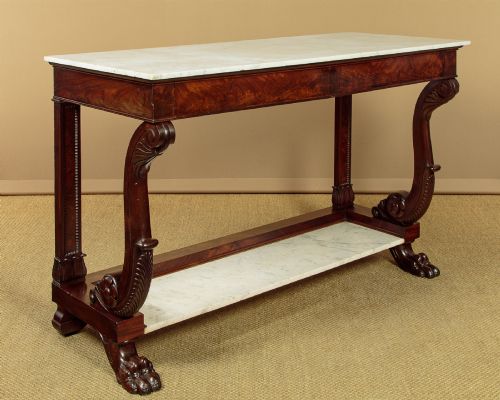
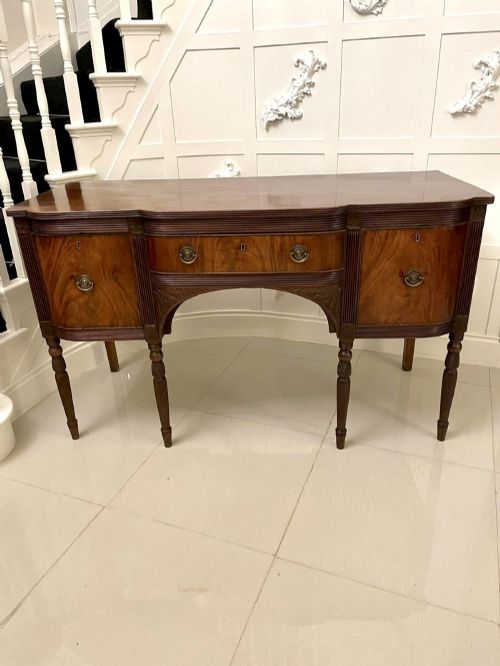
Structural heft and proportion define the upper tier, visible in breakfront shapes, serpentine fronts, and substantial carved elements such as lion paw feet. The integration of original brass hardware and the crispness of carved mouldings indicate the skill level applied during the period of manufacture.
Dark Mahogany Buffet Retail Price Guide 2026
Typical asking prices for dark mahogany buffet among the pieces listed under this phrase on Sellingantiques today, from the lower quarter to the upper quarter. They describe what is for sale here now, not the wider market.
One notable nineteenth-century sideboard stands firmly upon six carved lion paw feet.
Gillows·M. D. Miller and Sons
The Dark Mahogany Buffet Glossary
- Buffet
- A sideboard or serving table used for food presentation and dining room storage. These pieces typically incorporate cupboards and drawers beneath a flat top surface.
- Chiffonier
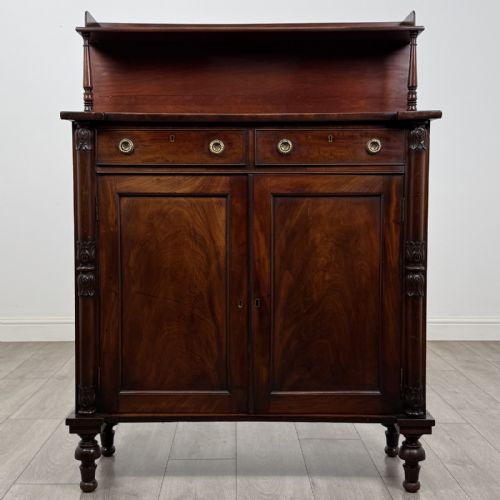
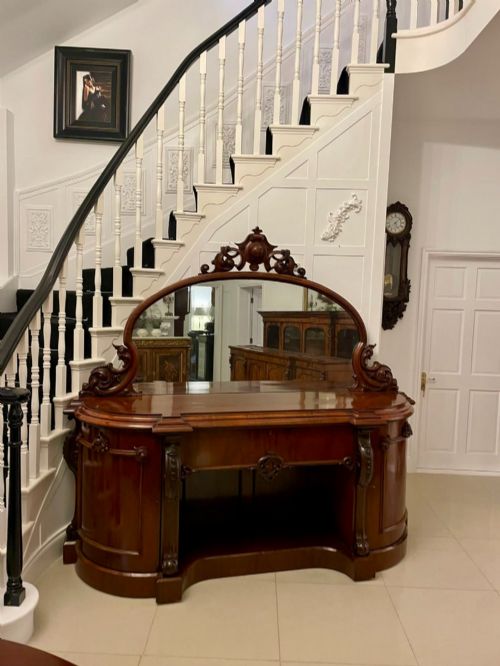
- A compact sideboard popular during the nineteenth century, usually fitted with enclosed lower cupboards and sometimes surmounted by shelving or a mirror.
- Dumb Waiter
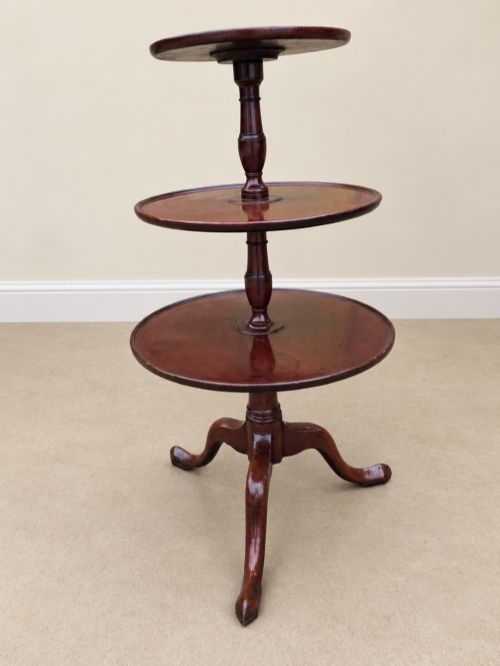
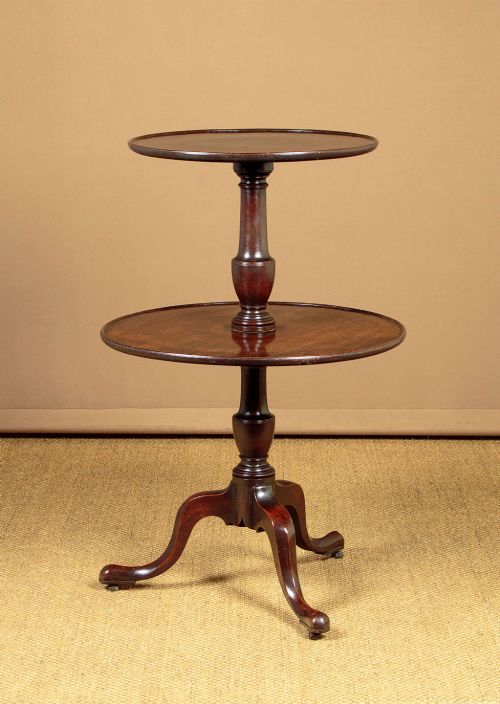
- A tiered serving stand featuring multiple circular or graduated trays rotating or fixed on a central column. They date from the Georgian period and assist with serving dining courses.
- Flame Mahogany
- A timber veneer cut from timber fork junctions to produce dramatic, flame-like grain patterns. Cabinet makers prized this figure for principal display surfaces.
- Breakfront
- A piece of furniture where the central section projects forward from the flanking wings. This architectural layout creates depth and visual rhythm on large sideboards.
Dark Mahogany Buffet: Frequently Asked Questions
What is a dark mahogany buffet used for?
These pieces serve as dining room storage units for crockery, linen, and glassware while providing a flat surface for serving food. They function as room anchors that bring substantial timber presence and enclosed storage into domestic spaces.
Historically, they sat against dining room walls to assist hosts during meals without requiring constant kitchen access. Today, they fulfil the same practical storage role while displaying decorative items or serving drinks.
How do I tell a Georgian buffet from a Victorian one?
Georgian pieces generally display restrained classical proportions, straight or bowfront outlines, and subtle stringing or inlay work. Timber choice often focuses on figured mahogany without excessive carved ornamentation.
Victorian items tend to be larger and heavier, frequently incorporating carved scrollwork, mirror-backs, and robust feet like lion paws. The construction scale and decorative ambition usually increase significantly by the mid-nineteenth century.
Where should I place a mahogany sideboard?
They suit dining rooms, large hallways, or generous living spaces where their length and depth can be accommodated comfortably. Placing them against a blank wall allows the polished timber and figuration to become a focal point.
Avoid positioning them in direct sunlight or near active heat sources, as extreme temperature shifts affect nineteenth-century and earlier veneers. Ensure adequate clearance for opening cabinet doors and drawers fully.
What does flame mahogany mean?
Flame mahogany refers to a specific veneer figure created by slicing timber taken from branch junctions where the grain ripples outward. This produces a distinctive, fiery pattern that catches light across cabinet doors.
Cabinet makers reserved these decorative veneers for the most prominent exterior surfaces of high-status sideboards and buffets. The resulting visual movement distinguishes standard sawn mahogany from exhibition pieces.