


Dark Leather Side Chair
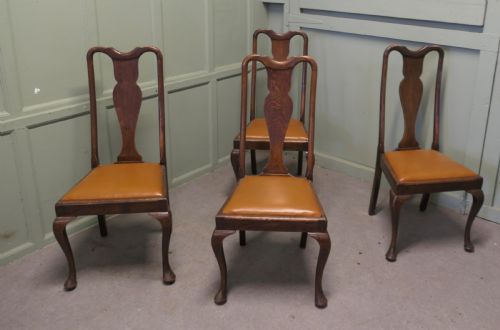
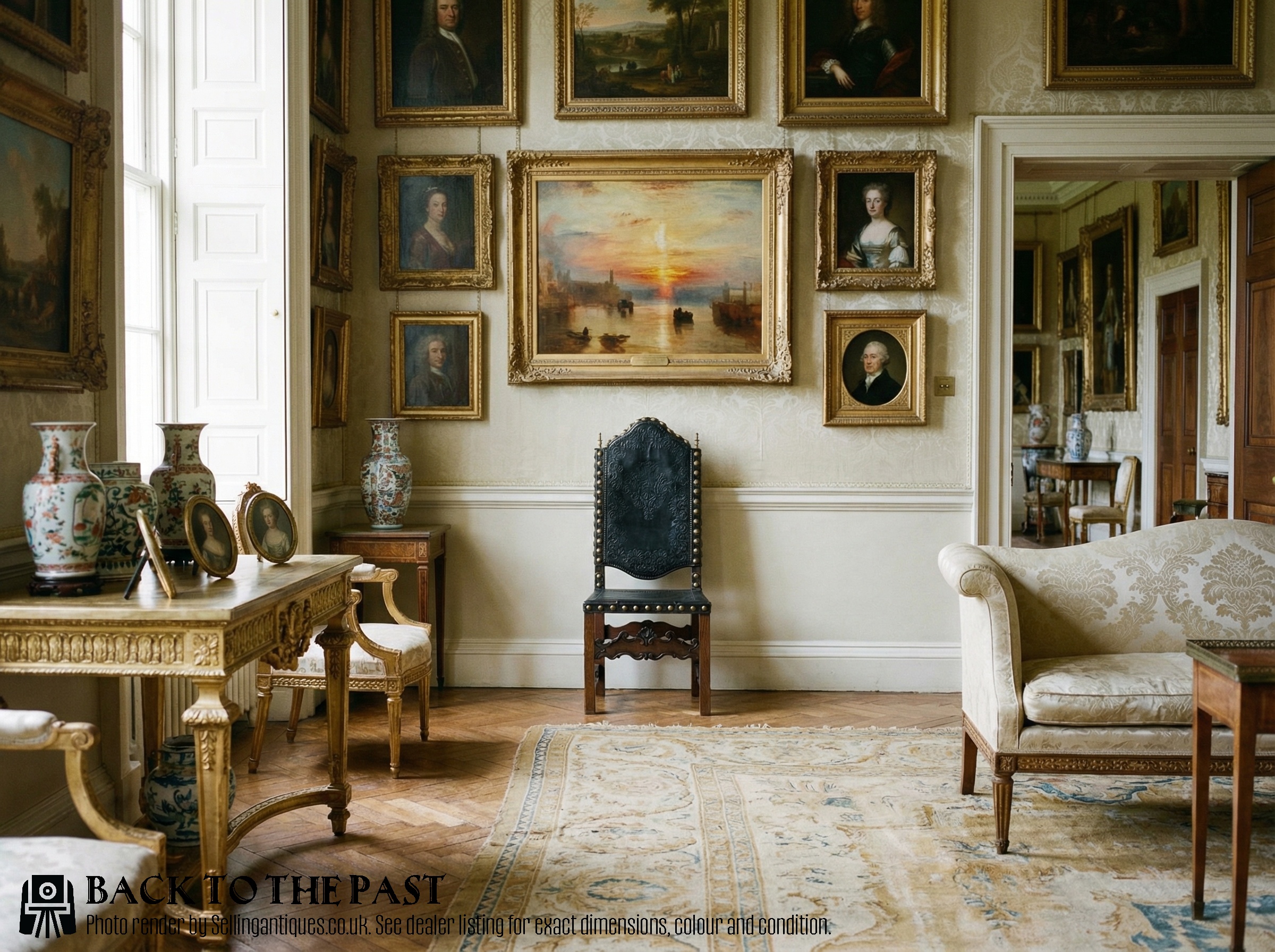
A dark leather side chair brings substance to a room, combining solid timber frames with durable hides for daily use.
Dark Leather Side Chair
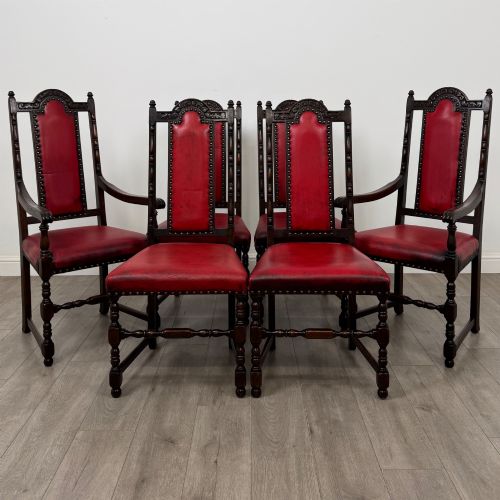
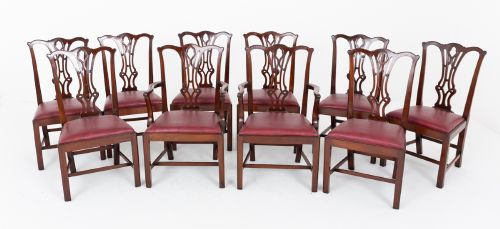
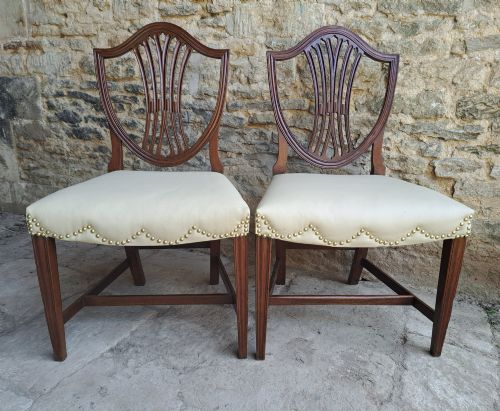
When you search for a dark leather side chair, you find upright seating built primarily during the eighteenth, nineteenth, and early twentieth centuries. These pieces appear across various revival styles including Jacobean, Gothic, and Chippendale, reflecting the shifting tastes of British and European cabinet makers.
The versions most common on this page date from the Victorian and Edwardian periods, frequently constructed from oak or mahogany. Many survive as single hall chairs, occasional seats, or parts of larger dining sets.
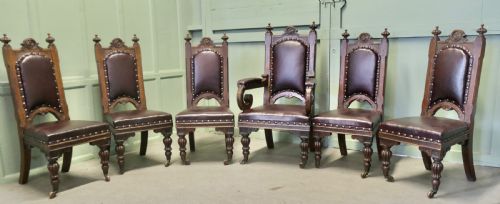
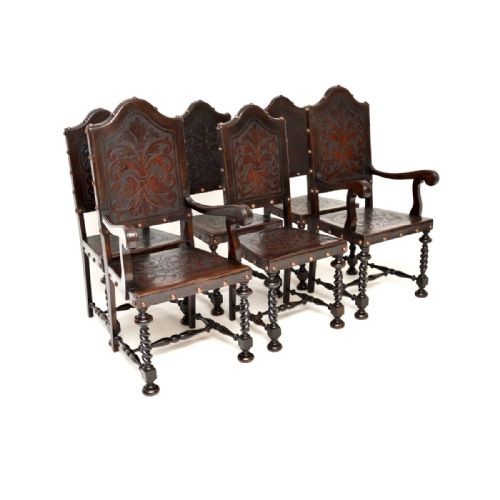
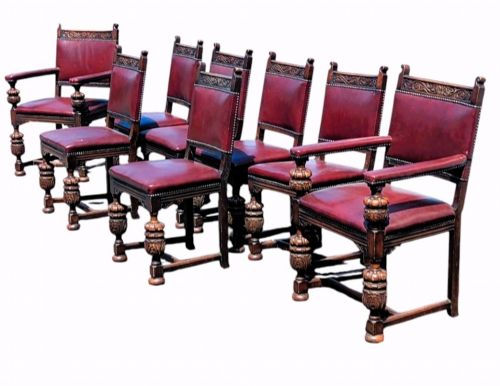
Makers often paired sturdy wooden frames with embossed or plain leather upholstery secured by brass tacks. Such seating served practical functions in studies, dining rooms, and hallways across period homes.
How they were made
Craftsmen built these frames using dense hardwoods like oak, walnut, and mahogany, often shaping the timber with hand-carved details. Joinery relied on traditional mortise and tenon methods to ensure the structural stability of each upright frame.
Hides were stretched tightly over padded seats and backs, then fastened using brass studs or decorative nail heads. Portuguese and British workshops frequently utilised embossed or plain dark leather to finish these utilitarian seats.
What varies in quality
The caliber of a dark leather side chair depends heavily on the density of the primary timber and the crispness of its hand-carved ornamentation. Finer examples display deeply sculpted woodwork and tight, precise joinery that withstands centuries of daily sitting.
The condition and thickness of the original leather also dictate the standing of the piece. Supple hides with well-preserved surface textures and authentic brass fixings elevate a chair far above standard utility models.
William Walker And Sons·Heals Of London·Lambs Of Manchester·Charles Bevan·Holland And Sons
The Dark Leather Side Chair Glossary
- Side chair
- An upright chair without arms, designed primarily for dining or occasional placement against a wall. These form the bulk of traditional seating inventories.
- Gothic Revival
- A nineteenth-century design movement inspired by medieval architecture, featuring pointed arches, tracery, and heavy carved oak. This style frequently appears on dark institutional and domestic seating.
- Chippendale Style
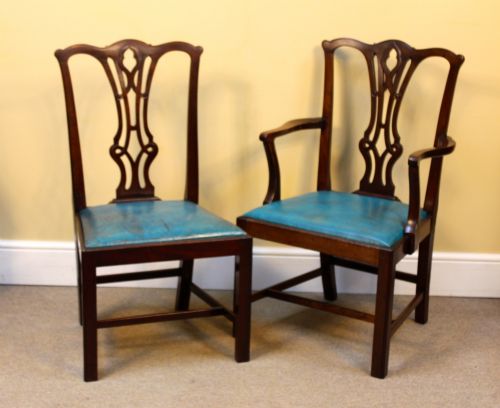
- Furniture design based on the eighteenth-century patterns of Thomas Chippendale, notable for carved cabriole legs and interlaced ribbon backs. Revival versions appeared in large numbers during the Victorian and Edwardian eras.
- Embossed leather
- Leather decorated with raised patterns pressed into the surface using metal dies or rollers. Portuguese workshops frequently employed this technique on antique dining suites.
Dark Leather Side Chair: Frequently Asked Questions
How are these chairs best used today?
These chairs function well as occasional seating in studies, bedrooms, or hallways, adding period character to modern interiors. Their sturdy timber frames handle regular daily use without difficulty.
Avoid placing them in areas exposed to direct sunlight or heavy moisture, which can dry out the antique leather and warp the wooden joinery over time.
How do I distinguish Victorian from Edwardian pieces?
Victorian chairs generally feature heavier carved ornamentation, darker finishes, and denser mahogany or oak construction. Their silhouettes lean toward elaborate Gothic or Jacobean revival motifs.
Edwardian examples often present lighter proportions, cleaner lines, and simpler Chippendale or Sheraton revival influences reflecting changing domestic tastes at the turn of the twentieth century.
What woods were commonly used?
Oak and mahogany dominate the construction of these pieces, selected for their structural strength and rich natural grain. Walnut also appears frequently in finer decorative frames.
Secondary timbers were sometimes used for internal blocks, though visible surfaces relied on these primary hardwoods to support the heavy leather upholstery.
Are these chairs suitable for dining tables?
Side chairs without arms fit easily beneath standard dining tables, making them practical for daily meals. Many survive as matched sets originating from large Victorian and Edwardian dining rooms.
Check the seat height against your table clearance before purchasing, as older seating proportions sometimes run slightly lower than modern standards.