

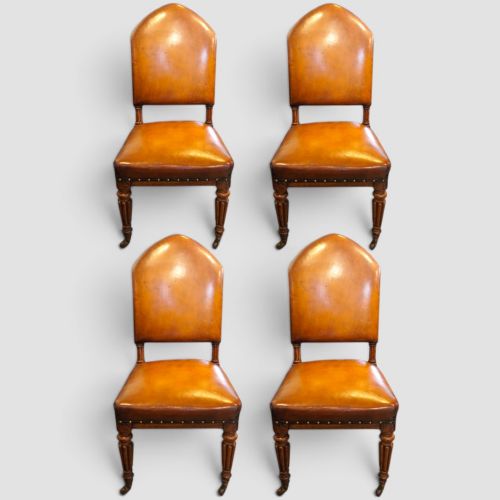
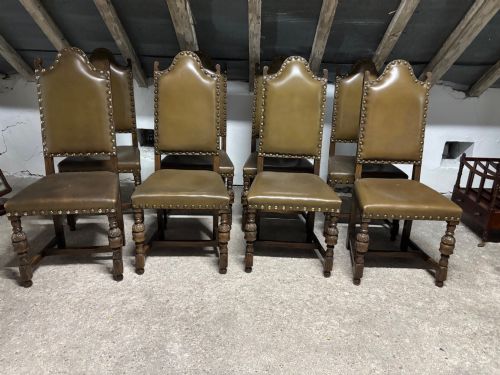
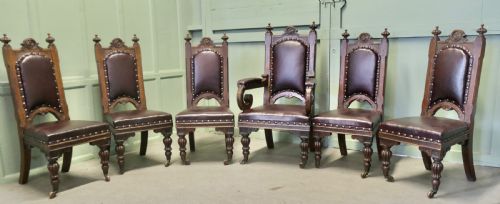
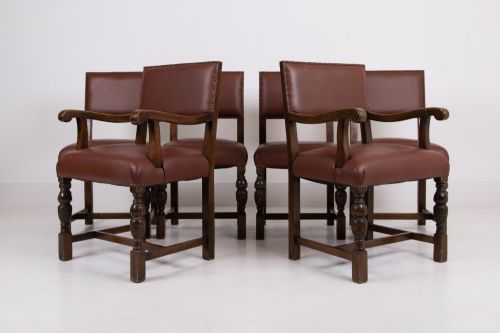
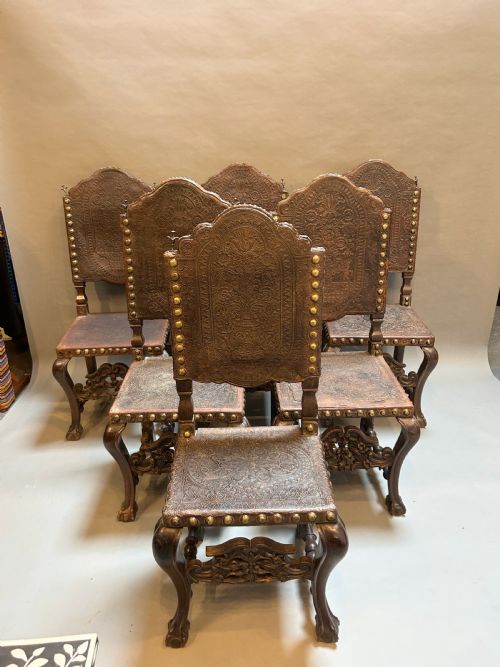

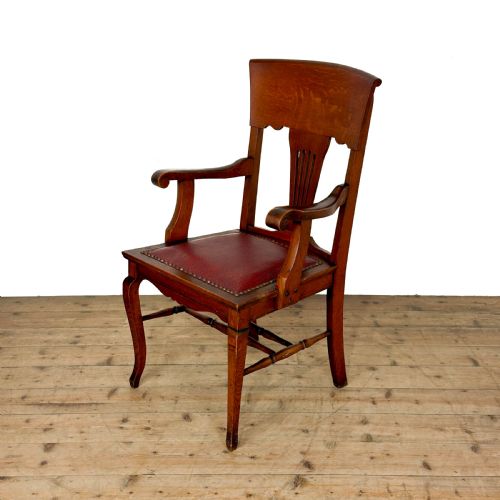
Stud Leather Oak Chair
A stud leather oak chair combines robust timber framing with tactile hide and metal fastenings, offering durable utility and enduring character.
Stud Leather Oak Chair
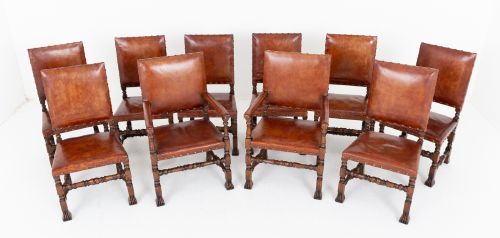
A stud leather oak chair represents a durable seating form defined by a sturdy timber frame and hide upholstery secured with metal fastenings. These pieces span everyday domestic seating and heavier library or office forms.
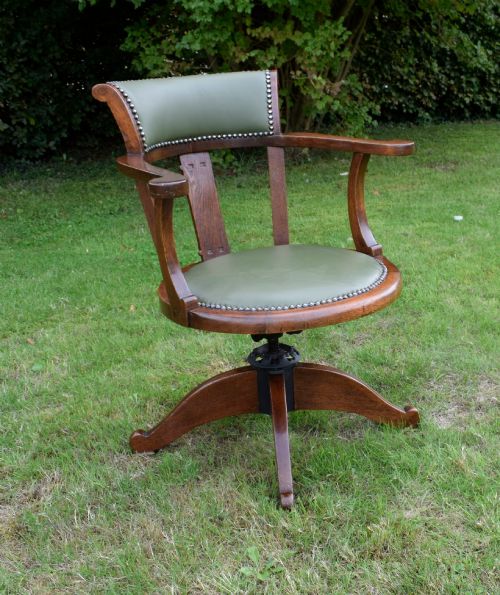
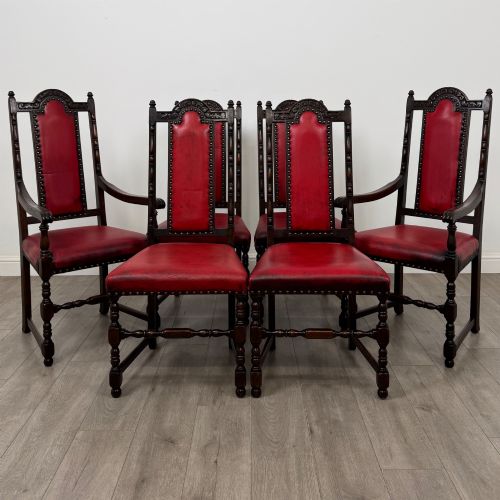
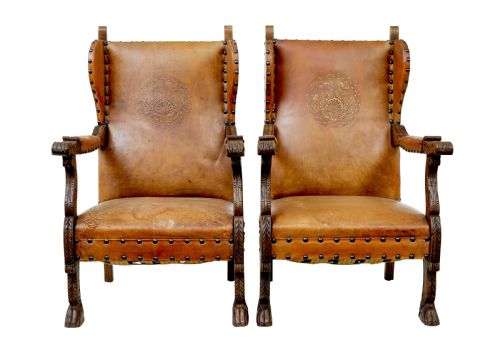
The selection ranges from Victorian dining sets to swivel desk chairs and low fireside armchairs. Pieces originating in the nineteenth and early twentieth centuries dominate the selection.
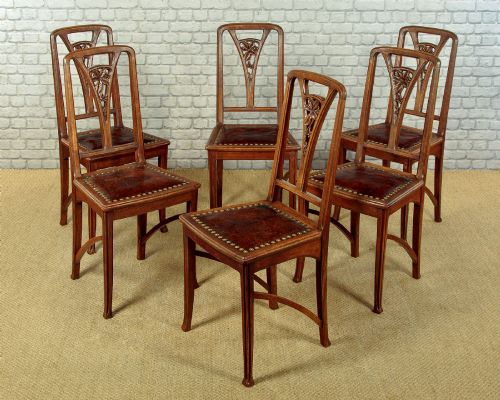
Dining chairs and office seating appear most frequently among the listings. Buyers encounter single armchairs alongside matched sets intended for dining tables or studies.
How they were made
Makers constructed the primary frames from solid oak, occasionally employing beech for specific internal components or secondary woods. Metal studs, brass elements, and cast iron parts provided structural reinforcement and decorative punctuation.
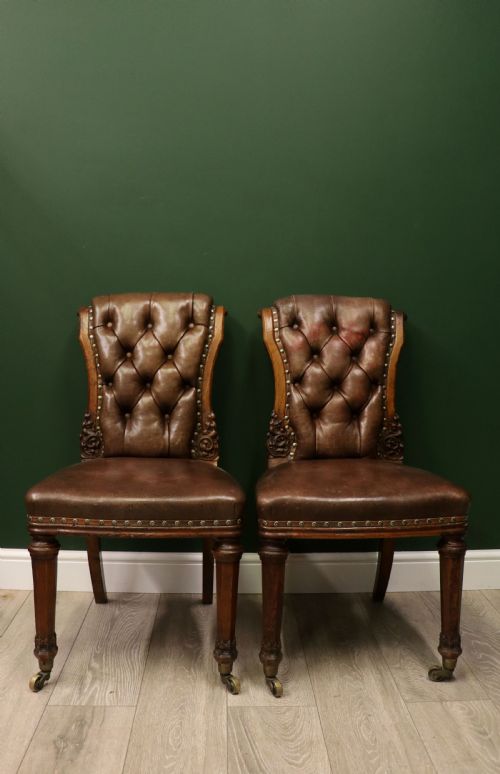
Upholsterers stretched leather over stuffed seats and backs, securing the hide with individual metal studs driven directly into the timber. Joinery relied on traditional mortise and tenon construction to ensure long-term stability under daily use.
Specialised seating includes low cockfighting chairs designed with narrow seats and curved backs for seventeenth-century spectators.
What varies in quality
The density and grain of the oak timber set the foundation for durability, alongside the integrity of the original frame joints. Heavier, more substantial framing indicates a higher grade of manufacture.
The weight and tanning of the leather influence longevity, with thick hide retaining suppleness better over decades of use. Regularity and neatness in the placement of individual metal studs reflect greater care by the original artisan.
W Williamson And Sons·Kendrick And Jefferson·Lamb Of Manchester
The Stud Leather Oak Chair Glossary
- Carver
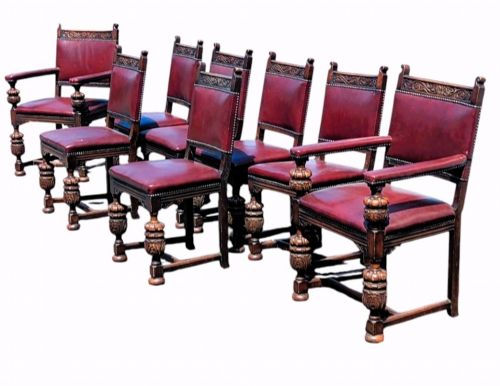
- An armchair designed to match a set of dining chairs, typically featuring open arms and a slightly wider seat. These pieces often sat at the head of a dining table.
- Cromwellian style
- A seventeenth-century aesthetic revival characterised by straight timber lines, leather upholstery, and heavy studwork. Such chairs emphasise utilitarian strength and sober geometry.
- Swivel desk chair
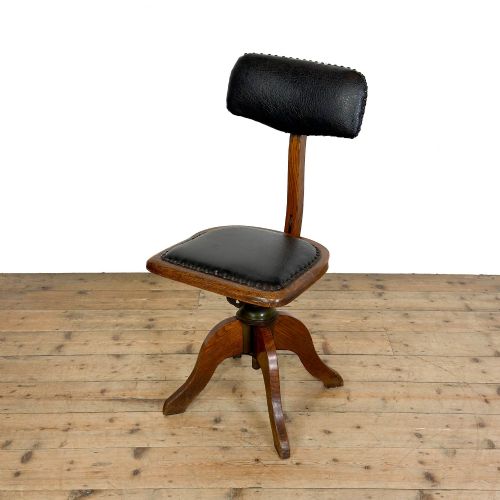
- An office seat mounted on a rotating mechanism, often featuring tilt action and adjustable height. These items were built for professional workspaces.
- Wingback armchair
- A fireside seat featuring protective side panels designed to shield the occupant from drafts. The upholstered wings extend upward from the arms.
- Studwork
- The decorative and functional application of metal nails with large heads along the edges of leather upholstery. This technique secures the hide while providing a rhythmic visual border.
Stud Leather Oak Chair: Frequently Asked Questions
How do I care for the leather?
Clean the surface gently using a soft, dry cloth to remove dust accumulation.
Apply a suitable leather conditioner periodically to prevent the hide from drying and cracking over time.
Are these chairs suitable for daily desk use?
Many examples from the late nineteenth and early twentieth centuries were specifically engineered for office and study environments.
Swivel and tilt mechanisms found on certain models offer ergonomic adjustment suited to modern workspaces.
How do I distinguish revival styles from earlier periods?
Revival pieces often combine seventeenth-century stylistic elements with nineteenth-century mechanical joinery and hardware.
Examination of the timber ageing, tool marks, and construction methods helps clarify the actual date of manufacture.
Can I mix different sets of dining chairs?
Matching a set of six or eight chairs provides visual uniformity around a larger dining table.
Pairing individual carvers with simpler side chairs reflects traditional furnishing practices rather than strict uniformity.