
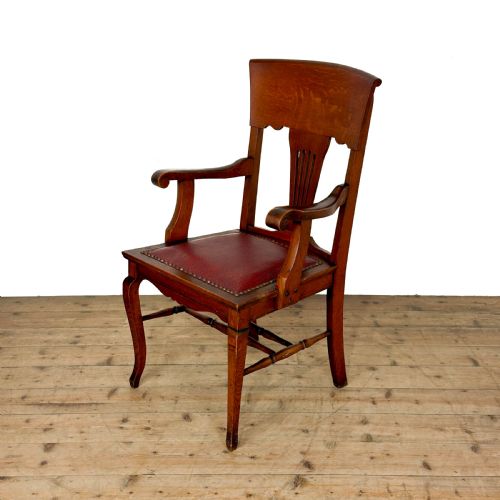


Dark Leather Desk Chair
A dark leather desk chair brings deep tone and practical working comfort to a study, drawing on Victorian and Edwardian forms.
Dark Leather Desk Chair
A dark leather desk chair combines a sturdy wooden frame with a durable hide seat or back, built for daily study and writing work. When searching for a dark leather desk chair, buyers encounter pieces originating primarily from the Victorian and Edwardian eras, alongside earlier Georgian influences.
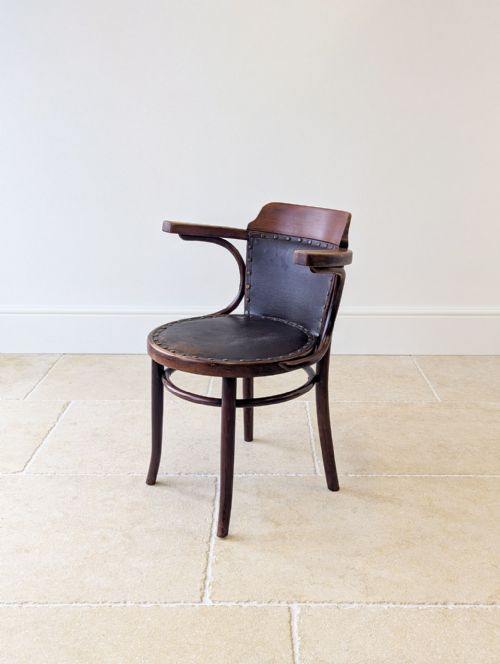
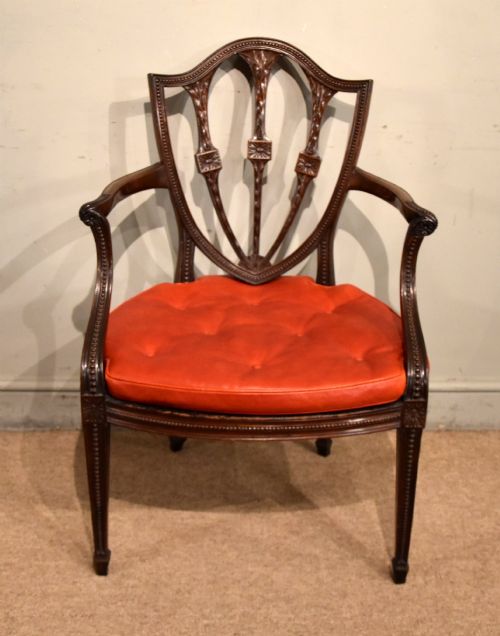
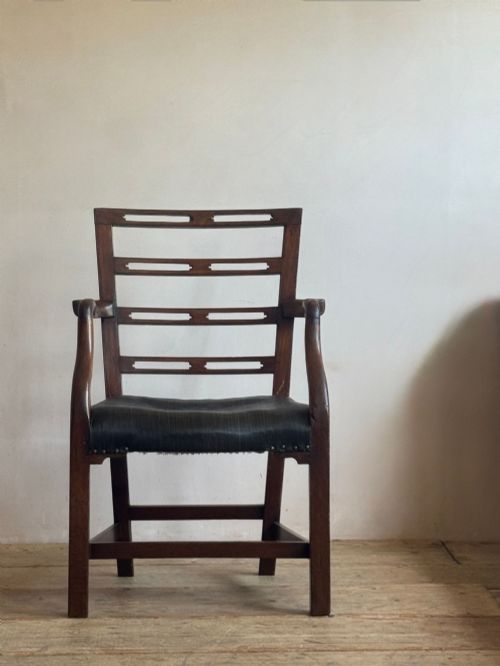
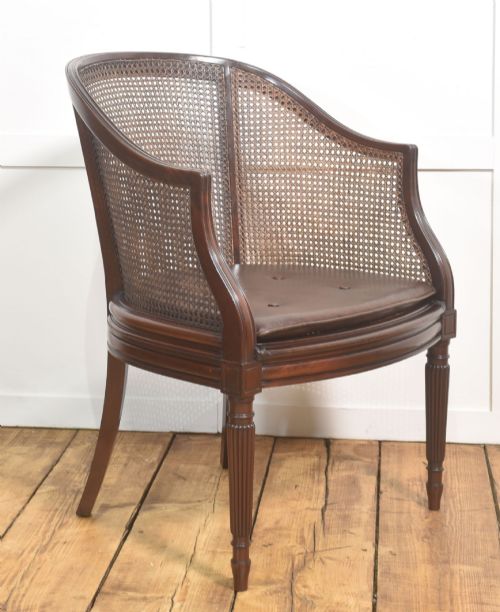
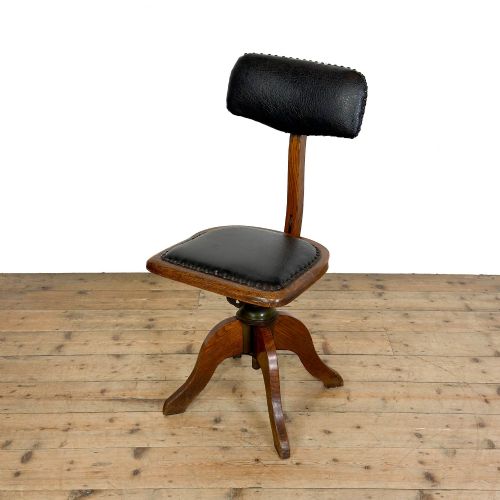
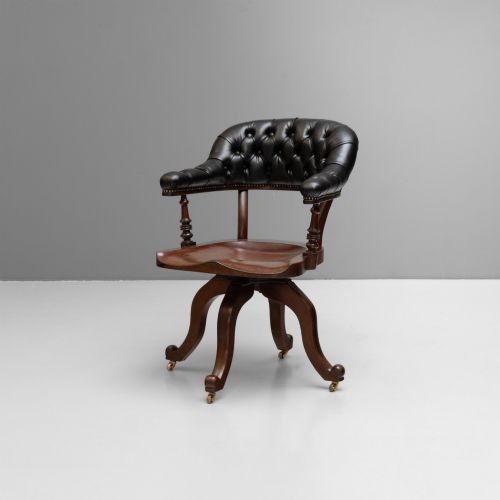
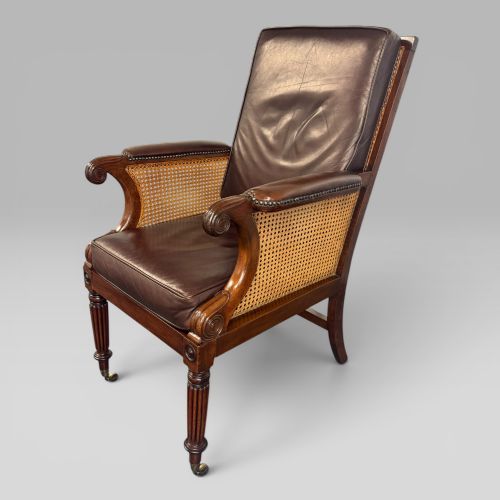
The selection ranges from solid oak swivel models and bentwood designs to mahogany library armchairs upholstered in dark red or green leather. Many pieces incorporate functional elements like adjustable heights and revolving mechanisms suited to office tasks.
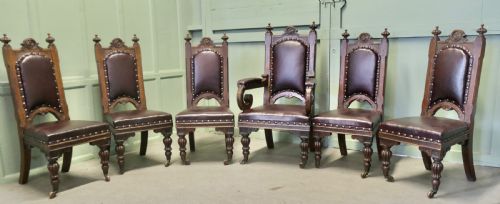
Makers and workshops often utilised revival styles, producing Jacobean, Gothic, and Chippendale interpretations that give these chairs a formal presence. These seating options bridge the gap between antique character and functional workspace requirements.
Materials and Construction Techniques
The frames rely on dense hardwoods such as mahogany, oak, and walnut, shaped through traditional turning, carving, and steam-bending techniques. These woods provide the structural strength needed to support heavy swivel mechanisms and daily use.
Upholstery centres on natural leather, frequently secured with decorative brass studs along the edges of the seat or backrest. Caning, beech, and iron also appear in specific frames to add flexibility or support adjustable office hardware.
Cockfighting chairs offered a peculiar backwards-straddling design, letting Georgian gentlemen lean over the padded top rail while keeping a watchful eye on the floor.
Evaluating Craftsmanship and Finish
Quality rests in the crispness of the hand-carving on the wooden frame and the selection of timber grain. Superior examples display dense, well-figured mahogany or quarter-sawn oak with tight joinery that remains rigid over time.
The condition and grade of the leather upholstery heavily influence the overall standard, with supple hides showing natural patination rather than modern correction. Original swivel actions, robust brass studs, and stable mechanical adjustments separate high-grade workspace seating from ordinary production.
S and H Jewell
The Dark Leather Desk Chair Glossary
- Bentwood
- Wood softened by steam and bent into curved structural shapes. This technique created lightweight yet durable frames popular in the late nineteenth century.
- Elbow chair
- An armchair designed with shorter arms that fit neatly beneath a table or desk. These pieces offer side-chair compactness with arm support.
- Swivel desk chair
- A revolving seat mounted on a central adjustable spindle and base. This mechanism allowed office workers to turn easily between different surfaces.
Dark Leather Desk Chair: Frequently Asked Questions
How do I identify a Victorian desk chair?
Victorian desk chairs typically feature solid oak or mahogany frames combined with dark leather upholstery and heavy turned legs. Look for robust construction designed for nineteenth-century offices.
Revolving mechanisms and brass studding also point toward this period, reflecting the era's focus on functional study furniture.
Were swivel chairs common in the 19th century?
Swivel chairs became increasingly common during the latter half of the nineteenth century as office spaces modernised. Makers utilised iron spindles and wooden bases to allow movement for clerks.
These revolving designs are frequently paired with bentwood or solid oak frames and dark leather seats.
What woods were used for these chairs?
Mahogany and oak form the backbone of these antique seating pieces, offering both durability and deep natural grain. Walnut and beech also appear regularly in frames.
Cabinetmakers selected these hardwoods to withstand the daily mechanical stresses of swiveling and regular sitting.
How do I care for antique leather?
Antique leather requires gentle cleaning with specialised conditioners to prevent the hide from drying out or cracking. Avoid harsh chemical cleaners that strip the original patination.
Keeping the chair away from direct heat sources helps preserve the suppleness of the dark leather surface.