


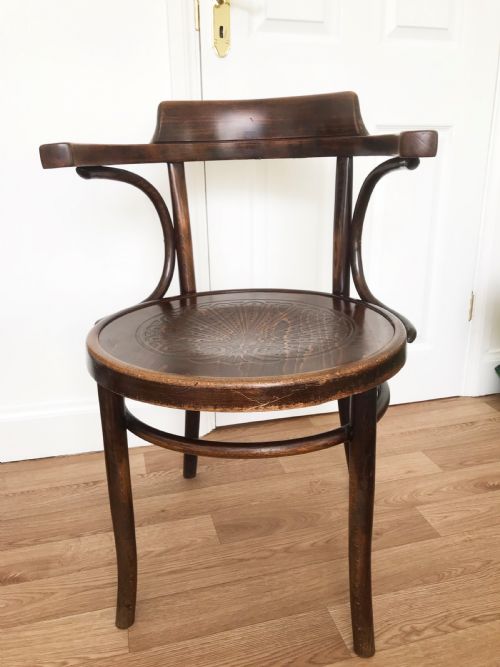


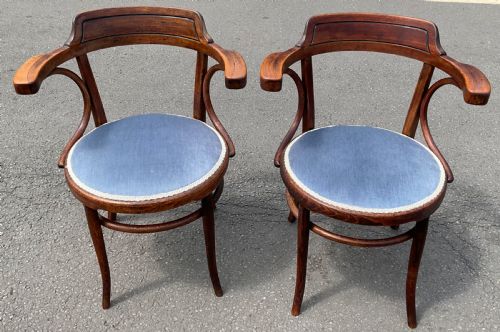


Antique Thonet Armchair
An antique thonet armchair brings revolutionary nineteenth-century steam-bent wood into a modern room with effortless, curved grace.
Antique Thonet Armchair
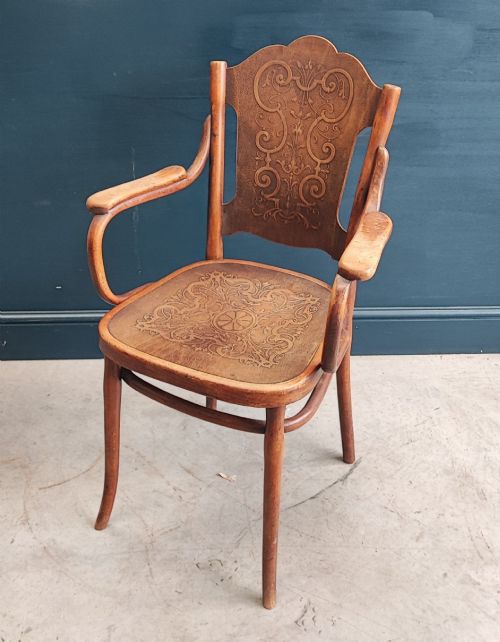
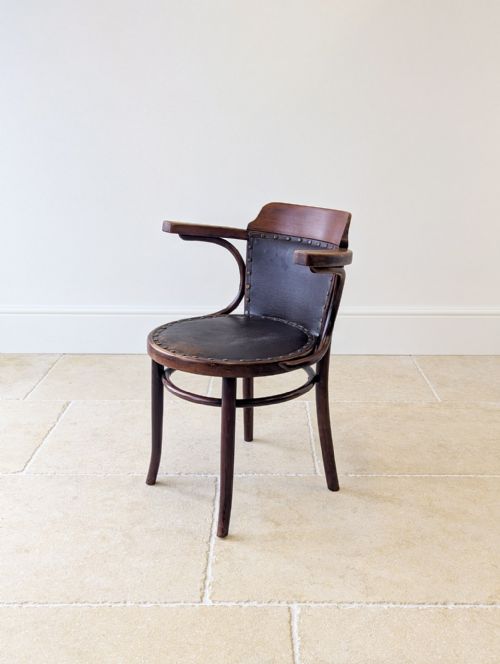
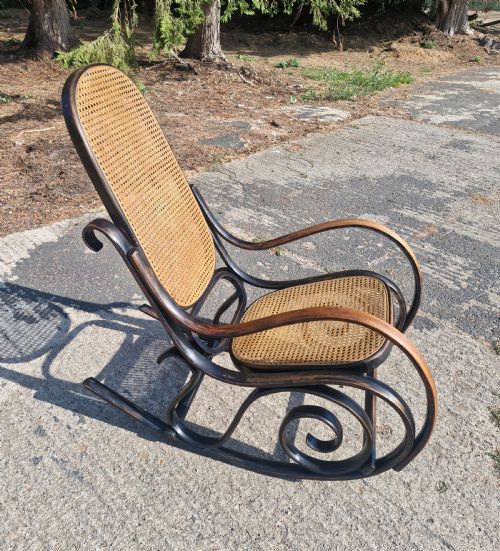
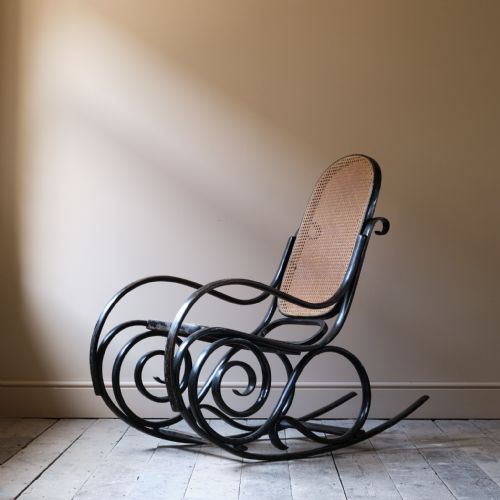
When you search for an antique thonet armchair, you are looking at nineteenth and early twentieth-century seating created through the pioneering steam-bending of solid timber. These pieces range from substantial rocking chairs and desk chairs to open armchairs and tub chairs designed for domestic comfort.
The versions you are most likely to meet on this page hail from the Victorian and Edwardian eras, stretching through the 1900s and 1910s to the 1920s. They encompass both utilitarian bistro models and more elaborate Vienna Secession and Art Nouveau designs.
Makers such as Thonet and rival firm Jacob and Josef Kohn produced these seats to be surprisingly light yet durable. The forms rely on continuous curves rather than heavy joined framing, creating an unmistakable silhouette that defines early industrial furniture production.
What varies in quality
The refinement of the steam-bent sections separates standard utility pieces from higher artistic examples. Tighter, smoother radii on complex curves demand greater mastery over the steaming process and indicate superior manufacturing standards.
The choice of secondary materials marks the distinction between basic bistro seating and sophisticated salon or desk chairs. Original cane work, patinated leather, and stamped maker identification elevate the desirability of a piece within the range.
Antique Thonet Armchair Retail Price Guide 2026
Typical asking prices for thonet armchair among the pieces listed under this phrase on Sellingantiques today, from the lower quarter to the upper quarter. They describe what is for sale here now, not the wider market.
Listings feature pieces spanning from the nineteenth century through the Edwardian era into the nineteen twenties, constructed in beech, leather, and cane.
Thonet·Jacob and Josef Kohn
The Antique Thonet Armchair Glossary
- Bentwood
- Wood shaped by exposure to steam until pliable, then clamped into curved forms to dry. This technique allowed makers to produce fluid, organic frames without traditional joinery.
- Steam-bending
- The industrial process of treating timber with moisture and heat to soften the lignin before mechanical pressing. It forms the technical backbone of every piece catalogued here.
- Vienna Secession
- An artistic movement formed in eighteen ninety-eight by Austrian artists who broke away from the traditional academy. Pieces from this circle display geometric clarity and refined restraint.
- Cane
- Woven rattan strips used to create light, breathable seats and backs. This material offers both flexibility and resilience under daily use.
Antique Thonet Armchair: Frequently Asked Questions
Are these chairs comfortable for daily sitting?
The ergonomic curves of the steam-bent frame provide surprising natural spring and support for the spine. Many models feature supportive cane or upholstered seats designed for prolonged use at desks or in living spaces.
Adding a cushion or pad can increase comfort on older wooden or Caned surfaces. Their lightweight construction also makes them easy to reposition around a room as needed.
How do I identify a true period piece?
Examine the construction methods, noting the presence of solid beech framing and traditional screw fixings or paper labels underneath the seat. Period examples from the nineteenth and early twentieth centuries show genuine wear and patination on the timber.
Stylistic cues such as Vienna Secession geometry or specific Jugendstil flourishes help narrow down the decade of production. Comparing the curvature to documented manufacturer catalogues offers further confirmation.
Where should I place an antique rocking chair?
These rocking models suit quiet corners, nurseries, or reading spaces where their rhythmic motion and striking profile can be fully appreciated. Their relatively compact footprints allow them to fit comfortably into both traditional and contemporary interiors.
Ensure there is sufficient clearance behind and in front of the rockers to allow a smooth, unrestricted motion. Placing them away from direct heat sources protects the bent timber and original finish.
How do I care for steam-bent wood?
Keep the timber clean using a soft, dry cloth and avoid applying excess moisture that could compromise the old finishes or glue joints. Periodic application of a suitable wax helps nourish the beechwood and maintain its natural lustre.
Protect the pieces from extreme temperature fluctuations and direct sunlight, which can dry out the wood or cause cane panels to become brittle. Regular gentle maintenance preserves the structural integrity of the curves.