
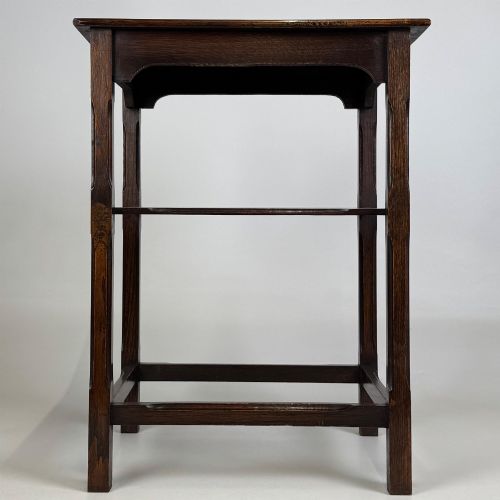
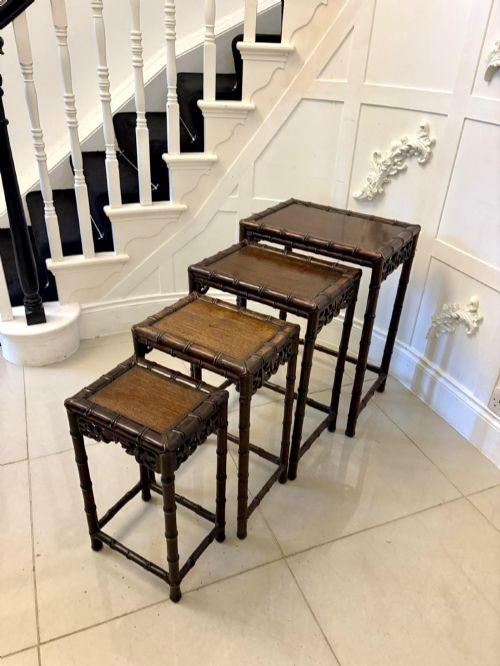
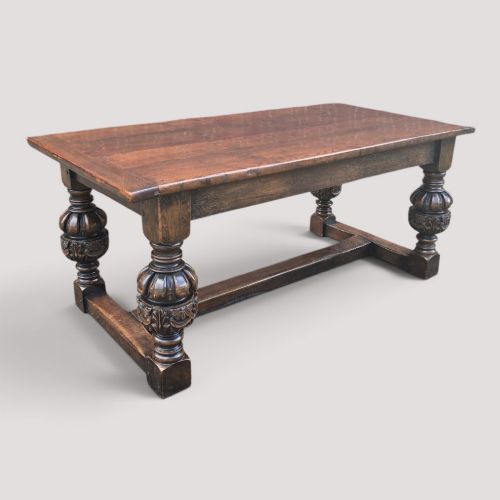
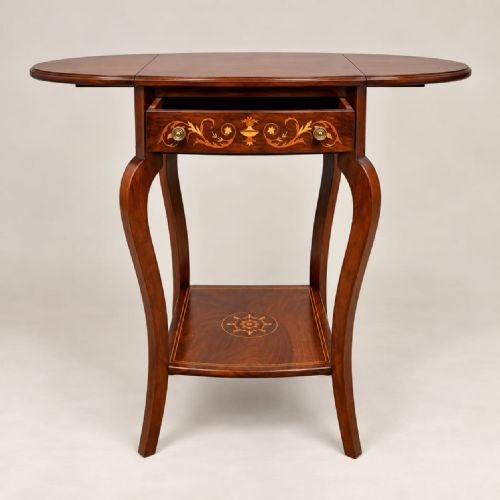

Dark Brown Wooden Table
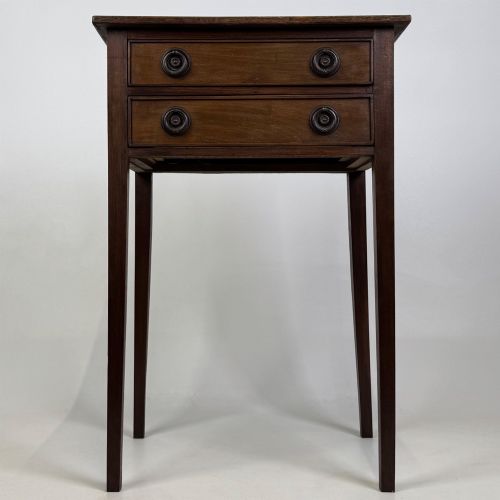
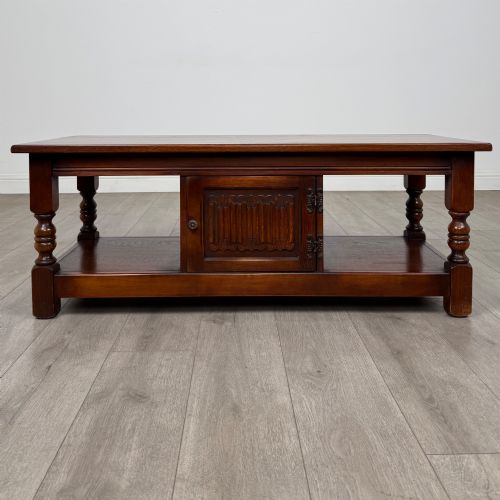
A dark brown wooden table brings warmth and utility to a room, ranging from robust oak dining formats to refined mahogany side pieces.
Dark Brown Wooden Table
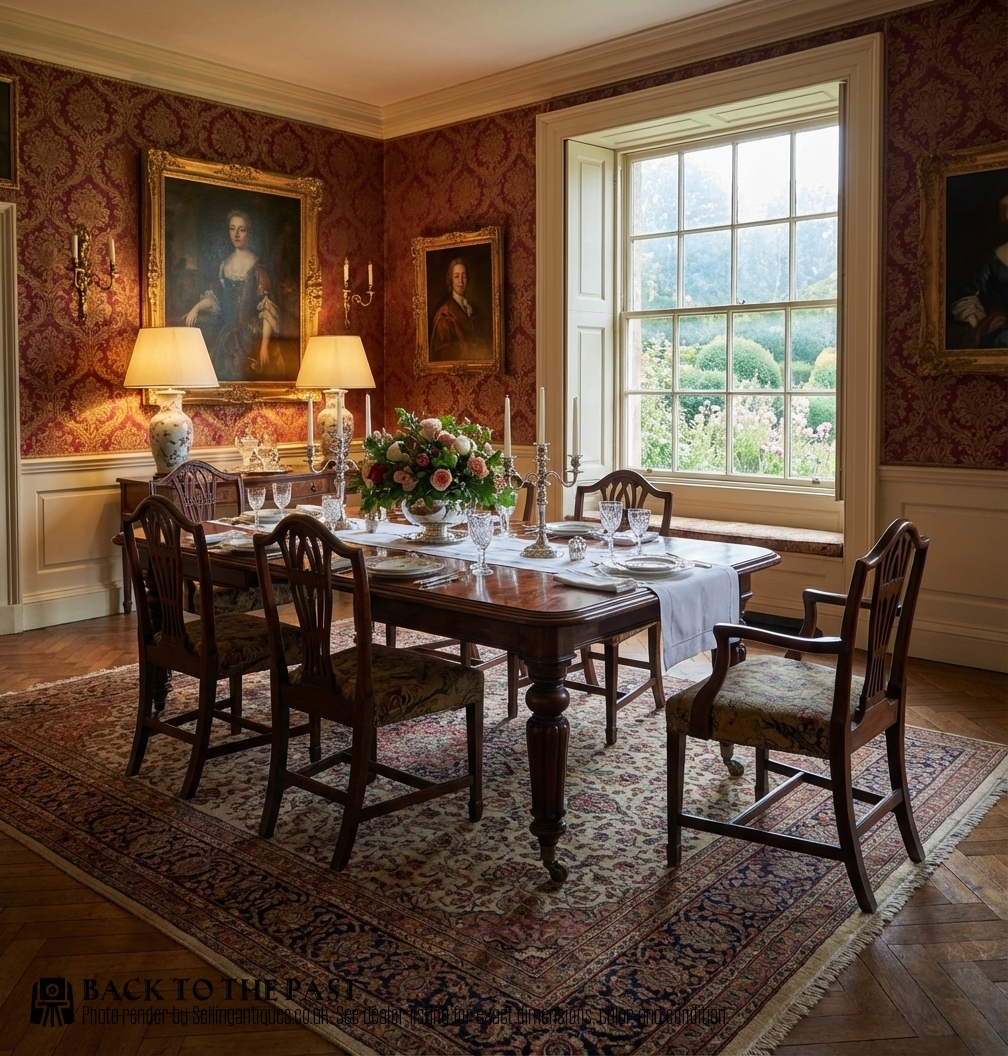
A dark brown wooden table encompasses a broad category of domestic furniture designed for dining, writing, and display. When searching for a dark brown wooden table, buyers encounter formats spanning centuries of British and European cabinet making.
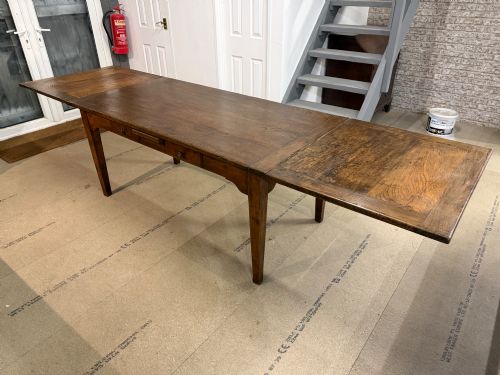
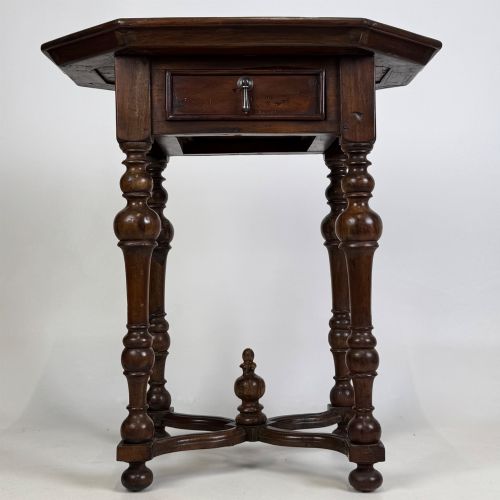
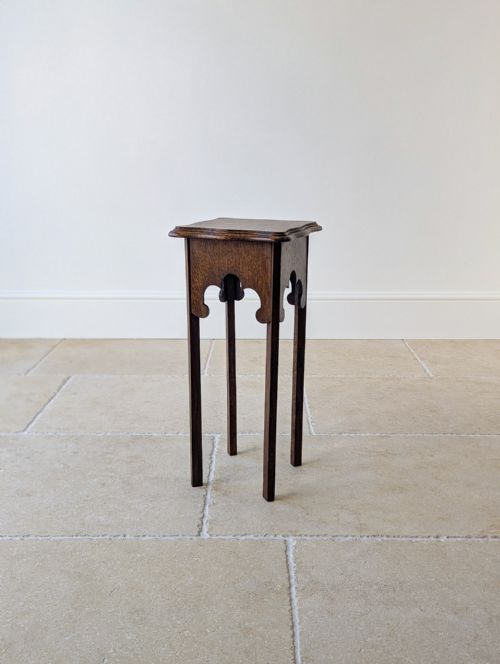
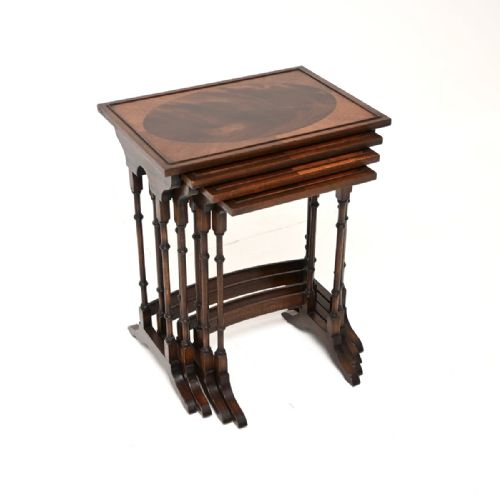
The selections available on this page run from substantial refectory dining boards to compact side tables, occasional stands, and nests. Oak and mahogany appear most frequently, shaped into drop-leaf, tilt-top, and draw-leaf configurations.
Materials and construction
Cabinet makers relied primarily on dense timbers such as oak, mahogany, walnut, and rosewood to build these surfaces. These woods were chosen for their structural resilience and capacity to take a deep, dark finish through polishing and waxing.
Joinery methods varied by period, employing traditional techniques like pegged mortise and tenon joints in earlier pieces and dovetailing in drawers. Veneers were applied to secondary woods to create decorative grain patterns, particularly on surfaces from the Georgian and Victorian eras.
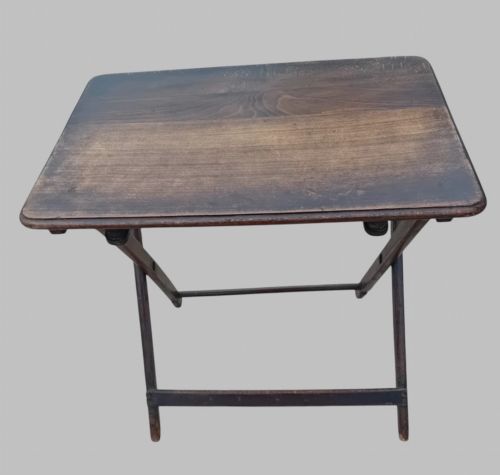
Several tables include clever hidden mechanisms, from tilting birdcage pivots to ingenious folding actions designed for campaign use.
Assessing quality and execution
The distinction between ordinary and superior pieces rests on timber selection and the precision of the joinery. Tables utilising solid, well-figured woods like Cuban mahogany or burr oak demonstrate a higher grade of craftsmanship than those built with lesser hardwoods.
Intricacy of hand carving, stability of mechanisms such as tilt-top birdcage pivots or extending leaves, and the retention of original brass hardware indicate superior workshop origin. Finer examples display thoughtful proportion and integrated detailing like chequered inlay.
Liberty & Co.·William Birch·P & MA Nicholson
The Dark Brown Wooden Table Glossary
- Refectory table
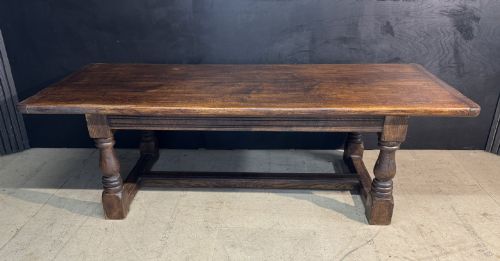
- A long, narrow dining table originally used in monastic dining halls and later adapted for domestic dining rooms.
- Drop-leaf table
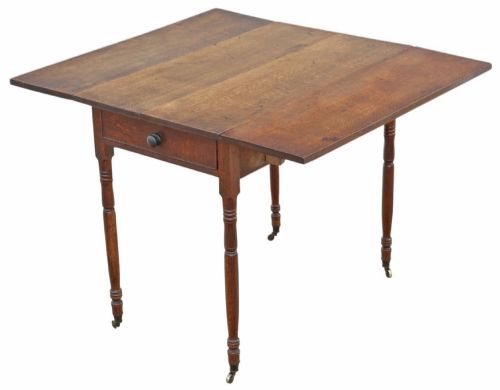
- A table with a fixed centre section and hinged flaps on either side that fold down when not in use.
- Tilt-top table
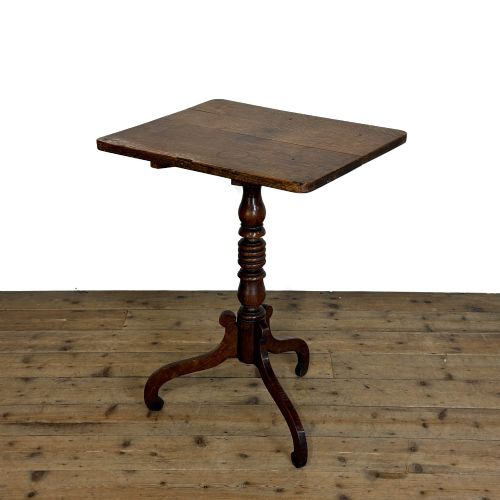
- A small occasional table featuring a mechanism that allows the tabletop to pivot to a vertical position for storage.
- Draw-leaf table
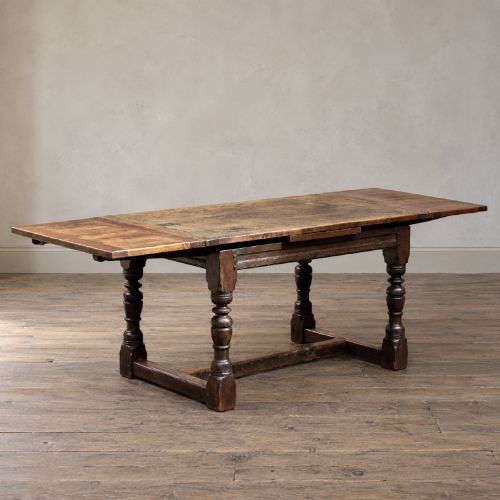
- An extending dining table with two pull-out leaves stored beneath the main top that slide out to lengthen the surface.
- Cricket table
- A small, lightweight three-legged table originating in the eighteenth century, traditionally built with a round wooden top.
Dark Brown Wooden Table: Frequently Asked Questions
What is a draw leaf table?
A draw leaf table is a dining table designed with concealed panels beneath the main surface. These leaves pull out from either end to extend the length of the table.
This mechanism allows the table to remain compact for daily use while accommodating extra diners when needed.
What is a cricket table?
A cricket table is a small occasional table supported by three splayed legs. The design provided stability on uneven floors in domestic interiors.
These pieces typically feature a circular wooden top and a triangular underframe.
How do I identify a Georgian table?
Georgian tables often display specific stylistic traits associated with the eighteenth and early nineteenth centuries. Look for classical proportions, straight or cabriole legs, and the use of dense mahogany or oak.
Joinery techniques and hardware styles help confirm the period of manufacture.