
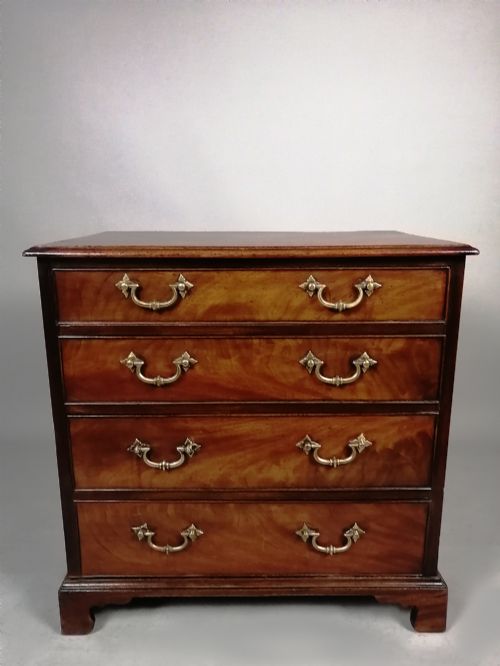
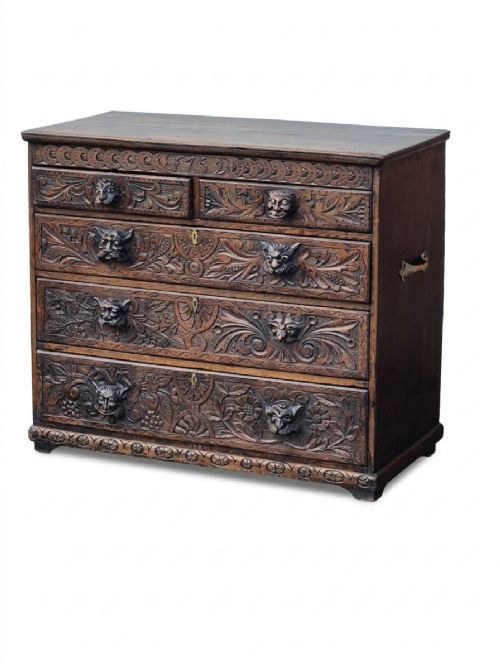
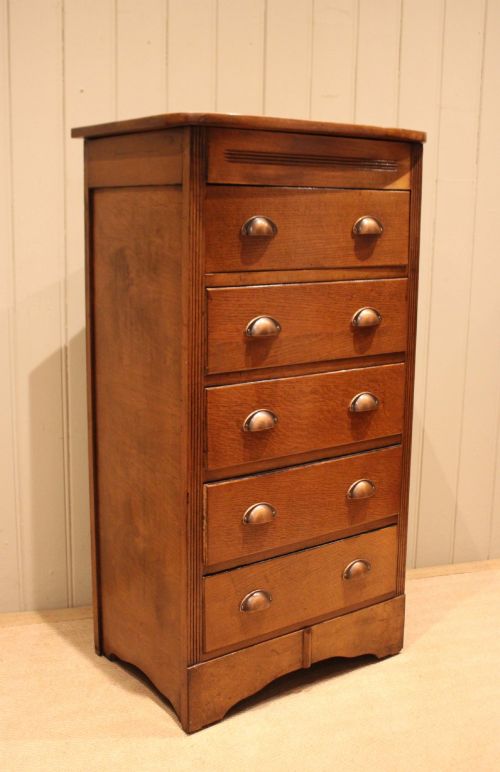
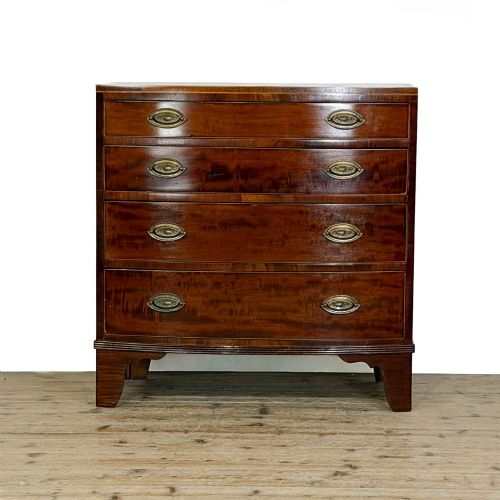


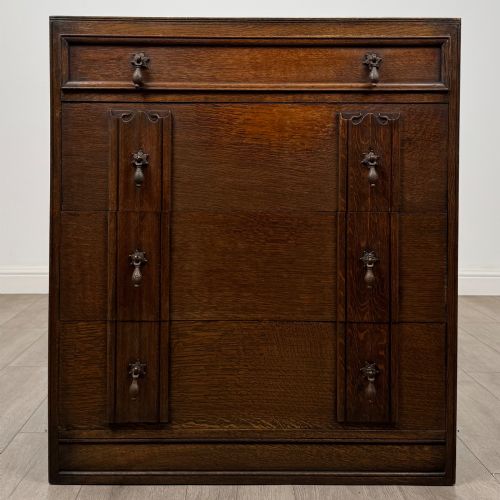
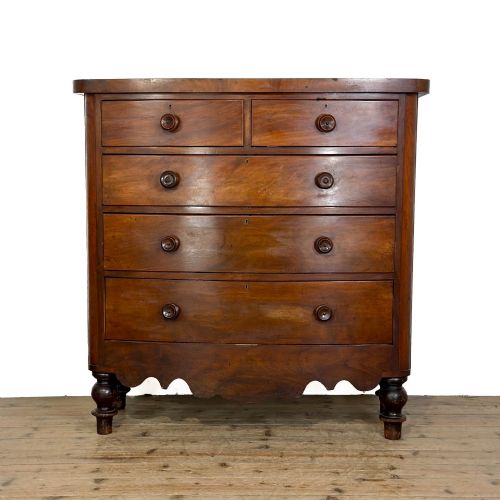
Dark Brown Tallboy
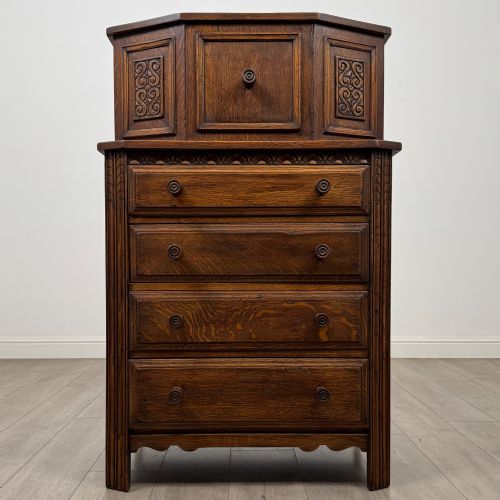
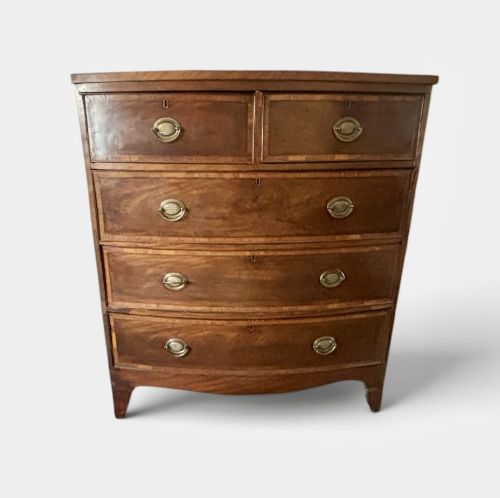
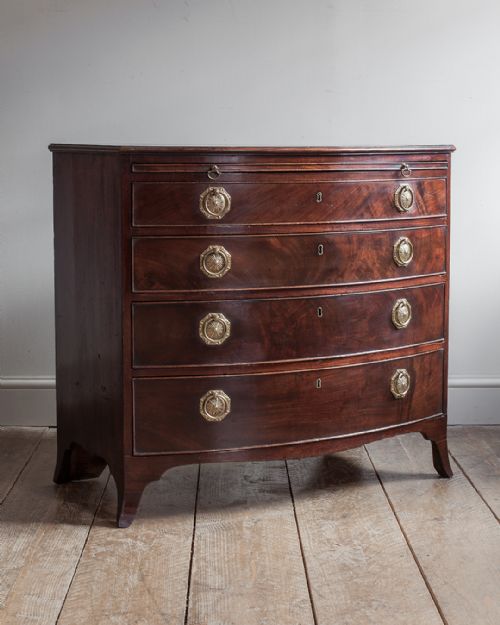
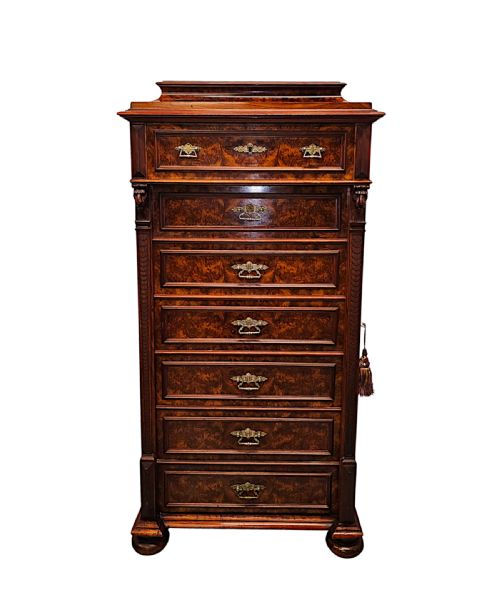
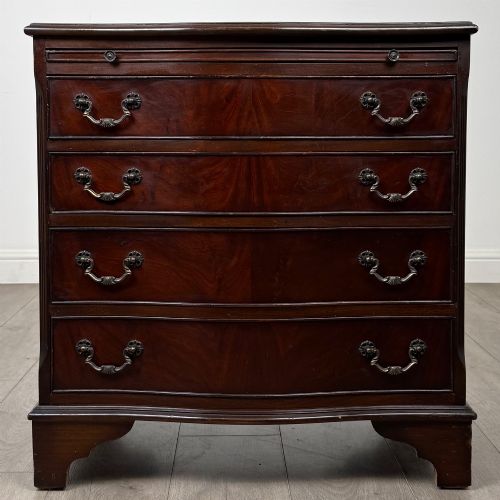
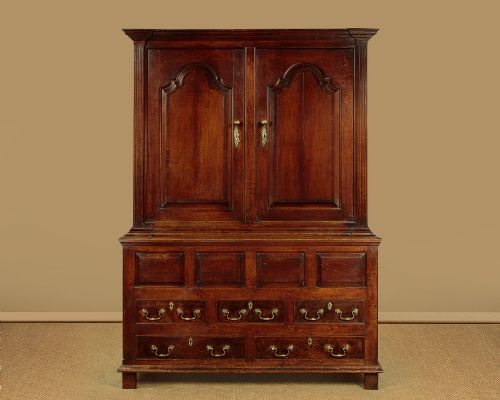
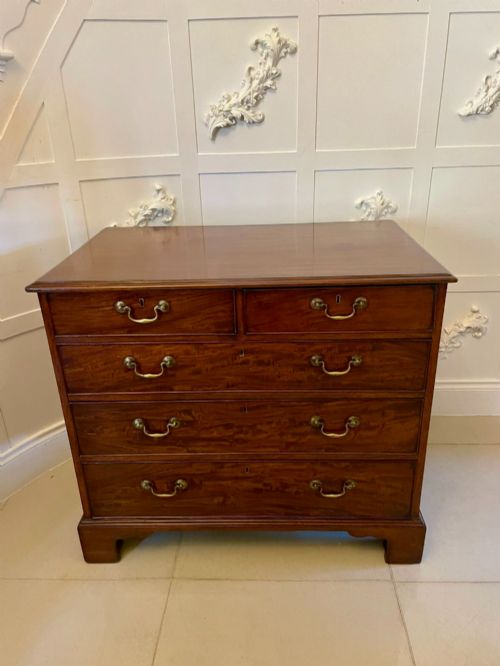
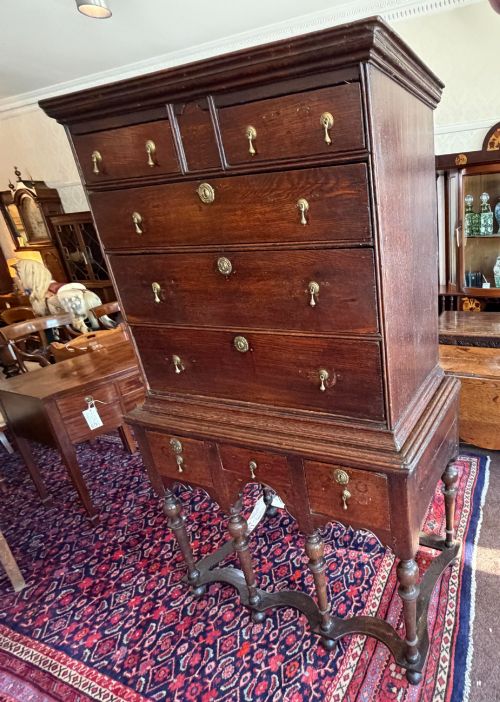
A dark brown tallboy provides vertical storage with characteristic depth of tone, drawing the eye upwards while housing linen and garments.
Dark Brown Tallboy
A dark brown tallboy brings together stacked drawers and chest-on-chest configurations from centuries of domestic joinery. These pieces serve as practical vertical storage units designed to occupy minimal floor space whilst offering substantial capacity.
The selections found here span from the seventeenth century through the Edwardian period, encompassing oak, mahogany, and walnut construction. Buyers encounter forms ranging from simple geometric moulded fronts to elaborate chests on stands.
Georgian and Victorian iterations dominate the material record, frequently presenting rich timber figuring and traditional brass hardware. Each piece reflects the domestic requirements of its era, from modest country houses to grander urban interiors.
Subtleties of Execution
The standard of a dark brown tallboy rests upon the crispness of its joinery and the selection of timber veneers. Superior examples display continuous grain matching across drawer fronts and precise dovetailing hidden from casual view.
Original hardware, untouched surface patination, and the retention of secondary timbers elevate an individual piece. Lesser examples suffer from mismatched timber replacements, degraded drawer runners, or unsympathetic refinishing that obscures the natural grain.
Listings span from seventeenth-century oak pieces to Edwardian mahogany designs, illustrating the evolution of vertical storage forms.
The Dark Brown Tallboy Glossary
- Tallboy
- A tall chest of drawers, often constructed as one chest stacked upon another or upon a low stand. This form maximises vertical storage capacity.
- Dovetail
- A joint formed by interlocking wedge-shaped fingers, essential for durable drawer construction. Hand-cut variations indicate earlier craftsmanship.
- Patina
- The surface sheen and softening of colour developed through age, handling, and wax polishing. This quality distinguishes period surfaces from modern finishes.
- Secondary Wood
- The timber utilised for hidden structural components, drawer linings, and backboards. Examining these woods assists in determining regional origin and period.
- Satinwood
- A pale, durable exotic timber used for contrasting stringing and banding on mahogany furniture. It provides visual relief against darker primary woods.
Dark Brown Tallboy: Frequently Asked Questions
Where should I place a tallboy?
A tallboy functions effectively in bedrooms and dressing areas where vertical capacity matters most. Ensure sufficient clearance for doors and drawers to open fully against adjacent walls.
Position the piece away from direct heat sources and strong sunlight to protect the dark timber finishes from fading or drying out over time.
How do I care for antique timber?
Maintain the surface by applying natural beeswax sparingly and buffing with a soft cloth to nourish the wood. Avoid silicone sprays and harsh chemical cleaners which damage historical finishes.
Maintain consistent room humidity levels to prevent the timber from expanding or contracting excessively, which can cause drawer sticking.
How do I distinguish oak from mahogany?
Oak displays prominent medullary rays and an open, coarse grain structure typical of seventeenth and eighteenth-century pieces. It generally presents a lighter golden-brown tone that deepens with age.
Mahogany offers a tighter, finer grain with rich reddish-brown hues that can be finished to a very dark shade. It became the dominant luxury timber during the Georgian and Victorian eras.