

Victorian Wellington Drawers
Victorian wellington drawers are tall, narrow locking chests designed to save space while keeping private papers secure.
Victorian Wellington Drawers
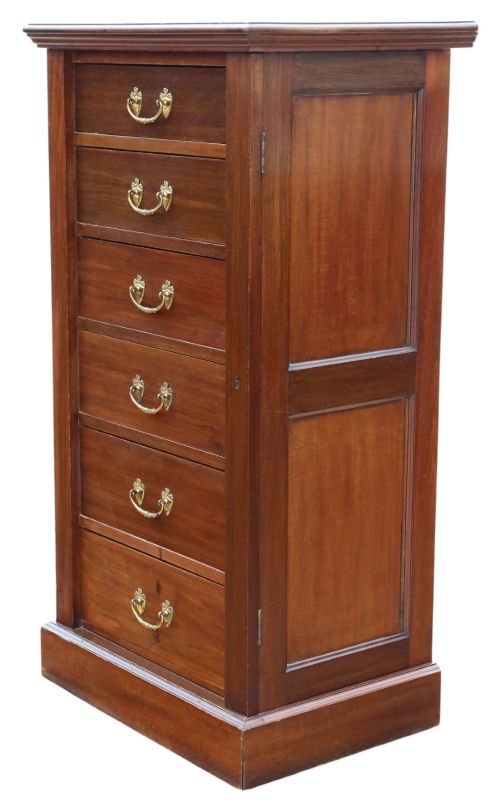
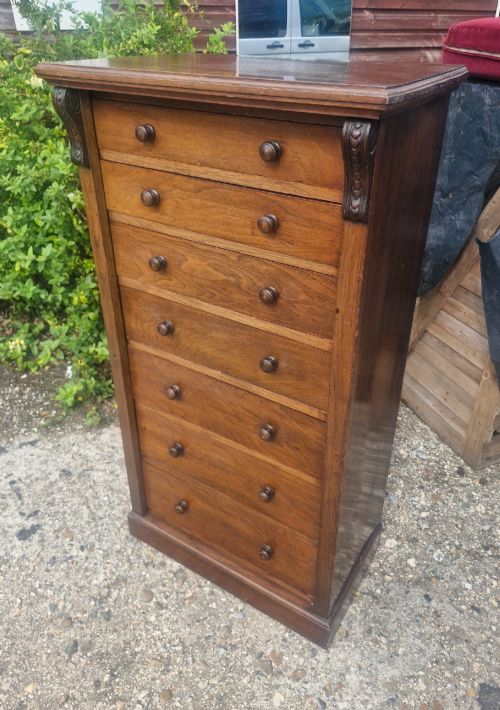
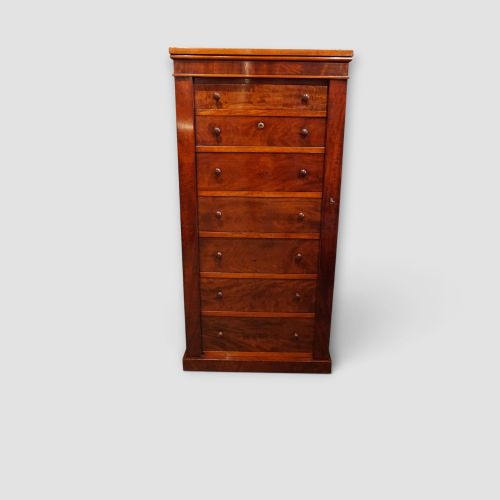
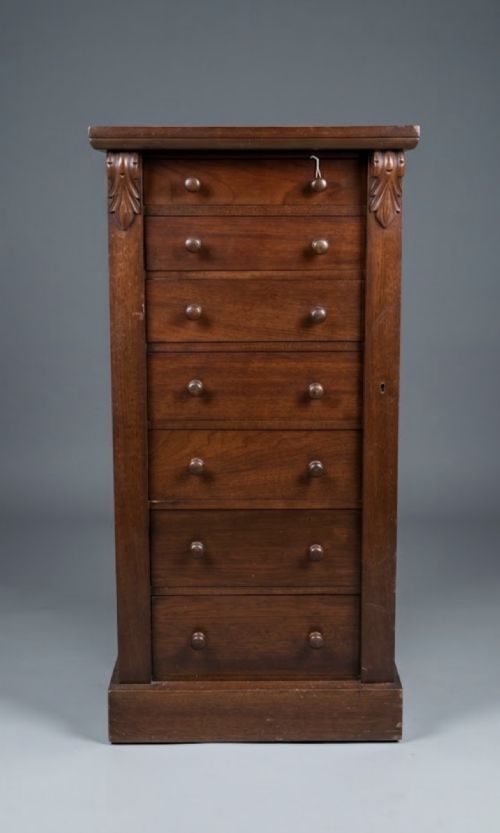
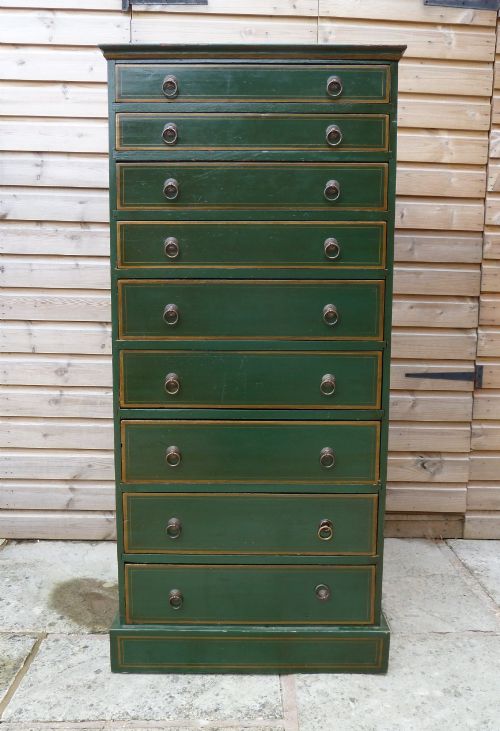
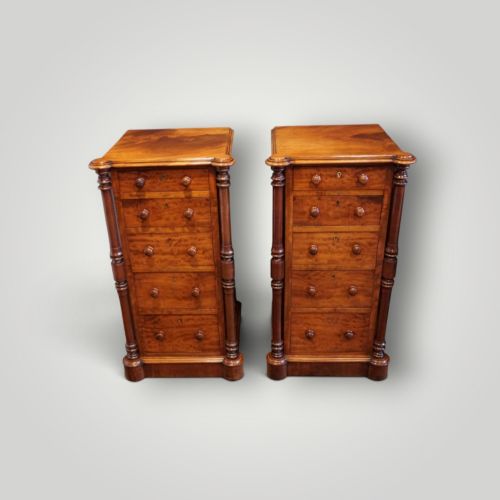
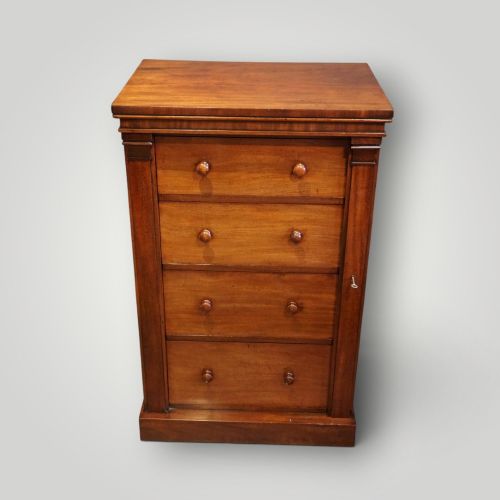
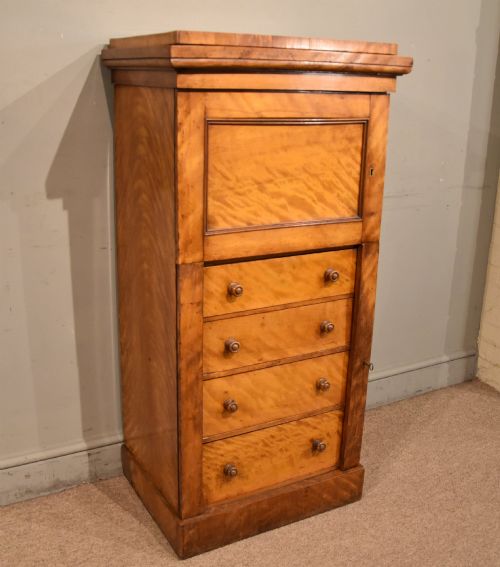
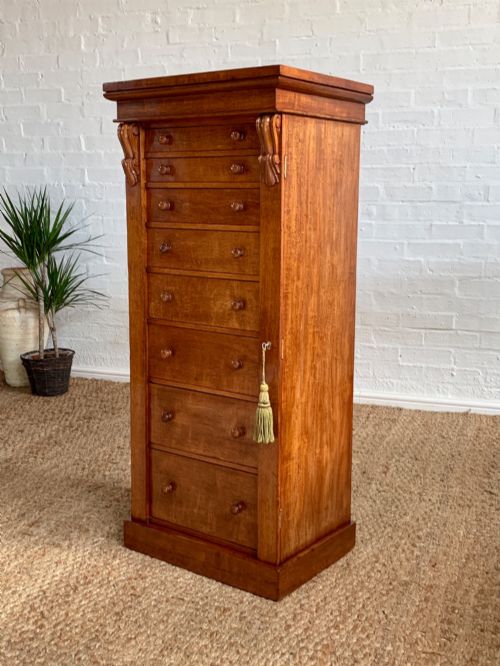
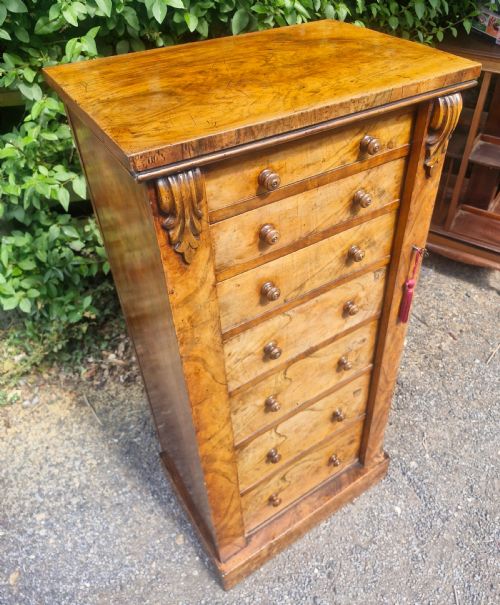
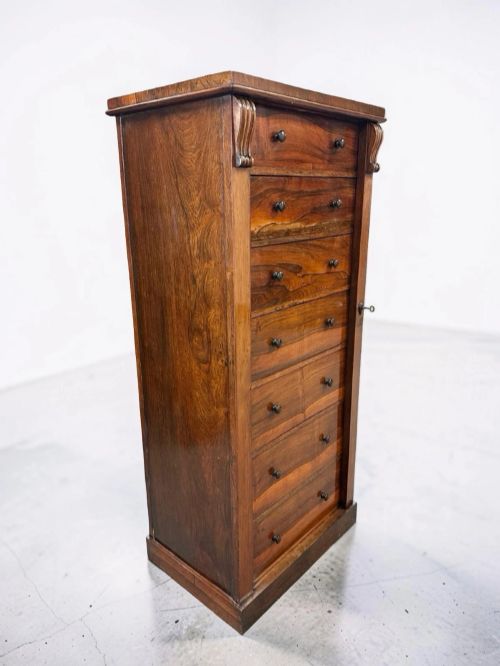
Victorian wellington drawers stand as tall, narrow chests characterised by a hinged locking stile on one side that secures all the drawers at once. These pieces emerged primarily during the nineteenth century to serve domestic and study spaces where floor space was at a premium.
Makers designed these items to offer substantial storage capacity within a compact footprint. Buyers often encounter standard chests alongside miniature versions, collectors' cabinets, and filing variants from the late Victorian period.
How They Were Made
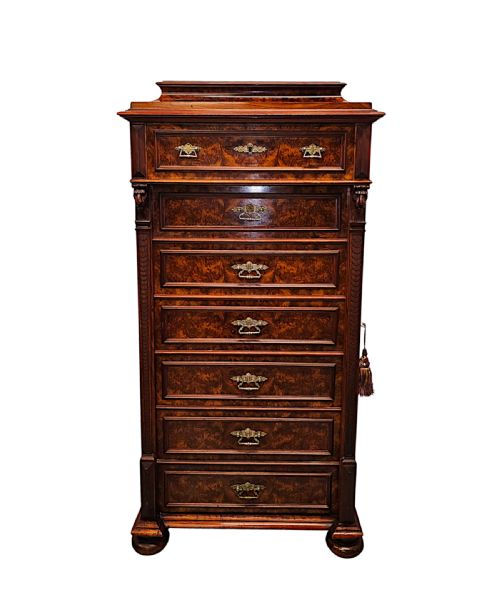
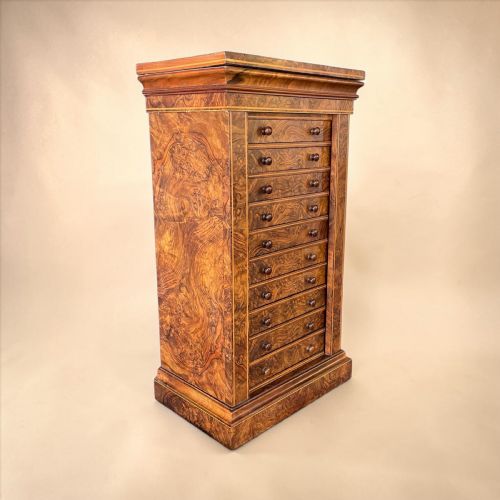
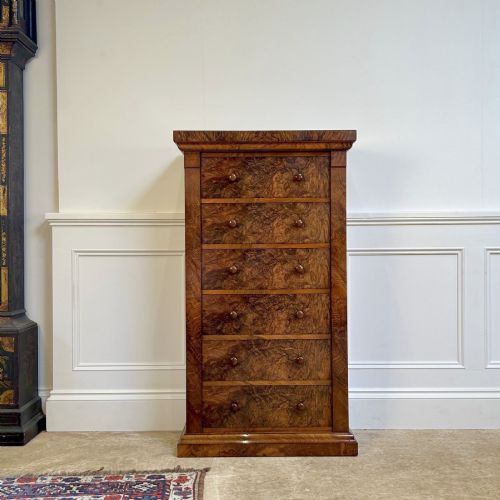
Cabinetmakers built these pieces using solid timbers such as mahogany, oak, and walnut, frequently applying figured veneers like burr walnut or flame mahogany to the drawer fronts. Secondary woods such as pine appear on internal drawer linings and structural backs.
The defining mechanical feature relies on a sturdy vertical locking flap or stile hinged to one side of the carcass. When closed and secured with a key, this side piece blocks the drawer edges, preventing any drawer from opening independently.
Listings feature woods including mahogany, walnut, burr walnut, rosewood, satinwood, oak, and pine across Victorian and Edwardian periods.
What Varies in Quality
Quality rests upon the selection and bookmatching of timber veneers, alongside the crispness of applied mouldings and turned wooden knobs. Superior examples exhibit tightly figured grains across multiple drawers with seamless veneer joins.
Construction standards show in the precision of the locking mechanism and the smooth operation of the side stile. Finer pieces maintain structural integrity and original hardware, whereas lesser versions show clumsy timber repairs or replaced locks.
Warings Liverpool·Gillows·Holland & Sons·Shoolbred
The Victorian Wellington Drawers Glossary
- Wellington chest
- A tall, narrow chest of drawers secured by a hinged locking pilaster on one side. This design gained popularity across the nineteenth century for bedrooms and studies.
- Secretaire
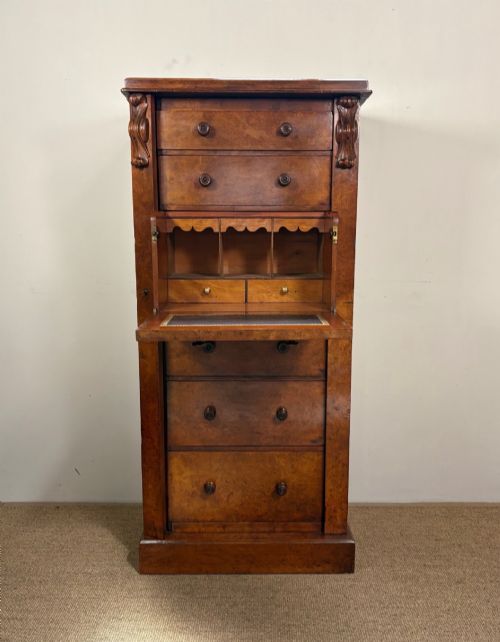
- A cabinet or chest incorporating a pull-down writing drawer fitted with small compartments and pigeonholes. It combines storage with a compact writing surface.
- Pilaster
- A vertical locking flap attached to the side of the chest that holds the drawers shut when locked. It swings outward once the key is turned.
- Graduated drawers
- A sequence of drawers that decrease in depth from the bottom to the top of the chest. This layout provides proportional balance to tall pieces.
- Flame mahogany
- A veneer cut from the fork of the mahogany tree to create a distinctive flickering flame pattern. Cabinetmakers reserved this timber for principal display surfaces.
Victorian Wellington Drawers: Frequently Asked Questions
Why do these chests have a locking side flap?
The locking stile provides security for the entire stack of drawers through a single key turn. This mechanism kept confidential papers and valuables private in busy Victorian households.
Cabinetmakers integrated the flap flush against the drawer ends so the locking action remained hidden until opened.
How do I use a wellington chest today?
These tall chests fit well into tight spaces where standard horizontal dressers take up too much room. They work effectively in bedrooms for folded garments or in studies for stationery and documents.
The narrow footprint makes them practical for hallways and alcoves while offering deep vertical storage.
Are all these chests made of mahogany?
While mahogany and its veneered variations dominate the selection, workshops also utilised walnut, burr walnut, rosewood, and oak. Some regional or later pieces feature pine or satin birch.
The choice of timber typically reflects the decade of production and the intended formality of the room.
What is the difference between a standard chest and a secretaire model?
A standard wellington chest contains only stacked drawers from top to bottom. A secretaire version conceals a fitted writing desk behind one of the upper drawer fronts.
This drop-front drawer opens to reveal small pigeonholes and compartments designed for correspondence.