


Dark Brown Oriental Rug
These heavy dark brown oriental rug pieces bring deep tribal character and enduring warmth into a room.
Dark Brown Oriental Rug
A dark brown oriental rug is typically a tribal or nomadic weaving produced across Persia, Afghanistan, and the Caucasus during the nineteenth and early twentieth centuries. When searching this phrase, buyers encounter hand-knotted room-size carpets, smaller area rugs, and narrow hallway runners woven by specific regional groups.
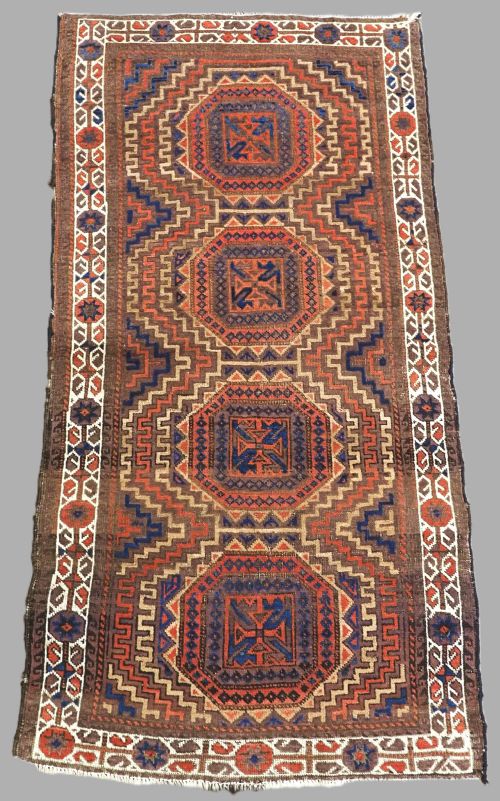
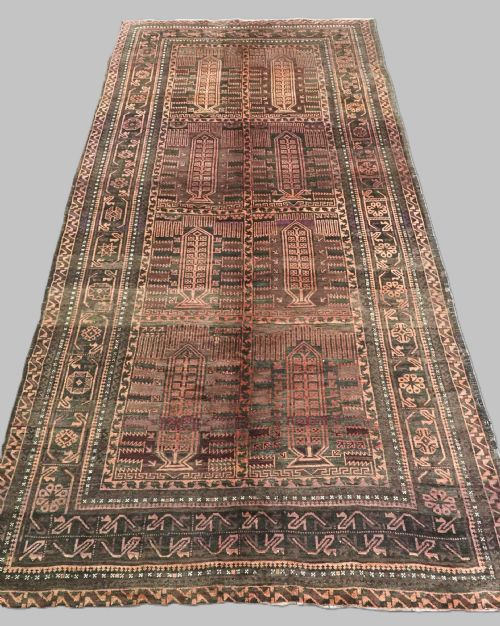
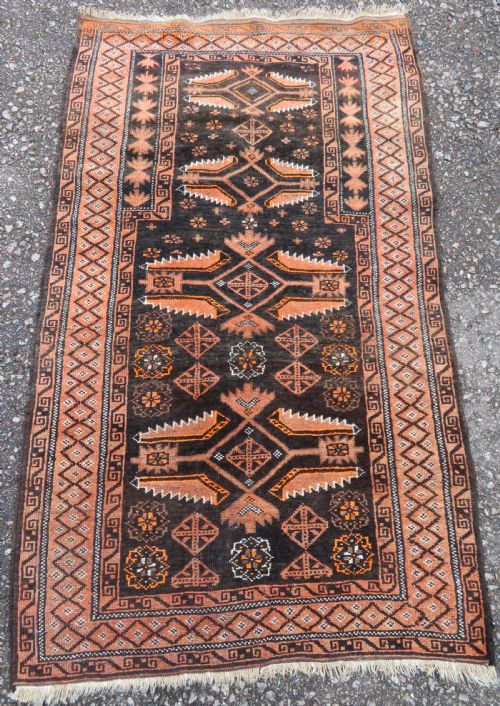
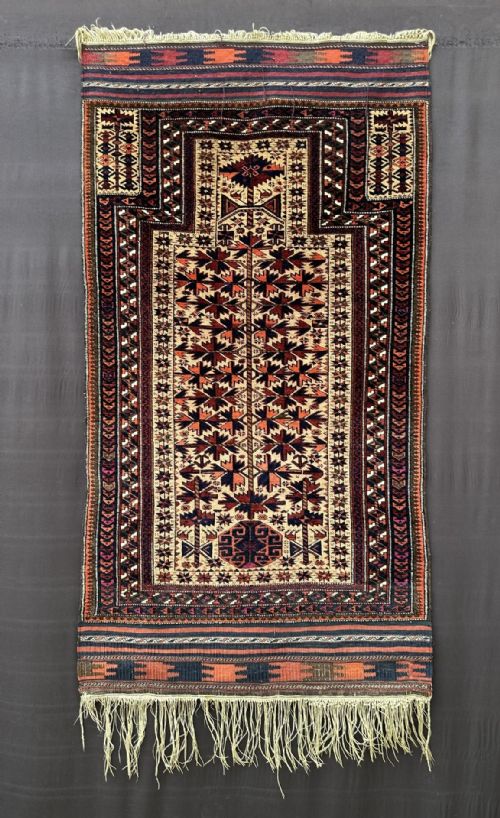
The selections on this page lean heavily toward Baluch, Timuri, Kurdish, and Yomut tribal weavings created between eighteen-eighty and nineteen-thirty. These pieces frequently display rich, dark grounds populated by repeating guls, prayer mihrabs, and geometric lattice motifs.
Formats range from compact prayer rugs and pushti faces to elongated runners and main carpets designed for nomadic or village dwellings. Each piece reflects the distinct visual vocabulary of its specific maker group, anchored by sombre, earthy palettes.
Materials and construction
Weavers constructed these carpets using resilient wool and hand-spun wool piles knotted onto sturdy cotton or wool foundations, occasionally incorporating goat hair for added durability along the selvedges. Natural dyes provided the deep, saturated dark brown and auburn tones that ground the primary fields.
The technical execution relies on traditional tribal knotting methods, producing dense, tactile surfaces built to withstand generations of floor use. Natural dye variations across the wool yarns create subtle abrash and tonal shifts within the dark brown fields.
Many of these dark brown rugs carry the invisible dust of nineteenth-century mountain winds, faithfully trapped in the lanolin of hand-spun wool.
Understanding quality differences
Quality in these tribal weavings rests upon the crispness of the geometric drawing, the depth and stability of the natural dyes, and the integrity of the wool foundation. Finer knot density allows complex motifs like lotus leaves, large guls, and lattice designs to retain sharp definition against the dark brown background.
The handling of the wool also distinguishes finer examples, where hand-spun yarns display a distinct lustre and oily richness that responds well to age. Structural completeness, including original borders and secured ends, separates well-preserved examples from heavily restored pieces.
The Dark Brown Oriental Rug Glossary
- Gul
- A medallion motif frequently repeated across tribal carpets, often indicating specific nomadic or regional origins. These octagonal or polygonal shapes form the primary pattern structure in many Baluch and Turkmen weavings.
- Mihrab
- An arched design element characteristic of prayer rugs, representing the direction of prayer. It guides the eye toward the centre of the rug where the worshipper places their hands or knees.
- Abrash
- Variations in colour shade across the field of a rug, caused by shifts in dye batches or hand-spun wool lots. This natural characteristic adds depth and subtle movement to dark brown grounds.
- Pushti
- A small rug or mat, often used as a cushion face or small sitting rug in nomadic households. These compact pieces showcase the same intricate tribal designs found in larger main carpets.
- Runner
- An elongated, narrow format designed specifically for hallways and corridors. These pieces adapt repeating medallions or continuous lattice designs to fit restricted spatial dimensions.
Dark Brown Oriental Rug: Frequently Asked Questions
What is a dark brown oriental rug?
It is a hand-knotted tribal weaving from Persia, Afghanistan, or the Caucasus, featuring rich earthy tones and traditional geometric motifs.
These pieces were produced by nomadic and village weavers using durable wool and natural dyes during the nineteenth and early twentieth centuries.
How were these rugs used originally?
Nomadic and village communities utilised them as floor coverings, bedding, prayer mats, and decorative tent furnishings.
Smaller formats served as functional portable seating or saddle bags, while larger main carpets anchored the main living spaces of tribal dwellings.
How do I live with an antique rug?
Place a quality underlay beneath the piece to prevent slip and cushion the historic foundation against hard modern floors.
Keep the rug away from direct, harsh sunlight to protect the natural dyes, and rotate it periodically to ensure even wear over time.
How can I tell tribal styles apart?
Look closely at the repeating motifs, border arrangements, and the specific structural materials used in the foundation.
Baluch and Timuri pieces often feature dark brown fields with guls, while Kurdish weavings frequently display bold latch-hook medallions and heavier wool structures.