
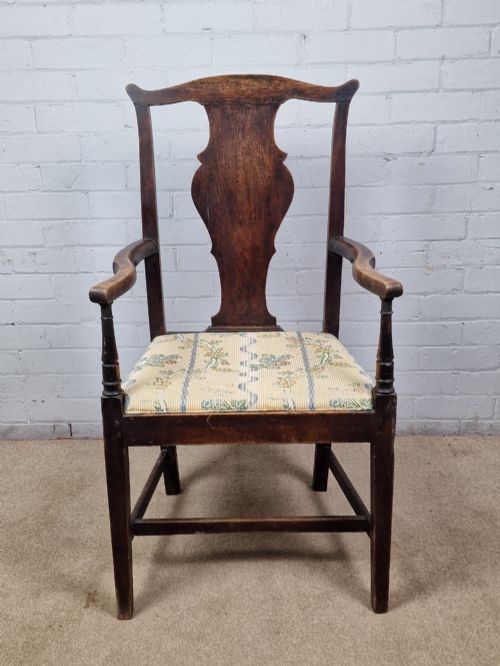
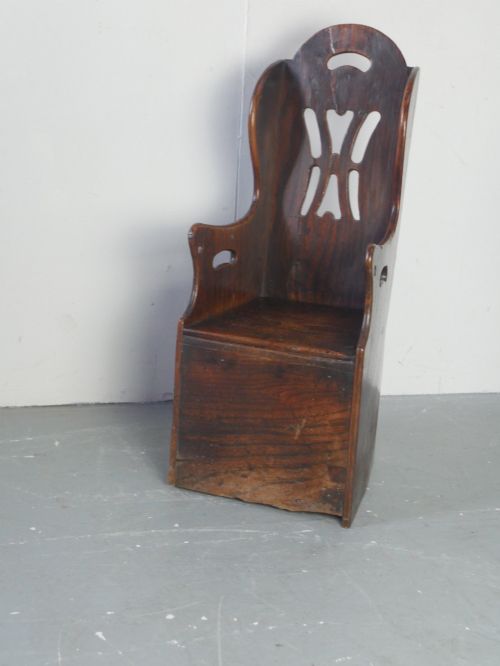
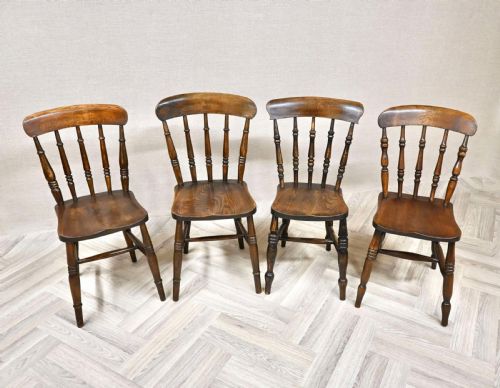
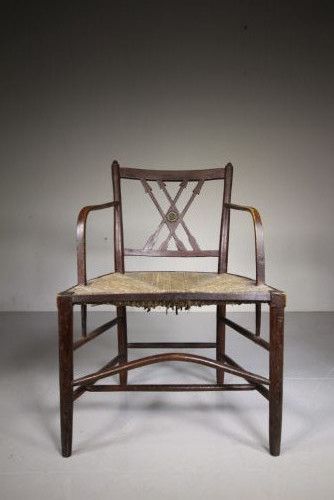


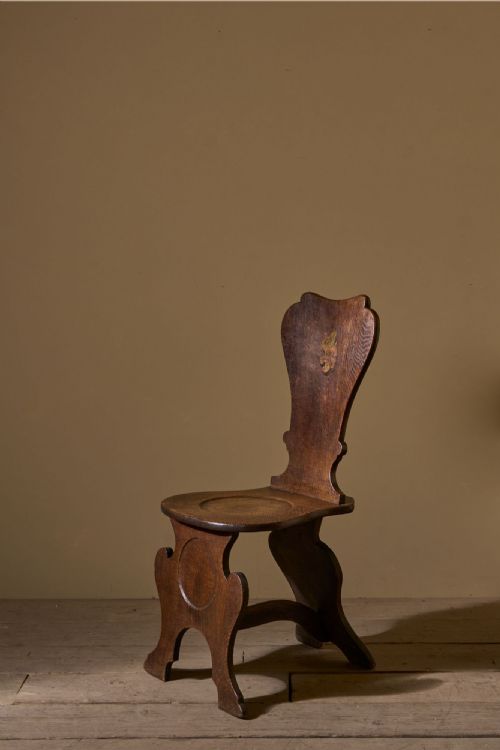
Dark Brown Oak Chair
A dark brown oak chair anchors a room with dense grain and deep patination, offering structural honesty across centuries of domestic life.
Dark Brown Oak Chair
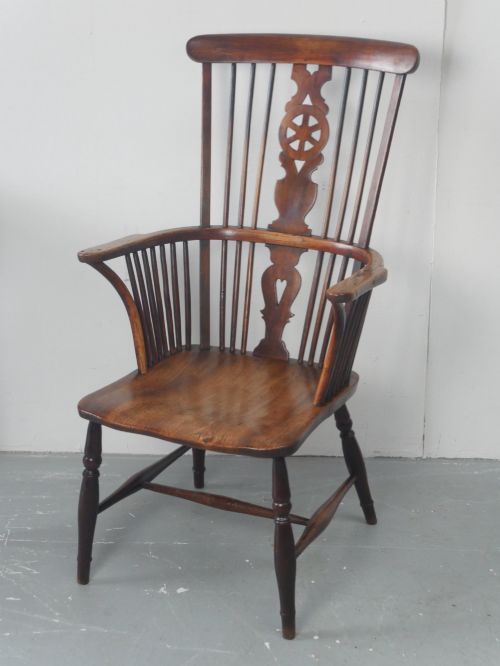
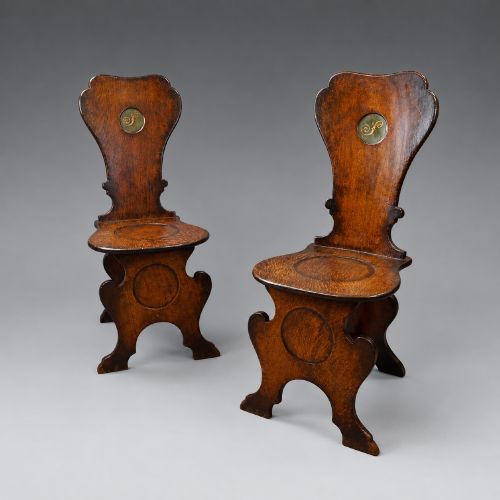
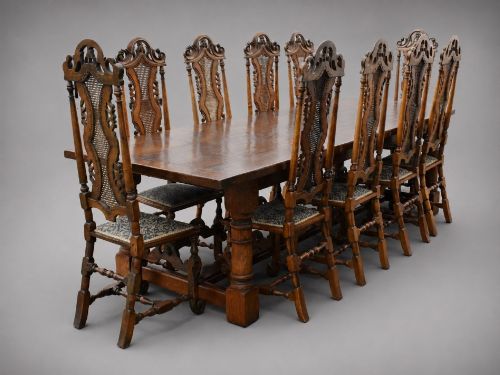
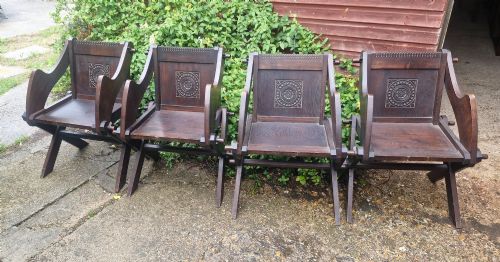
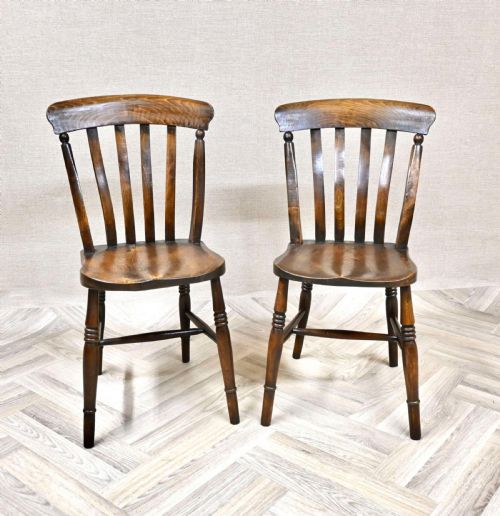
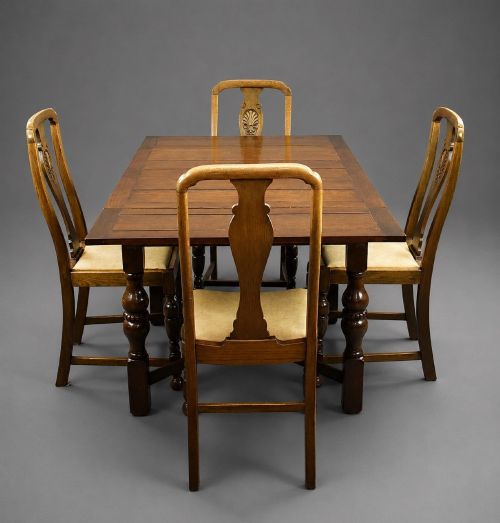
A dark brown oak chair brings centuries of domestic utility into a modern space, appearing as everything from a simple farmhouse Windsor to a high-back dining set. When buyers search for a dark brown oak chair, they encounter forms spanning the seventeenth to the early twentieth century, with Victorian and Edwardian examples appearing frequently alongside earlier vernacular pieces.
The selection ranges from sturdy kitchen armchairs and smokers bows to ladder-backed dining chairs, settles, and hall chairs. These pieces reflect regional English, Scottish, and Irish craftsmanship, utilising native hardwoods shaped by generations of local turners and joiners.
Substantial timbers and darker historic finishes define the visual weight of these seats. Whether configured as a single fireside armchair or part of a matched dining set, each item provides a utilitarian foundation rooted in historical domestic traditions.
Materials and Construction
Makers relied primarily on native oak for structural frames, legs, and stretchers, frequently combining it with secondary woods such as elm, ash, and beech for seats and spindles. This multi-timber construction exploited the specific properties of each wood, using flexible ash for steam-bent bows and dense oak for weight-bearing posts.
Joinery methods prioritized mechanical strength through mortise and tenon joints, pegged frames, and turned components secured without modern adhesives. Seats often incorporated carved solid timber depressions, woven rush, or upholstered leather fixed with decorative brass studs.
Surface finishes developed naturally through decades of handling, wax application, and exposure to smoke, while select pieces received historic paint or dark staining. Turners shaped uprights on pole lathes, leaving subtle tool marks that confirm manual execution.
Even sturdy oak occasionally submits to centuries of restless sitters, leaving some chair legs perceptibly shorter on one side than the other.
Evaluating Craft and Condition
Quality separates simple utility furniture from masterwork joinery through the integrity of the original construction and the depth of the timber patination. Superior examples retain their original pegged joints and uncompromised structural geometry without excessive timber replacement.
The refinement of the turning and the carving distinguishes regional workshops, where crisp mouldings and balanced proportions elevate an everyday seat into an accomplished piece. Surface preservation matters equally, with untouched historic finishes and deep wax patination commanding greater appreciation than stripped or overly restored timber.
The Dark Brown Oak Chair Glossary
- Windsor chair
- A wooden chair featuring a solid sculpted wooden seat into which the legs and back spindles are directly socketed. These vernacular seats often incorporate steam-bent bows and arm rails.
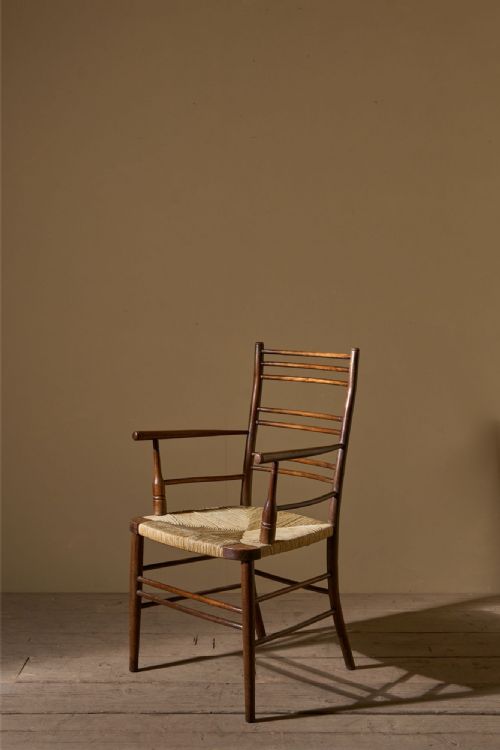
- Ladder back
- A chair back constructed with horizontal arched slats resembling the rungs of a ladder between two upright posts. This traditional form appears frequently in regional dining chairs.
- Wainscot chair
- An early heavy wooden armchair constructed primarily of panelled oak construction. These sturdy seats date to the seventeenth century and reflect high-status domestic joinery.
- Turners chair
- A heavy armchair built entirely from cylindrical turned wooden spindles and posts fitted together in geometric patterns. Also known as a thrown chair, this form dates back to medieval traditions.
Dark Brown Oak Chair: Frequently Asked Questions
How do I date an old oak chair?
Dating relies on observing construction methods, tool marks, and timber shrinkage patterns visible across the frame. Hand-riven wood, pegged joints, and primitive lathe turning typically indicate earlier centuries of manufacture.
Stylistic cues such as ladder backs, barley twist legs, or specific regional vernacular traits further narrow down the period. Comparing the joinery against documented examples helps confirm the era.
Are these chairs suitable for daily dining use?
Most antique oak chairs remain structurally robust enough for regular daily seating when maintained properly. Solid timber construction and pegged frames provide enduring strength for modern dining environments.
It is advisable to check the stability of leg stretchers and seat joints periodically. Using appropriate floor protectors prevents unnecessary wear on historic feet.
How should I care for dark oak finish?
Preserving the surface requires applying high-quality beeswaxes periodically to nourish the dry historic timber. Avoid placing wooden seating near direct heat sources or in strong sunlight, which causes timber to split.
Cleaning should be done with a soft, dry cloth without harsh chemical polishes. Gentle maintenance protects the accumulated patination built up over generations.
What is a smokers bow chair?
A smokers bow is a low-backed Windsor armchair featuring a rounded, continuous arm rail supported by turned spindles. These robust seats were common in nineteenth-century country houses and public spaces.
They offer an ergonomic seating posture due to the curved backrest wrapping around the user. Their sturdy elm or ash seats provide lasting comfort.