




Early Oak Dining Chair
An early oak dining chair brings structural honesty and heavy vernacular character to a room, built to last centuries.
Early Oak Dining Chair
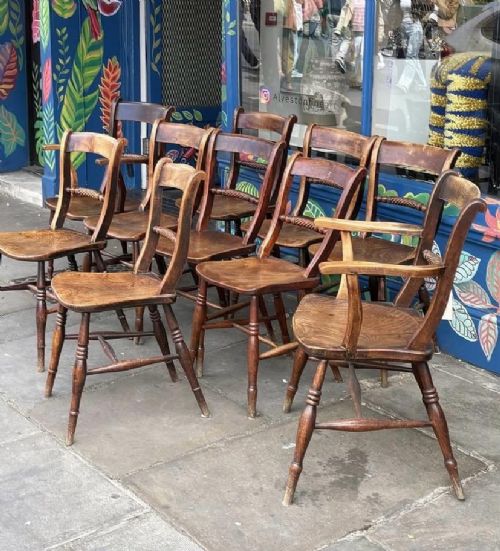
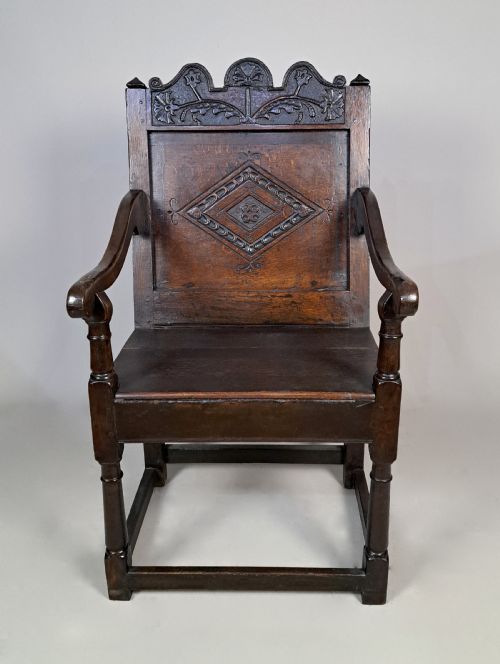
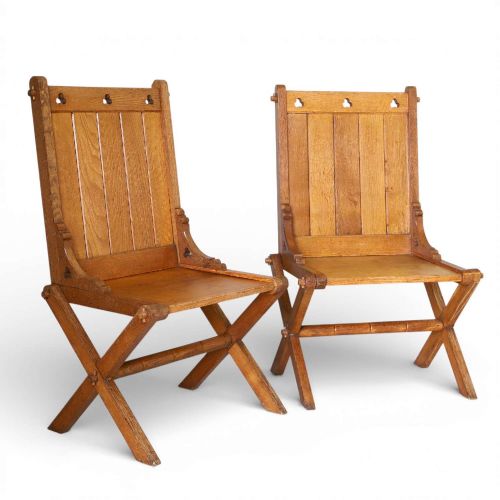
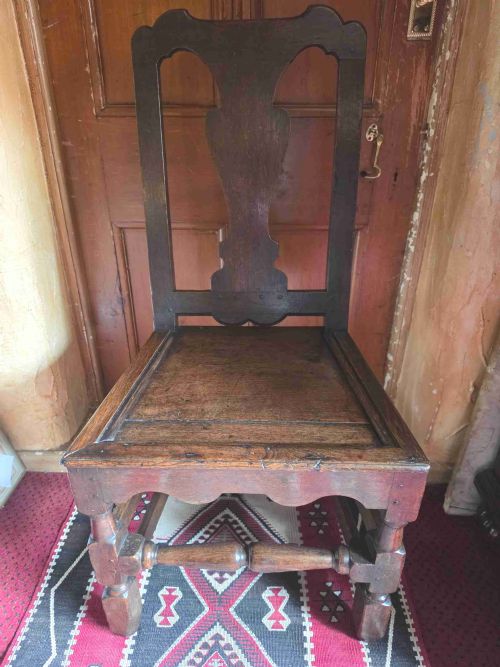
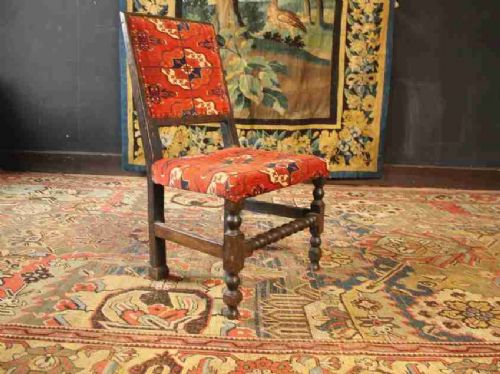
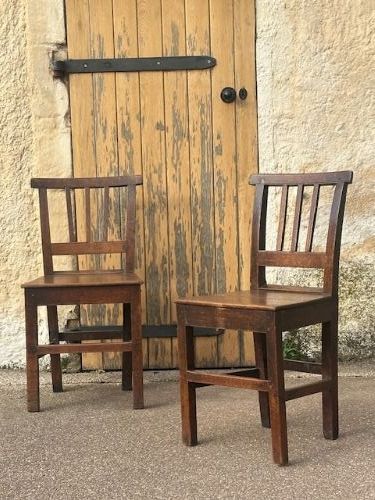
An early oak dining chair is a heavy, utilitarian seat rooted in country vernacular traditions, designed for heavy daily use. When you search for an early oak dining chair, you encounter forms spanning from seventeenth-century wainscot armchairs to nineteenth-century ladderback and cottage dining variants.
The selection ranges from joined sixteenth and seventeenth-century seating with high backs to vernacular farmhouse and kitchen chairs from the Georgian and Victorian eras. Regional pieces, including Scottish vernacular or Welsh cottage seats, appear alongside matched sets suitable for daily dining.
Distinctions in Quality
Quality rests upon the proportion of original timber retained in the frame and the integrity of the initial joinery, such as pegged joints versus later metal reinforcements. Early seventeenth-century wainscot examples derive authority from untouched surface patination and period-correct construction.
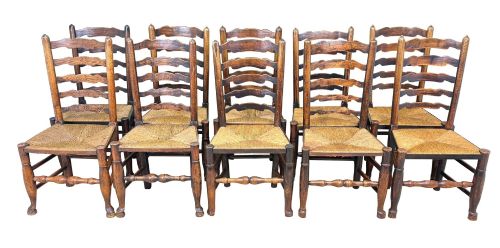
Sets command attention when they survive intact as uniform groupings rather than assembled matches, preserving consistent timber grain and wear patterns across every chair in the collection.
Some early nineteenth-century kitchen chairs still bear the subtle hollows worn into their wooden seats by generations of hurried diners.
Gillows
The Early Oak Dining Chair Glossary
- Wainscot
- A heavy, panelled wooden armchair of sixteenth or seventeenth-century origin. These sturdy seats represent status and robust joinery.
- Vernacular
- Objects made by local craftsmen using regional styles and available materials rather than high-fashion metropolitan designs. This approach produces honest, unpretentious country furniture.
- Peg Joined
- A method of securing timber joints using wooden dowels instead of metal nails. This technique accommodates seasonal wood movement.
- Ladderback
- A chair back constructed from horizontal slats arranged between two upright posts. It remains a standard form in country farmhouse seating.
Early Oak Dining Chair: Frequently Asked Questions
How do I date an oak chair?
Dating relies on examining construction methods, tool marks, and timber shrinkage patterns. Peg-joined frames and high backs typically indicate seventeenth or eighteenth-century origin.
Later Victorian and early twentieth-century pieces often display machine-sawn components and standardised turning styles that differ from earlier hand-shaped vernacular work.
Can I use these chairs daily?
Most early oak dining chairs were built for heavy domestic service and withstand regular use today. Solid timber frames and pegged joints provide lasting structural support.
Care should be taken with rush seats or antique upholstery fabrics, which may require periodic maintenance or gentle treatment.
What is a wainscot armchair?
A wainscot armchair is a formal, panelled wooden seat dating primarily from the seventeenth century. They feature solid panel backs and heavy armrests, reflecting high status.
Such chairs stand out for their architectural joinery and monumental presence in domestic interiors.
Are matched sets authentic?
Matched sets often comprise chairs gathered over time that share similar regional styles, timbers, and forms. Workshops historically produced chairs in variable quantities.
Slight variations in turning or timber tone are common within older dining sets and reflect hand-crafting traditions.