


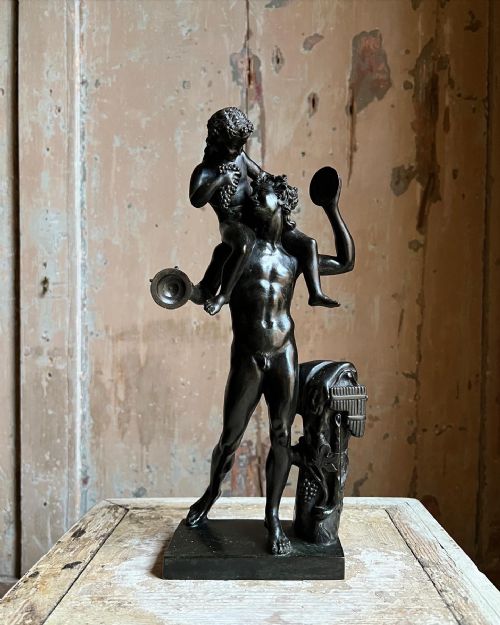


Dark Bronze Satyr Statue
A dark bronze satyr statue brings neoclassical mythology into your interior with rich patination and classical forms.
Dark Bronze Satyr Statue
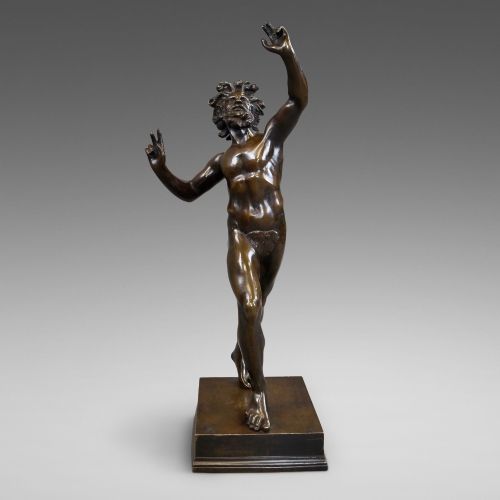
A dark bronze satyr statue represents mythological figures associated with Bacchus, predominantly taking the form of the dancing faun derived from ancient excavations at Pompeii. These sculptures span the nineteenth century, including Victorian pieces and Italian or French Grand Tour souvenirs created for travellers.
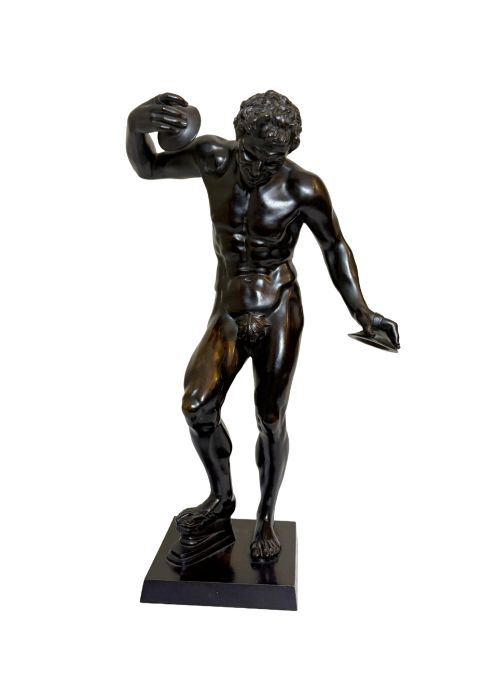
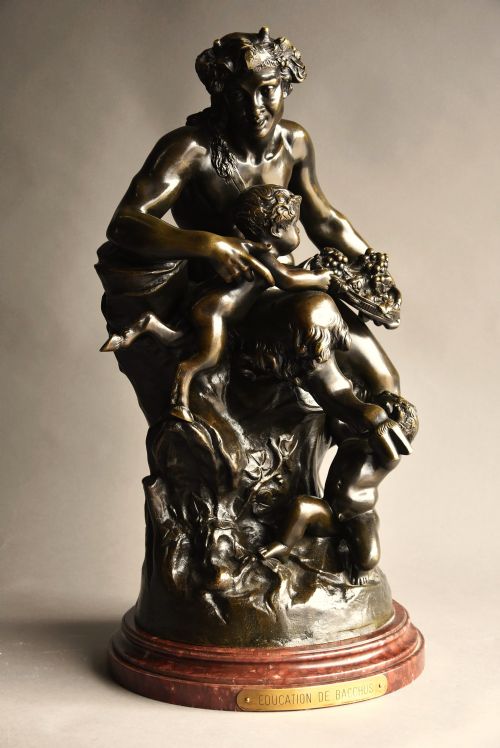
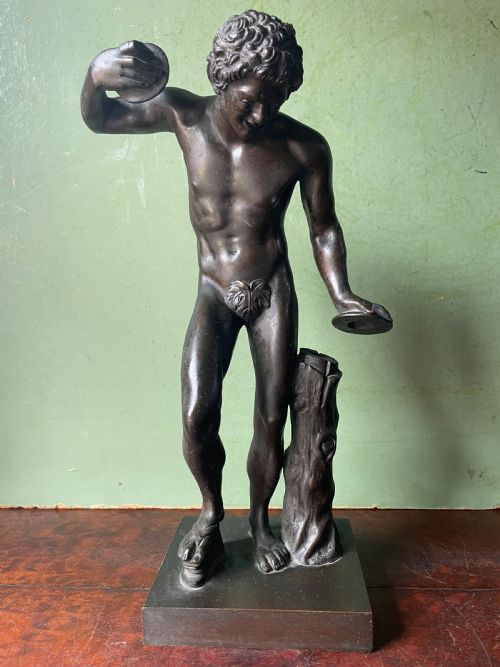
The most frequent variations on this page depict dancing fauns with cymbals, pipes, or infant figures, drawing directly on classical antiquity. Pieces range from small reductions after ancient models to larger sculptural groups involving multiple figures.
Objects appear across defined historical brackets such as eighteen-fifty, eighteen-seventy, eighteen-eighty, and eighteen-ninety, alongside general nineteenth-century and Victorian datings. Buyers encounter both solid bronze castings and alternative mediums like plaster while searching for this subject.
Materials and construction
Foundries utilised bronze and patinated bronze to cast these figures, often applying a dark chemical finish to mimic the aged appearance of excavated antiquities. Certain items utilise plaster as a primary medium rather than metal.
Many examples incorporate marble plinths or bases to support the dynamic postures of dancing satyrs and fauns. French and Italian workshops produced these reductions using traditional lost-wax or sand-casting techniques common to the period.
Pan occasionally stops playing his pipes long enough to supervise an overly enthusiastic infant Bacchus.
Evaluating quality and execution
Finer examples demonstrate crisp chasing and detail in the musculature, facial expressions, and accessories such as cymbals or pan pipes. Weaker castings lose definition in the extremities and hair.
The depth and consistency of the bronze patina contribute significantly to the visual success of the piece. Superior patination shows subtle tonal variations rather than flat, uniform dark paint.
Augusto Rivalta·Claude Michel Clodian
The Dark Bronze Satyr Statue Glossary
- Grand Tour
- A traditional trip through Europe undertaken by upper-class young men to collect art and antiquities. Souvenirs purchased on these journeys heavily influenced nineteenth-century bronze production.
- Patinated Bronze
- Metal treated with chemical solutions to produce a specific surface colour and tone. This finish protects the metal and creates an antique aesthetic.
- Reduction
- A smaller copy of a famous large-scale sculpture, often produced in bronze during the nineteenth century for domestic display. These allowed collectors to own miniature versions of museum antiquities.
- Neoclassical
- A style reviving the art and culture of ancient Greece and Rome. It dominates the design vocabulary of nineteenth-century satyr and faun figures.
Dark Bronze Satyr Statue: Frequently Asked Questions
What is a Grand Tour bronze?
A Grand Tour bronze is a nineteenth-century souvenir sculpture purchased by travellers visiting European cultural sites, particularly Italy. These pieces replicated famous classical statues discovered during archaeological excavations.
Foundries in cities like Naples, Rome, and Paris specialised in producing these reductions for the collector market.
How do I care for bronze?
Bronze requires minimal maintenance beyond occasional dusting with a soft, dry cloth. Avoid using liquid cleaners, polishes, or abrasive materials that can strip the patination.
Keeping the sculpture away from direct moisture and extreme temperature fluctuations preserves the surface finish.
Who is the dancing faun?
The dancing faun is a famous classical sculpture discovered in the House of the Faun at Pompeii. Its dynamic posture and joyous expression made it one of the most replicated subjects of the nineteenth century.
Statues on this page frequently adapt this specific antique model in various sizes.
Are these pieces solid bronze?
Many nineteenth-century sculptures utilise solid bronze casting, though some larger or hollow figures were cast with internal supports. The material description usually indicates whether the object is metal or an alternative medium like plaster.
Weight often helps distinguish solid metal castings from lighter decorative alternatives.