


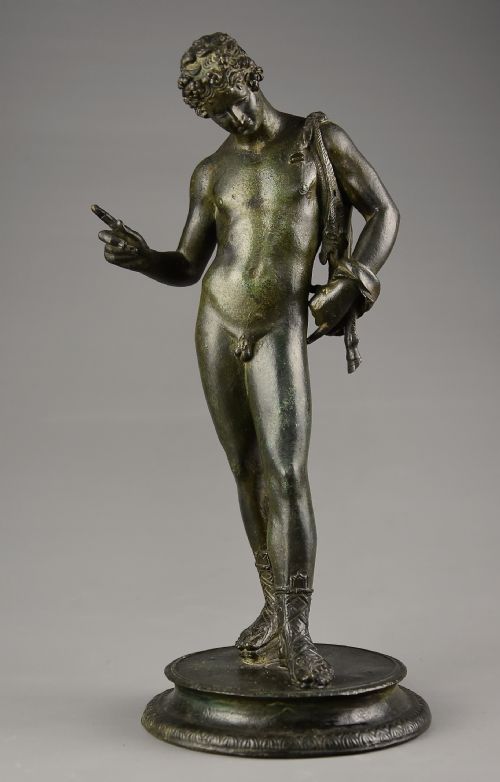
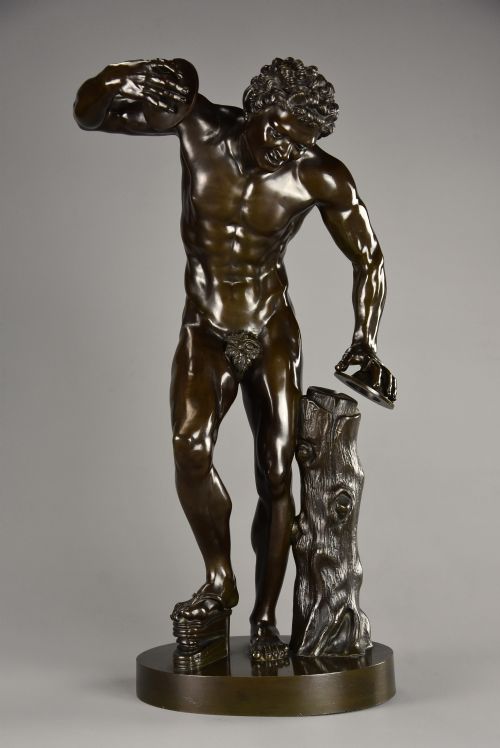


Dark Bronze Male Statue
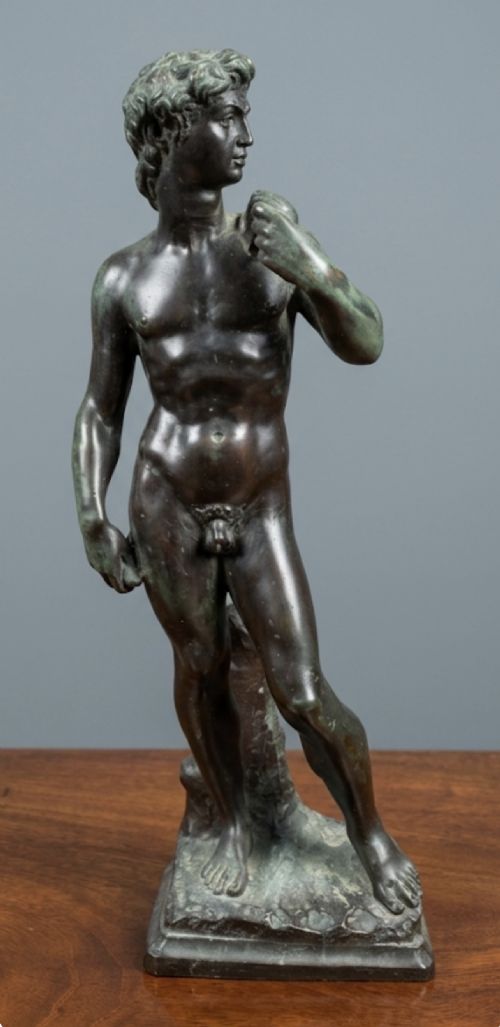
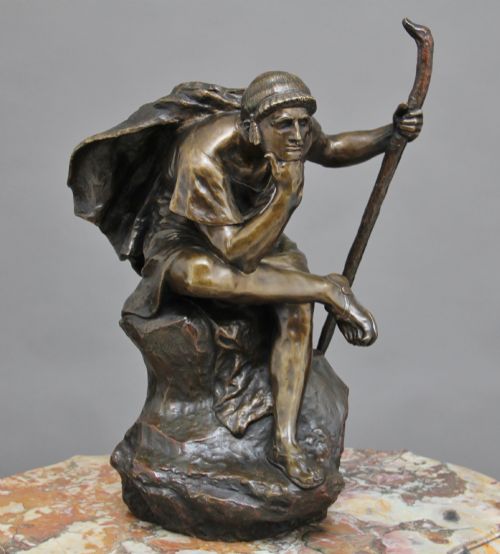
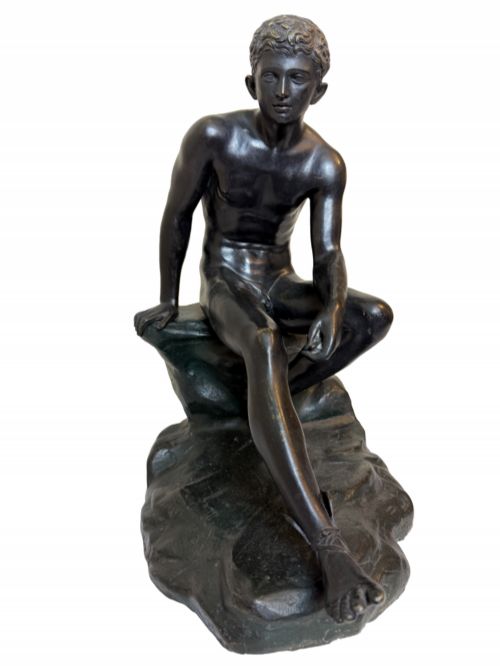
A dark bronze male statue captures classical strength and heroic form through patinated metal and detailed casting.
Dark Bronze Male Statue
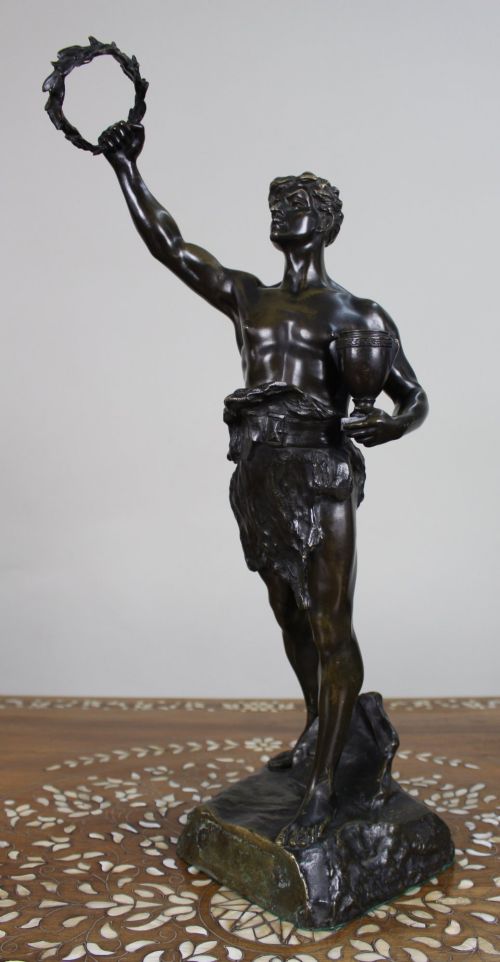
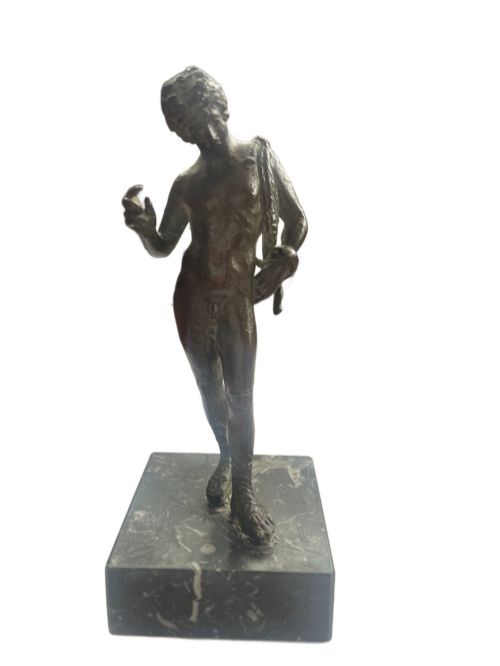
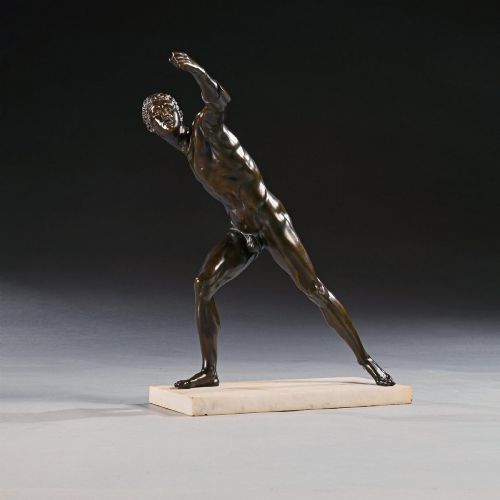
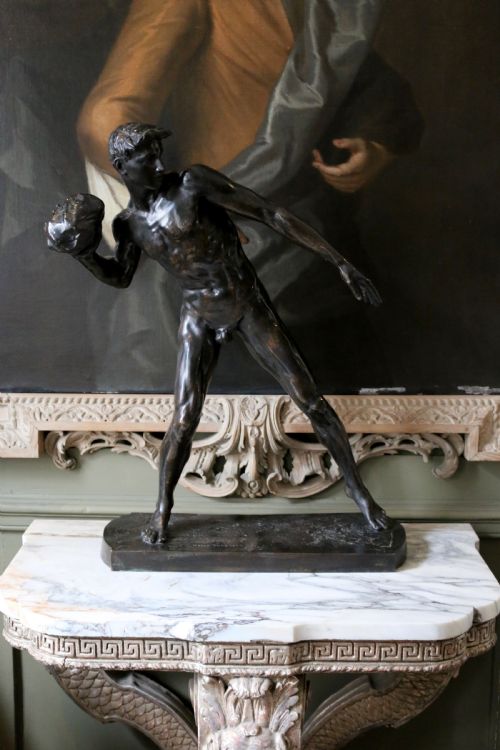
A dark bronze male statue brings classical mythology, historical figures and athletic forms into domestic interiors through sculptural casting. When searching for a dark bronze male statue, collectors encounter figures of ancient heroes, mythological gods and classical athletes originating largely from nineteenth-century European foundries. These works span Grand Tour souvenirs from Italy, French academic bronzes and later Art Deco interpretations of masculine power.
The selection on this page centres on solid metal figures and busts mounted on stone bases such as marble or fossil marble. Pieces range from intimate cabinet statuettes to monumental sculptures and figural lamps depicting subjects like Narcissus, gladiators and classical deities. Victorian and Edwardian examples sit alongside earlier Neoclassical casts and nineteen-thirties athletic studies.
What varies in quality
The sharpness of the metal chasing determines how clearly muscle contours, facial expressions and surface details emerge from the dark patina. Superior casts retain crisp anatomical precision without losing definition in hair or fingers during the finishing stage.
The choice and execution of the base material separates standard productions from finer works. High-grade pieces feature heavy mounts of fossil marble or bespoke stone plinths fitted accurately to the bronze sculpture.
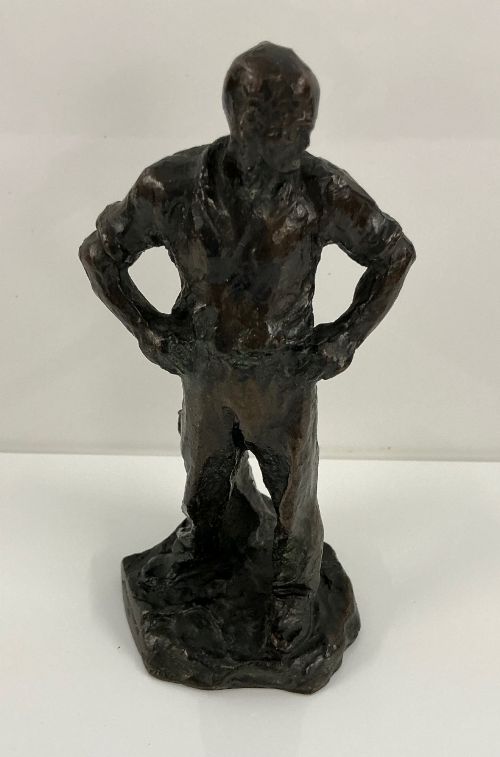
Several figures pause mid-action, capturing everything from ancient gladiators and resting peasants to powerlifters and harvest dancers holding their tools.
Hamo Thornycroft·Jules Dalou·Julien Lorieux·Emile Louis Picault·Giuseppe Moretti·Eugene Barillot·Sir Thomas Brock·Mathurin Moreau·Desire Grisard·Raoul Francois Larche·Bruno Zach·Salmson
The Dark Bronze Male Statue Glossary
- Patination
- The chemical treatment applied to the surface of a bronze sculpture to produce specific colours and tones. Dark patination enhances the contrast of muscle and shadow.
- Grand Tour
- A traditional journey through Europe undertaken by upper-class travellers who collected small bronzes and antiquities as souvenirs. These pieces often copied classical statues found in Italian museums.
- Lost-wax casting
- A historic metalworking process where a molten metal is poured into a mould that has been created by melting away a wax model. This technique allows for intricate undercuts and fine surface details.
- Chasing
- The manual process of refining a raw metal cast using small punches and hammers to clean up seams and sharpen details. Skilled chasing creates the final texture of skin and fabric.
- Neoclassical
- An artistic movement drawing inspiration from the classical art and culture of ancient Greece and Rome. Sculptures in this style emphasise heroic proportion and dignified restraint.
Dark Bronze Male Statue: Frequently Asked Questions
What subjects do these statues typically show?
These sculptures depict classical gods, Roman emperors, mythological figures and nineteenth-century athletes. Common subjects include Narcissus, gladiators, archers and historical military figures.
Many pieces reproduce famous antiquities encountered by travellers on the Grand Tour across Italy. Others record contemporary strength athletes, woodsmen and harvest dancers from the Victorian and Art Deco eras.
How should I care for a bronze statue?
Maintain the dark patination by dusting the metal gently with a soft, dry cloth. Avoid using commercial metal polishes or liquid cleaners, which can strip the chemical finish from the bronze.
Keep the sculpture away from direct heat sources and high humidity to protect both the metal surface and the fitted marble or stone base.
How can I distinguish a Grand Tour bronze?
Grand Tour bronzes were produced in Italy and France during the nineteenth century as portable souvenirs of travel. They typically replicate famous ancient sculptures discovered during archaeological excavations.
These pieces often feature characteristic dark patination and are mounted on heavy bases of marble, fossil marble or slate designed to display well in nineteenth-century libraries.
What is patination on bronze?
Patination is the deliberate coloration of a bronze surface achieved through the application of chemical solutions and heat. This process darkens the raw metal to shades of brown, black or deep green.
The resulting dark finish protects the metal and accentuates the sculptural modelling by creating contrast across muscles and drapery.