


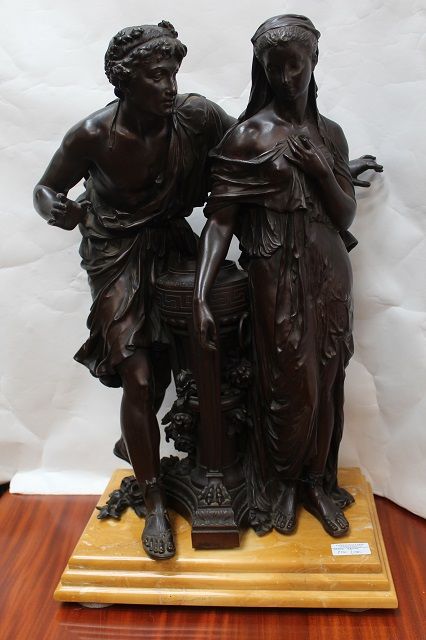

Dark Bronze Figural Group
A dark bronze figural group brings classical mythology and domestic intimacy into a room through cast metal sculpture.
Dark Bronze Figural Group
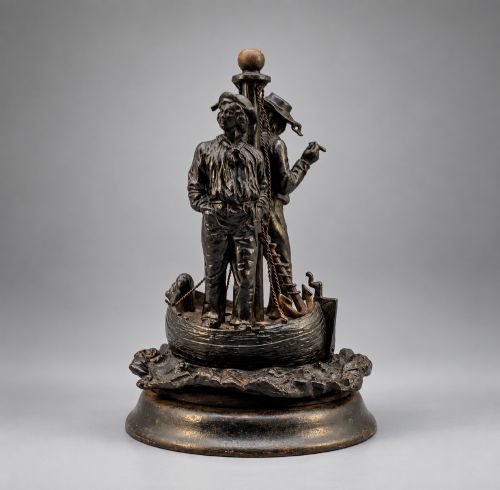
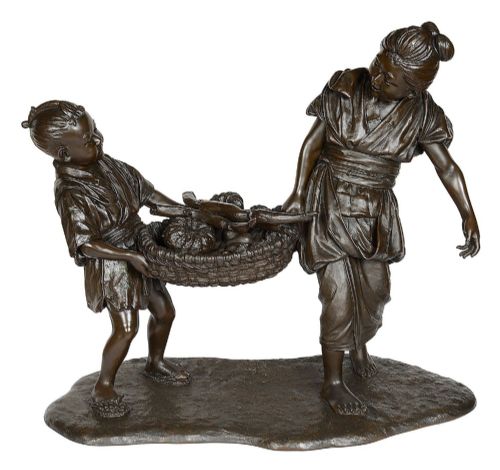
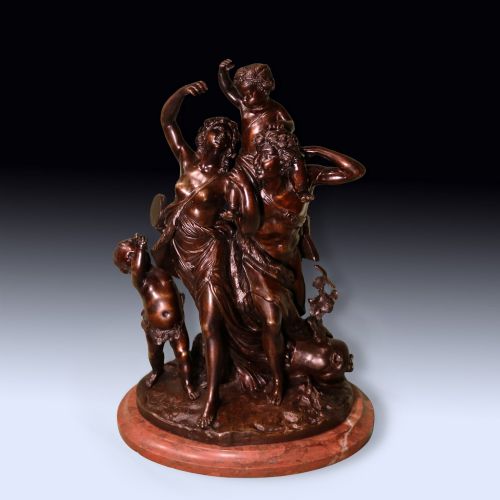
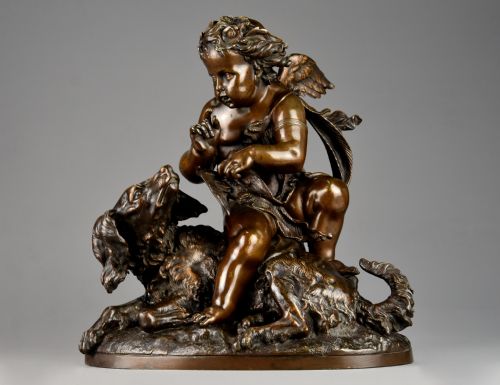
A dark bronze figural group comprises multi-figure bronze sculptures representing classical, mythological, and rustic subjects. These pieces capture dynamic interactions between figures such as Bacchus, putti, dancing maidens, and fishermen.
The selections available here stem predominantly from the nineteenth century, encompassing French neoclassical, Rococo revival, and Victorian aesthetic sensibilities. Many pieces demonstrate direct stylistic lineage from classical sculptors like Clodion.
Forms vary from intimate tabletop figures to large-scale sculptural compositions mounted on marble pedestals. Materials frequently pair dark patinated bronze with contrasting marble bases.
How they were made
Foundry workers utilised the lost-wax casting technique or sand casting to capture intricate anatomical details and drapery in bronze. The molten metal was poured into moulds taken from original clay or wax models.
Chemical patination treatments were applied to the finished bronze surface to achieve the characteristic dark patina. Artisans then chased the metal surfaces by hand to refine textures, musculature, and facial expressions.
Listings for dark bronze figural groups feature nineteenth-century French and Viennese works, frequently incorporating marble bases and patinated bronze materials.
What varies in quality
The definition and sharpness of the chasing distinguish superior metalwork from softer, more generalised casts. High-quality examples preserve the crispness of fingernails, hair strands, and fabric folds without surface pitting.
The integration of the figural group with its base determines structural integrity and aesthetic balance. Pieces mounted on shaped rouge or black marble pedestals demonstrate careful assembly where the bronze pins secure firmly into the stone.
Auguste Moreau·Carl Kauba
The Dark Bronze Figural Group Glossary
- Patina
- The surface coloration and sheen developed naturally over time or applied chemically by a foundry. This dark finish protects the metal and defines the contours of the figures.
- Putto
- A chubby male child figure often depicted with wings or as part of a mythological scene. These figures frequently accompany Bacchus or domestic groups.
- Lost-wax casting
- A traditional method where a wax model is melted out of a ceramic mould to leave a cavity for molten bronze. This allows for complex undercuts and fine details in figural groups.
- Neoclassical
- An artistic style drawing inspiration from the art and culture of classical antiquity. It prioritises restraint, classical drapery, and mythological narratives.
- Chasing
- The manual finishing process where metalworkers refine the cast bronze using hammers and punches. This step removes casting flaws and sharpens surface details.
Dark Bronze Figural Group: Frequently Asked Questions
How do I clean a dark bronze figural group?
Dust the sculpture regularly with a soft, dry bristle brush to prevent particle accumulation in the crevices. Avoid using water, soap, or abrasive metal polishes which can strip the original dark patina.
Apply a microcrystalline wax sparingly if the surface requires protection against humidity. Buff the wax gently with a clean cloth to maintain a subdued, historic sheen.
Where should I display a bronze figure group?
Place the sculpture on a sturdy, level surface such as a wooden cabinet top or a dedicated pedestal. Ensure the location avoids direct sunlight and dramatic temperature fluctuations that might affect marble bases.
Position the group at eye level or slightly below to appreciate the dynamic interactions between the figures. Adequate surrounding space allows the shadows of the dark patina to read clearly.
How can I tell if a piece is nineteenth century?
Examine the casting quality, the character of the dark patina, and the tooling marks visible on the underside. Nineteenth-century French and Viennese bronzes typically exhibit hand-chased details and heavier metal gauges.
Check for signature stamps, foundry marks, or the style of the mounting hardware on the marble base. Stylistic cues such as Rococo revival motifs or neoclassical drapery align with the period production.
What is the difference between a single figure and a group?
A figural group depicts two or more interacting characters engaged in a narrative or mythological exchange. These compositions require greater technical skill from the foundry to balance multiple bodies and spatial relationships.
Single figures focus on the anatomy and posture of one subject. Groups offer more complex sightlines and dramatic tension within the sculpture.