




Dark Bronze Censer Bowl
A dark bronze censer bowl brings quiet weight and centuries of ritual history to a room.
Dark Bronze Censer Bowl
A dark bronze censer bowl is a solid vessel designed for burning incense, appearing across centuries of Asian and European craftsmanship. When searching for a dark bronze censer bowl, a buyer encounters scholarly vessels, heavy ritual pieces, and decorative planters cast in bronze, copper alloy, and occasionally brass.
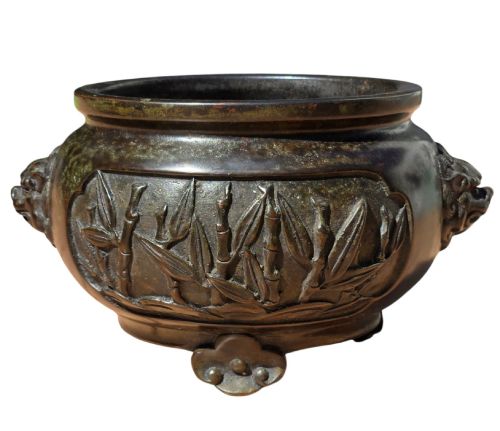
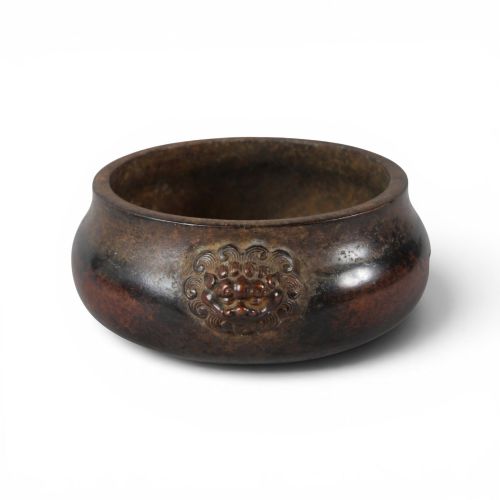
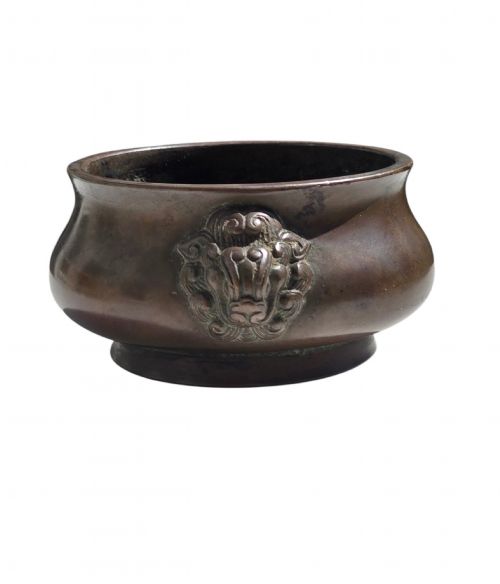
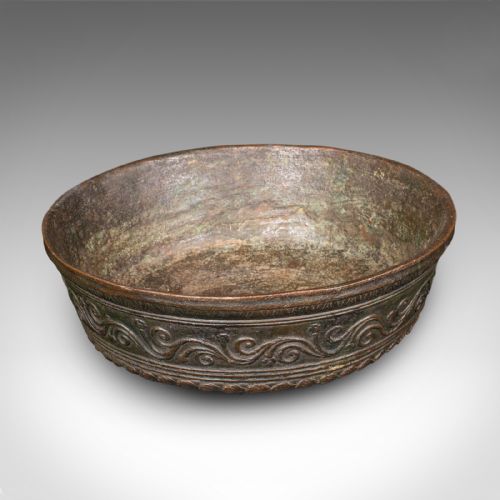
The selections on this page span the sixteenth century through the early twentieth century, taking the form of incense burners, decorative bowls, and jardinieres. Pieces frequently display traditional motifs such as lion masks, taotie masks, dragon ornamentation, and relief panels.
Most examples originate from Chinese dynasties, including the Ming and Qing periods, alongside Japanese works from the Edo and Meiji periods. Collectors also find occasional items associated with Georgian and Victorian eras that incorporate these oriental forms.
What varies in quality
Quality rests in the precision of the casting and the thickness of the metal wall, with heavier master-cast examples producing a clear bell-ring resonance. Finer pieces demonstrate sharp definition in relief panels and mask handles rather than smoothed or muddy surfaces.
The integrity of the dark bronze patina also distinguishes superior examples, showing natural age and handling rather than uniform modern chemical treatments. Enamelled variations depend on the crispness of the cloisonné or champlevé work and the preservation of the coloured glass pastes.
The inventory records distinct regional origins, including Ming and Qing dynasty Chinese pieces alongside Japanese Edo and Meiji period works.
The Dark Bronze Censer Bowl Glossary
- Bronze
- An alloy consisting primarily of copper, traditionally mixed with tin, used for centuries to cast durable vessels and ritual objects. It develops a rich dark patina over long periods of handling and exposure.
- Censer
- A vessel designed for burning incense, often featuring pierced covers or open bowls to diffuse aromatic smoke. These objects served both domestic and ritual functions in scholarly and religious settings.
- Gui
- An ancient Chinese ritual vessel form characterised by a round bowl set upon a foot ring, frequently adapted in later centuries for scholar's censers. These pieces often feature prominent animal-mask handles.
- Champlevé
- An enamelling technique where troughs or cells are carved into the metal surface and filled with vitreous enamel powder before firing. The technique creates colourful patterns bordered by thin lines of exposed metal.
- Edo Period
- A period in Japanese history spanning from sixteen hundred and three to eighteen hundred and sixty-eight, noted for distinct developments in metalwork and decorative arts. Pieces from this era often show refined sculptural casting.
Dark Bronze Censer Bowl: Frequently Asked Questions
How were bronze censers used?
These vessels were primarily utilised for burning aromatic incense in scholarly studies, temples, and formal domestic spaces. The rising smoke aided meditation, created a pleasant atmosphere, and marked the passage of time.
In addition to burning incense, many of these heavy bowls functioned simply as decorative works of art or as planters for small indoor plants. Their substantial weight and artistic motifs made them centrepieces in traditional interiors.
How do I tell Ming dynasty pieces apart?
Ming dynasty censers often display deep, patinated bronze surfaces with scholarly motifs like the three friends of winter or taotie masks. The casting tends to be robust, reflecting the philosophical and ritual priorities of the period.
Later nineteenth and twentieth-century interpretations frequently adopt these earlier styles, but differences in metal composition, weight, and surface wear help separate historical periods. Examining the sharpness of the relief work provides further clues to age.
What is a scholar's censer?
A scholar's censer is a refined vessel made for the desk or study of an educated literati member in traditional China or Japan. These pieces prioritized subtle elegance, tactile quality, and resonant bronze tones over ostentatious decoration.
They were designed to be touched and appreciated closely during quiet contemplation, poetry composition, or painting. Their forms often draw on ancient ritual bronzes while fitting the intimate scale of a scholar's studio.
How should I clean a bronze bowl?
Historic bronze vessels require minimal intervention to preserve their natural dark patinas and accumulated age surfaces. Dusting with a soft, dry cloth is generally sufficient for routine maintenance.
Harsh commercial metal polishes, abrasive cleaners, and liquids should be avoided because they strip away centuries of oxidation and historical finish. Preserving the original surface maintains the character and historical integrity of the piece.