
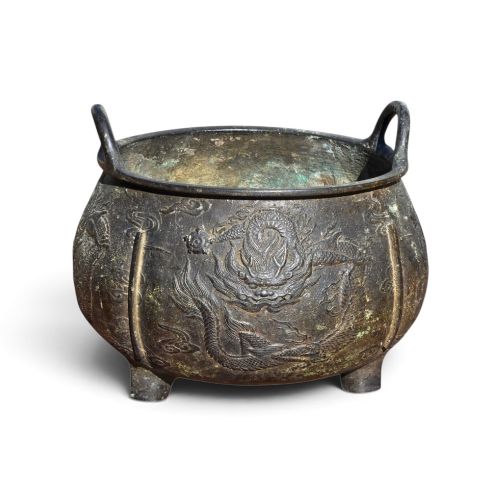
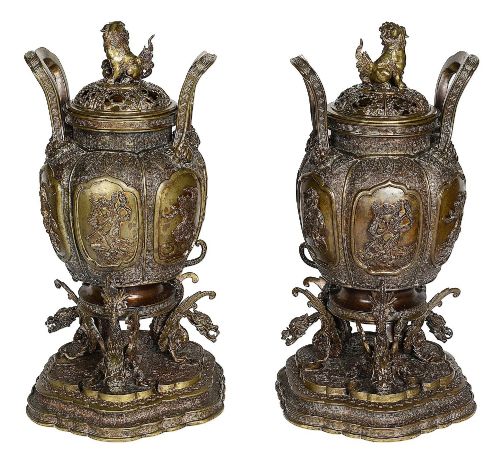


Bronze Dragon Incense Censer
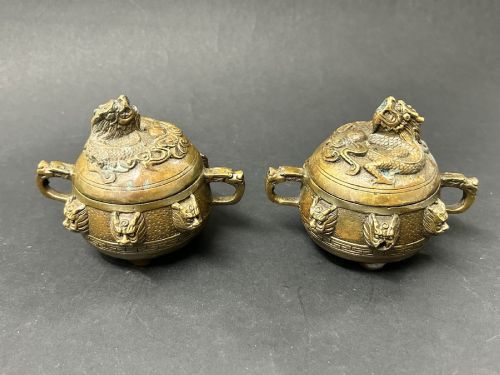
A bronze dragon incense censer brings centuries of ritual craft into a room, forged in bronze and brass with coiled serpentine dragons.
Bronze Dragon Incense Censer
A bronze dragon incense censer is a vessel designed to burn aromatic resins and woods, appearing here primarily in forms spanning the 16th century to the Victorian era.
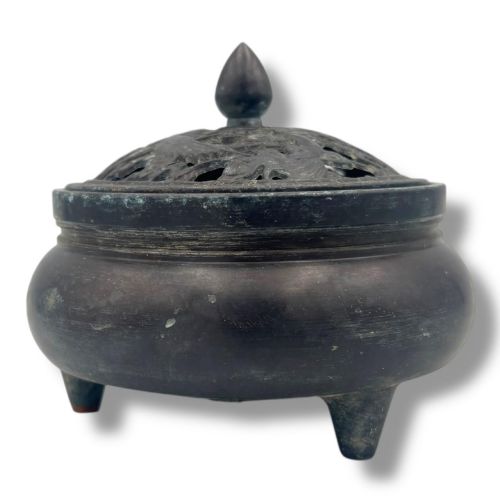
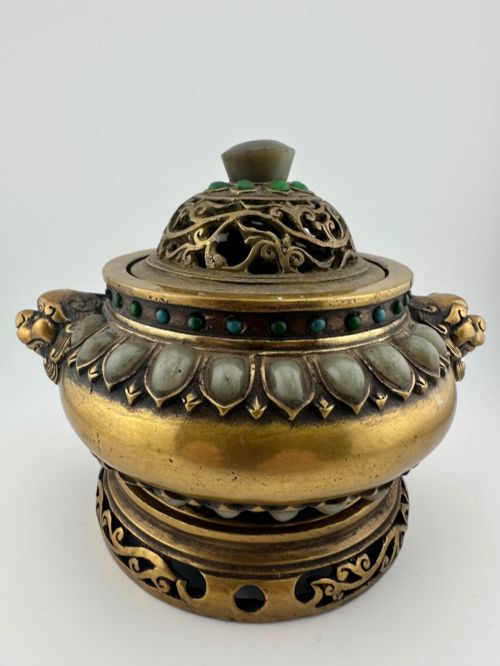
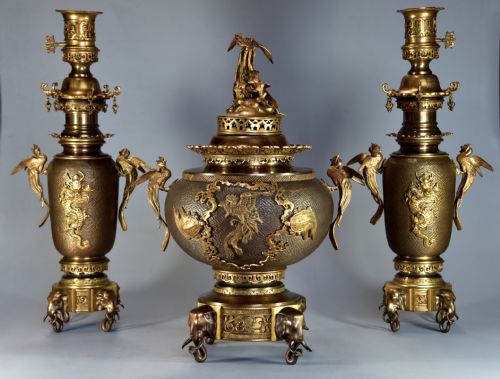
The pieces on this page include tripod bowls, lidded urns, and monumental vessels bearing dragon and mask handles, alongside French Japonisme interpretations.
Originating predominantly from Chinese Qing and Ming dynasties as well as Japanese Edo and Meiji periods, these censers frequently incorporate cast bronze and parcel-gilt finishes.
How they were made
Foundries utilised lost-wax casting techniques to shape intricate bronze, brass, and cast bronze bodies, allowing artisans to model high-relief dragons and phoenixes with precision.
Surface decoration relies on patination, parcel-gilt highlights, and hardstone or jade inlays set directly into the metalwork of covers and stands.
Materials documented across the collection include standard bronze, cast bronze, gilt bronze, brass, hardstone, and jade.
What varies in quality
The distinction between standard vessels and exceptional examples rests upon the crispness of the chased and cast details, particularly the musculature and scales of the dragon motifs.
Weight, balance, and the integration of original cast covers or carved hardwood stands separate utilitarian pieces from major studio or dynastic commissions.
The Bronze Dragon Incense Censer Glossary
- Censer
- A vessel specifically constructed for burning incense. These containers often feature pierced covers to allow fragrant smoke to disperse.
- Patinated Bronze
- Metal treated with chemical solutions to produce a stable surface colour or aged finish. This process protects the bronze while enhancing visual depth.
- Tripod
- A vessel supported by three feet, commonly seen on archaic and dynastic bronze censers. This configuration provides stability on flat surfaces.
- Japonisme
- A Western artistic style inspired by Japanese art and aesthetics, popular during the 19th century. European makers adopted these motifs in gilt and patinated bronze.
- Meiji Period
- An era of Japanese history spanning from 1868 to 1912, noted for highly refined metalwork and export bronzes. Pieces from this time often exhibit exceptional surface finishing.
Bronze Dragon Incense Censer: Frequently Asked Questions
How do I use an antique censer?
Place a bed of ash inside the bronze bowl before lighting your incense cone or coil. The heavy metal absorbs and diffuses the gentle heat safely.
Ensure the vessel sits on a stable, heat-resistant surface away from drafts. The pierced lid should remain on top to let the aromatic smoke drift out through the dragon motifs.
How do I clean a bronze censer?
Dust the surface regularly with a soft, dry bristle brush to prevent particle buildup in the crevices of the dragon relief. Avoid commercial metal polishes that strip away historical patination.
If cleaning is necessary for hygiene, use a damp cloth with mild soap and dry thoroughly immediately. Moisture left on cast bronze can cause oxidation.
How can I tell Ming from Qing bronzes?
Ming dynasty pieces often display a heavier, more austere casting style with deep patination and restrained decorative lines. Qing items tend to feature more elaborate high-relief dragons and added marks.
Comparing the alloy colour and the wear patterns on the base helps indicate the period. Dynastic marks can also guide attribution, though they require careful study.
Where should I display a heavy bronze censer?
Select a sturdy mantelpiece, low table, or cabinet that can support the considerable weight of solid bronze. Larger vessels can weigh several kilograms and require a secure footing.
Position the censer where adequate lighting can catch the patination and details of the dragon handles. Keeping the piece away from direct high humidity preserves the metal.