


Japanese Dragon Urn Vessel
These japanese dragon urn vessel items combine metalwork, ceramic forms and traditional mythical imagery from the Meiji period.
Japanese Dragon Urn Vessel
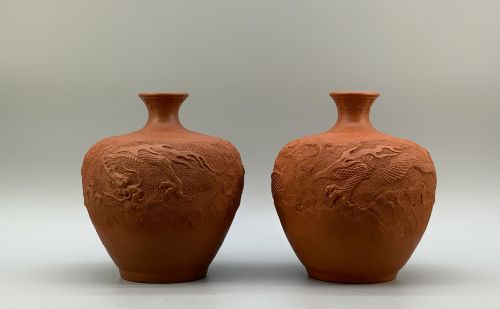
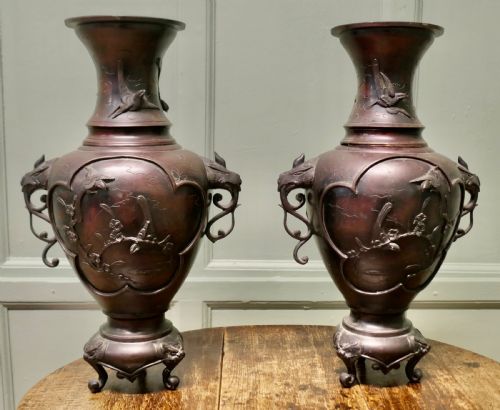
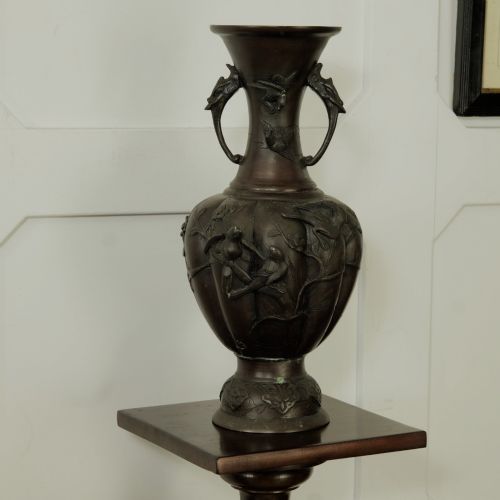
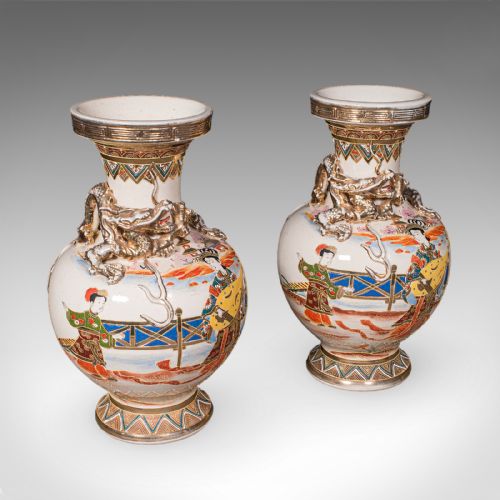
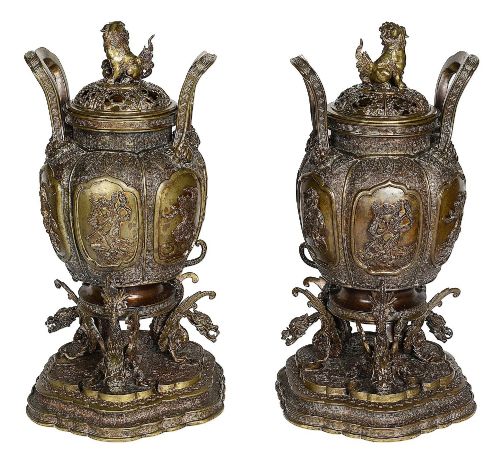
A japanese dragon urn vessel encompasses bronze and brass vases, ceramic Satsuma wares, and large garden planters originating from late nineteenth and early twentieth century Japan. Buyers seek these pieces for their intricate depictions of dragons coiled around bodies, necks, and shoulders of vessels. The selection most commonly brings together heavy bronze temple pieces alongside earthenware and porcelain baluster forms.
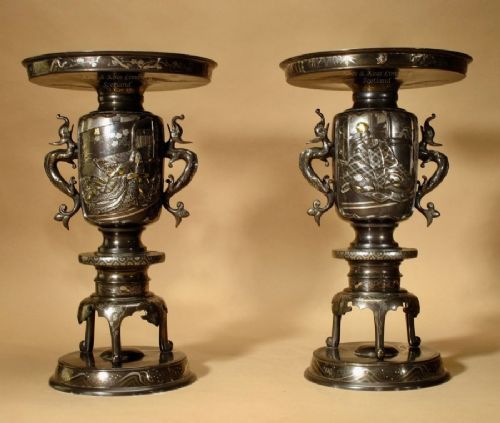
The objects serve various functions, ranging from lidded incense burners and altar censers to monumental garden water dispensers and decorative household vases. Many originate from the Meiji period, reflecting a time of immense craftsmanship in metal casting and ceramic painting. Pairs predominate among the heavier bronze examples, while individual vessels often display elaborate hand-painted scenes or enamel work.
Materials and Construction
Makers utilised bronze, copper, and brass for cast metal vessels, frequently applying patination, gold leaf, and champlevé or cloisonné enamel details. Ceramic examples employ earthenware and porcelain bases, decorated with hand-painted polychrome glazes and intricate gilding over crackle-glaze surfaces.
Metal pieces rely on traditional casting techniques, sometimes incorporating inlaid elements or applied dragon reliefs that wrap around the main body. Earthenware and porcelain items combine wheel-thrown or moulded bodies with detailed surface painting depicting mythological figures and dragons.
Listings feature bronze, earthenware, porcelain, and champlevé enamel spanning the Victorian era through the 1920s.
Distinctions in Quality
The standard of a japanese dragon urn vessel rests on the crispness of the casting in metalwork and the fineness of brushwork in ceramic pieces. Superior examples exhibit deeply undercut dragon reliefs, precise enamel cloisonné wires, or meticulously hand-painted arhats alongside scaled serpentine bodies.
Weight and scale also distinguish finer specimens, particularly with monumental garden urns and heavy bronze vases from the Meiji era. The integration of signatures, complex patination, and the balanced composition of dragons and traditional motifs separate ordinary production from workshop masterpieces.
Hotoda
The Japanese Dragon Urn Vessel Glossary
- Meiji Period
- The era in Japanese history spanning from 1868 to 1912, marked by opening trade and exceptional decorative arts production. Many bronze and ceramic dragon vessels date from this time.
- Satsuma
- A type of Japanese earthenware featuring a pale, crackled ivory glaze decorated with polychrome enamels and gold. These ceramics frequently incorporate dragon and arhat motifs.
- Champlevé
- An enamelling technique where troughs or cells are carved into a metal base and filled with vitreous enamel before firing. It appears on various bronze vases and vessels.
- Usubata
- A specific form of Japanese bronze vessel traditionally used for flower arrangement, often featuring a broad basin top and a columnar stem. Several large examples appear as garden urns.
- Arhat
- One of the perfected followers of Buddha, frequently depicted in painted ceramic scenes alongside dragons on Satsuma vases.
Japanese Dragon Urn Vessel: Frequently Asked Questions
How do I date a Japanese dragon bronze vase?
Dating relies on stylistic markers from the Meiji period, manufacturing techniques, and surface patination. Pieces from the late nineteenth and early twentieth centuries often exhibit distinct casting methods.
Heavier bronze examples typically show traditional workshop practices from the Meiji-Taisho transition. Examining the depth of the metal relief and surface wear helps confirm the period.
Were these vessels used outdoors?
Certain large bronze items function specifically as garden urns, temple water dispensers, or planters meant for open-air display. Their robust metal construction withstands exterior placement.
Smaller vases, incense burners, and delicate Satsuma ceramics were strictly intended for interior decorative use. Checking the scale and material reveals the original intended environment.
What is Satsuma ware?
Satsuma ware is a distinct style of Japanese earthenware characterised by a warm, ivory-coloured body covered in a fine network of crackled glaze. Artisans painted these surfaces by hand using rich pigments and gold leaf.
Pieces bearing this finish frequently illustrate complex scenes involving dragons, immortals, and traditional figures. The crackle glaze acts as a deliberate aesthetic feature of the pottery.
How should I clean a bronze dragon urn?
Maintenance requires only gentle dusting with a soft, dry cloth to preserve the historic patination and metal finish. Avoid using abrasive polishes, harsh chemicals, or water on antique bronze surfaces.
Leaving the natural age-related oxidation intact maintains the integrity of the piece. Regular care simply prevents dust accumulation in the crevices of the dragon relief.