
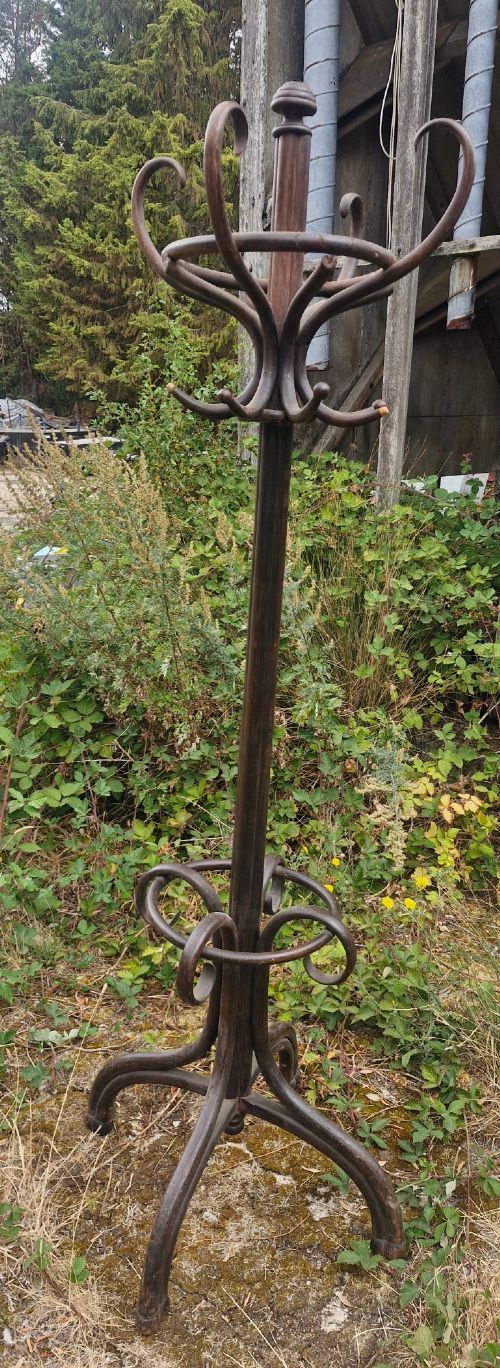
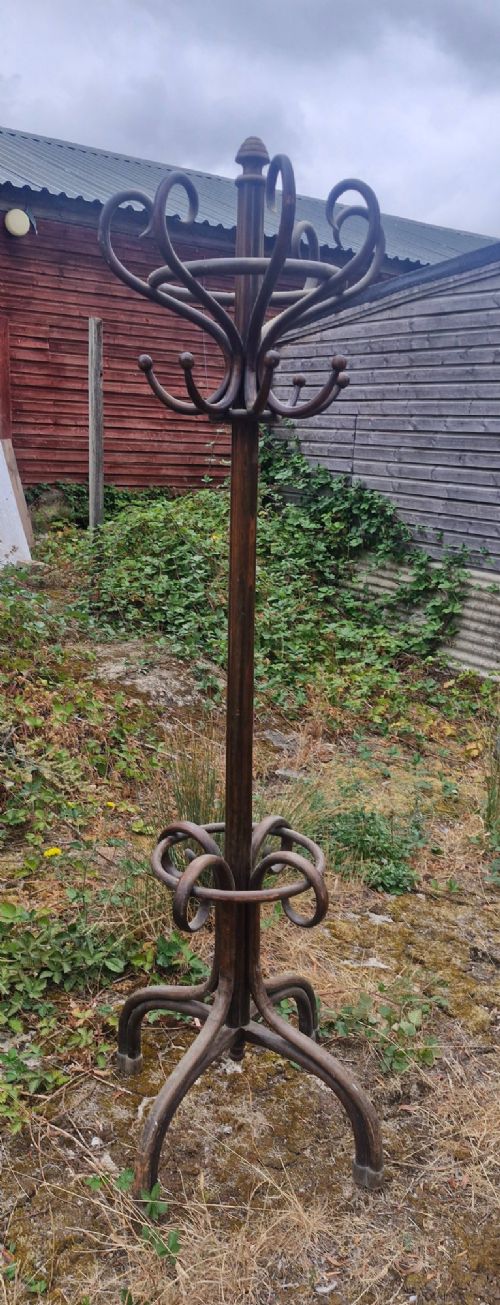
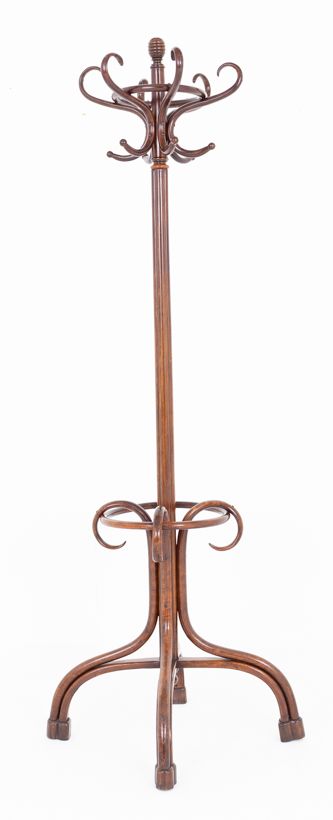
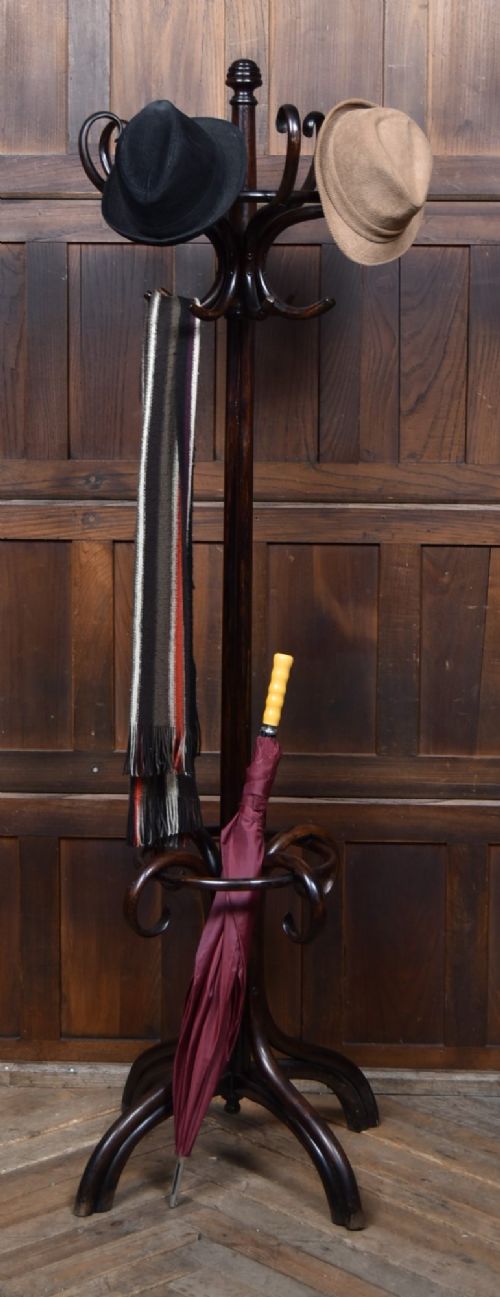
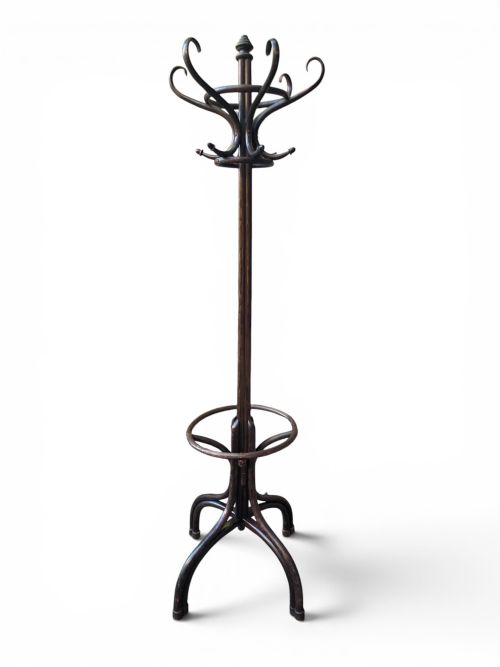
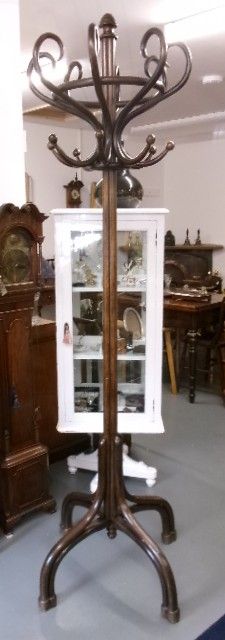
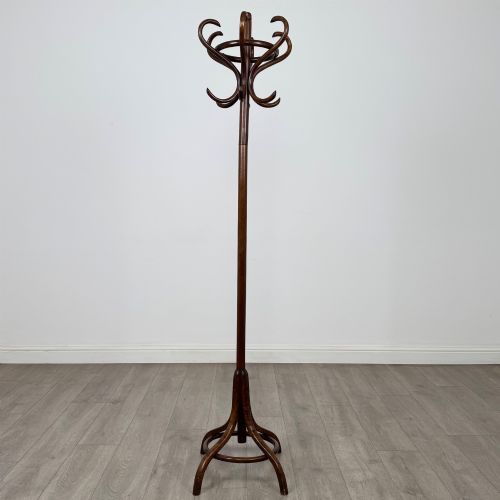
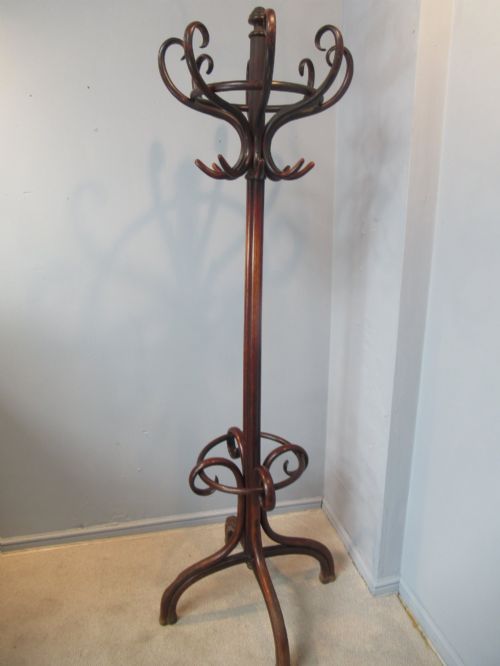
Dark Bentwood Hall Stand
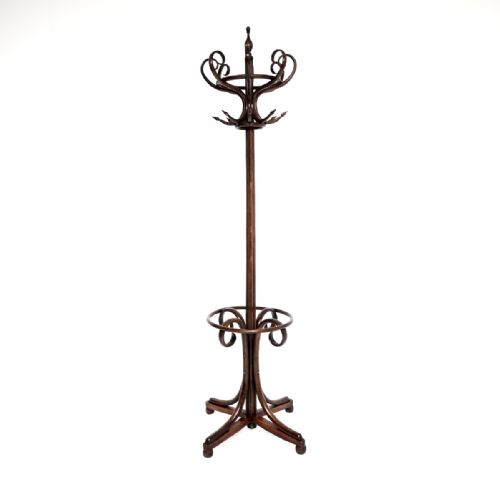
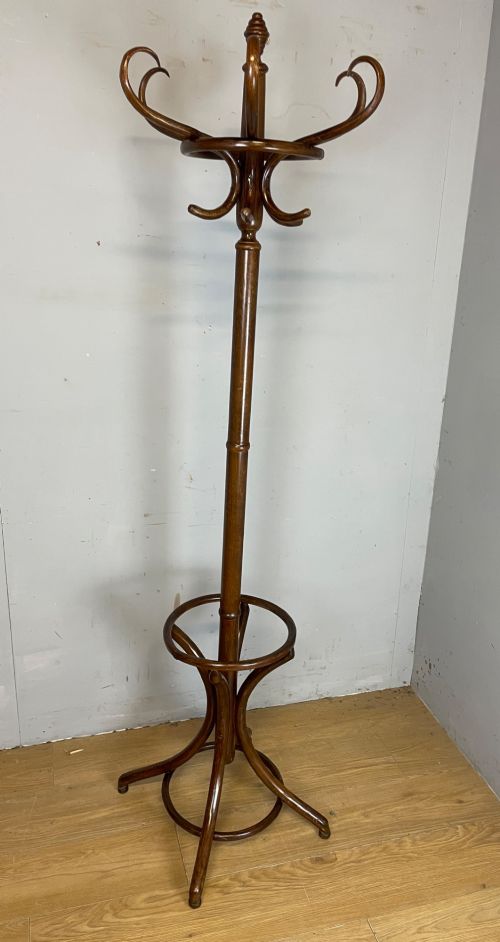
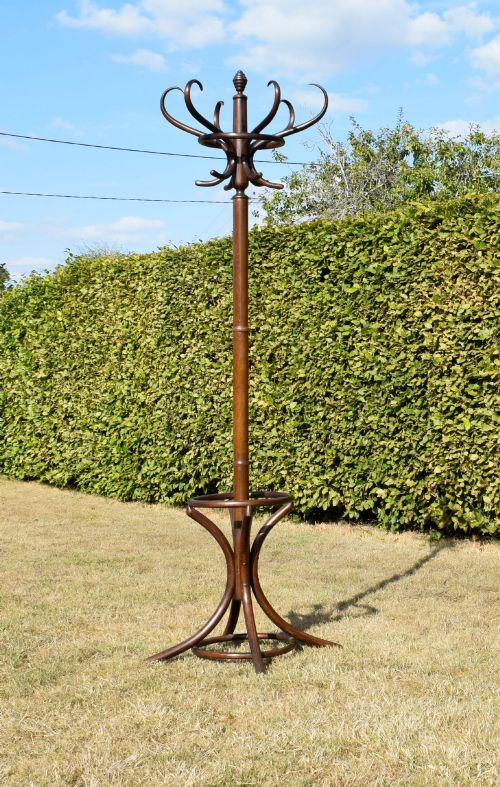
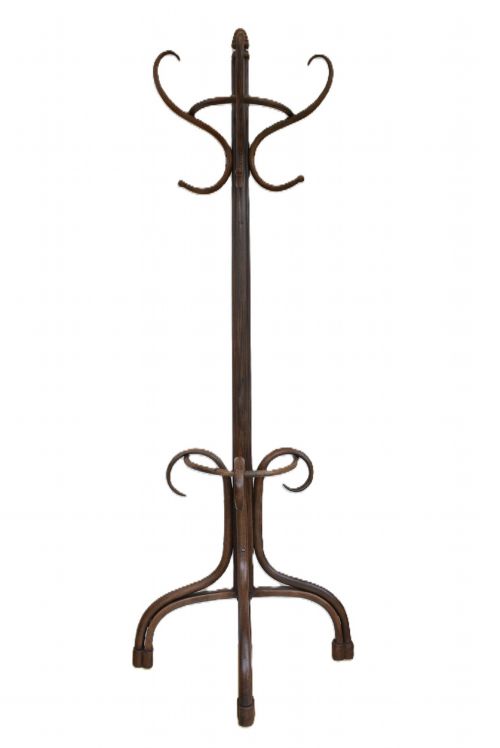
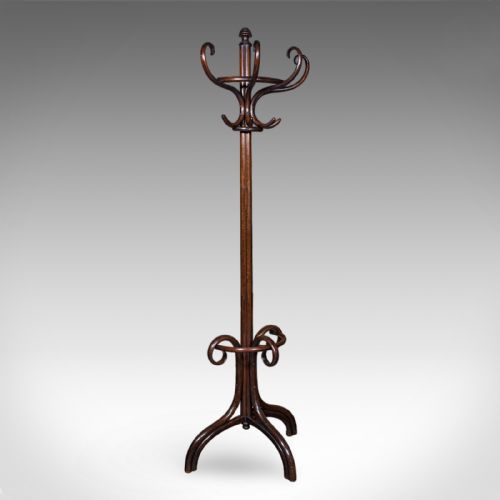
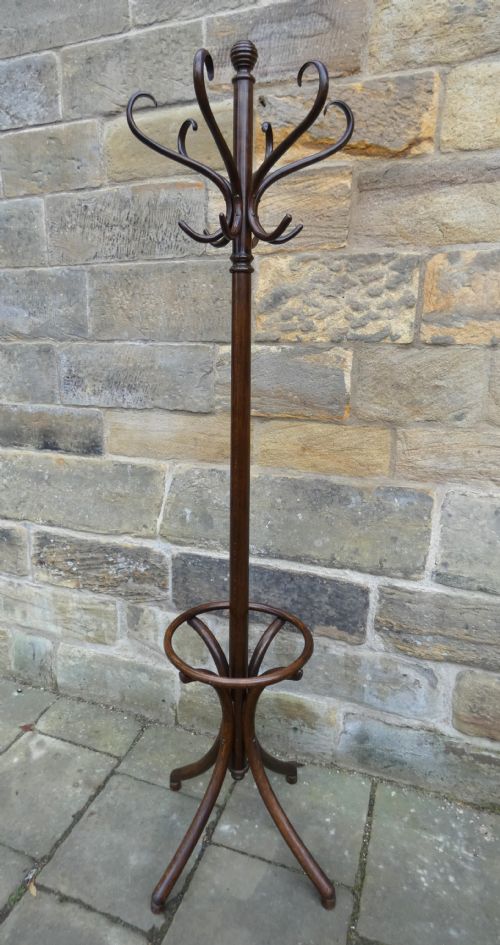
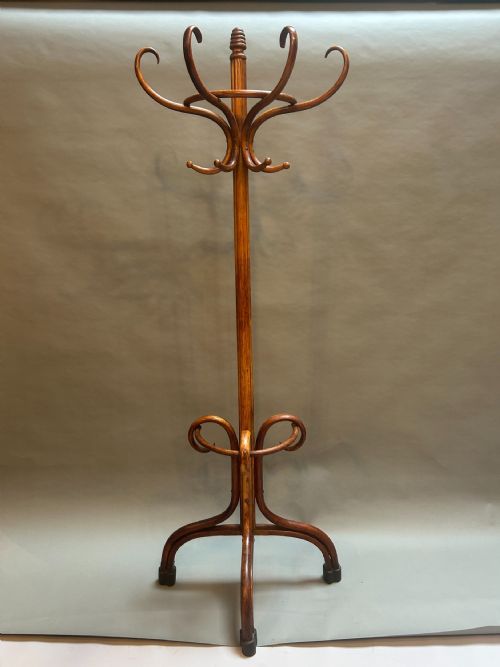
A dark bentwood hall stand brings lightness to an entrance through curved beech and practical tiers for hats and coats.
Dark Bentwood Hall Stand
A dark bentwood hall stand provides vertical storage for coats, hats, and umbrellas in an entrance hall without dominating the floor space. These pieces combine slender profiles with clever structural curves designed to hold heavy garments securely.
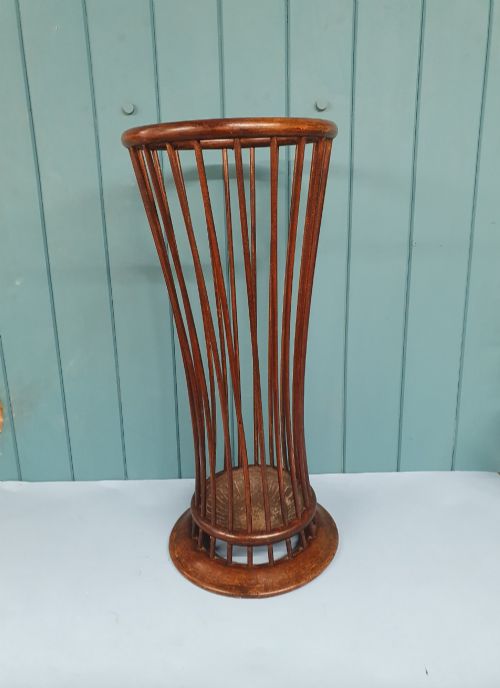
The version most commonly met on this page is the freestanding hat and coat stand dating from the Victorian and Edwardian eras. Pieces often incorporate bentwood rings for hanging items alongside lower racks or trays for walking sticks.
Origins stretch from the late nineteenth century into the 1930s, taking inspiration from Austrian workshops and makers who mastered steam-bent timber. The aesthetic relies on dark wood stains that give the beech a rich, uniform tone.
How they were made
Makers utilised solid beech and beechwood, soaking or steaming the timber until it became pliable enough to pull into sweeping curves in metal moulds. This technique allowed craftsmen to form continuous loops and structural collars without traditional corner joints.
Dark wood stains were applied to the finished beech framework to achieve the deep brown and black finishes seen across these listings. Metal components such as original drip trays and hanging hooks were integrated to handle wet umbrellas and heavy wear.
What varies in quality
The distinction between ordinary production and superior pieces lies in the complexity of the upper revolving tiers and the symmetry of the bentwood curves. Heavier gauge timber and double top constructions denote greater stability under heavy winter coats.
Maker attribution elevates certain examples, particularly those bearing labels from prominent workshops like Thonet or Fischel. The crispness of the turned wooden elements and the retention of original metal drip trays distinguish better preserved examples.
Thonet·Fischel·Drevounia
The Dark Bentwood Hall Stand Glossary
- Bentwood
- Wood that has been heated with steam to bend it into curved shapes. This method creates strong, lightweight furniture without weak joints.
- Demi lune
- Half moon shape. Pieces with this profile sit flat against a hallway wall to save floor space.
- Drip tray
- A metal tray placed at the base of a stand to catch water from wet umbrellas. Original trays add historical accuracy to the piece.
- Hall tree
- An alternative term for a hall stand that incorporates hooks, mirrors, and umbrella storage. These tall vertical units organise outerwear in narrow spaces.
Dark Bentwood Hall Stand: Frequently Asked Questions
How do I date a bentwood hall stand?
Dating relies on construction methods, labels, and the complexity of the bentwood rings. Pieces from the nineteenth century often feature simpler joinery and early manufacturer stamps.
Later Edwardian and 1930s examples introduce heavier double tops and distinct turning styles on the central column.
Are these stands sturdy enough for heavy coats?
The curved beech framework is engineered to distribute weight evenly down to the circular base. Heavier quality models handle multiple winter coats and hats securely.
Distributing garments evenly around the revolving or fixed hooks maintains balance.
What is the difference between a coat stand and a hall stand?
Coat stands focus primarily on vertical tiers of hooks for hats and outerwear with optional stick holders. Hall stands often include lower umbrella rings and demi lune footprints for wall placement.
Both serve the entrance hall purpose using steam-bent beech.
How do I clean dark bentwood furniture?
Dust regularly with a soft dry cloth to protect the dark wood stain from fading or scratching. Avoid harsh chemical cleaners that strip the original finish.
Feed the beech periodically with a suitable furniture wax to maintain the deep tone.