
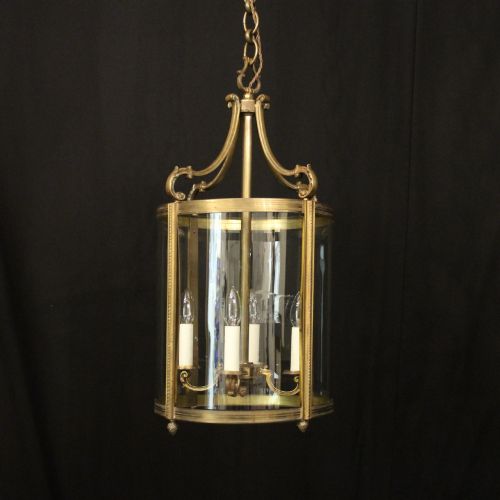
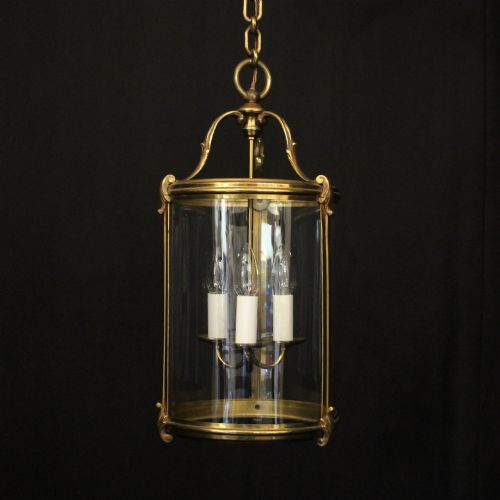
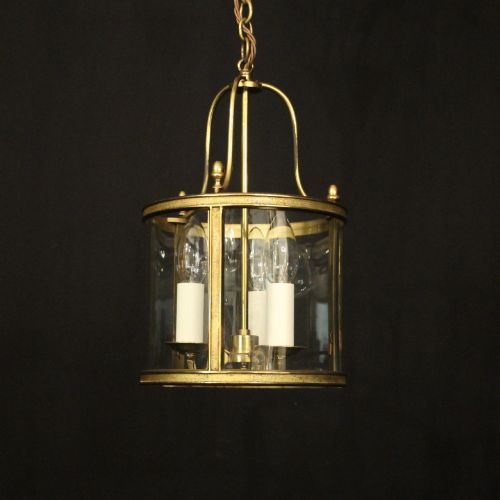
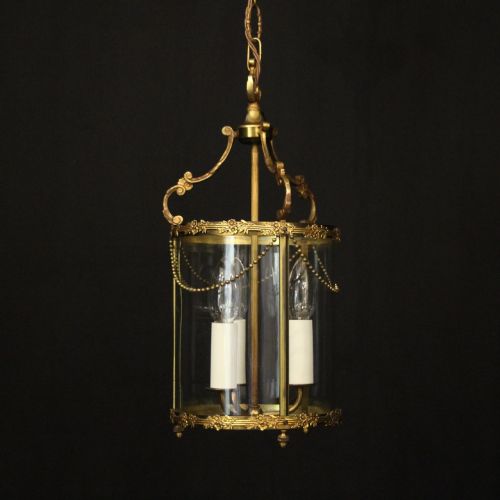
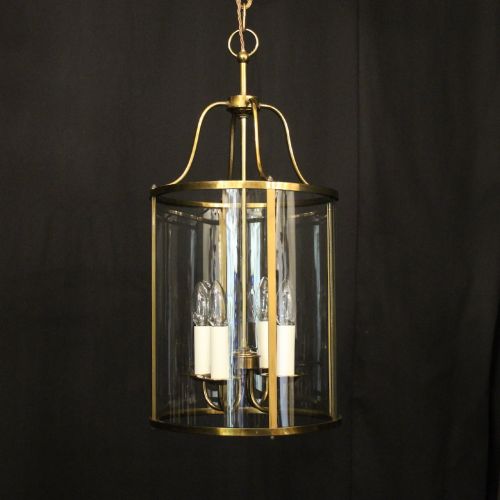
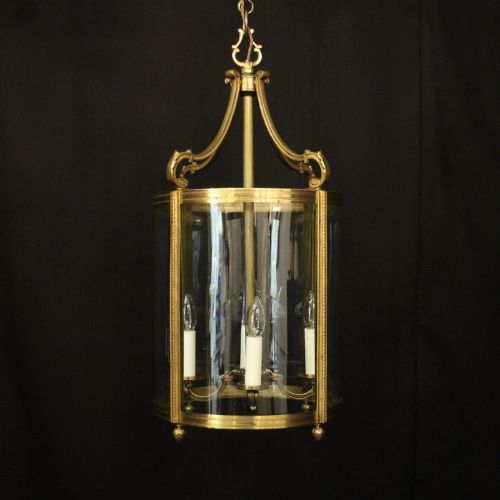


Cylindrical Pendant Lantern
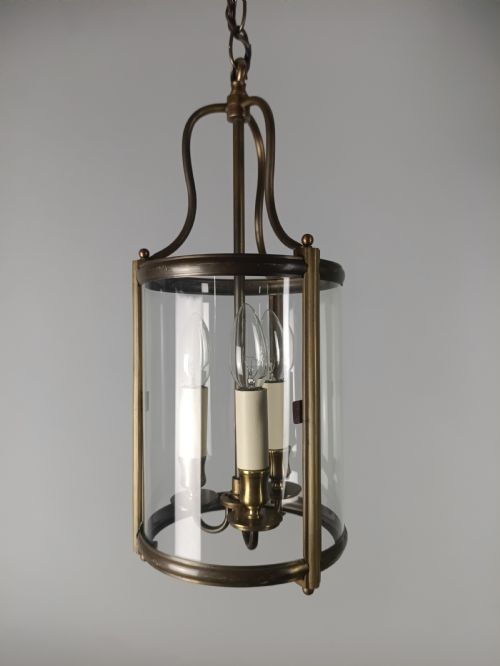
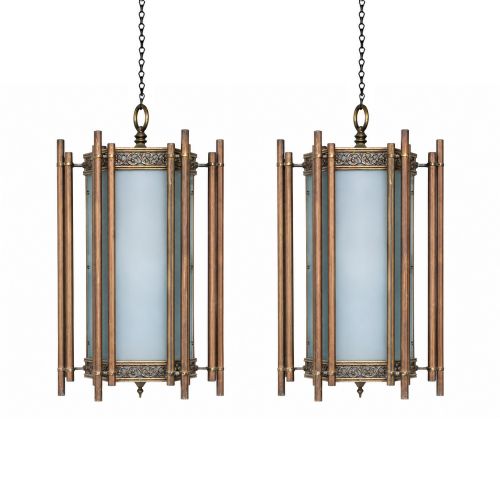
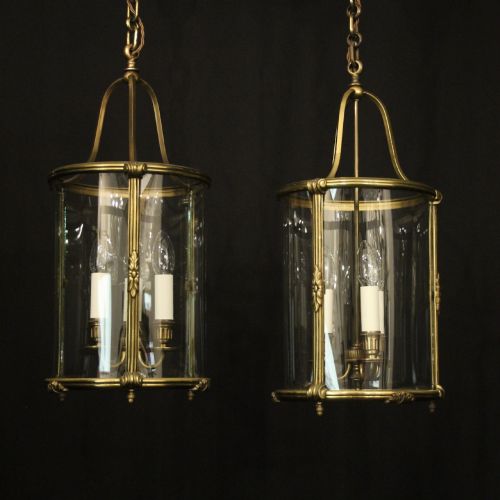
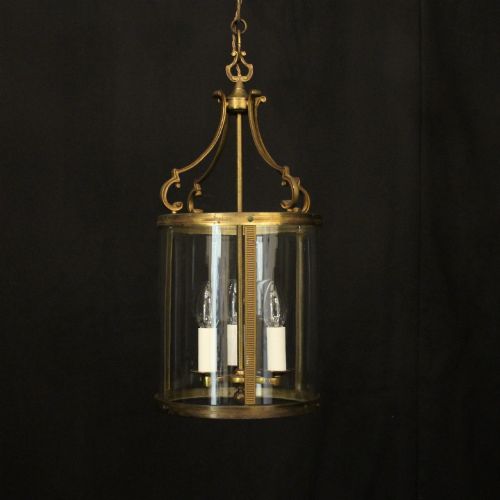
These cylindrical pendant lanterns are hanging light fixtures designed to illuminate entryways and hallways with period character.
Cylindrical Pendant Lantern
A cylindrical pendant lantern provides vertical illumination through glass panels held within a metal frame, suspended by a chain or rod from the ceiling. You will frequently encounter French examples from the early twentieth century alongside English pieces from the Edwardian period and the 1930s.
The profile ranges from simple round and convex designs to monumental proportions holding multiple internal lights. Hall lanterns and ceiling lights appear in styles spanning French Neoclassical, Art Deco, and Grand Regency influences.
Materials and Construction
These fixtures combine glass panes with metal frameworks fashioned from brass, bronze, and gilt bronze. Gilded finishes appear frequently across the French items, alongside polished brass and occasional copper elements.
Makers utilised clear, frosted, and convex glass to diffuse the light from single or triple internal bulb setups. Metalwork components are cast and joined to support the weight of the glass and the suspension hardware.
Some lanterns include convex glass panels designed to make the hallway glow like a miniature French chateau.
Differentiating Quality
The distinction between tiers rests upon the weight of the cast bronze or brass and the crispness of the chased detailing on the metal frame. Heavier mounts and substantial cast elements indicate superior construction compared to lighter commercial alternatives.
Glass selection also marks the grade, particularly where thick convex or heavily frosted panes are utilised to shape the light. The integration of multi-light internal clusters within balanced proportions further separates standard items from grander examples.
The Cylindrical Pendant Lantern Glossary
- Cylindrical pendant lantern
- A hanging light fixture featuring a tubular glass body suspended from the ceiling by a chain or rod. These pieces illuminate halls and entryways.
- Gilt bronze
- Bronze metal treated with a thin layer of gold to create a luminous surface finish. This material appears frequently in French lighting.
- Convex glass
- Curved glass panels that bulge outward to soften and diffuse internal illumination. This technique adds depth to the profile of the light.
- Hall lantern
- A ceiling-suspended light fixture specifically scaled for corridors, vestibules, and entrance spaces. They provide both direct downward and ambient lateral light.
- Art Deco
- A design style characterised by sleek geometric lines and streamlined forms that emerged during the early decades of the twentieth century. It appears in several metal lantern configurations.
Cylindrical Pendant Lantern: Frequently Asked Questions
Where should I hang a cylindrical pendant lantern?
These fixtures suit hallways, entrance foyers, and stairwells where vertical hanging space allows adequate clearance below.
Ensure the suspension height leaves enough room for passage underneath while positioning the light source to properly illuminate the room.
How do I clean the glass panels?
Carefully remove dust with a soft cloth before applying a mild glass cleaner to the interior and exterior surfaces.
Take care around gilded or bronze metal frames to avoid harsh chemical contact with the aged finishes.
Can these lanterns use modern bulbs?
Most antique fixtures accept standard modern bulbs provided the internal wiring and lamp holders meet current electrical standards.
Consult a qualified electrician to inspect the internal wiring and ensure compatibility with your household supply.
What periods do these lanterns come from?
The available pieces span the nineteenth century, the Edwardian era, and the early twentieth century up to the 1930s.
French and English workshops produced the majority of these designs, drawing upon classical and neoclassical decorative styles.