



Victorian Hallway Pendant
These Victorian hallway pendant lights bring practical illumination and architectural character to entrances, combining period glass with robust metal frames.
Victorian Hallway Pendant
A victorian hallway pendant encompasses hanging lanterns and ceiling lights designed specifically for entrance spaces and corridors during the nineteenth century. Buyers searching this phrase encounter hanging lanterns and ceiling lighting featuring protective glass panels and metal framework.
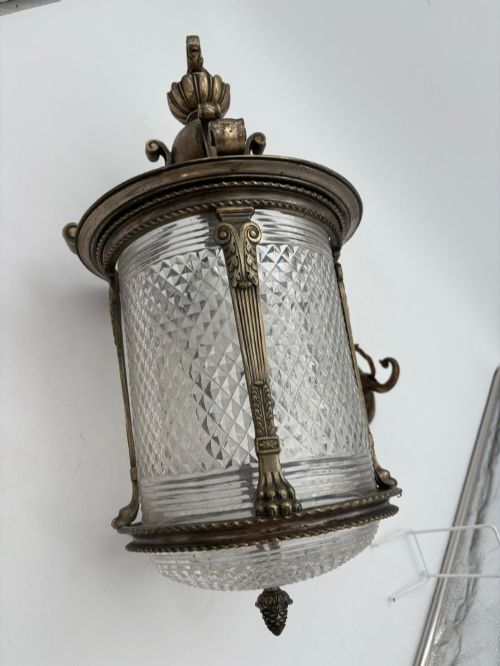
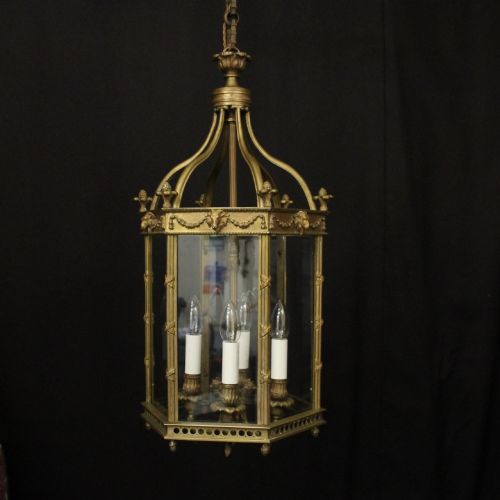
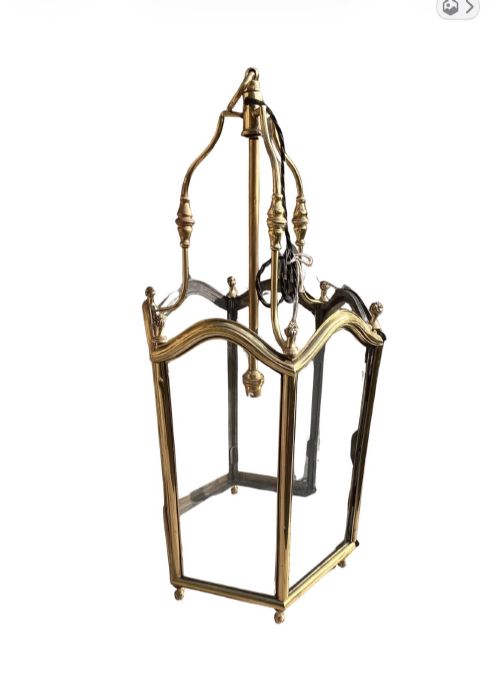
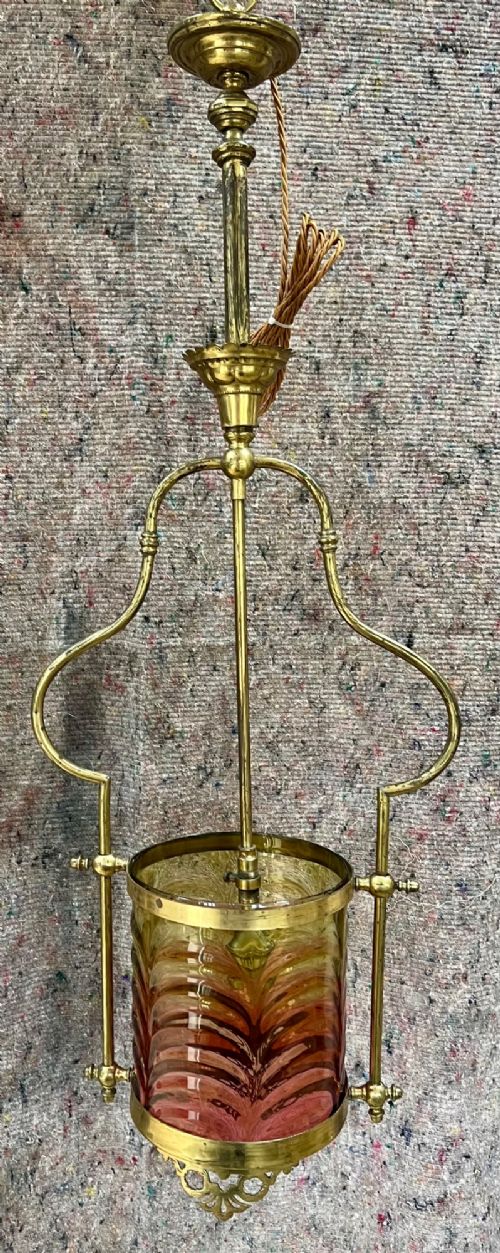
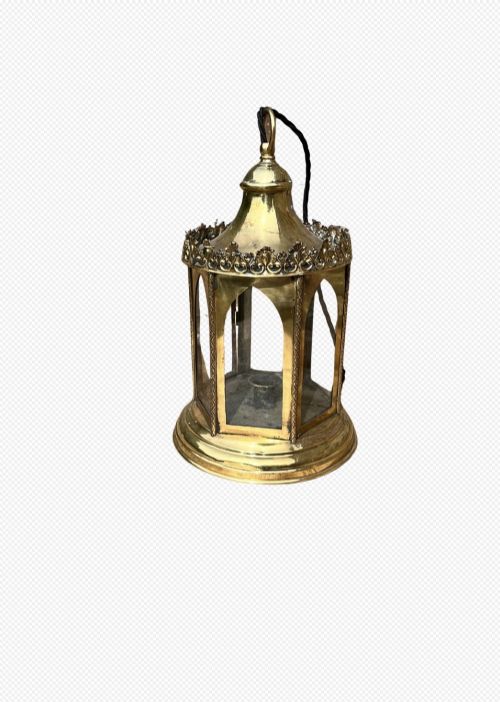
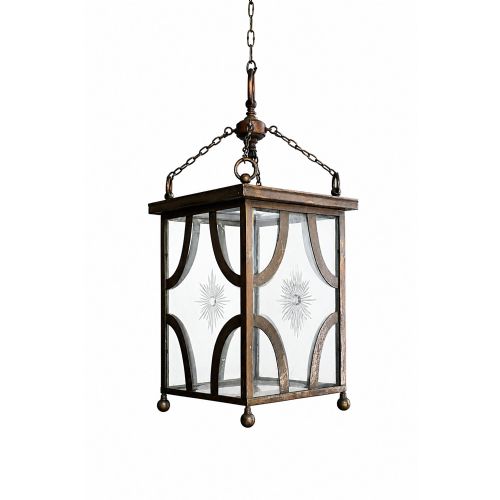
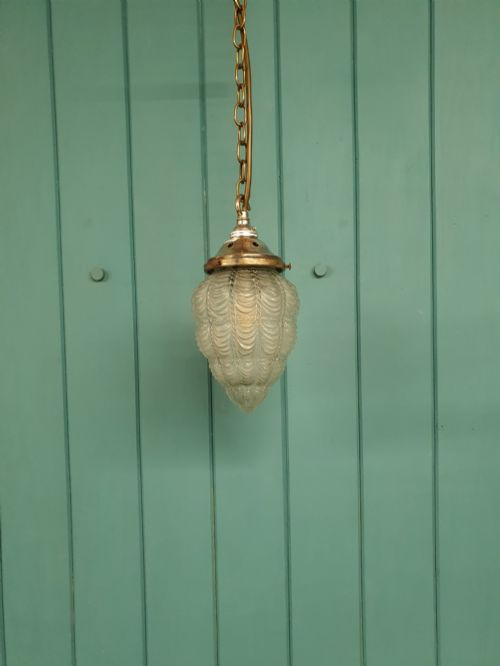
The selection here includes examples from the Victorian period alongside Edwardian and 19th Century pieces. Forms range from round and hexagonal glass lanterns to large brass framed designs and bell jar pendants.
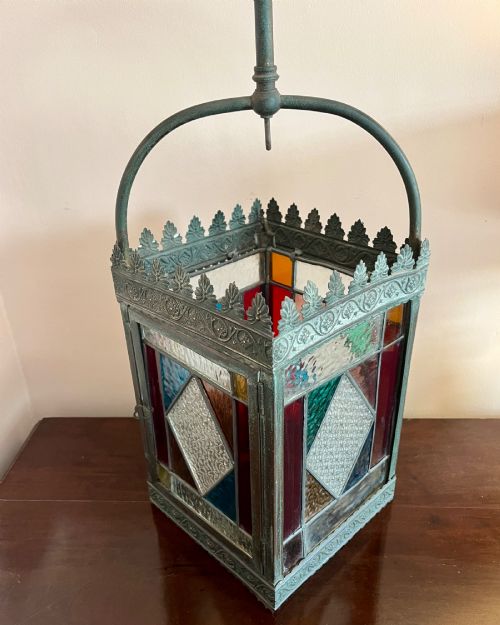
Many items utilise brass, copper, and gilt metal paired with clear, pressed, or coloured glass. Certain variants show influences from Gothic Revival and Regency styles, reflecting the eclectic tastes of the era.
Materials and construction techniques
Makers constructed these lanterns using durable metals such as brass, wrought iron, and copper to form structural frames capable of supporting heavy glass elements. Lead came secures individual panes within hexagonal and multi-sided configurations.
Glass components include hand-blown diamond cut crystal and pressed glass panels designed to diffuse candle or early electric light effectively. Metal frames often feature cast ornamentation or gilded finishes reflecting prevailing stylistic preferences.
Victorian Hallway Pendant Retail Price Guide 2026
Typical asking prices for victorian hallway pendant among the pieces listed under this phrase on Sellingantiques today, from the lower quarter to the upper quarter. They describe what is for sale here now, not the wider market.
Listings feature 19th Century and Edwardian pieces, predominantly constructed from brass, glass, and copper in lantern forms.
Markers of quality and craftsmanship
Quality in a victorian hallway pendant is evident in the weight of the metal frame and the precision of the glass cutting. Heavier brass construction and hand-blown crystal panels indicate superior workshop output compared to simpler pressed alternatives.
The integrity of the structural joints and the complexity of the frame design distinguish finer examples. Hexagonal configurations with detailed metalwork require greater skill than basic round forms.
The Victorian Hallway Pendant Glossary
- Hall lantern
- An enclosed hanging light fixture designed primarily for entrance halls and corridors. These pieces typically feature glass panels held within a metal frame to protect the light source from drafts.
- Bell jar lantern
- A pendant light characterised by a curved glass shade shaped like a traditional bell jar. This form often incorporates cut crystal or etched glass details.
- Gilt metal
- Metal that has been treated with a thin layer of gold leaf or gilt paint to simulate solid gold. This finish was common in decorative interior lighting.
- Lead glass
- Glass manufactured with lead oxide, which increases clarity and weight. It allows for deep diamond cutting and light refraction.
Victorian Hallway Pendant: Frequently Asked Questions
How do I hang a heavy hall lantern?
These lanterns require secure anchoring to ceiling joists using appropriate hooks and ceiling roses. Professional installation ensures the weight of the metal and glass frame is safely supported.
Buyers should also check the drop length to ensure the pendant hangs at a suitable height above the floor for passage.
Were these lights originally wired for electricity?
Many nineteenth-century examples were originally designed for candles or oil before being electrified later. Alterations to wiring are common in antique lighting to meet modern safety standards.
Examining the internal fittings reveals whether the lamp holder has been added during a twentieth-century conversion.
What is the difference between brass and copper lanterns?
Brass frames contain an alloy of copper and zinc, offering a bright metallic appearance that tarnishes slowly. Copper frames develop a distinct natural patina over time when exposed to air.
Both metals provide the structural strength needed for hanging entrance lights.
How do I clean antique glass panels?
Glass panels should be removed from the metal frame only if the lead or clips are secure. Gentle cleaning with warm water and a soft cloth prevents damage to delicate surfaces.
Harsh chemical cleaners can erode historical glass or discolour gilt metal finishes.