
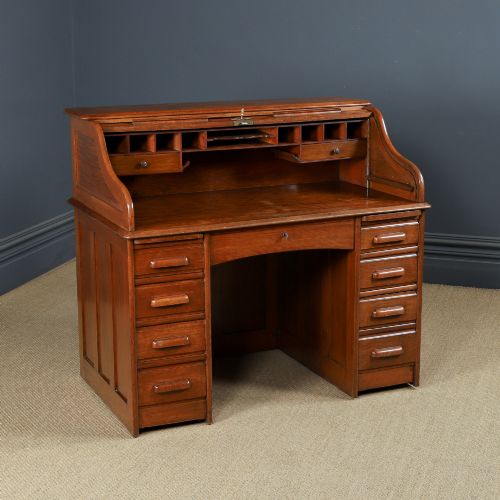
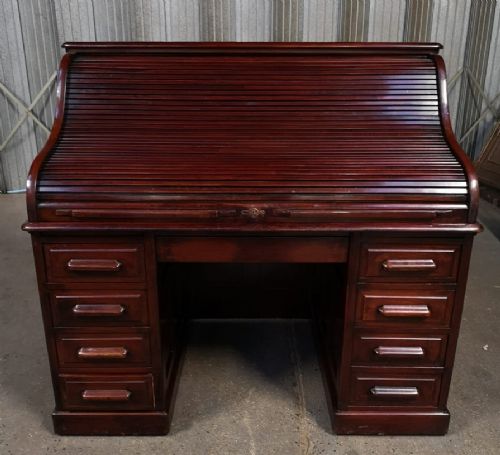
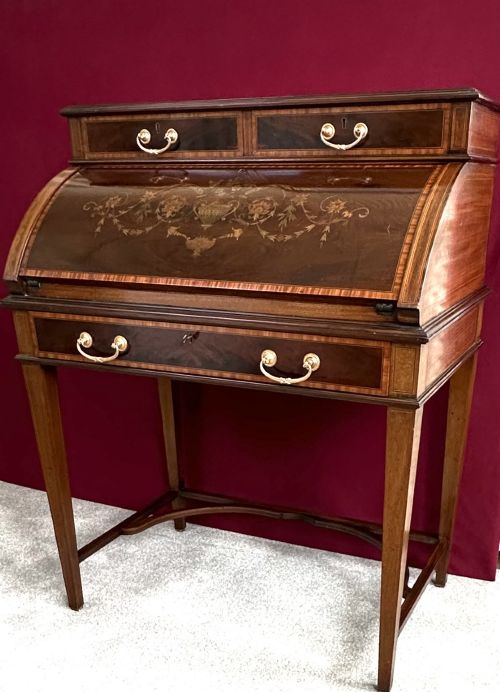
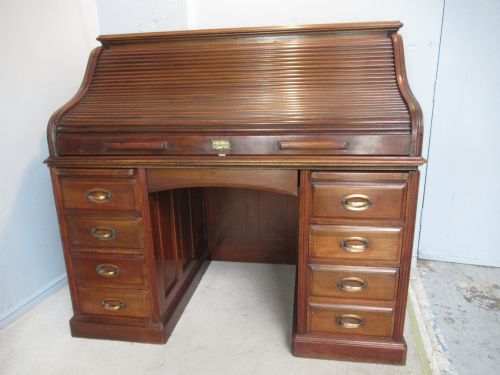
Cylinder Front Desk
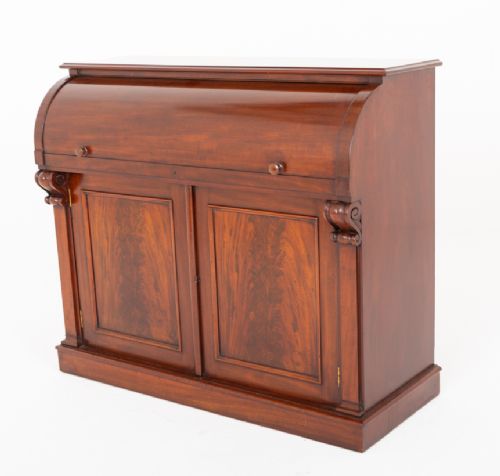
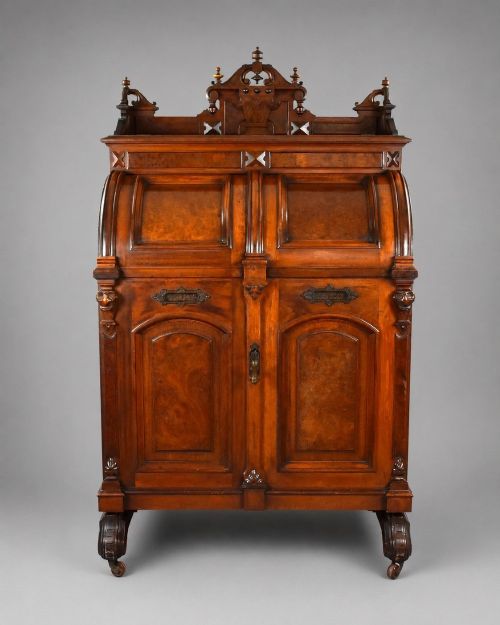
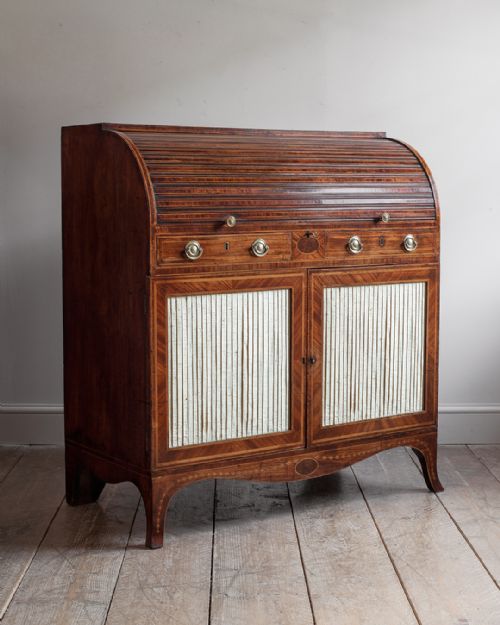
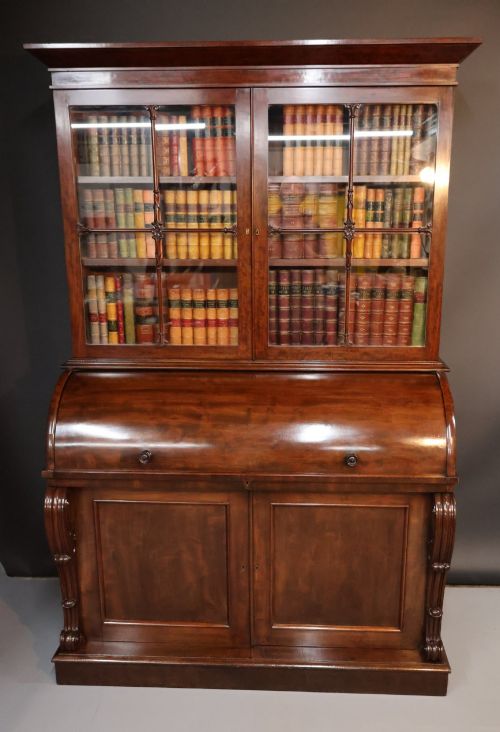
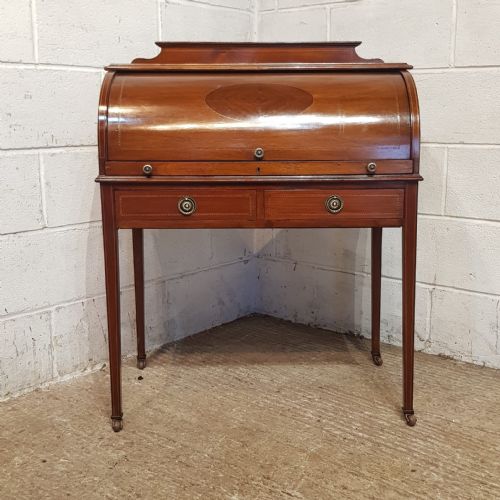
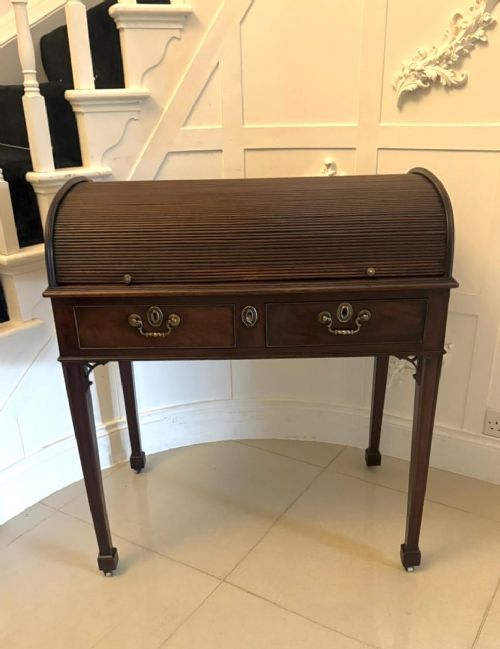
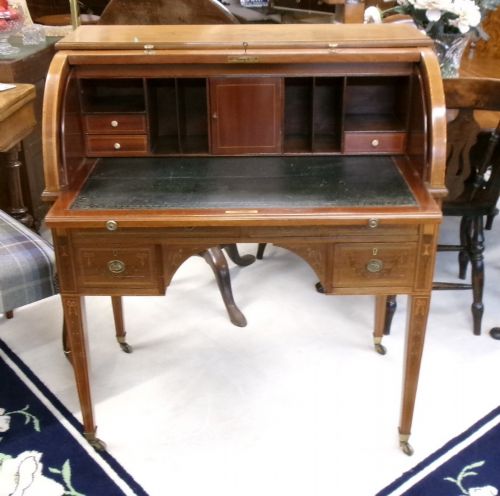
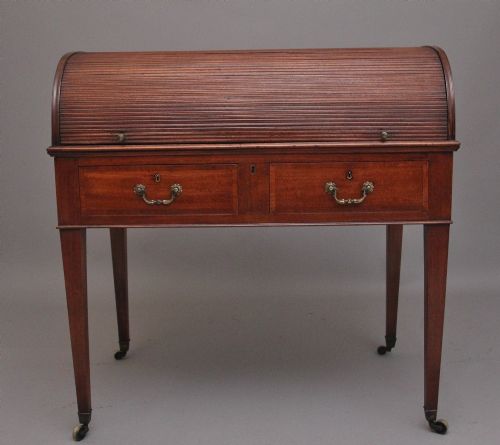
These cylinder front desk pieces combine enclosed writing surfaces with handsome cabinetwork, offering both clever concealment and elegance for the study.
What cylinder front desk pieces are
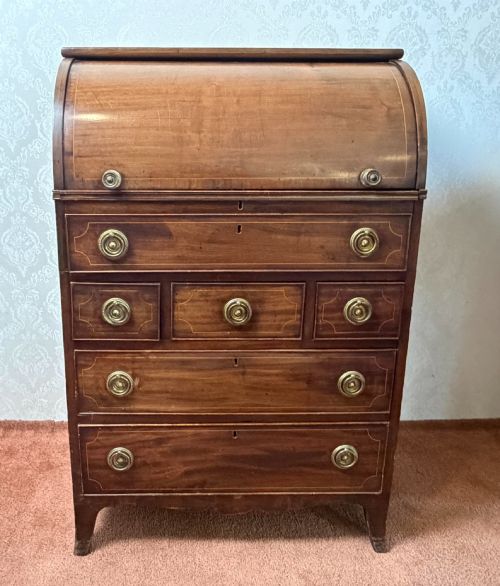
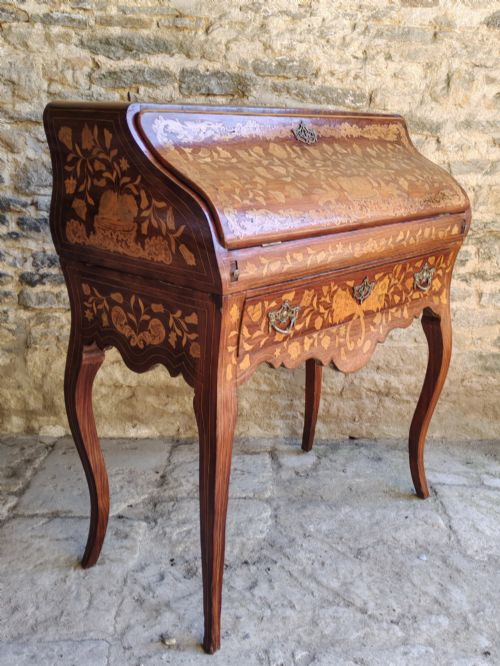
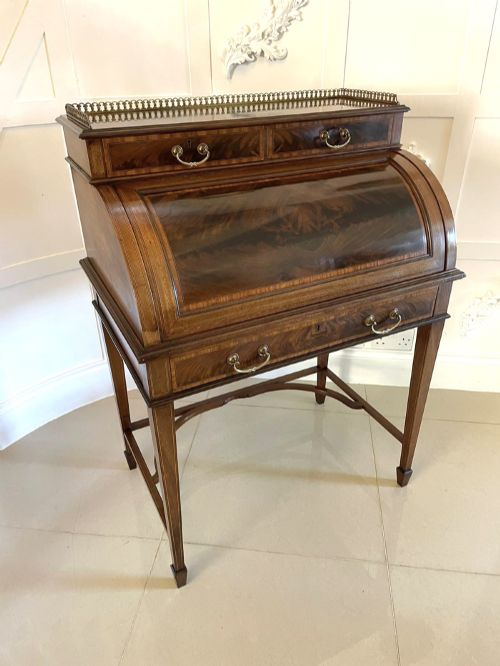
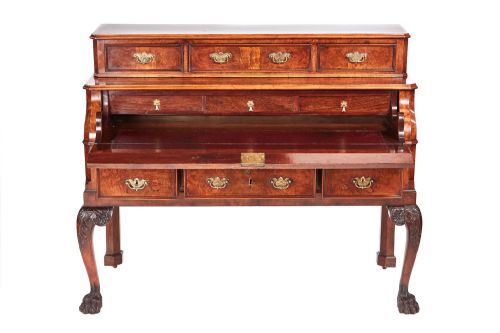
The pieces on this page span the nineteenth century, nineteen ten, and around eighteen hundred. They draw upon Edwardian, Dutch Rococo, Regency, and Sheraton Revival styles.
Makers and cabinetmakers produced these varied designs using distinct regional characteristics. Buyers encounter everything from simple freestanding writing tables to richly inlaid architectural bureaux.
Materials and construction
Cabinetmakers constructed these pieces primarily in mahogany and walnut, frequently incorporating fruitwood and satinwood inlay. Brass mounts and leather writing surfaces also appear across the selection.
Techniques relied on precise joinery to ensure the curved wooden cylinder mechanism glides smoothly within its housing. Marquetry and delicate stringing decorate the exterior surfaces of the finer examples.
Retail Price Guide 2026
Typical UK retail prices for cylinder front desk, calculated from the Sellingantiques database of over a million retail prices indexed since 2003. This retail price guide relies exclusively on Sellingantiques data; no external sources or auction records are used, so the figures do not describe the wider market.
Listings feature mahogany, walnut, fruitwood, satinwood, brass, and glass across nineteenth-century and nineteen-ten periods.
Judging quality
Quality rests in the precision of the rolling cylinder action and the smoothness of the interior fit. Superior examples maintain exact alignment without binding during daily use.
The refinement of the decorative work distinguishes finer items. Crisp floral marquetry, well-figured timber grain, and finely matched satinwood inlay separate exceptional cabinetwork from simpler utility pieces.
The Cylinder Front Desk Glossary
- Cylinder top
- A curved, quarter-circle wooden shutter that rolls back to enclose the desk interior. This mechanism conceals pigeonholes and small drawers when closed.
- Marquetry
- Decorative woodwork where pieces of veneer are fitted into a ground to form floral or geometric patterns. Craftsmen use contrasting timbers to achieve tonal depth.
- Freestanding
- A piece finished on all sides so it can stand away from a wall in the middle of a room. These items often feature polished backs.
- Stringing
- Thin lines of contrasting wood inlay used to outline panels and drawers. It provides a subtle border that defines the structural lines of the furniture.
Frequently Asked Questions
How does a cylinder front desk work?
The curved wooden shutter slides along a track to roll open or closed. Pulling the writing slide forward often retracts the cylinder automatically.
This clever mechanism keeps correspondence and writing materials neatly out of sight when not in use.
Where should I place a freestanding desk?
Place it toward the centre of a room rather than flat against a wall. The finished back and polished timber deserve to be seen from all angles.
Ensure adequate clearance around the piece for chairs and movement.
What is the difference between Edwardian and Regency styles?
Regency pieces often display classical restraint with clean architectural lines. Edwardian and Sheraton Revival examples frequently favour lighter timbers and delicate floral inlay.
Both periods utilise fine mahogany and satinwood materials.
How do I care for the leather writing surface?
Keep the leather clean by dusting it gently with a dry, soft cloth. Avoid harsh chemical cleaners that can dry or stain the material.
Maintain a stable room temperature to protect both the leather and the surrounding timber cabinetwork.