
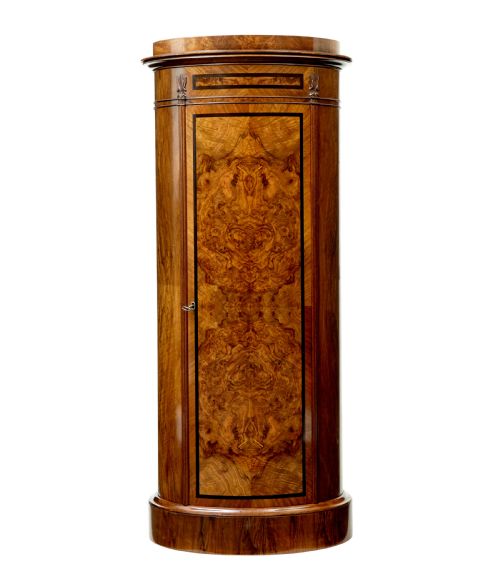


Cylinder Bedside Cabinet
These cylinder bedside cabinet designs offer a neat circular footprint that hides nighttime clutter while adding warmth to a bedroom.
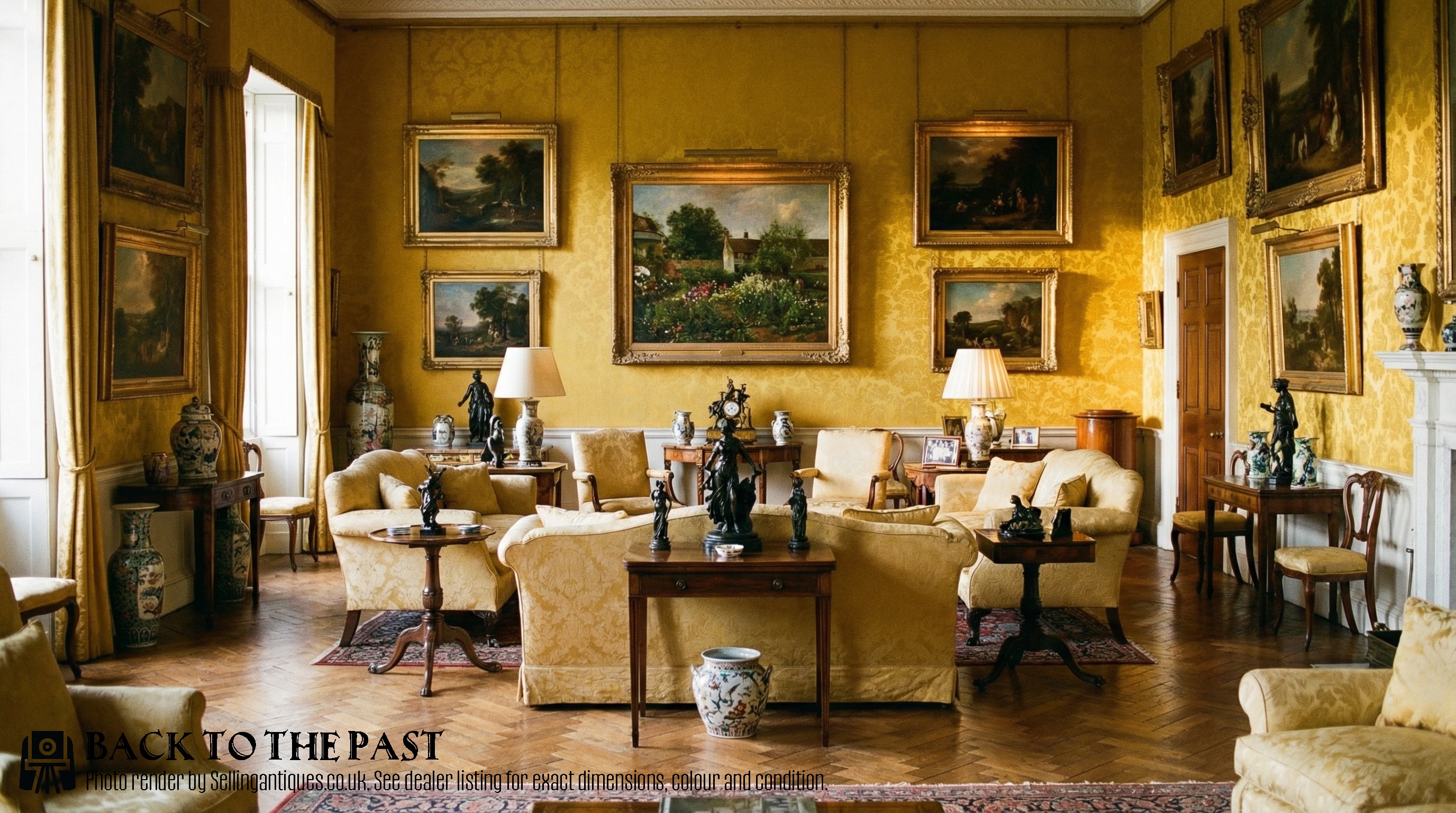
Cylinder Bedside Cabinet
A cylinder bedside cabinet brings a distinct curved form to the bedroom, standing beside a bed to hold small items out of sight behind a curved door. When you search for a cylinder bedside cabinet, you encounter compact pedestals designed primarily during the nineteenth century and the Regency period.
The standard version met here is a mahogany or burr walnut drum-shaped cupboard, often topped with white or grey marble to provide a durable surface. These pieces frequently function as pot cupboards or lamp stands, combining enclosed storage with a sturdy top.
Most examples hail from the Victorian era, spanning early Victorian production through to the late nineteenth century, alongside occasional Regency and French Empire pieces. They appear as single cabinets or pairs, serving practical needs with classical proportions.
Materials and Construction
Cabinetmakers constructed the curved bodies of these pieces using flexible timber substrates veneered in flame mahogany, burr walnut, or plain mahogany. Bending timber into a tight cylinder required specialist joinery techniques to maintain structural integrity over time.
Many cabinets incorporate inset marble slabs on the top surface, offering a cool, water-resistant finish suited to bedside use. Interiors typically feature a single shelf enclosed by a curved wooden door pivoting on hidden hinges.
Listings feature nineteenth-century and Victorian pieces utilising mahogany, burr walnut, and marble.
Assessing Quality and Execution
The quality of a cylinder bedside cabinet rests largely on the selection of timber veneers and the precision of the curved door fitting. Finer examples display symmetrical flame mahogany or richly figured burr walnut that wraps seamlessly around the circular frame.
Superior pieces feature thick, heavy marble tops with clean edges and well-fitted interior shelving rather than thin secondary timbers. The smoothness of the door action and the tightness of the joinery distinguish higher-tier workshop output from utilitarian production.
The Cylinder Bedside Cabinet Glossary
- Flame mahogany
- A veneer cut from the fork of a mahogany tree where the grain twists to create a distinct flickering flame pattern. This decorative surface was favoured by nineteenth-century cabinetmakers for prominent curved panels.
- Burr walnut
- A highly figured timber harvested from walnut tree growths, producing swirling knot clusters across the surface. It appears on finer Victorian pedestals and cupboards.
- Pot cupboard
- A small enclosed bedside cabinet originally designed to house a chamber pot. These pieces evolved into general bedside storage units.
- Pedestal
- A tall, freestanding column-like piece of furniture used for storage or display. In this context, it describes the vertical cylindrical form of the cabinet.
- French Empire
- A neoclassical design style popular in the nineteenth century, characterised by bold geometric forms and architectural restraint. Pieces from this tradition value symmetry and clean lines.
Cylinder Bedside Cabinet: Frequently Asked Questions
How were they originally used?
These cabinets served primarily as bedside storage for personal items and chamber pots before modern plumbing became standard. Their enclosed circular cupboards kept bedroom essentials discreetly hidden.
Over time, their role shifted towards general bedside tables or lamp stands holding reading lights and decorative objects.
Are marble tops original?
Many nineteenth-century cylinder cabinets were manufactured specifically to receive inset marble slabs. Marble provided a practical, wipe-clean surface for water jugs and candles.
While some tops are period replacements, matching marble inserts formed a standard option for Victorian bedroom furniture.
How do I date a cabinet?
Dating relies on timber selection, construction methods, and stylistic cues such as veneer grain and foot design. Regency pieces show earlier classical restraint, while mid-Victorian examples often feature heavier proportions and rich burr walnut.
Secondary woods inside the cabinet also help determine the period of manufacture.
Do they come in pairs?
While individual cylinder cabinets appear frequently, matching pairs occasionally surface in the archive and current listings. Sourcing a pair requires patience due to the individual nature of nineteenth-century bedroom furniture.
Single pieces work well as standalone lamp stands or side tables in smaller spaces.