


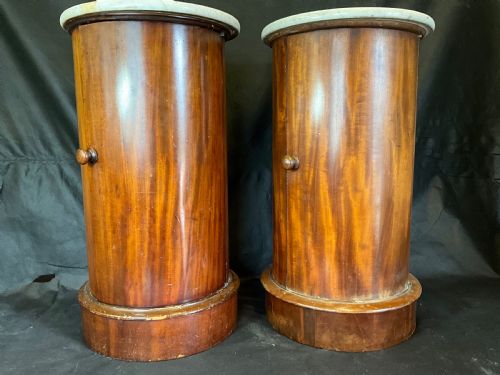


Circular Pedestal Cabinet
These circular pedestal cabinet examples are compact cylindrical cylinders built to hold bedside essentials or display lamps.
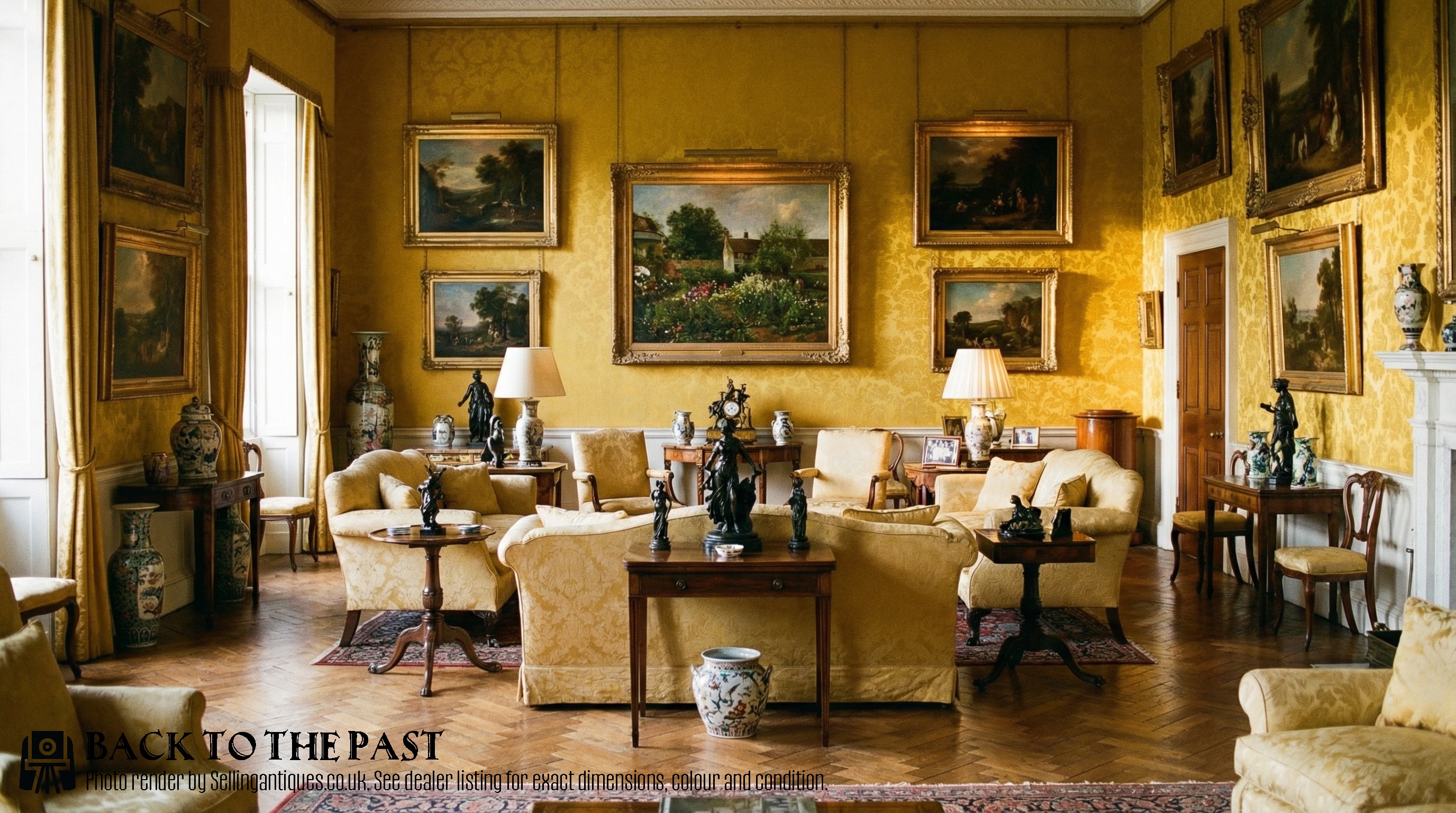
Circular Pedestal Cabinet
A circular pedestal cabinet provides useful enclosed storage and a sturdy surface within a small floor footprint. When you search for this phrase, you find cylindrical bedside cupboards, nightstands, and lamp stands designed to fit tightly beside a bed or in a corner.
The pieces on this page span the Regency, Victorian, and Early Victorian periods, alongside items dated between eighteen-forty and nineteen-ten. Mahogany and flame mahogany feature prominently, often paired with marble tops or brass details.
Most examples function as bedside cabinets or pot cupboards, while others serve as display stands or column nightstands. English and French origins appear across the listings, showing both simple wooden cylinders and painted faux marble finishes.
How they were made
Cabinet makers built these circular bodies using solid wood and flame mahogany veneer curved around a structural core. This technique created smooth cylindrical walls that conceal internal storage behind a curved door.
Many examples incorporate fitted marble tops to provide a durable and water-resistant surface for lamps and bedroom items. Brass hardware and ceramic elements appear as handles and mounts, adding functional contrast to the dark timber.
Some nineteenth-century makers concealed chamber pots inside cylindrical mahogany towers so discreetly that guests mistook them for decorative pedestals.
What varies in quality
The choice of timber grain sets the visual standard, with richly figured flame mahogany veneer marking out finer pieces from plain wood surfaces. The precision of the curved door fit and the seamless joinery around the cylinder demonstrate superior workshop skill.
Fittings such as inset marble tops and original brass hardware elevate an example beyond standard utility furniture. Coordinated pairs indicate a higher original commission, whereas single cabinets reflect standard domestic production.
The Circular Pedestal Cabinet Glossary
- Flame mahogany
- A distinctive timber veneer cut from branch junctions to produce a swirling, flame-like grain pattern. This decorative wood featured heavily on high-status nineteenth-century furniture.
- Pot cupboard
- A small enclosed bedside cabinet originally designed to house a chamber pot. These pieces evolved into general bedside tables and nightstands.
- Cylinder
- A geometric shape with straight parallel sides and circular ends that forms the primary body of these cabinets. It allows the furniture to occupy minimal floor space.
- Regency
- An English design period spanning the early nineteenth century defined by classical restraint and polished timber surfaces. Pieces from this era often display clean lines and fine mahogany veneers.
Circular Pedestal Cabinet: Frequently Asked Questions
How were they used historically?
These cabinets functioned primarily as bedside cupboards to store personal items and nighttime necessities out of sight. The flat top surface held chamber lamps, water jugs, or pocket watches.
Over time, many adapted into general lamp stands or display pedestals for decorative figures and urns within the home.
Are pairs common for these cabinets?
Matched pairs appear occasionally among nineteenth-century bedroom furnishings, designed to sit symmetrically on either side of a double bed. Finding a true pair requires careful comparison of timber grain and dimensions.
Single cabinets also occur frequently as standalone pieces for smaller rooms or hallways.
How do I date a pedestal cabinet?
Dating relies on observing the timber choice, construction methods, and prevailing decorative styles of periods like Regency or Victorian. Flame mahogany veneers and heavy marble tops often point towards mid-nineteenth-century production.
Door hinges, internal shelving structure, and finishing techniques provide further clues regarding the workshop era.