





Cylindrical Nightstand Cabinet
A cylindrical nightstand cabinet is a circular bedside cupboard designed to keep nighttime essentials concealed beside the bed.
Cylindrical Nightstand Cabinet
When you search for a cylindrical nightstand cabinet, you encounter compact circular bedside storage pieces designed to fit neatly in restricted spaces. The forms on this page include bedside cabinets, bedside tables, cupboards, and pot cupboards.
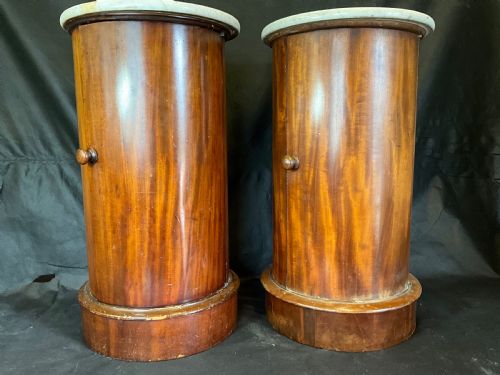
Most examples date from the nineteenth century, spanning the Regency, Victorian, and Early Victorian periods. These circular cupboards offer enclosed storage behind a curved door, often topped with marble for practical utility.
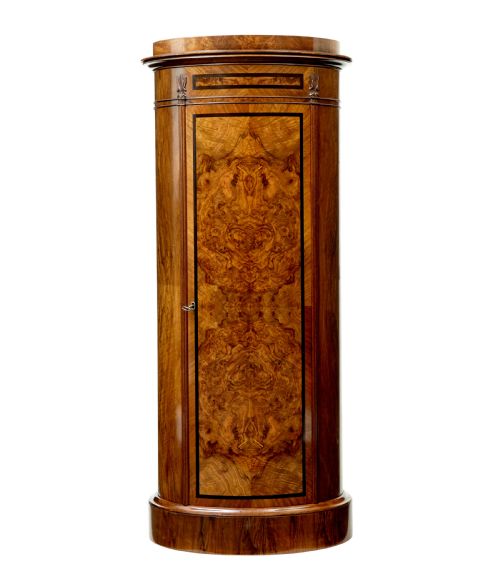
Makers utilised rich timbers and classical proportions to create functional bedroom furniture. The resulting pieces range from plain mahogany cylinders to highly figured burr walnut pedestals.
How they were made
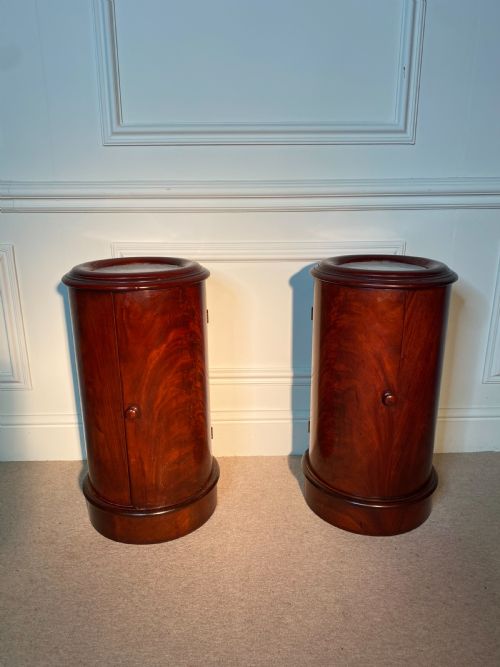
Cabinetmakers constructed the curved bodies of these cabinets using flexible wood cores overlaid with premium veneers. Mahogany and flame mahogany provide a smooth, reddish-brown grain, while burr walnut and ebony introduce deep, swirling patterns.
Heavier stone surfaces, notably marble and faux marble, were fitted to the tops of these circular stands to create a durable, wipe-clean finish. Wood and ceramic elements complete the construction of the interior compartments.
Some cylindrical cabinets feature hidden compartments originally built to keep midnight snacks safe from household mice.
What varies in quality
The choice of timber veneer fundamentally separates standard examples from superior ones. Highly figured flame mahogany and burr walnut demand greater skill in matching the grain around a tight curve.
The integration of the marble top and the seamless movement of the curved door indicate the original maker's standard of work. Refined proportions and clean architectural details distinguish the finest nineteenth-century pieces.
The Cylindrical Nightstand Cabinet Glossary
- Cylinder
- A geometric shape with straight parallel sides and circular ends. This form defines the curved body of the cabinet.
- Flame mahogany
- A wood veneer cut from the branch junction of a mahogany tree. It displays a distinctive flickering flame pattern.
- Burr walnut
- A prized timber harvested from a tree growth or knot. It produces complex, swirling grain patterns across the surface.
- Pot cupboard
- A small bedside cabinet originally designed to house a chamber pot. They share the same cylindrical footprint as nightstand cabinets.
- Pedestal
- A support or base column beneath a cabinet structure. Many nineteenth-century examples utilise this upright format.
Cylindrical Nightstand Cabinet: Frequently Asked Questions
What is a cylindrical nightstand cabinet?
A cylindrical nightstand cabinet is a round bedside storage piece featuring a curved door and enclosed shelving. These items were designed to hold personal items beside the bed while keeping the bedroom tidy.
Most surviving examples date from the nineteenth century and incorporate wood or marble surfaces. Their circular footprint allows them to fit efficiently into smaller spaces.
How were these cabinets used?
These pieces functioned primarily as bedside storage for night-time necessities and chamber pots. The enclosed cupboards kept domestic items out of sight.
The flat top surface held lighting, water jugs, or pocket watches. Marble-topped versions provided an especially durable area for washing items.
How do I identify a Regency period piece?
Regency pieces often display clean classical lines and rich flame-mahogany veneers. Makers of this era favoured architectural simplicity and high-quality timber selection.
Comparing the grain patterns and structural proportions helps differentiate Regency items from later Victorian examples. The use of specific wood types provides further clues to the date of manufacture.
What woods are common on this page?
Mahogany is the most frequent timber seen across these listings, often appearing as flame mahogany with pronounced figuring. Burr walnut and ebony also feature on select pieces.
These dense hardwoods provided the stability needed to construct curved cabinet doors. Lighter secondary woods were typically used for interior framing.