
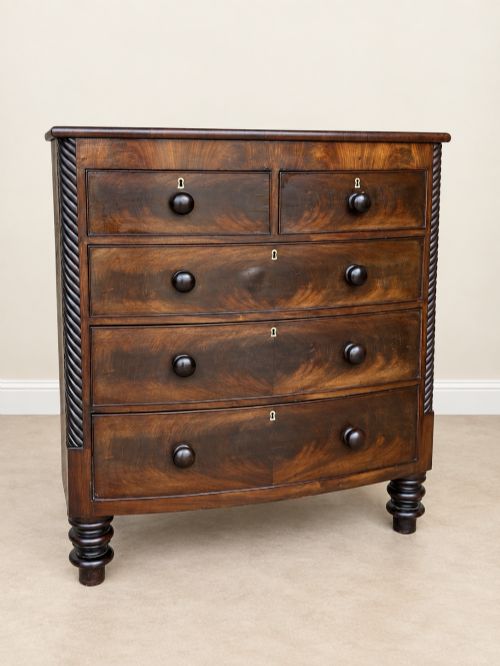
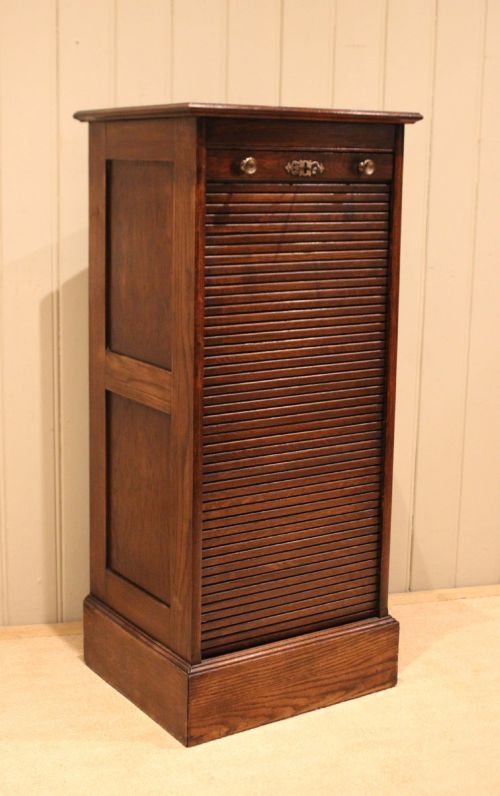
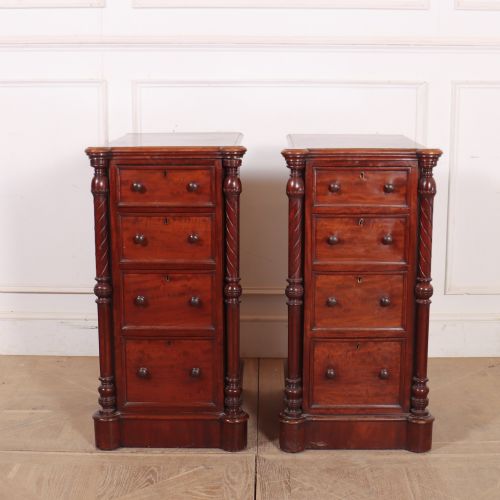
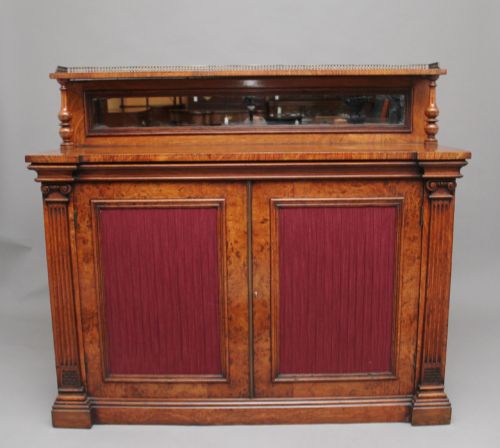




Victorian Column Cabinet
These Victorian column cabinet pieces combine sturdy nineteenth-century utility with classical architectural forms, offering practical storage topped with distinctive column details.
Victorian Column Cabinet
A victorian column cabinet brings architectural presence to domestic storage, drawing on nineteenth-century revival styles that incorporate turned or carved columns into functional furniture.
The selections on this page span bedside tables, pedestals, bookcases, and credenzas produced across the Victorian period and surrounding decades.
Makers utilised rich timbers including mahogany, walnut, and rosewood, often pairing upright cylindrical forms with marble tops or glazed doors.
Materials and construction methods
Cabinetmakers worked with solid hardwoods and applied veneers such as burr walnut, amboyna, and pollard oak over secondary timbers to create patterned surfaces.
Architectural elements like columns and friezes were turned on lathes or carved by hand, while brass hardware and marble inserts provided contrasting textures.
Several miniature apprentice chests appear among the listings, offering scaled-down storage with surprisingly functional secret drawers.
Evaluating craftsmanship and proportion
Superior examples display balanced proportions where the weight of the supporting columns matches the scale of the central body and top.
The refinement of the timber figure, the crispness of the turned column details, and the precision of joinery separate standard utility pieces from exhibition-grade work.
The Victorian Column Cabinet Glossary
- Credenza
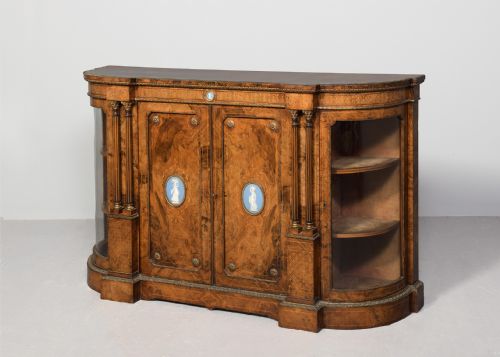
- A low cabinet or sideboard, frequently featuring glazed doors and decorative inlays, developed during the Victorian era for display and storage.
- Pedestal
- A tall, freestanding support structure or single-column cabinet designed to elevate lamps, figures, or decorative objects.
- Wellington chest
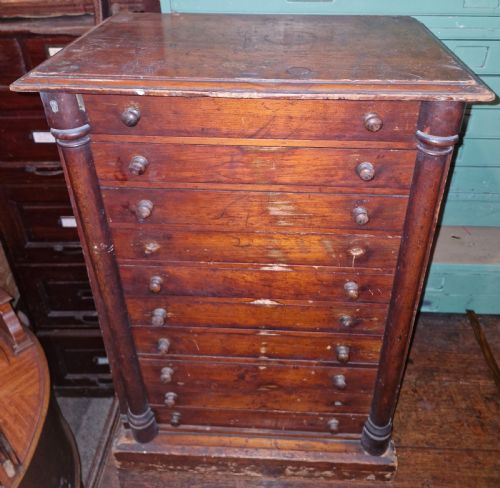
- A tall, slender chest of drawers secured by a hinged locking side stile that fastens with a key.
- Pier cabinet
- A narrow cabinet designed to stand against the wall space between windows, often fitted with glass doors or mirror backs.
- Burr walnut
- A prized timber harvested from the irregular growth burrs of walnut trees, producing swirling grain patterns used for decorative veneer.
Victorian Column Cabinet: Frequently Asked Questions
What rooms suit a Victorian column cabinet?
These compact or tall cabinets suit studies, bedrooms, and living spaces where surface display and enclosed storage are both required.
Their vertical proportions allow them to fit into narrower wall spaces or corners while introducing distinct nineteenth-century character.
How do I care for polished mahogany and walnut surfaces?
Maintain the finish by dusting regularly with a soft, dry cloth and avoiding direct exposure to strong sunlight or heat sources.
Applying a traditional beeswax polish occasionally helps nourish the timber and preserve the depth of the grain.
Were columns always structural or decorative?
Columns on these cabinets served primarily as decorative architectural framing rather than bearing structural weight.
Turned or carved pilasters and freestanding columns drew on classical revival tastes popular throughout the Victorian period.
How can I distinguish a credenza from a sideboard?
A credenza is typically lower, sits flush to the floor without legs, and often incorporates glass-fronted side display compartments.
Sideboards generally stand on legs or feet and focus more heavily on dining room storage and serving surfaces.