



Victorian Cylinder Pedestal
These Victorian cylinder pedestal pieces combine enclosed writing surfaces with sturdy support, offering a practical solution for organising papers while adding architectural weight to a room.
Victorian Cylinder Pedestal
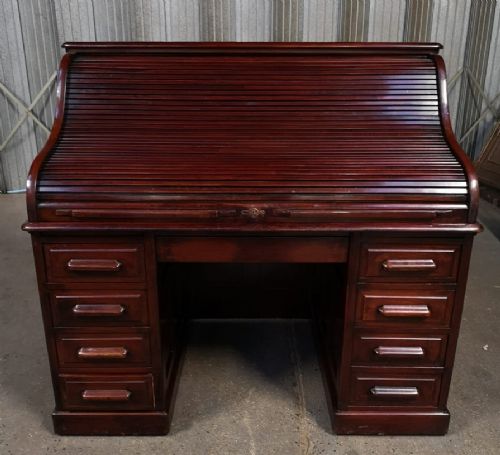
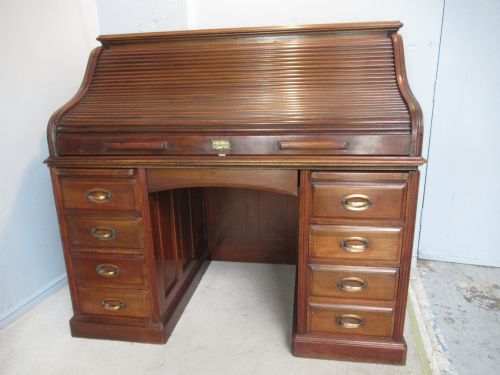
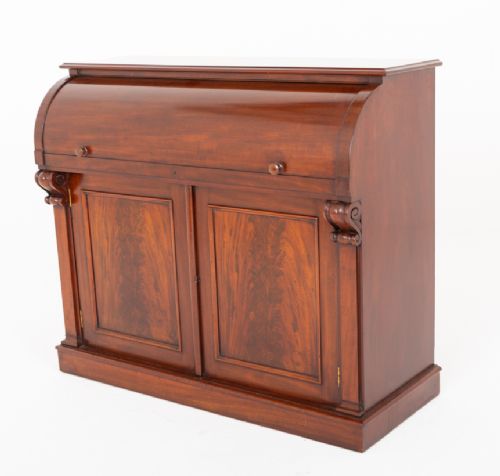
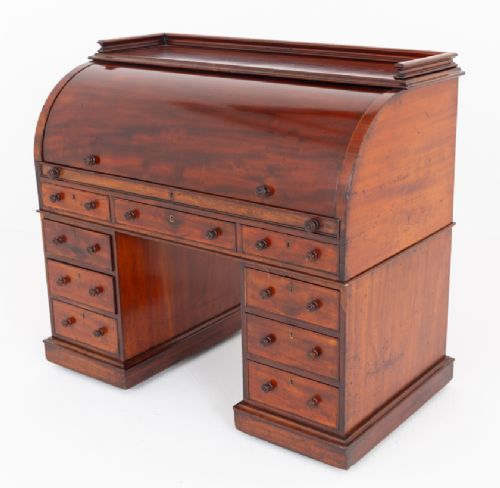
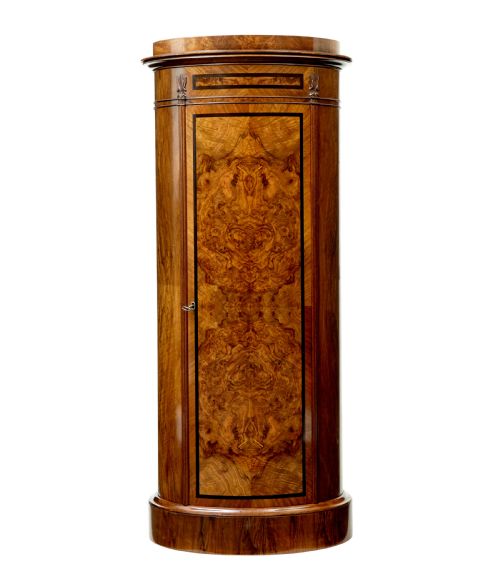
When searching for a victorian cylinder pedestal, a buyer encounters a focused range of furniture centred on desks and cabinets. The most frequent forms are roll-top and cylinder desks, alongside smaller bedside cabinets and lamp stands featuring cylindrical compartments.
The selection spans the nineteenth century, moving from early Victorian and mid-century examples through to Edwardian interpretations. These works typically pair a curved, sliding wooden shutter with pedestal bases or cupboard storage.
Originating primarily in British workshops, the pieces vary from compact bedside stands to large kneehole writing tables. Walnut, oak and mahogany dominate the offerings, occasionally paired with marble tops.
How they were made
Cabinet makers utilised solid timbers alongside veneers, applying flame mahogany veneer and burr walnut to curved cylinder fronts to create visual depth. The sliding cylinder mechanism relies on closely fitted wooden slats glued to a flexible canvas backing, running smoothly within precision-cut grooves.
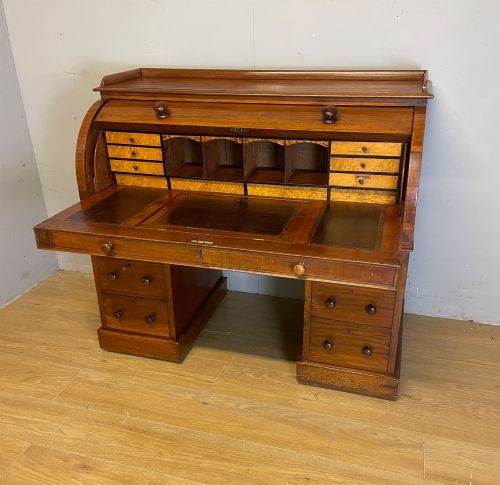
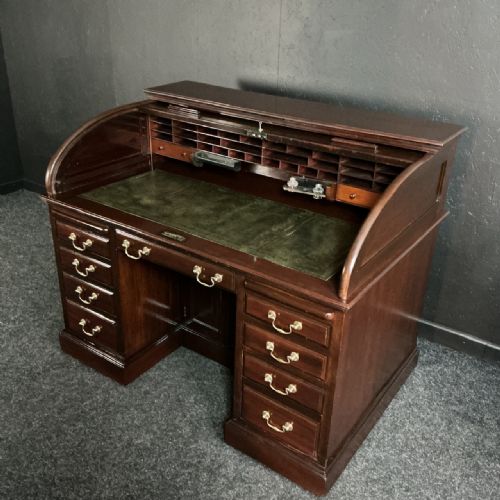
Structural integrity stems from sturdy pedestal bases and well-jointed carcases built from oak or mahogany. Secondary details frequently incorporate brass hardware and fitted interior compartments designed for stationery and ledgers.
Some desks hide secret compartments behind tiny drawers, waiting for a stray paperclip.
What varies in quality
The distinction between standard examples and superior pieces rests on the choice of timber and the precision of the joinery. Selected grain patterns on flame mahogany or burr walnut surfaces elevate the visual presence of a desk or cabinet.
Smooth operation of the sliding cylinder shutter indicates careful initial construction and subsequent maintenance. Integrated interior fittings, such as small drawers and pigeonholes executed in matching woods, mark out more ambitious commissions.
Boston Chair Company
The Victorian Cylinder Pedestal Glossary
- Cylinder desk
- A writing table featuring a quarter-circle or semi-circular wooden shutter that rolls back to reveal a fitted interior. This mechanism conceals writing materials when not in use.
- Pedestal
- A supporting base or column beneath a desk or cabinet, often containing banks of small drawers on either side of a central kneehole.
- Flame mahogany veneer
- A sliced layer of timber displaying a distinctive branching flame pattern, applied to primary surfaces to create an ornamental effect.
- Tambour
- A flexible shutter constructed from narrow strips of wood glued to fabric, allowing the sliding door to follow a curved track.
- Kneehole
- The central space beneath a desk designed to accommodate the user's legs, flanked by pedestals of drawers or cupboards.
Victorian Cylinder Pedestal: Frequently Asked Questions
How do I operate a cylinder desk?
The curved wooden shutter slides smoothly along tracks recessed into the sides of the desk carcase. Pulling the handle downwards reveals the writing surface and internal compartments.
Opening the main writing drawer often unlocks the cylinder mechanism, allowing the shutter to glide open without resistance.
What is the difference between a cylinder desk and a roll top?
A cylinder desk typically uses a solid curved wooden panel that moves in a smooth arc. This form is frequently associated with refined Victorian cabinet making.
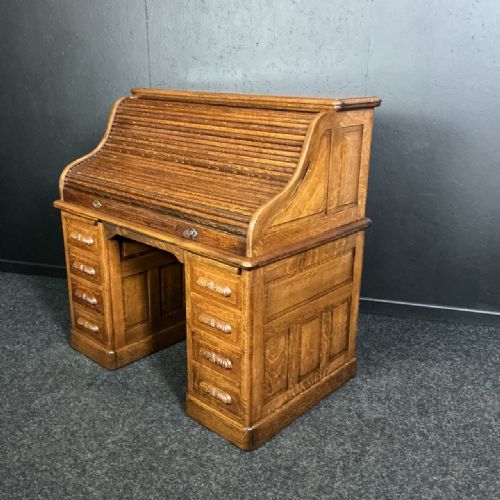
A roll top relies on narrow tambour slats to achieve the curve. This construction method became common on heavier oak desks towards the end of the nineteenth century.
Where were pedestal cabinets used?
These compact pieces served primarily as bedside storage or incidental stands within domestic chambers. The enclosed cupboard section kept personal items out of sight.
Versions featuring marble tops provided a durable, water-resistant surface suitable for wash jugs or bedside lamps.
How do I care for mahogany surfaces?
Maintain the timber by applying traditional beeswax polish sparingly and buffing with a soft cloth. Avoid placing these pieces in direct sunlight to prevent fading.
Keep indoor humidity stable to protect the timber carcase and prevent the curved cylinder mechanism from binding in its tracks.