
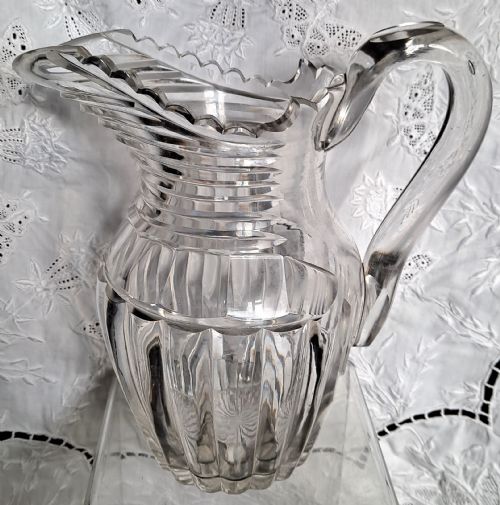
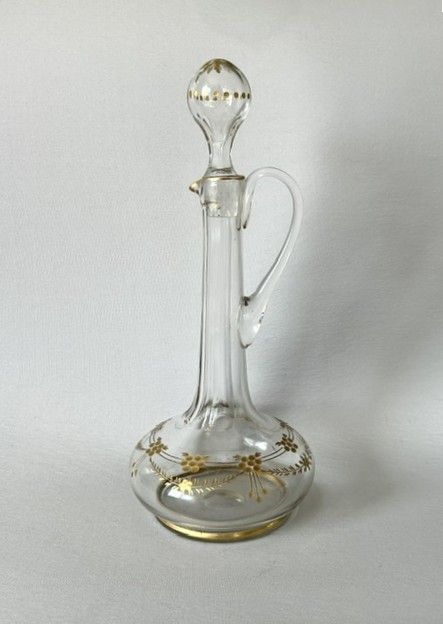
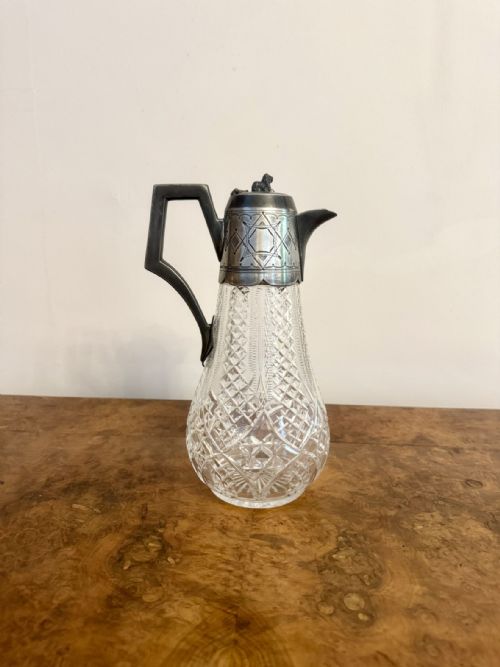
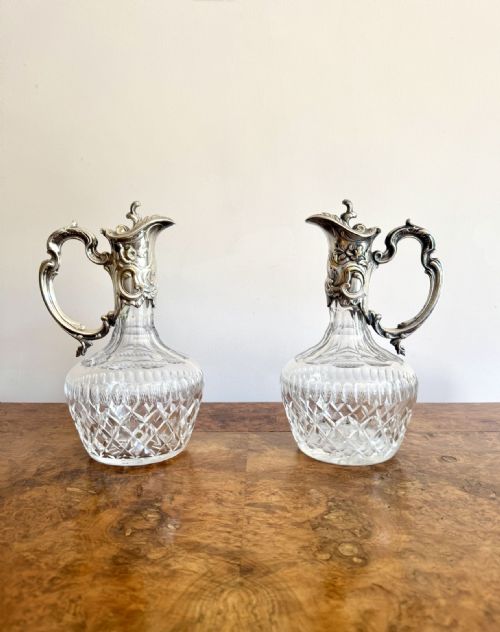


Cut Glass Jug
A cut glass jug brings tactile weight and sharp brilliance to a table, combining heavy crystal with metal mounts.
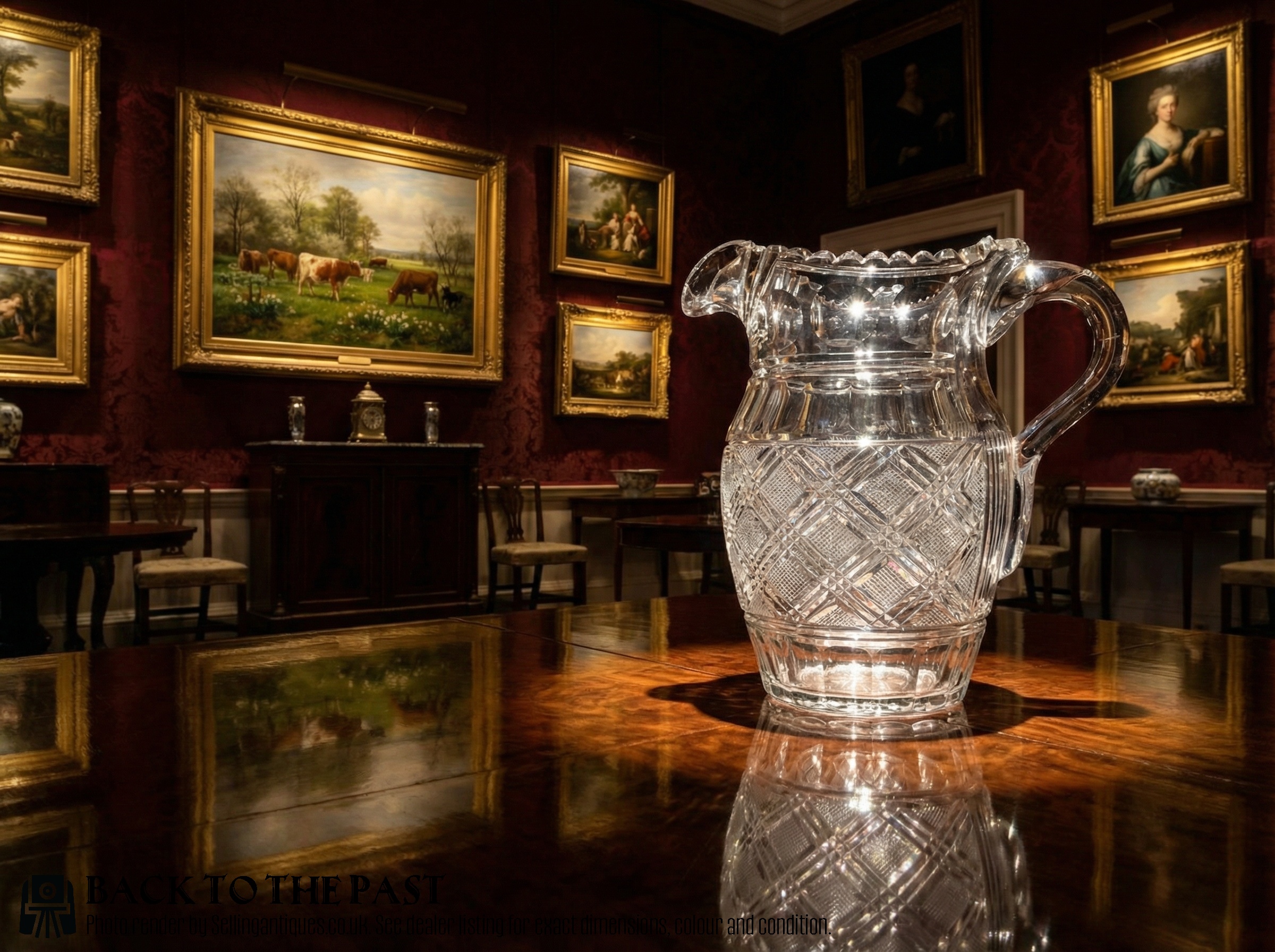
Cut Glass Jug
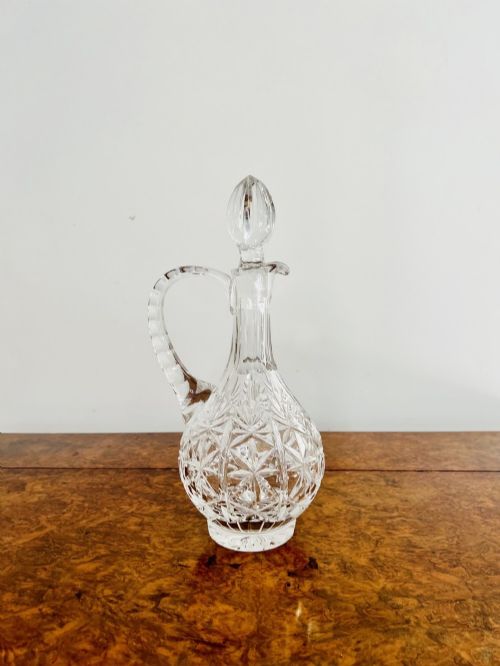
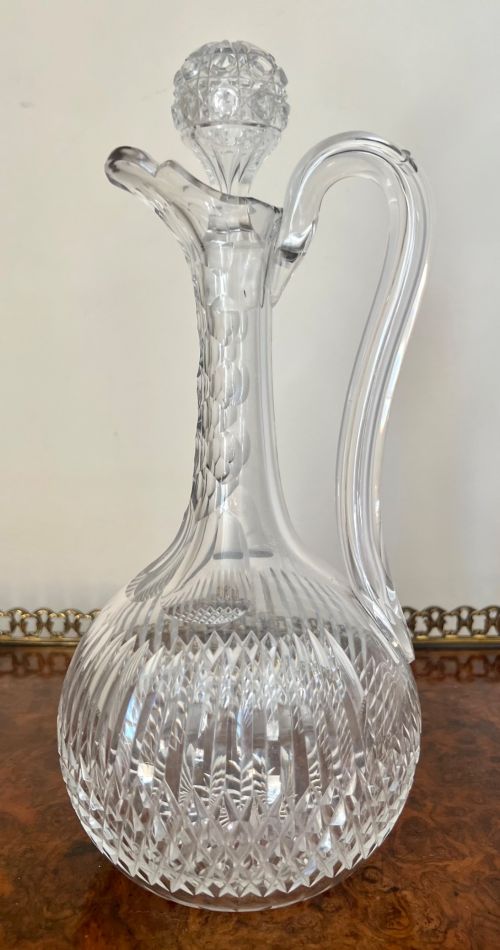
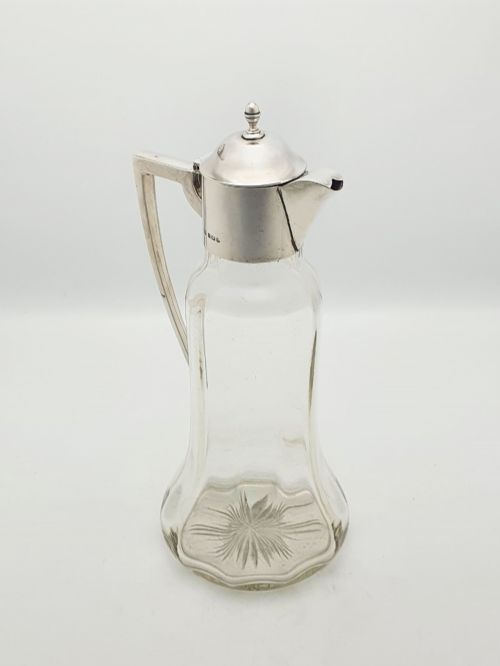
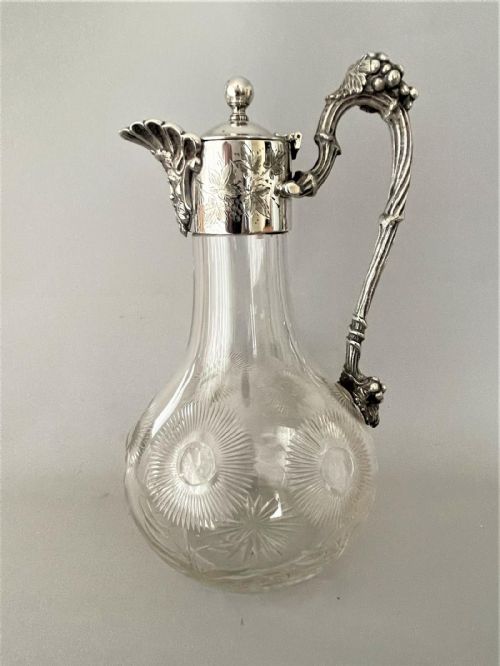
A cut glass jug is a vessel designed for serving wine, water, or spirits, frequently mounted with silver or silver plate. When searching for a cut glass jug, buyers encounter forms ranging from large Victorian claret jugs to compact Edwardian whisky noggins.
The pieces on this page span the nineteenth century into the twentieth century, including Georgian, Victorian, Edwardian, and George V periods. Forms include water pitchers, lemonade jugs with ice tubes, and claret decanters.
Makers and workshops from Britain, Bohemia, and France produced these vessels, utilising clear lead crystal alongside overlaid coloured glass and gilded accents.
How they were made
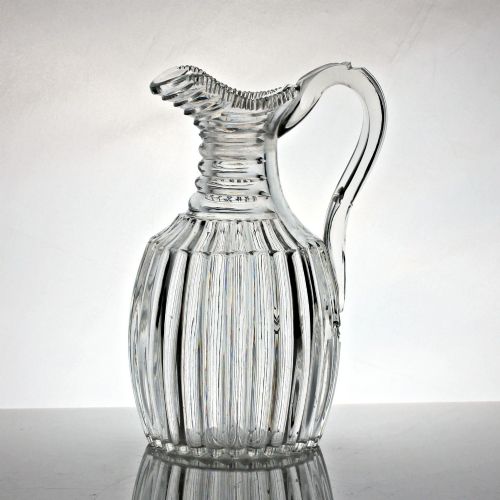
Vessels were hand-blown from lead crystal or clear glass before cold-working. Artisans cut geometric patterns, flutes, pillars, and prisms into the surface using rotating wheels.
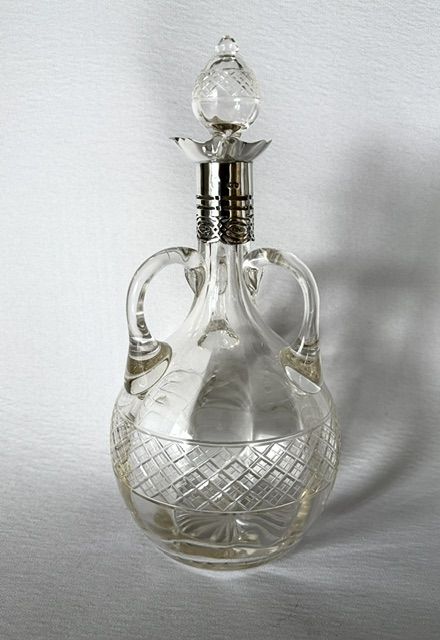
Silver or silver-plated mounts, collars, hinges, and lids were then fitted to the glass body. Makers sometimes added internal ice tubes or engraved decorative motifs such as dolphins.
Several Victorian jugs feature engraved dolphins swimming across the crystal body.
What varies in quality
Quality rests upon the depth and crispness of the wheel cutting on the glass body. Sharp, well-defined facets refract light cleanly, whereas softer cutting lacks definition.
The weight and substance of the metal mounts, alongside the balance of the handle and collar against the glass, separate standard production pieces from finer examples.
Stevens and Williams·Mappin and Webb·Hukin and Heath·Webb Corbett·Richardsons
The Cut Glass Jug Glossary
- Claret jug
- A specialised vessel intended for serving red wine at the table. These pieces often feature hinged metal lids and spouts.
- Whisky noggin
- A small spirit jug, frequently fitted with a sterling silver collar and handle. They commonly date from the Edwardian and George V periods.
- Lead crystal
- Glass containing metal oxides that increase weight, clarity, and refractive index. This material allows for deeper and sharper wheel cutting.
- Prism cut
- A linear facet cutting style that splits light into spectral colours. It appears frequently on Georgian and nineteenth-century water jugs.
- Intaglio
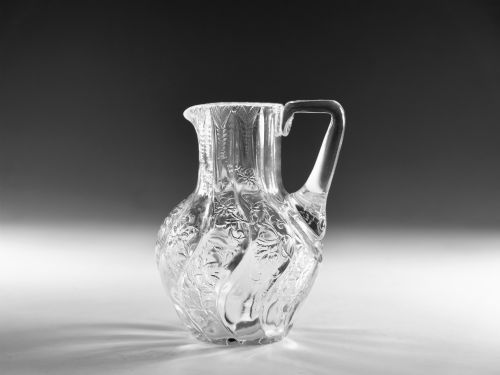
- A technique where designs are carved into the glass surface rather than left in relief. This method creates sunken motifs such as foliage or animals.
Cut Glass Jug: Frequently Asked Questions
What is a claret jug?
A claret jug is a serving vessel specifically made for red wine during formal dining. They combine heavy glass bodies with metal spouts and hinged lids.
Most surviving examples date from the Victorian and Edwardian eras, often featuring intricate wheel-cut patterns across the crystal.
How do I use a whisky noggin?
A whisky noggin is a small personal decanter used for pouring spirits at the sideboard or table. They typically include a fitted silver mount and handle.
These compact jugs pair well with barware collections and remain practical for serving measures of spirits.
How do I date a cut glass jug?
Dating relies on the style of the metal mounts, hallmarks on the silver, and the pattern of the glass cutting. Victorian pieces often display heavy silver-plated collars, while George V examples feature neat sterling mounts.
Examining the base for pontil marks and wear patterns also helps determine the age of the glass.
What is an ice tube jug?
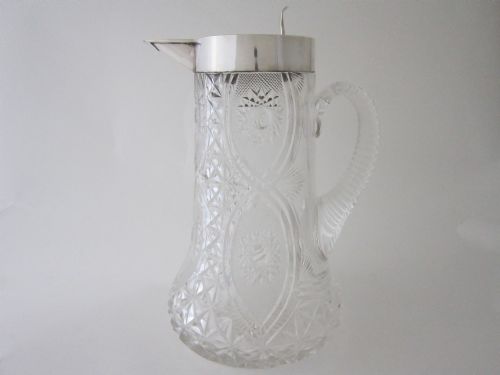
An ice tube jug contains a central metal cylinder that holds ice without diluting the liquid inside. These were popular during the Victorian and Edwardian periods for lemonade and water.
The removable tube screws into the silver-plated lid assembly.