

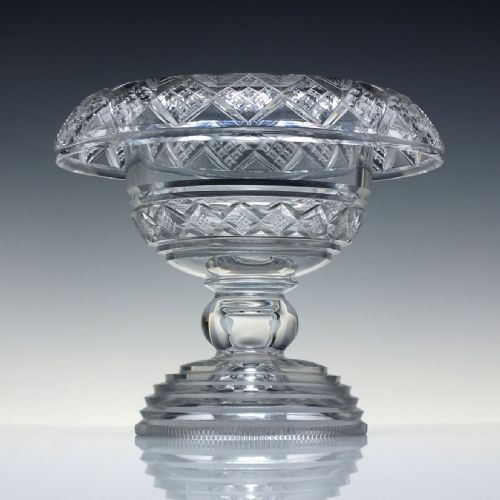


Cut Glass Compote
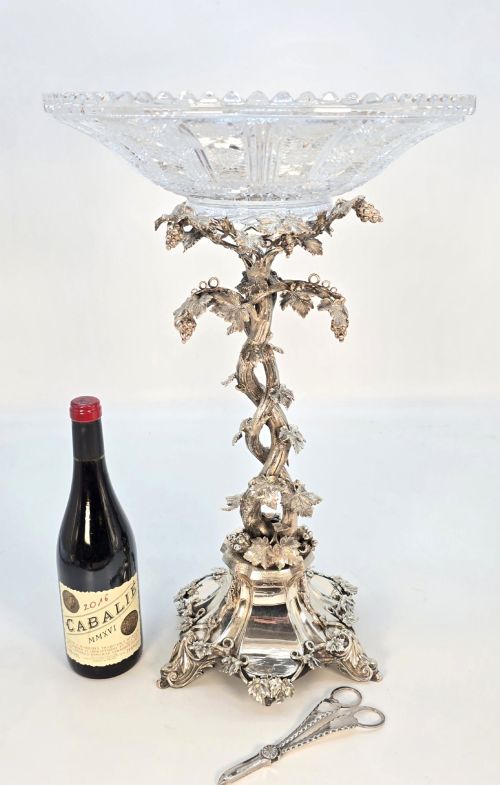
These cut glass compote pieces are elevated serving vessels and centrepieces that bring sparkle and presence to a table.
Cut Glass Compote
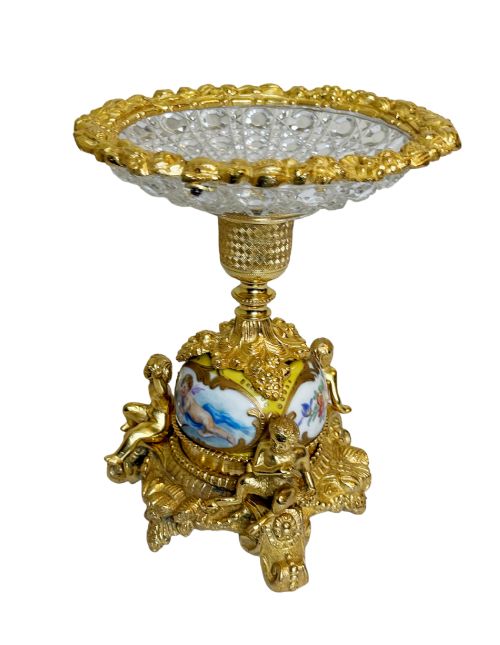
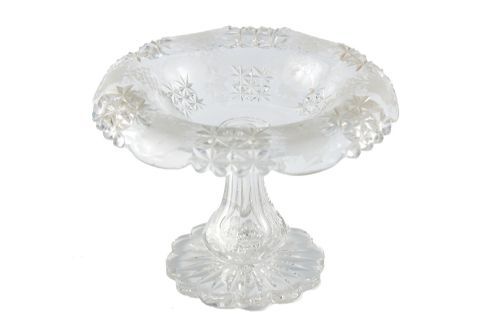
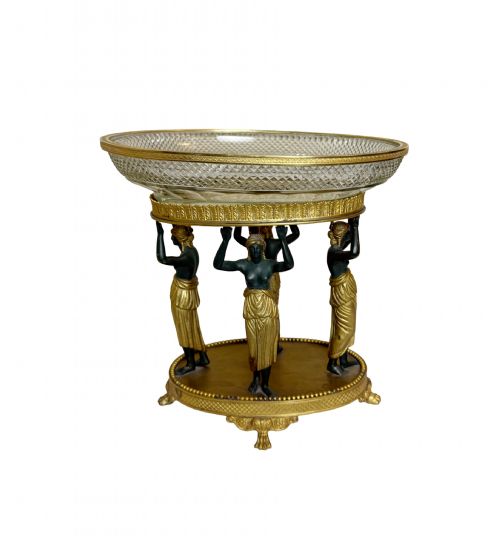
A cut glass compote takes many forms on this page, including pedestal bowls, footed fruit dishes, tazzas, and elaborate table centrepieces. You will encounter pieces spanning from the Georgian and Victorian eras into the Edwardian and Art Deco periods, alongside Grand Tour items.
The materials paired with the glass shape the character of each piece. Silver plate, gilt bronze, patinated bronze, and porcelain frequently accompany lead crystal and cut glass in these designs.
Materials and construction
Makers shaped heavy lead crystal and glass through hand blowing before cutting deep facets, hobnail patterns, and delicate etchings into the surface. These optical cuts catch and refract light across the room.
Metal mounts in silver plate, gilt bronze, and patinated bronze support the glass bowls securely, often featuring cast figural details like cherubs or nautical motifs.
A sailor prince theme occasionally steers these grand nautical centrepieces into wonderfully specific Victorian waters.
Markers of distinction
The depth, crispness, and precision of the glass cutting define the upper tier of these vessels. Sharp, clean facets indicate skilled handwork, whereas softer edges suggest lesser execution.
The integration between the glass bowl and its metal or porcelain mount dictates overall refinement. Solid casting in the bronze or silver plate elements marks superior manufacture.
W M F·Christofle et Cie
The Cut Glass Compote Glossary
- Compote
- A raised bowl or dish used for serving fruit or sweets at the table. It stands on a central foot or pedestal.
- Tazza
- A shallow saucer-like dish mounted on a stem and foot. This Italian term often describes formal serving vessels of the nineteenth century.
- Hobnail
- A raised, faceted glass pattern resembling the hobnails on stout boots. It creates intense texture and sparkle.
- Lead crystal
- Glass containing lead oxide, which increases weight, brilliance, and workability for deep cutting. It forms the body of the finest bowls.
- Turnover bowl
- A vessel with an everted rim folded outward during shaping. This creates a distinctive silhouette seen in older Irish pieces.
Cut Glass Compote: Frequently Asked Questions
How were these compotes used historically?
Historically, these vessels held fruit, sweetmeats, or comfits during formal dining. Placed in the centre of the table, they caught the candlelight and added height to table settings.
As dining habits shifted through the Victorian and Edwardian periods, their role evolved from active service toward decorative display on sideboards and consoles.
How do I date an antique compote?
Dating relies on stylistic clues, glass colour, cutting styles, and any accompanying metal mounts. Georgian and early nineteenth-century pieces often display heavier lead crystal and distinct Irish cutting, while later Victorian and Edwardian examples show diverse metal combinations.
Makers' marks on silver plate or bronze mounts can also pinpoint the manufacturing period.
How do I care for antique glass?
Care requires gentle hand washing in lukewarm water with mild soap. Avoid sudden temperature changes to prevent cracking the heavy crystal.
Take care with silver plated or bronze mounts, keeping moisture away from metal joints and polishing only the plated areas with appropriate cloths.