


Cut Flash Glass
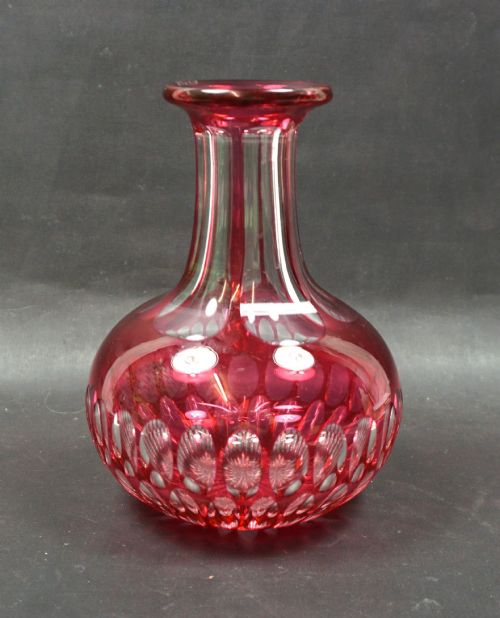
Cut flash glass pieces are vibrant double-layered vessels carved to reveal a contrasting clear or coloured interior, prized for their rich hues and brilliant facets.
Cut Flash Glass
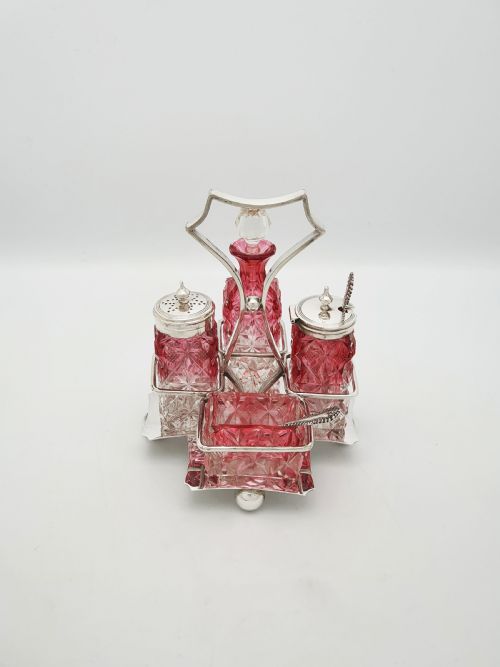
When you search for cut flash glass, you are looking at nineteenth-century and early twentieth-century vessels created through a distinct layering technique. The pieces seen here span decanters, vases, cruet sets, scent bottles, and tumblers dating from the Victorian and Edwardian eras.
English and Bohemian makers dominate these listings, producing objects that range from deep ruby and cranberry reds to cobalt blue, yellow, and green. You are most likely to meet decanters, vases, and lustres featuring cut panels or engraved botanical and avian motifs.
How they were made
These items combine coloured glass and clear lead crystal fused together while hot to form a single vessel with a distinct outer casing. The maker then uses a wheel to cut away portions of this outer layer, exposing the contrasting colour or clear crystal beneath.
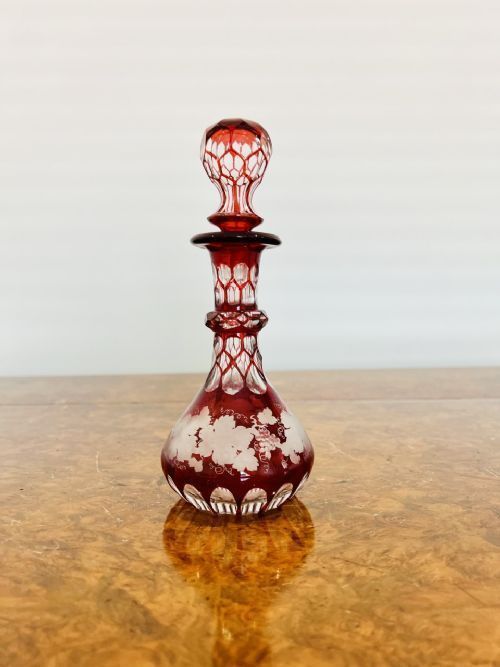
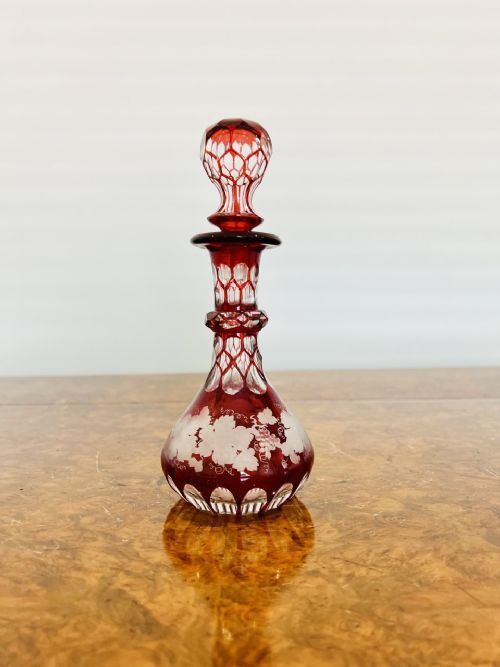
Finishing work often involves wheel engraving or gilding to add intricate patterns such as birds, vines, or geometric panels across the cut surfaces.
Several decanters and tumblers feature hand-engraved birds perched among vines, bringing a lively menagerie to the Victorian sideboard.
What varies in quality
The distinction between standard items and superior examples lies in the crispness and depth of the wheel cutting. Deeper cuts reveal sharper contrasts between the coloured overlay and the clear or white base layer.
Artistry in the secondary engraving, such as detailed birds and foliage rather than simple geometric faceting, separates workshop output from mass production. The weight and clarity of the underlying lead crystal also dictate the piece's standing.
The Cut Flash Glass Glossary
- Flash glass
- Glass formed of a thin layer of coloured glass cased over a thicker body of clear or contrasting glass. This method allowed makers to achieve intense colour while keeping the vessel workable for cutting.
- Overlay
- A thicker layer of coloured glass applied over a body of clear crystal before cutting and engraving. Unlike flash glass, overlay involves a substantial secondary layer that permits deep sculptural carving.
- Lustre
- A decorative table ornament featuring a bowl with a long stem and hanging crystal prisms. Victorian examples in ruby glass often combined flash cutting with elaborate gilding.
- Tazza
- A small shallow cup or bowl raised on a stem and foot, used for serving sweetmeats or display. Examples in coloured flash glass highlight the contrast between the rim and the stem.
- Cruet set
- A matched group of glass bottles or containers for condiments, often mounted in silver plate during the Edwardian period.
Cut Flash Glass: Frequently Asked Questions
What is cut flash glass?
Cut flash glass is a type of decorative glassware made by coating a clear or contrasting body with a thin layer of coloured glass. This outer layer is then partially cut away to reveal the base material underneath.
The resulting contrast in colour and transparency creates striking geometric or pictorial patterns, particularly popular during the nineteenth century in Britain and Bohemia.
How do I clean cut flash glass?
Clean these pieces gently by hand using warm water and a mild detergent. Avoid soaking them for long periods, especially items with gilded or silver-plated mounts.
Dry them immediately with a soft, lint-free cloth to protect the polished surface and any delicate engraved details on the outer casing.
Are these pieces English or Bohemian?
The listings include both English and Bohemian origins from the Victorian and Edwardian periods. English makers produced notable decanters and carafes, while Bohemian workshops were particularly prolific in ruby and coloured overlay vases and lustres.
Distinguishing between them often relies on specific stylistic motifs, cutting depth, and the colour palette typical of continental or domestic glasshouses.
How can I tell the period of a piece?
Dating relies on stylistic clues, manufacturing techniques, and associated fittings such as silver plate. Victorian examples often feature rich ruby or cranberry tones with heavy wheel cutting or gilding.
Later Edwardian pieces frequently include cruet sets with metal mounts, while turn-of-the-century items showcase specific colourways like yellow or green over crystal.