


English Victorian Decanters
English victorian decanters bring heavy crystal, silver mounts and rich colour to the dining table.
English Victorian Decanters
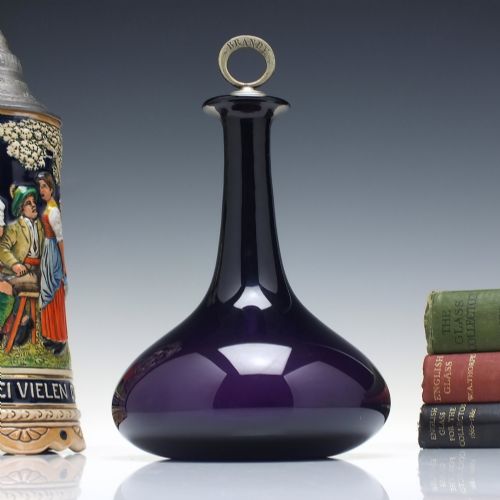
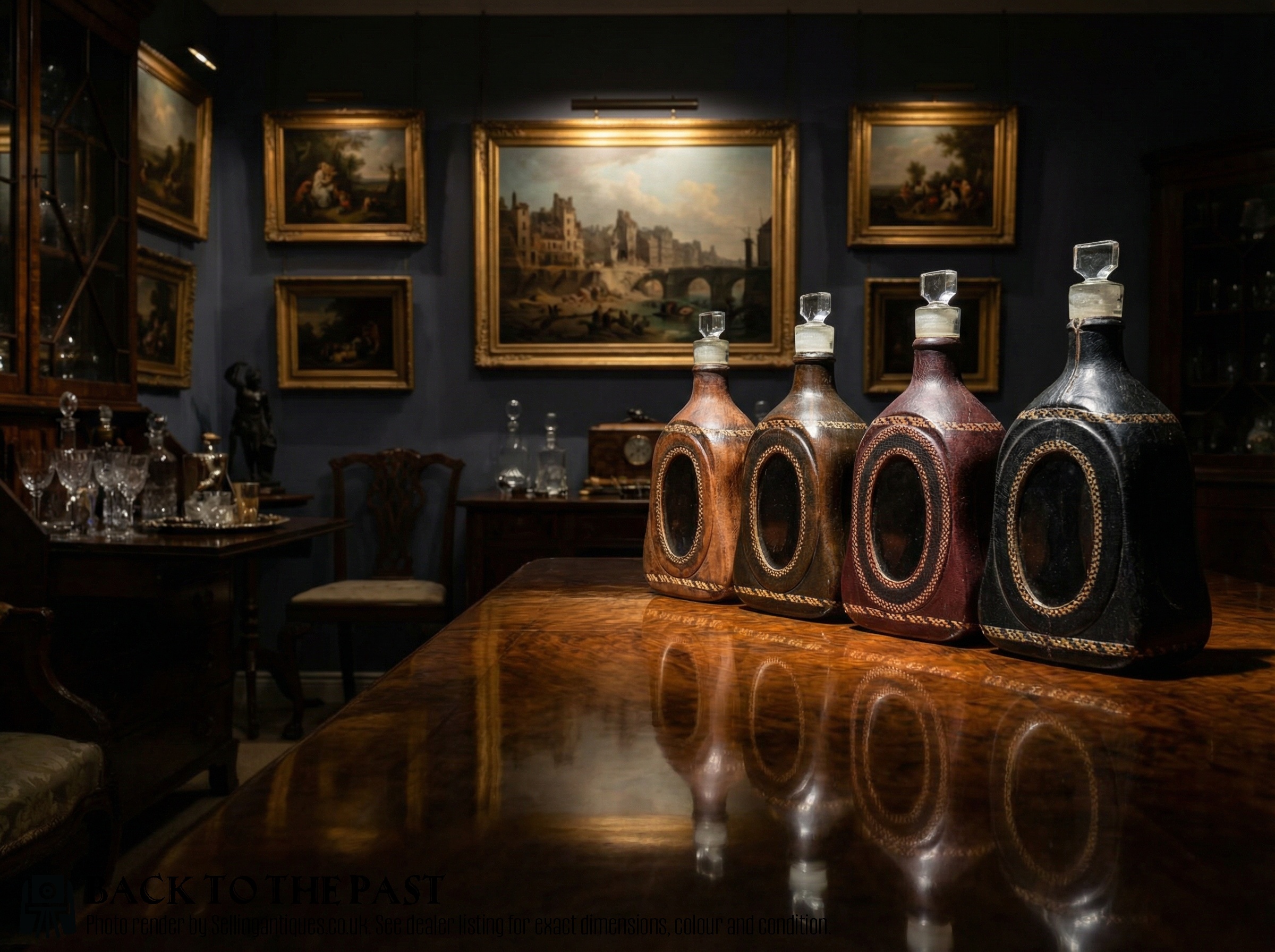
English victorian decanters span the nineteenth century, taking the form of spirit vessels, wine jugs and claret containers in heavy glass. Most examples date from the middle decades onwards, including pieces shaped for whisky, sherry and claret.
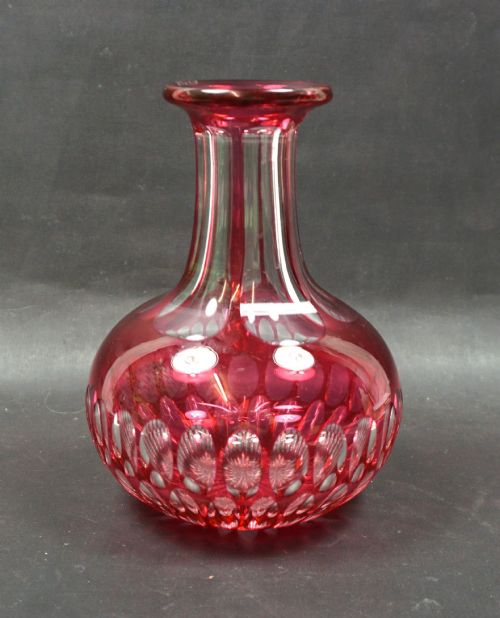
Makers produced these bottles in clear cut crystal, alongside coloured glass such as cranberry, ruby and amethyst overlays. Many incorporate silver plate or sterling silver collars, stoppers and labels.
Alongside standalone bottles, the period produced fitted boxes, tantalus frames and spirit barrels designed to lock away the contents. These items reflect the formal entertaining habits of the era.
Materials and Working Methods
Glassmakers relied on lead crystal, blown into moulds or free-blown before undergoing deep wheel-cutting to create facets and geometric patterns. Coloured vessels often utilised an overlay technique, where a thin layer of ruby, cranberry or amethyst glass was fused over clear crystal and cut away to expose the base layer.
Silversmiths and metalworkers provided cast and hallmarked silver collars, mounts and stoppers, securing them with cork or ground glass bungs. Wooden accessories like mahogany, walnut and coromandel formed the frames for tantalus sets and travelling bars, fitted with brass locks.
Listings feature materials spanning cut crystal, cranberry glass, amethyst glass, sterling silver, silver plate, walnut, coromandel and treen.
Defining Quality
Quality rests in the crispness of the glass cutting and the weight of the metal mounts. Superior pieces display sharp, deep facets that catch the light, whilst lesser examples feature shallow press-moulded patterns with soft edges.
The integrity of the ensemble determines the standing of a piece, particularly in fitted boxes and tantalus sets where matching stoppers and original locking mechanisms preserve the design as the maker intended.
Richardsons·Mappin Brothers
The English Victorian Decanters Glossary
- Tantalus
- A locking wooden frame that holds decanters securely, displaying the bottles whilst preventing unpermitted access to the spirits inside.
- Overlay
- A layered glass technique where a coloured exterior shroud is cut through to reveal the clear crystal underneath.
- Claret jug
- A serving vessel with a handle and pouring spout, commonly fashioned from cut crystal and mounted with silver plate.
- Latticinio
- Fine opaque white glass threads twisted within clear glass to form delicate interior patterns.
English Victorian Decanters: Frequently Asked Questions
How do I date an english victorian decanter?
Dating relies on the style of the glass cutting, the shape of the bottle and any associated silver hallmarks. Monograms and registration marks stamped into the metal mounts provide precise years of production.
Changes in stopper design and the depth of the pontil mark on the base also help separate mid-century examples from later nineteenth-century pieces.
Were these decanters used for specific drinks?
Certain forms were tailored for particular contents, such as claret jugs featuring spouts for red wine and narrow spirit bottles for whisky or brandy. Tantalus sets frequently housed three distinct decanters for a choice of liquors.
Labels hanging from silver chains often identified the intended contents, ranging from port to sherry.
How should I clean antique glass decanters?
Stubborn residue inside the vessel responds best to warm water and non-abrasive cleaning beads rather than harsh chemical detergents. Extreme temperature changes must be avoided to prevent thermal shock to heavy lead crystal.
Silver collars require careful polishing with a soft cloth to protect the surrounding glass from staining.
What is a spirit barrel?
A spirit barrel is a novelty container fashioned to resemble a small cask, often mounted on a wheeled carriage or wooden stand. These pieces held liquor for portable or table service during the Victorian period.
They combine glass bodies with silver-plated taps and hoops.