
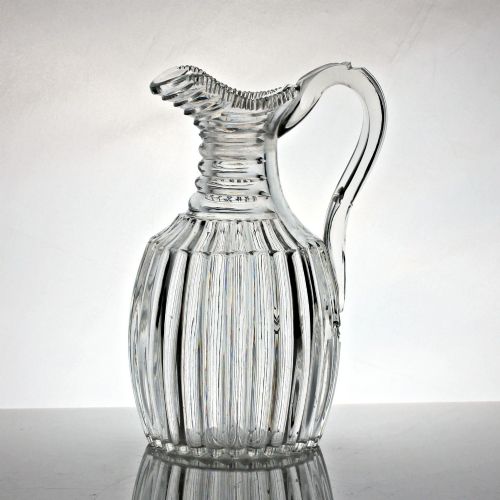
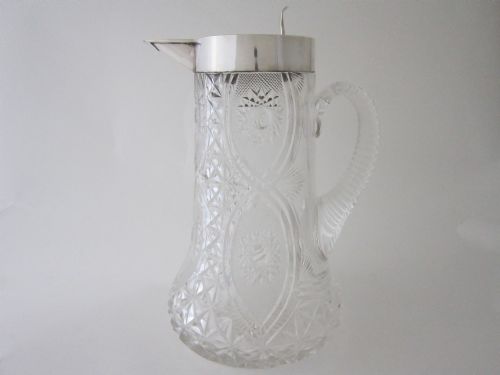
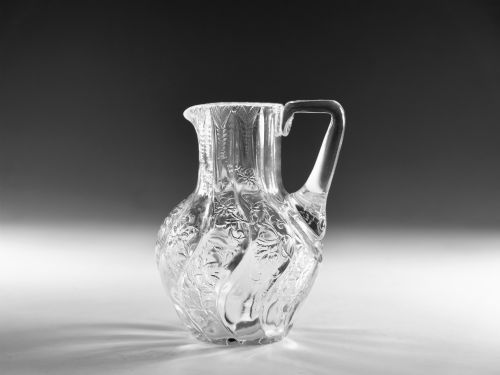
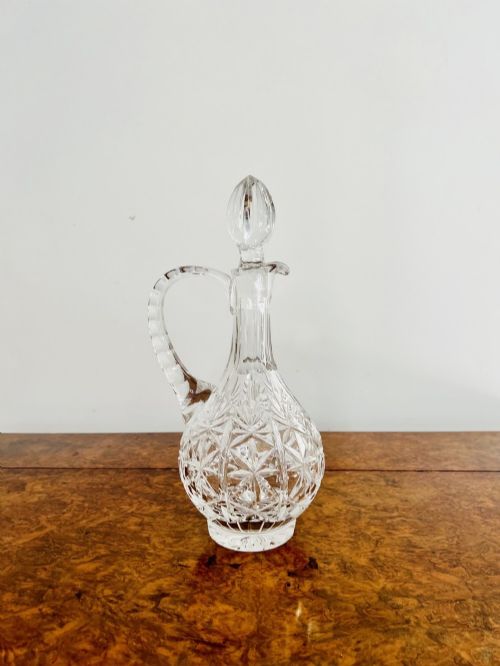



Cut Crystal Pitcher
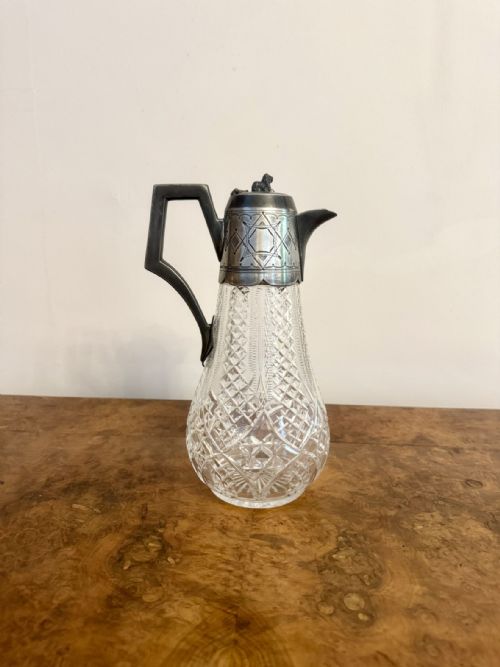
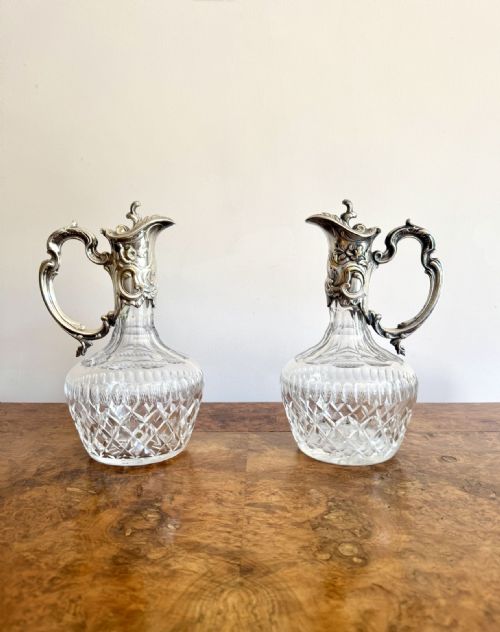
A cut crystal pitcher brings heavy refraction and polished weight to the table, uniting sharp wheel-cut glass with precious metal mounts.
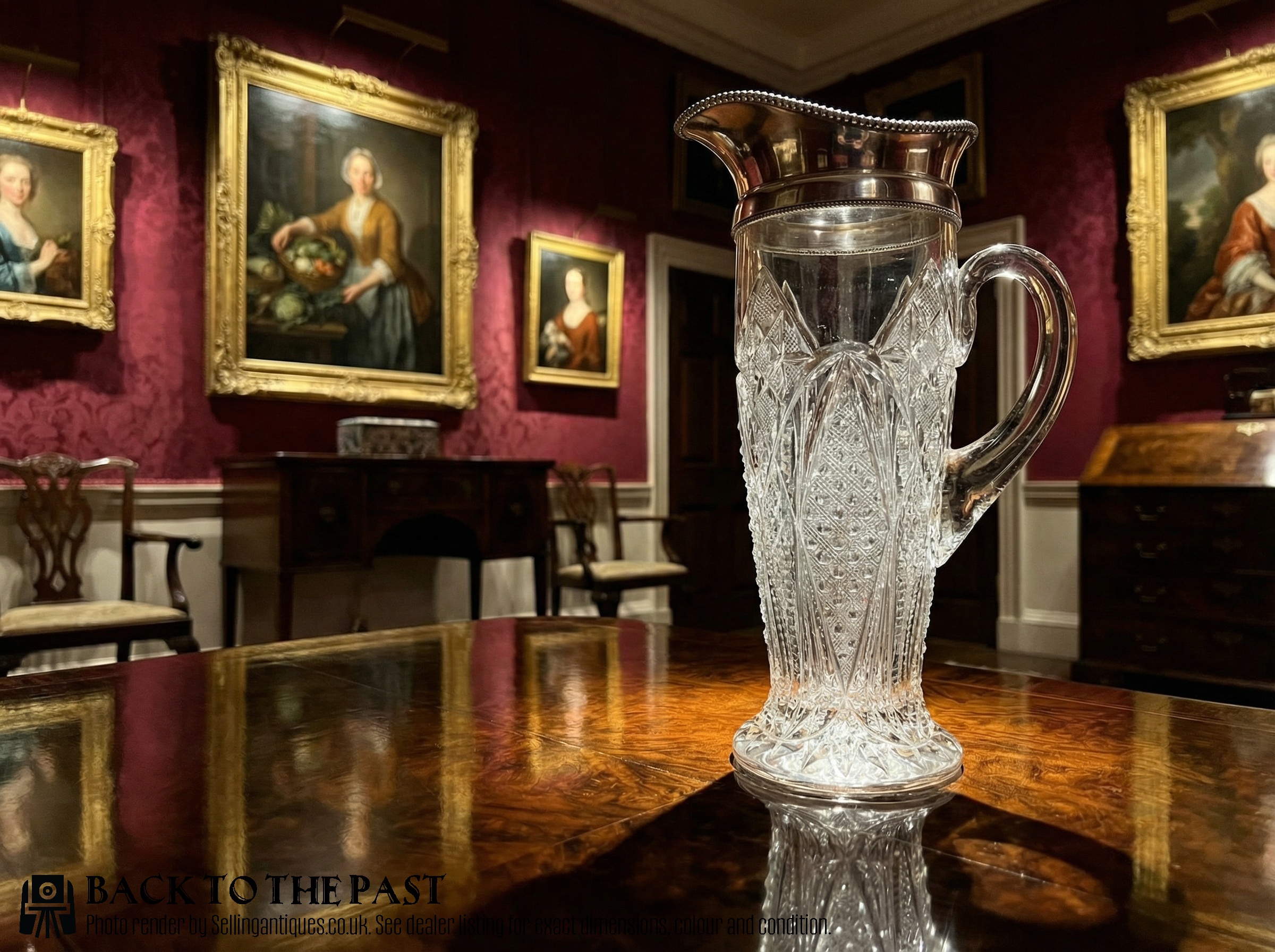
Cut Crystal Pitcher
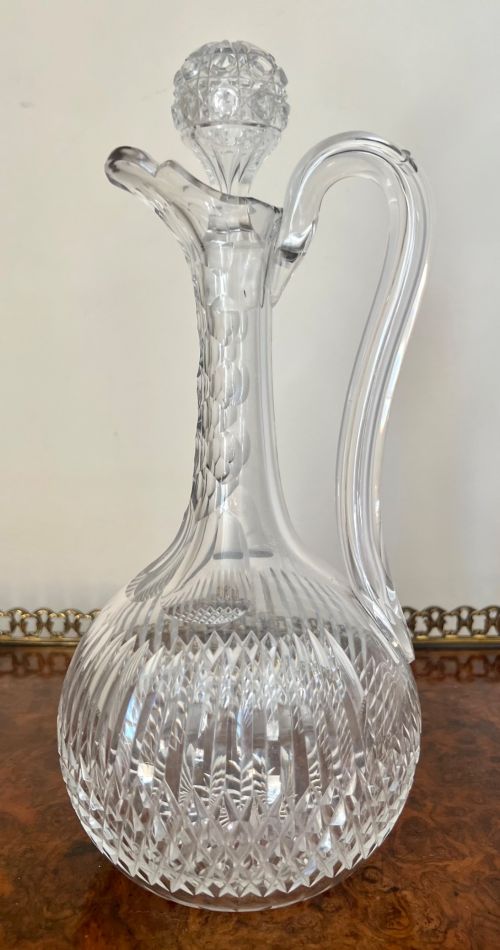
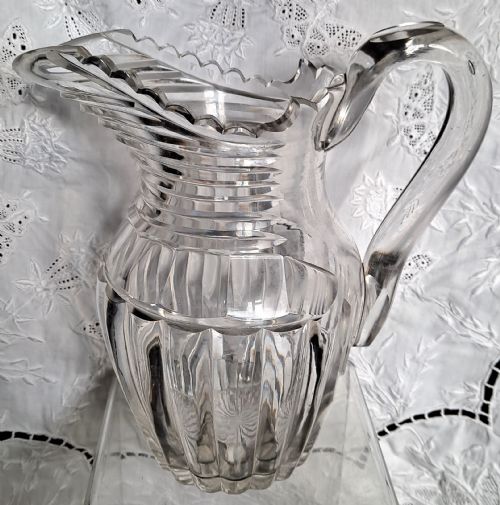
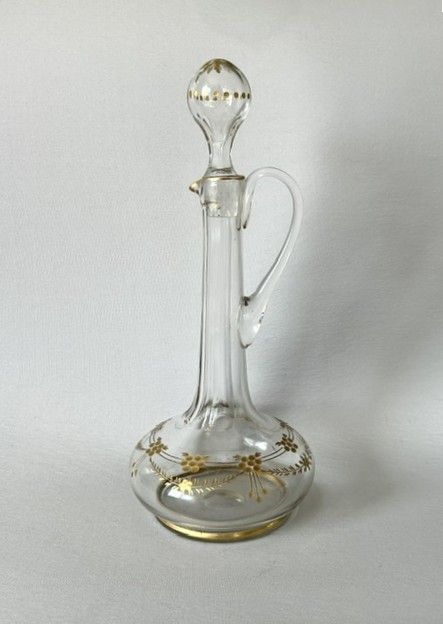
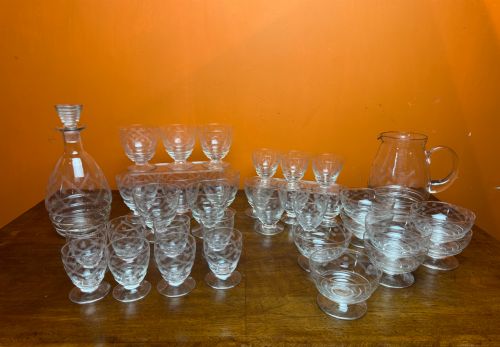
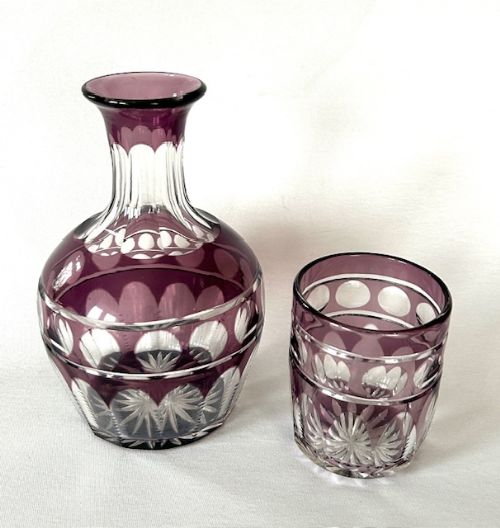
A cut crystal pitcher serves as a functional vessel for wine, water, or cocktails, defined by deep incisions across the body of the glass. These objects emerge most frequently from Victorian, Edwardian, and nineteenth-century workshops in forms ranging from claret jugs to water ewers.
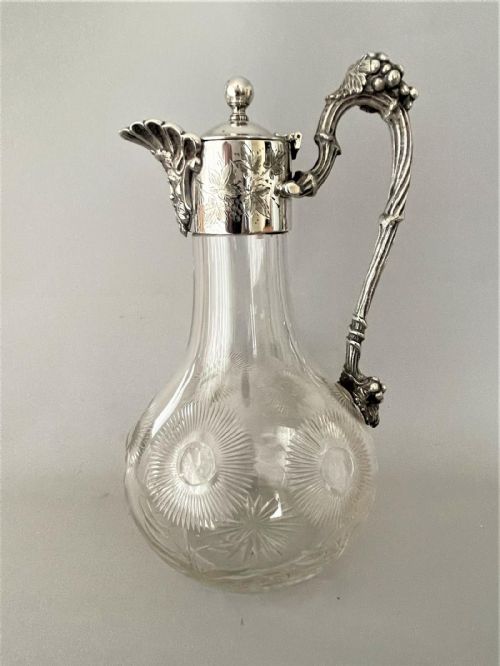
Buyers encountering this selection will find heavy glass bodies paired with silver plate or sterling silver fittings, handles, and hinged lids. The vessels often adopt faceted necks, star-cut bases, and pouring spouts designed for formal dining rooms.
What varies in quality
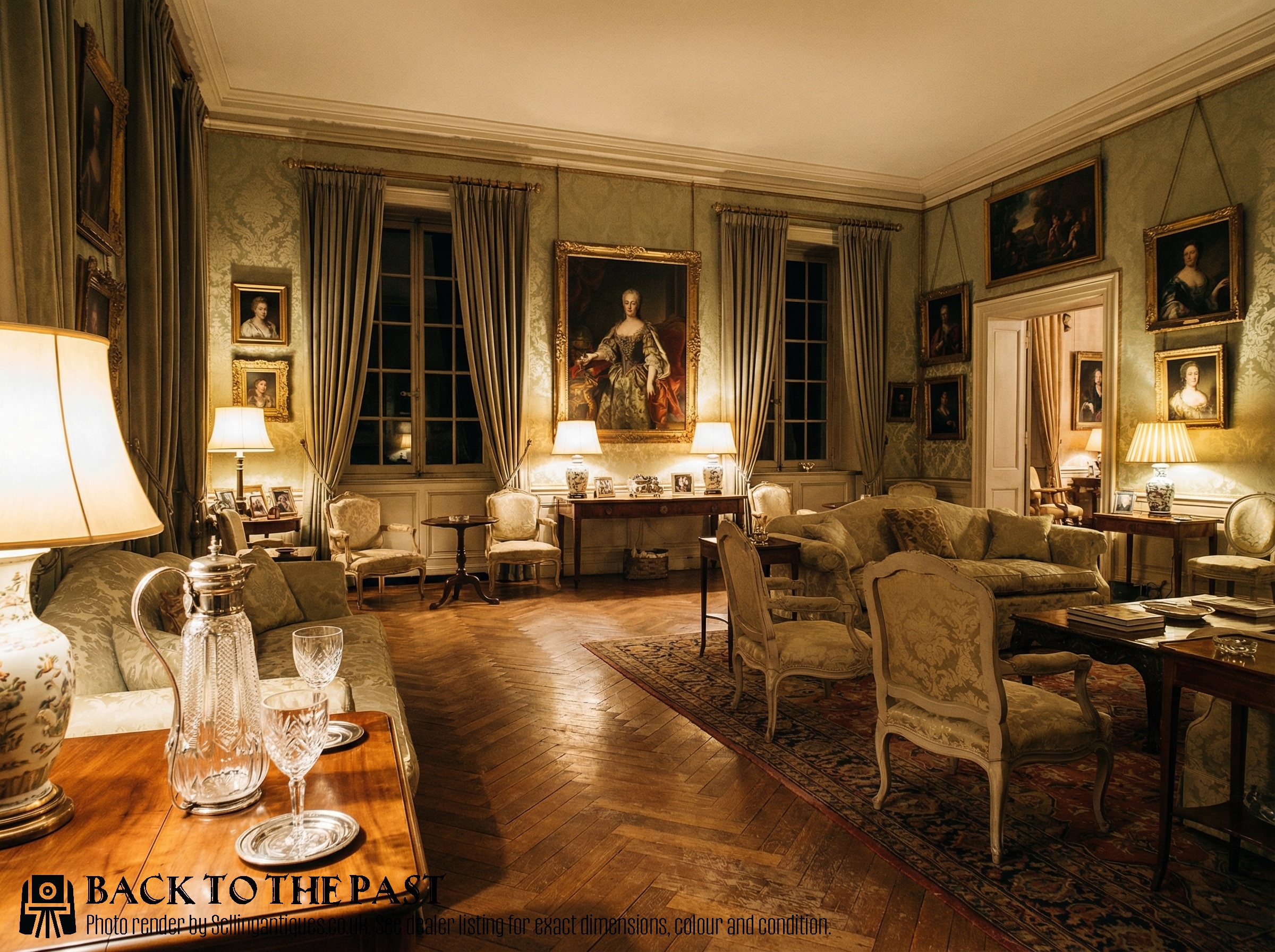
Depth and precision of the wheel-cut facets dictate the upper tier of production, where lines remain sharp and symmetrical without blurring at the intersections. Superior examples display heavy lead crystal blanks that ring clearly when struck, providing substantial weight and high refractive brilliance.
The quality of the metal mounts similarly separates standard production from finer pieces, evident in the gauge of the sterling silver or silver plate and the snug articulation of the hinged lids. Maker involvement, such as marked mounts from established silversmiths, elevates the standing of the vessel.
Cut Crystal Pitcher Retail Price Guide 2026
Typical asking prices for cut crystal pitcher among the pieces listed under this phrase on Sellingantiques today, from the lower quarter to the upper quarter. They describe what is for sale here now, not the wider market.
Some Victorian jugs feature engraved dolphins leaping across the crystal, ensuring the table setting comes with its own aquatic escort.
Stevens and Williams·Webb Corbett·Tiffany·Gorham·Richardsons
The Cut Crystal Pitcher Glossary
- Claret jug
- A specialised pouring vessel designed for serving red wine at the table. These pieces typically combine cut glass bodies with ornate silver handles and hinged spouts.
- Lead crystal
- A high-clarity glass containing metallic oxides that increase weight and refractive index. This material allows for deeper, sharper facet cutting than standard soda-lime glass.
- Pillar and prism cut
- A decorative arrangement of vertical flutes and geometric light-refracting angles. This style creates intense sparkle under artificial or natural illumination.
- Sterling silver mount
- A collar, handle, or lid fashioned from silver of ninety-two point five percent purity. These additions secure the pouring lip and reinforce the upper rim of the glass body.
Cut Crystal Pitcher: Frequently Asked Questions
How do I clean a cut crystal pitcher?
Wash the vessel by hand using warm water and a mild detergent, avoiding sudden temperature changes that can crack heavy glass. Dry the interior with a lint-free cloth to prevent water spots on the facets.
Polish the silver mounts separately with a soft cloth while avoiding abrasive contact with the glass surface. Store the pitcher upright in a stable cabinet away from direct edge impacts.
Were these pitchers used only for wine?
Victorian and Edwardian households utilised these versatile vessels for claret, water, champagne, and mixed cocktails. The inclusion of an ice chamber or a hinged lid often determined the specific beverage served.
Smaller examples served whisky and mixed spirits, while larger ewers held water for dining tables. The presence of silver-plated ice guards or internal tubes marked specific configurations for chilled service.
How can I date an unmarked piece?
Examine the style of the glass cutting, the profile of the handle, and the construction of the silver-plated or sterling silver mount. Heavy geometric hobnail patterns and elongated necks frequently point to the Edwardian period or late nineteenth century.
Silver mounts bearing hallmarks provide exact assay office symbols and date letters for precise attribution. Hand-blown pontil marks on the unpolished base generally indicate earlier nineteenth-century production before machine grinding became standard.
What is the difference between glass and crystal?
True crystal incorporates lead oxide into the batch, which increases the density, durability, and light-bending properties of the material. This composition permits much deeper and sharper wheel-cut decoration without fracturing the wall.
Standard glass remains lighter in weight and softer to the touch, lacking the characteristic resonant ring of lead crystal. Most antique pitchers of high quality rely on the heavier crystal formulation to support intricate facet cutting.