


Diamond Cut Glass Pitcher
A diamond cut glass pitcher brings heavy facets and bright refraction to the table, handling water, wine or claret with robust service.
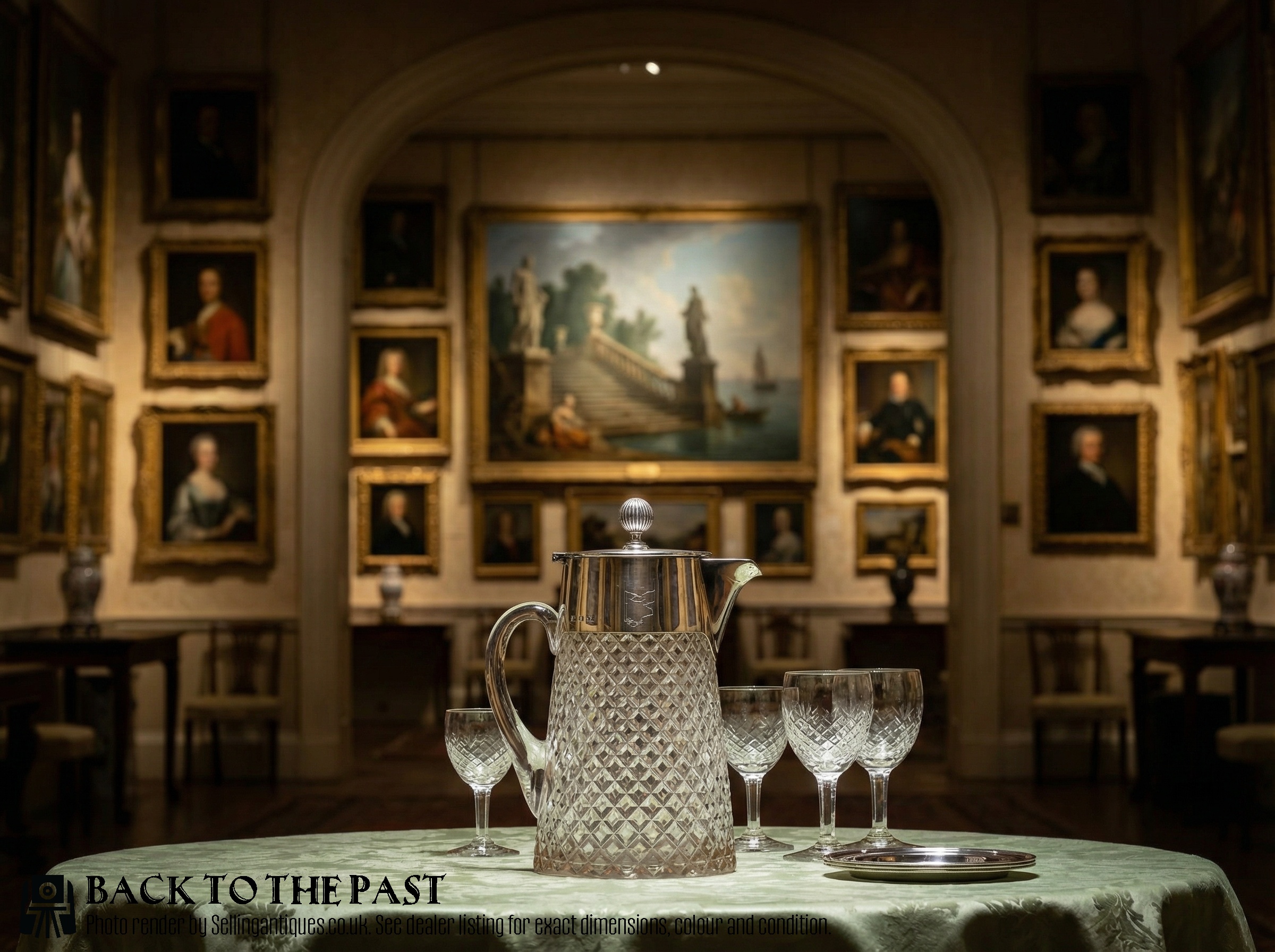
Diamond Cut Glass Pitcher
When searching for a diamond cut glass pitcher, collectors encounter robust vessels designed for service and display, primarily taking the form of claret jugs, water jugs, and ewers. These pieces span the nineteenth century, reaching from the Georgian era through the Victorian and Edwardian periods.
The version most commonly met on this page is the silver-plate mounted Victorian claret jug dated around eighteen eighty, alongside large Edwardian jugs from nineteen hundred. These vessels combine heavy glass bodies with pouring lips and handles tailored for dining.
Origins range across British and Anglo-Irish workshops, incorporating forms such as carafes and decanters. Each object reflects the utilitarian yet decorative demands of formal nineteenth century hospitality.
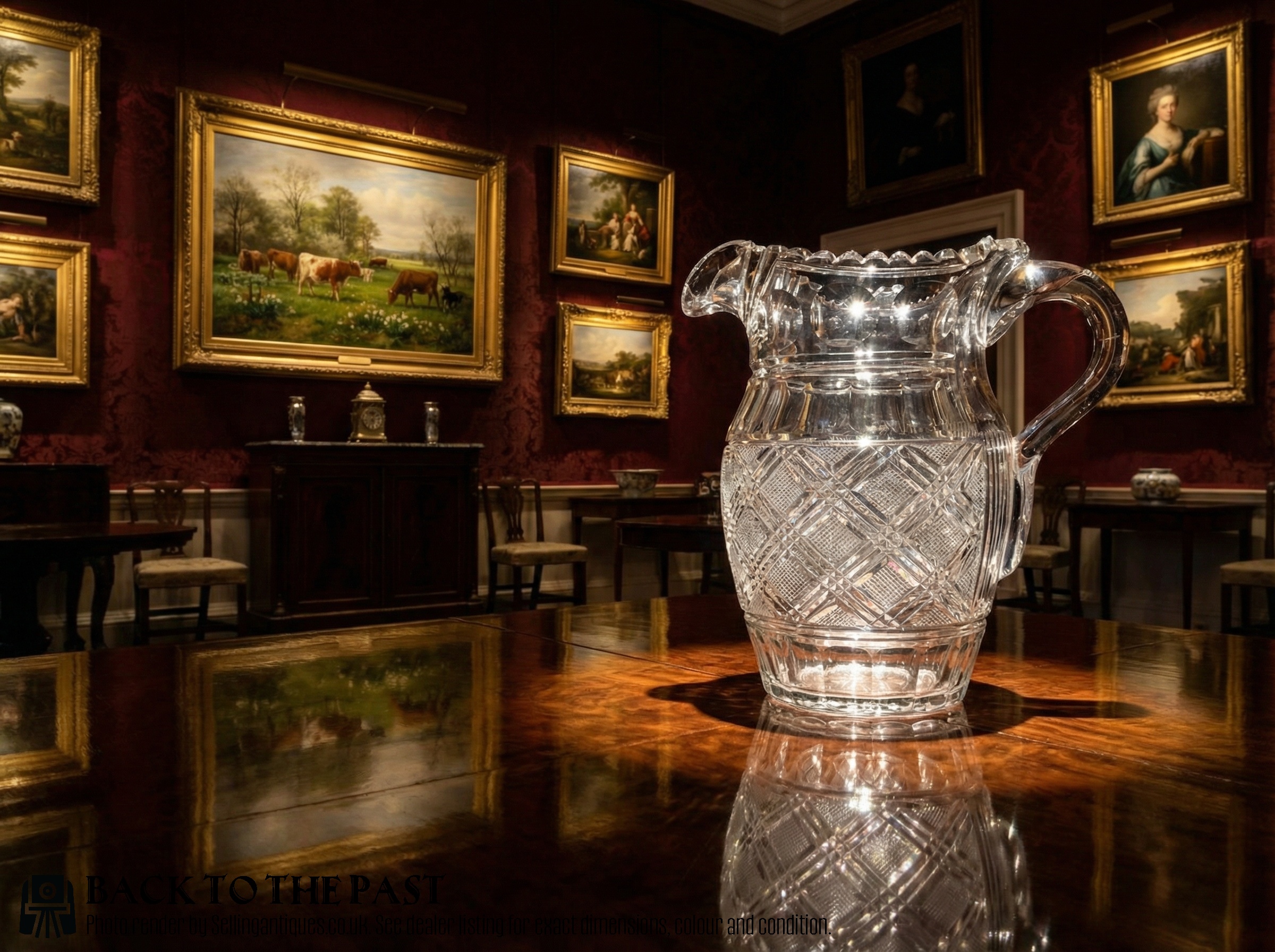
What varies in quality
The standard of glass cutting defines the upper tier, where deep, crisp facets catch the light sharply without blurring or surface waviness. Lesser examples display shallow cuts and softer edges that dull the overall brilliance.
The integration and weight of the silver plate or sterling silver mounts dictate the balance and substance of the piece. Substantial metalwork securely fitted to the glass indicates superior workshop execution.
Hukin & Heath
The Diamond Cut Glass Pitcher Glossary
- Ewer
- A large jug with a wide spout and a curved handle, traditionally used for holding water or wine. These pieces emphasise decorative form alongside utility.
- Lead Crystal
- A heavy type of glass containing metallic oxide that increases brilliance and weight. This material allows for deeper and sharper wheel-cutting.
- Silver Plate
- A base metal coated with a thin layer of silver, providing the appearance of solid silver. It appears frequently on Victorian mounts.
- Regency
- A style period spanning the early nineteenth century characterised by classical restraint and elegance. Pieces from this era show distinct proportions.
Diamond Cut Glass Pitcher: Frequently Asked Questions
What is a diamond cut glass pitcher used for?
These vessels served primarily for holding and pouring claret, water, or wine during formal nineteenth century dining and entertaining. Their sturdy construction and decorative facets made them suitable for prominent display on the sideboard.
Over time, collectors have transitioned these pieces from active dining service to decorative display objects. They continue to function well for serving drinks when handled with appropriate care.
How do I identify a Victorian piece?
Victorian examples often feature heavy silver-plate mounts combined with deep wheel-cut glass patterns. Look for specific design motifs and proportions typical of the nineteenth century.
Comparing the mount style and the weight of the lead crystal helps distinguish Victorian items from later Edwardian productions. Maker marks on the silver mounts also provide definitive dating evidence.
What is the difference between an ewer and a jug?
An ewer traditionally possesses a more pronounced spout and a graceful, curved handle designed for pouring water or wine. Jugs often feature straighter profiles and simpler utilitarian handles.
Both forms appear frequently in nineteenth century glasswork, though ewers tend to emphasise decorative sculptural qualities. The distinction rests largely on the silhouette of the neck and lip.