
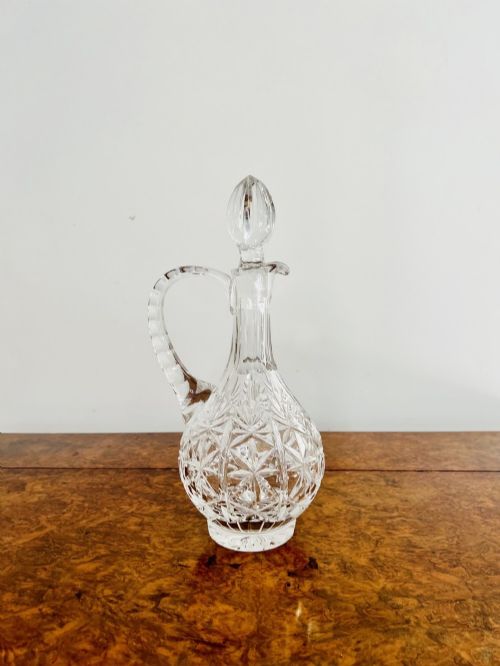
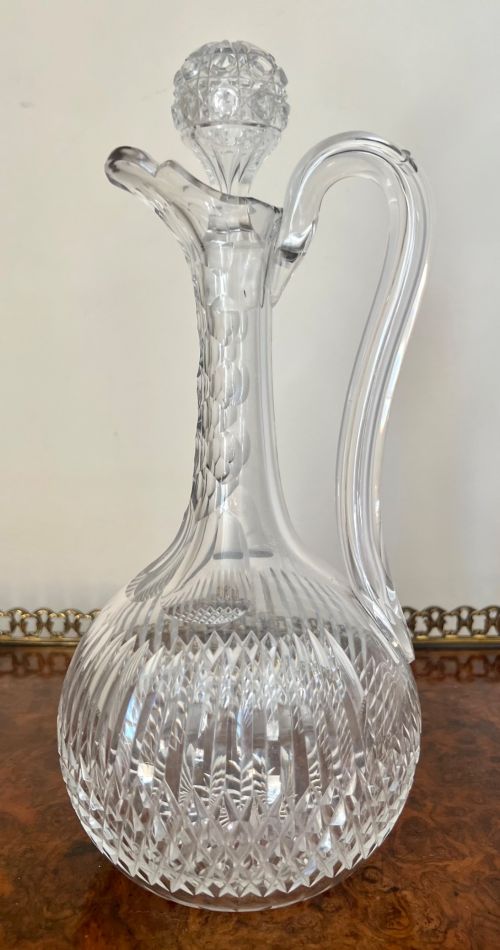
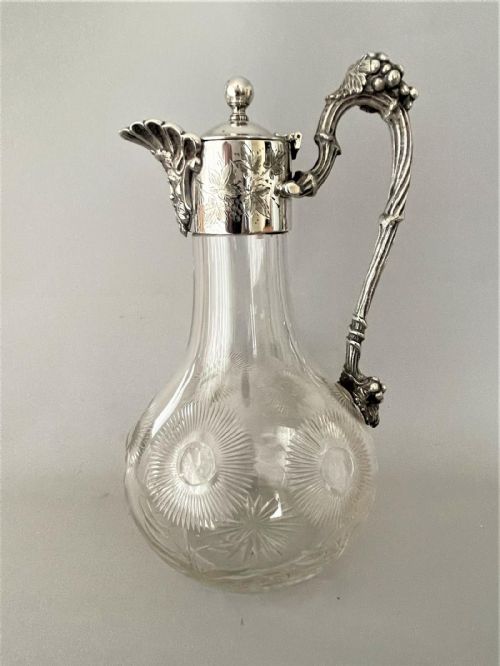
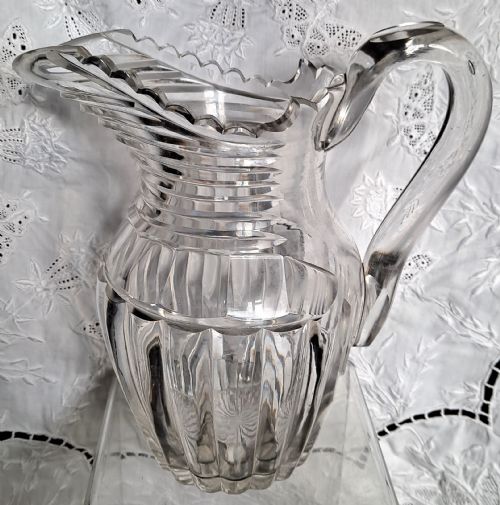
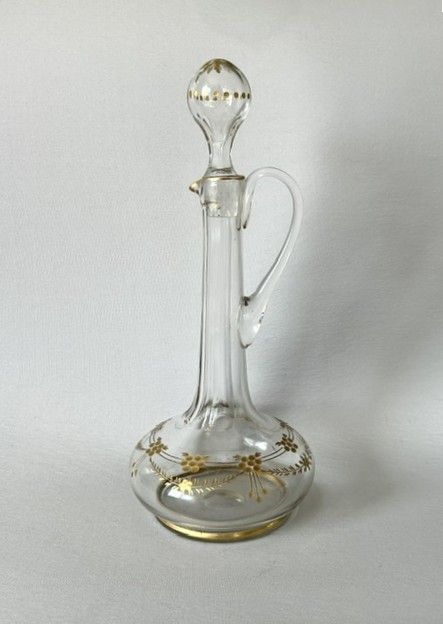
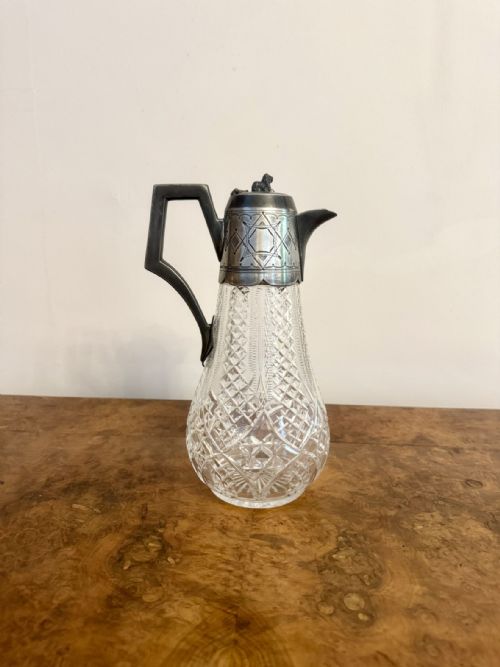
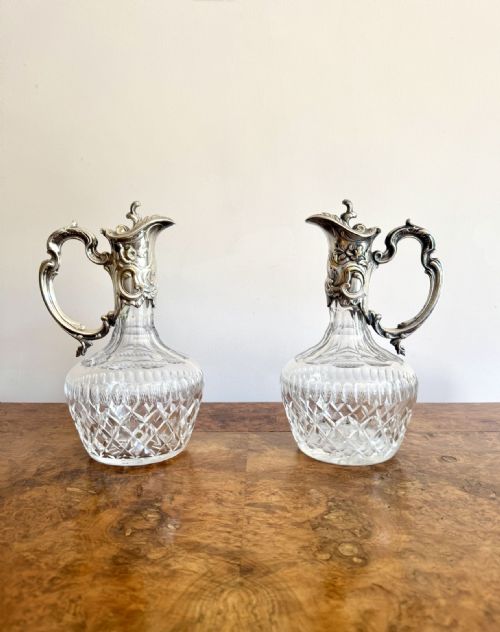


Cut Crystal Jug
When you handle a cut crystal jug, you hold heavy glass shaped by wheel-cutting and paired with gleaming silver mounts.
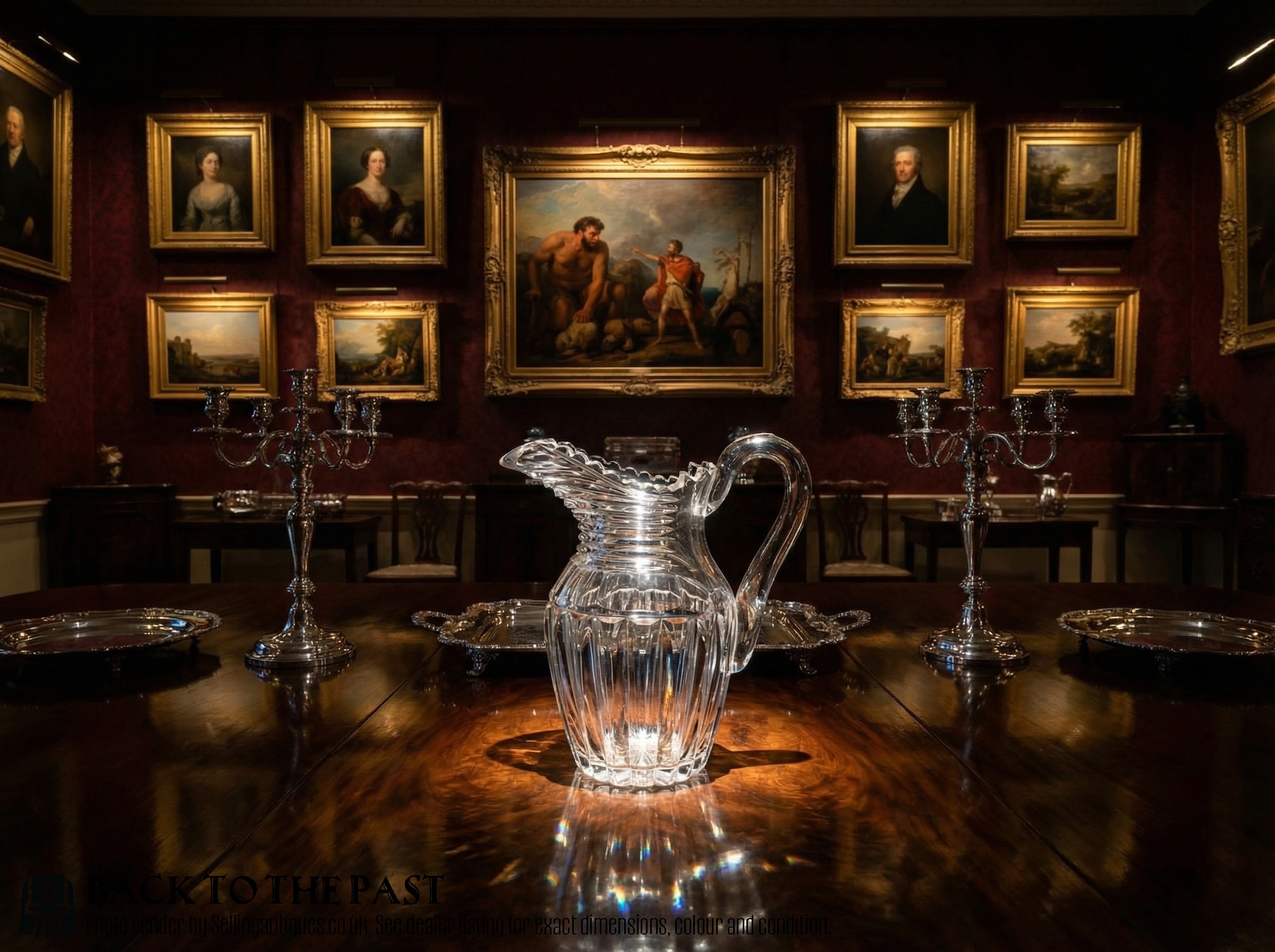
Cut Crystal Jug
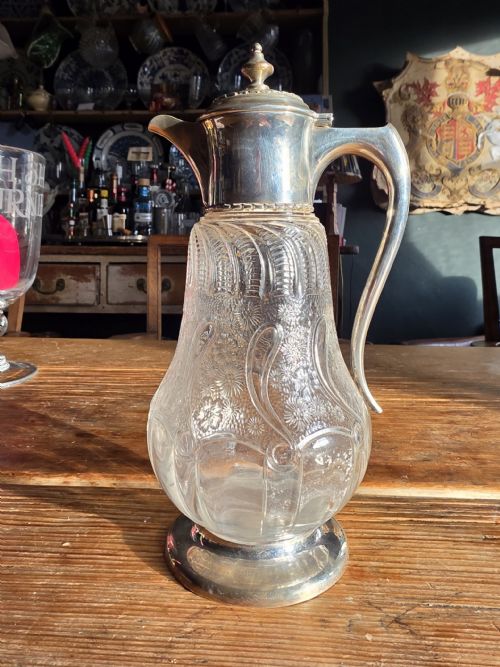
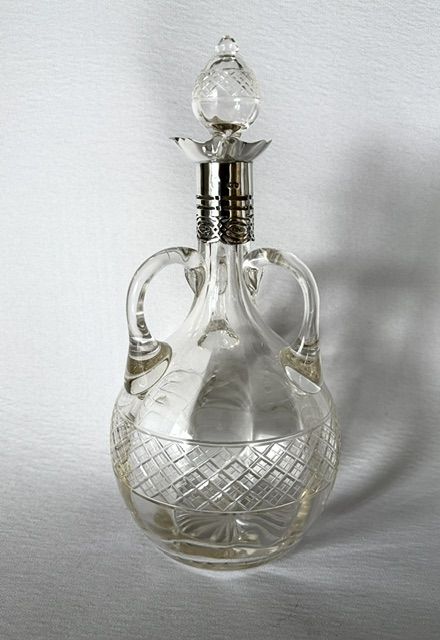
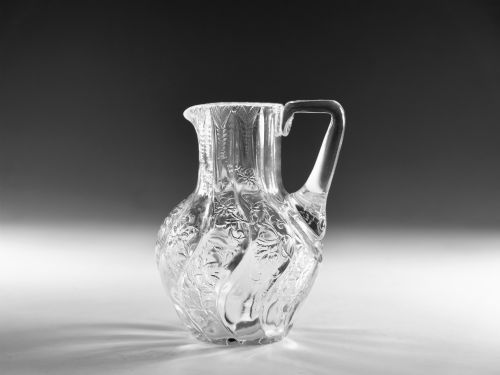
A cut crystal jug unites heavy lead glass with functional serving forms, appearing primarily as claret jugs, water pitchers, and wine ewers. These vessels emerge frequently from Victorian, Edwardian, and early twentieth-century workshops.
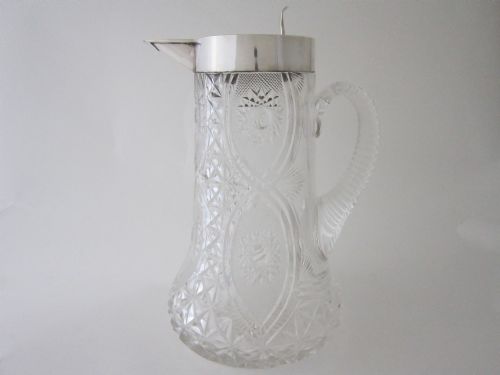
The body of the vessel is heavily faceted, fluted, or diamond-cut to catch the light, often fitted with a hinged metal lid or handle. Common examples combine deep glass cutting with silver-plated or sterling silver mounts.
Makers fashioned these pieces for formal dining tables, drawing rooms, and sideboards to serve water, wine, or claret. The surviving pieces bridge Georgian utility and late Victorian decorative display.
Materials and Working Methods
Craftsmen shaped lead crystal and cut glass while hot or ground the patterns onto cooled blanks using rotating wheels. This abrasive cutting created deep facets, flutes, and star motifs that defined the surface.
Silversmiths and metalworkers added structural support by mounting collars, hinged lids, and spouts around the glass neck. These metal elements utilised sterling silver or silver plate, sometimes marked by notable firms.
Victorian dining etiquette demanded a dedicated claret jug so the butler could replenish glasses without disturbing conversation.
Assessing Craftsmanship
Quality rests in the depth and crispness of the wheel-cutting on the glass body. Sharp, cleanly defined facets separate fine vessels from softer, shallower pressed glass imitations.
The weight of the lead crystal and the balance of the mounted handle dictate the tactile feel of the piece. Well-engineered silver or silver-plated mounts fit the glass collar precisely without movement.
Stevens and Williams·Webb Corbett·Richardsons·Tiffany·Fenton Brothers·Edgar Finley and Hugh Taylor·Elkington and Co·Hukin and Heath·William Hutton·Gorham
The Cut Crystal Jug Glossary
- Lead crystal
- Glass containing lead oxide that increases weight, refractive index, and clarity. This high density allows cutters to achieve deep, sharp facets.
- Claret jug
- A specialised pouring vessel designed for serving red wine at the table. These pieces usually feature a secure metal lid and a slender neck.
- Silver plate
- A layer of pure silver fused to a base metal foundation such as copper or nickel brass. Makers utilised this method to provide the appearance of solid silver.
- Wheel-cutting
- A cold-working technique where a glass vessel is held against rotating abrasive wheels of stone, copper, or wood to carve patterns.
- Sterling silver
- An alloy consisting of silver and other metals, predominantly copper, standardising at a high purity level. Hallmarks stamped into the metal indicate assay office and date.
Cut Crystal Jug: Frequently Asked Questions
Can I use these jugs for serving drinks?
These vessels remain entirely functional for serving water, wine, or cocktails at the modern table. Check the interior for any residue before use.
Ensure that silver-plated mounts are wiped clean after holding acidic liquids like citrus juice or wine. Modern handling does not harm sturdy antique lead crystal.
How do I distinguish Victorian from Edwardian pieces?
Victorian examples often display heavier, deep-relief geometric cutting alongside ornate silver-plated mounts. The forms lean toward robust proportions and elaborate surface decoration.
Edwardian pieces frequently show lighter glass profiles with refined star or flute cuts, reflecting changing dining fashions. Silver mounts from this later era sometimes exhibit cleaner lines.
What do silver hallmarks tell me?
Hallmarks stamped on the metal mounts indicate the assay office, metal standard, and date of manufacture. These small stamps confirm whether the collar is sterling silver.
Unmarked mounts generally indicate silver plate over a base metal foundation. Maker marks within these stamps point directly to the silversmith workshop.