

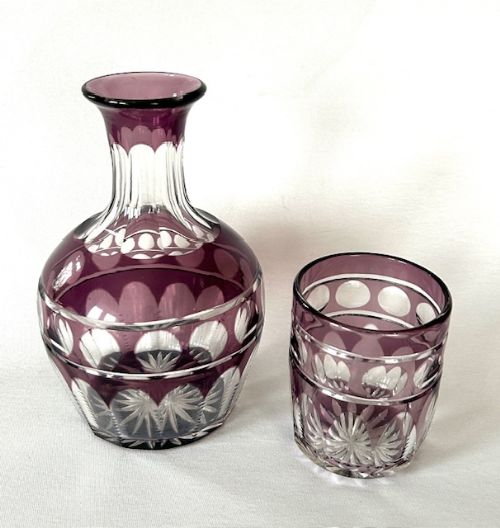


Vintage Crystal Water Pitcher
A vintage crystal water pitcher brings brilliant reflection and heft to a table, combining utility with decorative cut glass.
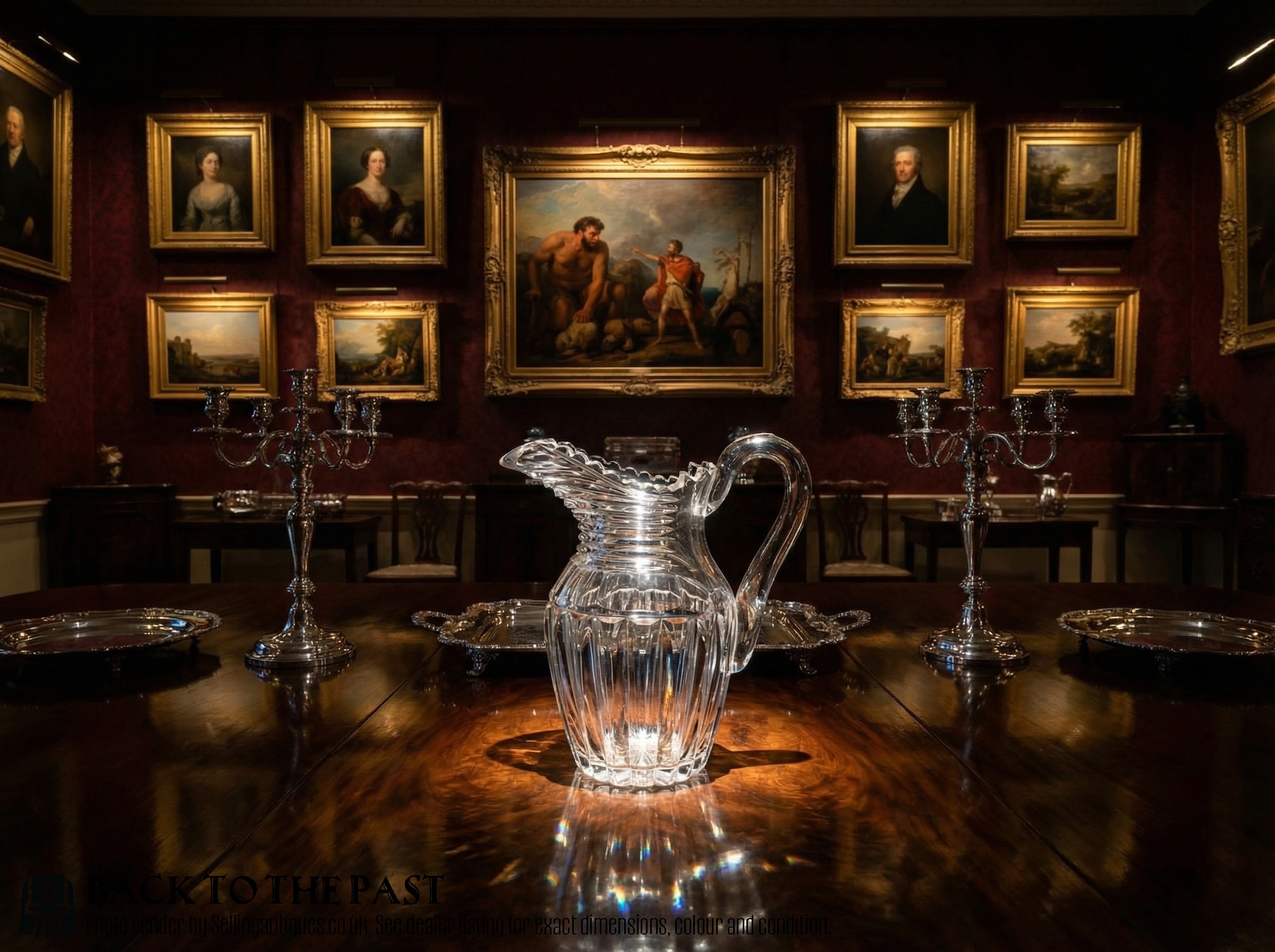
Vintage Crystal Water Pitcher
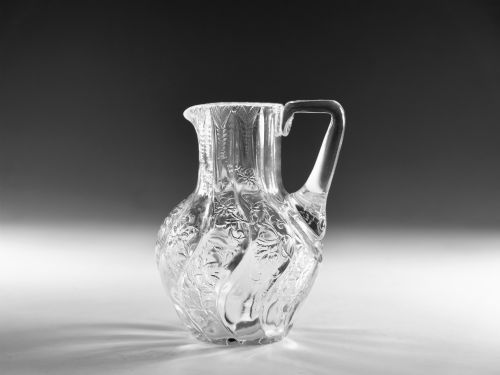
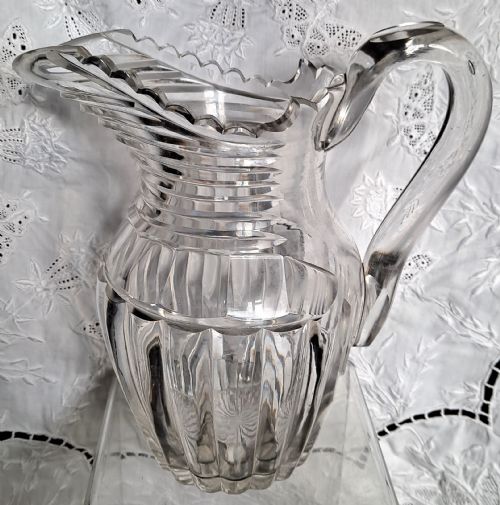
The versions most commonly met on this page date from the Edwardian period and the Victorian era, often featuring deep hand-cut facets or engraved decoration. Makers ranged from English and Irish glasshouses to continental workshops, producing robust vessels designed for everyday hospitality.
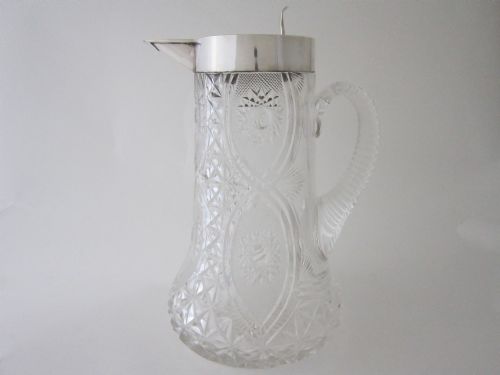
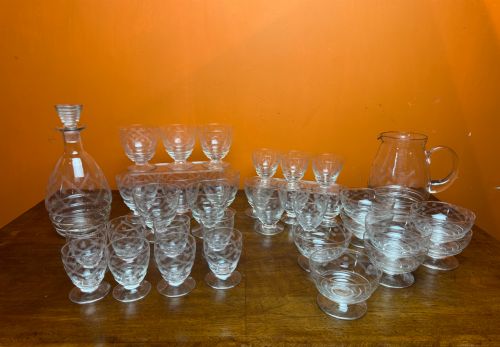
Alongside standalone pitchers, the selection includes matched suites and silver-mounted examples that bridge the gap between dining room service and display. Each piece reflects the prevailing taste of its decade, shifting from nineteenth-century floral motifs to streamlined 1930s geometry.
Materials and Technique
Heavy lead crystal forms the foundation of these pitchers, providing the density required for deep wheel cutting and sharp prismatic facets. Glassmakers shaped molten metal by blowing and pressing, before cooling and transferring the vessel to the cutting bench.
Surface decoration relies on wheel-engraving and intaglio techniques, creating frosted floral motifs, dolphins, and geometric patterns across the clear glass. Many vessels incorporate mounts, handles, and lips cast in sterling silver or silver plate, secured directly to the glass body.
Listings feature cut glass, lead crystal, and silver plate across Victorian, Edwardian, and Art Deco periods.
Distinctions in Quality
The standard of a vintage crystal water pitcher rests on the crispness of its cutting and the clarity of the metal. Superior pieces display deeply incised facets that catch the light sharply, whereas lesser examples show softer, shallower grinding.
Weight and balance dictate the feel in the hand, with finer pitchers demonstrating a substantial lead content and a well-proportioned handle. The integration of silver mounts, where present, distinguishes master-workshop production from standard commercial output.
Stevens and Williams·Webb Corbett·Richardsons·Tiffany·Lobmeyr
The Vintage Crystal Water Pitcher Glossary
- Cut glass
- Glass decorated by holding the vessel against a rotating abrasive wheel to carve decorative patterns into the surface. This technique produces sharp facets that refract light.
- Ewer
- A large jug with a wide spout and a curved handle, traditionally used for holding and pouring water. Victorian and Edwardian examples often feature heavy crystal bodies with silver mounts.
- Intaglio
- A design carved into the surface of the glass rather than raised in relief. It creates a subtle, frosted appearance against polished crystal.
- Claret jug
- A specialised pouring vessel designed for wine, frequently constructed from cut glass with a hinged metal lid and handle. These items date predominantly from the nineteenth and early twentieth centuries.
Vintage Crystal Water Pitcher: Frequently Asked Questions
Can I use these pitchers for daily dining?
These robust vessels were originally created for active household use and handle water, juice, and wine comfortably. The heavy lead crystal provides durability for regular serving.
Take care when setting the pitcher down on hard surfaces, as the heavy base can chip stone countertops. Hand washing preserves the clarity of the glass and any attached silver plating.
How do I distinguish Victorian from Edwardian pieces?
Victorian pitchers often feature dense, elaborate cutting combined with naturalistic etched motifs like grapes and vines. The forms tend toward ornate shapes with heavy ornamentation.
Edwardian designs frequently display lighter, more restrained cutting styles influenced by neoclassical revival tastes. Silver mounts on Edwardian pieces often bear hallmarks specific to the early twentieth century.
What is the difference between glass and lead crystal?
Lead crystal contains a percentage of lead oxide, which increases the weight, refractive index, and softness of the material. This softness allows artisans to cut deeper, sharper facets than standard soda-lime glass permits.
Crystal produces a clear, resonant ring when tapped gently, whereas ordinary glass yields a duller sound. The added lead also gives the material a noticeable heft in the hand.